When water damage strikes your St. Petersburg property, every minute counts in preventing costly secondary damage and health hazards.
Share:

Summary:
Water damage isn’t just about what you can see on the surface. Within 24 hours of water intrusion, mold spores can begin growing in hidden areas like wall cavities and under flooring. Within 48-72 hours, that growth accelerates, potentially spreading throughout your property.
The clock starts ticking the moment water enters your space. Standing water continues absorbing into porous materials like drywall, insulation, and subflooring. What starts as a manageable water extraction can quickly become a full-scale renovation project if not addressed immediately.
Professional water removal equipment can eliminate moisture that household fans and dehumidifiers simply can’t handle. Industrial-grade air movers and dehumidifiers work together to pull moisture from materials before permanent damage sets in.
Most property owners focus on the obvious damage—wet carpets, standing water, soaked furniture. But the real threat often lurks where you can’t see it. Water travels through the path of least resistance, seeping into wall cavities, under flooring, and into structural components.
Within your walls, trapped moisture creates the perfect environment for mold growth and wood rot. Metal components like nails, screws, and electrical connections begin corroding. Insulation becomes waterlogged and loses its effectiveness, leading to energy efficiency problems down the road.
Your property’s structural integrity can be compromised without visible warning signs. Drywall becomes soft and begins sagging. Hardwood floors start cupping and warping. Paint begins peeling, and wallpaper starts separating from walls.
In St. Petersburg, FL’s humid climate, these problems accelerate. Our average humidity levels create conditions where moisture takes longer to naturally evaporate, giving mold and bacteria more time to establish themselves. What might take a week to develop in a dry climate can happen in just 2-3 days here.
Temperature fluctuations from our frequent afternoon thunderstorms create condensation issues that compound the problem. When cool, moist air meets warm surfaces, additional moisture forms—even in areas that weren’t directly affected by the original water intrusion.
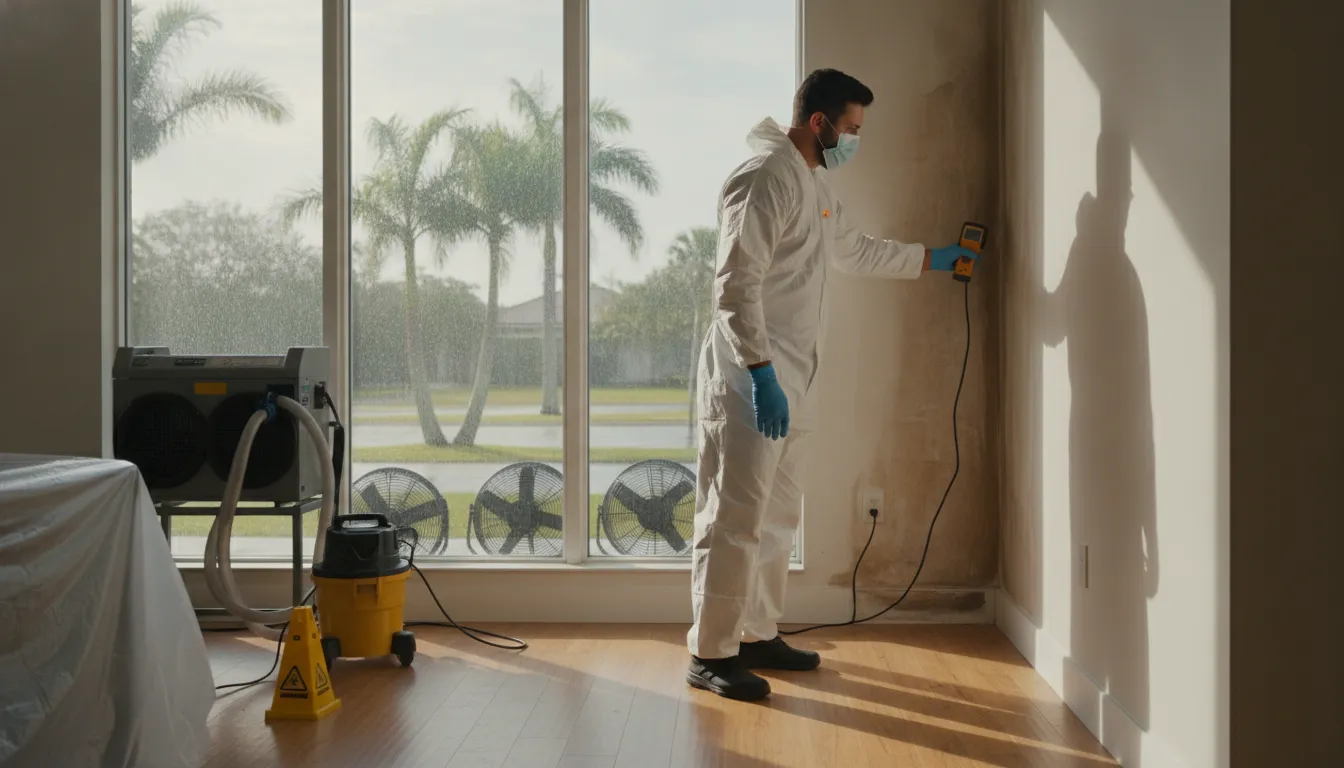
We use moisture meters and thermal imaging cameras to detect hidden water damage that isn’t visible to the naked eye. This technology allows us to address problems before they become major structural issues, potentially saving you tens of thousands in reconstruction costs.
Professional water extraction goes far beyond what you can accomplish with a wet vacuum or mop. We arrive with truck-mounted extraction units capable of removing hundreds of gallons per minute. These powerful systems create negative pressure that pulls water from deep within carpet padding, subflooring, and other porous materials.
The process begins with a thorough assessment using moisture detection equipment. We map out affected areas, including spaces that appear dry on the surface but contain hidden moisture. This comprehensive approach ensures no water-damaged areas are overlooked.
We use specialized extraction tools for different materials and situations. Carpet wands with powerful suction remove water from carpeting and padding. Hard surface extractors handle tile, concrete, and hardwood floors. For severely flooded areas, submersible pumps quickly remove standing water before detailed extraction begins.
Air movement is crucial during water removal. We strategically position industrial air movers to create airflow patterns that accelerate evaporation. These aren’t ordinary fans—they’re engineered to move large volumes of air at specific velocities to maximize drying efficiency.
Dehumidification works hand-in-hand with air movement. Commercial-grade dehumidifiers remove moisture from the air, preventing it from reabsorbing into materials. In St. Petersburg, FL’s naturally humid environment, this step is especially critical for preventing secondary damage.
Temperature control plays a role in effective extraction. Warmer air holds more moisture, so we may use heating equipment to accelerate the drying process. However, temperature must be carefully controlled to prevent damage to sensitive materials and to avoid creating conditions that promote mold growth.
Not all restoration companies are created equal, especially when you’re dealing with an emergency. The company you choose can make the difference between a smooth recovery and months of ongoing problems.
Look for IICRC (Institute of Inspection, Cleaning and Restoration Certification) credentials. These certifications ensure technicians understand proper water damage restoration protocols and safety procedures. Companies with multiple IICRC certifications demonstrate ongoing commitment to industry standards.
24/7 emergency response isn’t just a nice-to-have feature—it’s essential. Water damage doesn’t follow business hours, and delays in response time directly translate to increased damage and higher costs.
Storm chasers and fly-by-night operators often appear after major weather events, targeting desperate property owners with too-good-to-be-true offers. These companies typically lack proper licensing, insurance, and the equipment necessary for thorough restoration work.
Be wary of companies that demand full payment upfront or pressure you to sign contracts immediately. Legitimate restoration companies work with insurance providers and understand that payment typically comes after work completion and insurance approval.
Door-to-door solicitation is another red flag. Reputable restoration companies don’t need to knock on doors looking for business—we’re usually busy responding to emergency calls from existing customers and referrals.
Companies that can’t provide local references or seem evasive about their licensing and insurance status should be avoided. In Florida, restoration contractors must carry specific licenses and insurance coverage. Any hesitation to provide this information is a warning sign.
Extremely low bids often indicate corners will be cut during the restoration process. Proper water damage restoration requires specialized equipment, trained technicians, and thorough processes. Companies that underbid often leave moisture behind, leading to mold problems and structural issues later.
Watch out for companies that don’t use moisture detection equipment or seem to rush through the assessment process. Thorough moisture mapping is essential for complete restoration. Companies that rely on visual inspection alone often miss hidden damage that becomes expensive problems later.
Insurance coverage for water damage varies significantly depending on the cause and your specific policy. Understanding what’s covered—and what isn’t—can save you from unexpected expenses and claim denials.
Most homeowner’s insurance policies cover “sudden and accidental” water damage, such as burst pipes, appliance malfunctions, or roof leaks during storms. However, flood damage from external sources typically requires separate flood insurance through the National Flood Insurance Program.
Documentation is crucial for successful insurance claims. Take photos and videos of all damaged areas before cleanup begins. We provide detailed documentation throughout the process, including moisture readings, equipment placement, and daily progress reports.
We have experience working with insurance providers. We understand insurance requirements for documentation and can communicate directly with adjusters when necessary. This coordination can streamline the claims process and reduce stress during an already difficult time.
Be aware that insurance companies may recommend their preferred restoration vendors. While you’re not required to use these companies, they often have established relationships that can expedite claim processing. However, don’t sacrifice quality for convenience—research any recommended companies thoroughly.
Some insurance policies include “loss of use” coverage that pays for temporary housing if your home becomes uninhabitable during restoration. Understanding this coverage beforehand can help you make informed decisions about the restoration timeline and your living arrangements.
Keep detailed records of all expenses related to the water damage, including temporary housing, meals, and personal property replacement. These costs may be reimbursable under your policy, but proper documentation is essential for reimbursement.
Water damage emergencies test your patience and your wallet, but they don’t have to derail your life for months. The key is acting fast and choosing the right restoration partner from the start.
Remember that the cheapest option often becomes the most expensive in the long run. Proper water damage restoration requires specialized equipment, trained technicians, and thorough processes that can’t be rushed or shortcut.
When disaster strikes your St. Petersburg, FL property, you need a restoration company that understands our unique climate challenges and responds with the urgency your situation demands. We at Go Time Roofing and Restoration combine 24/7 emergency response with the expertise and equipment necessary to get your property back to normal quickly and completely.
Article details:
Share:
Continue learning: