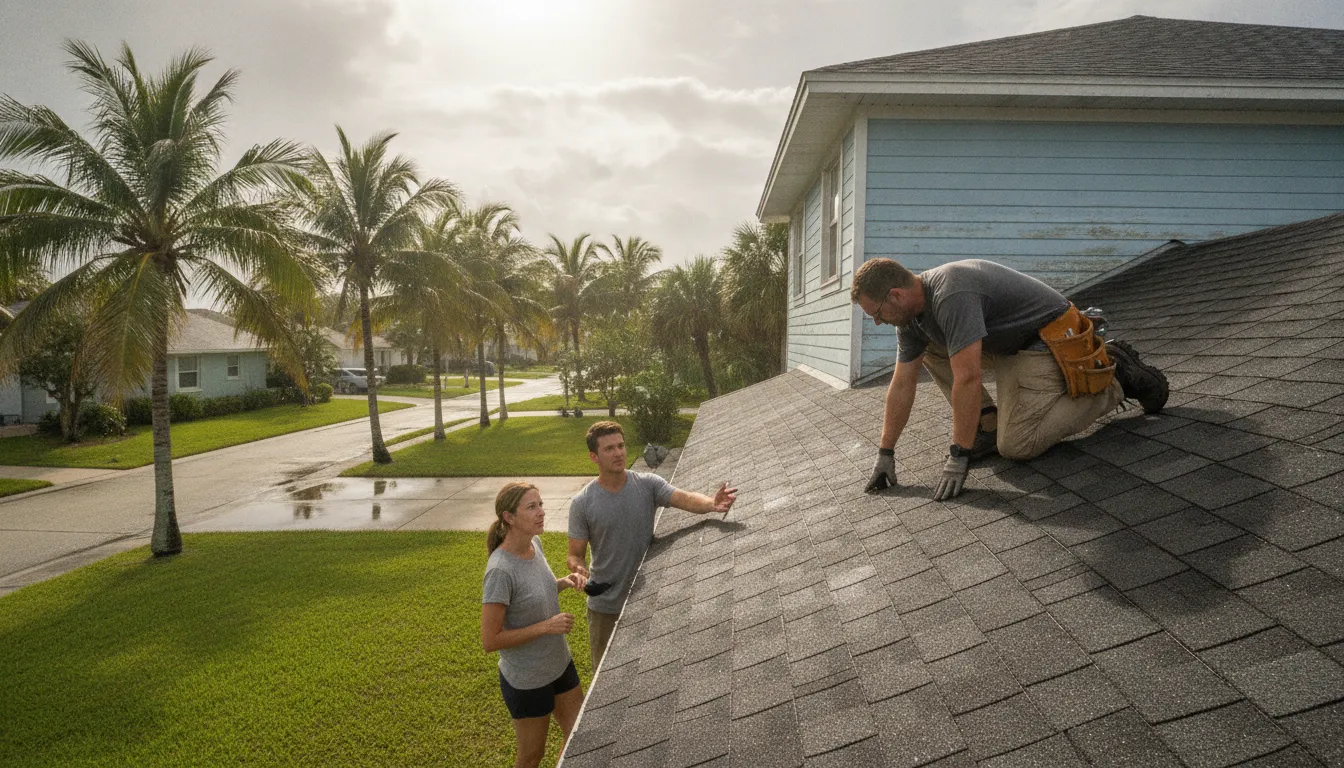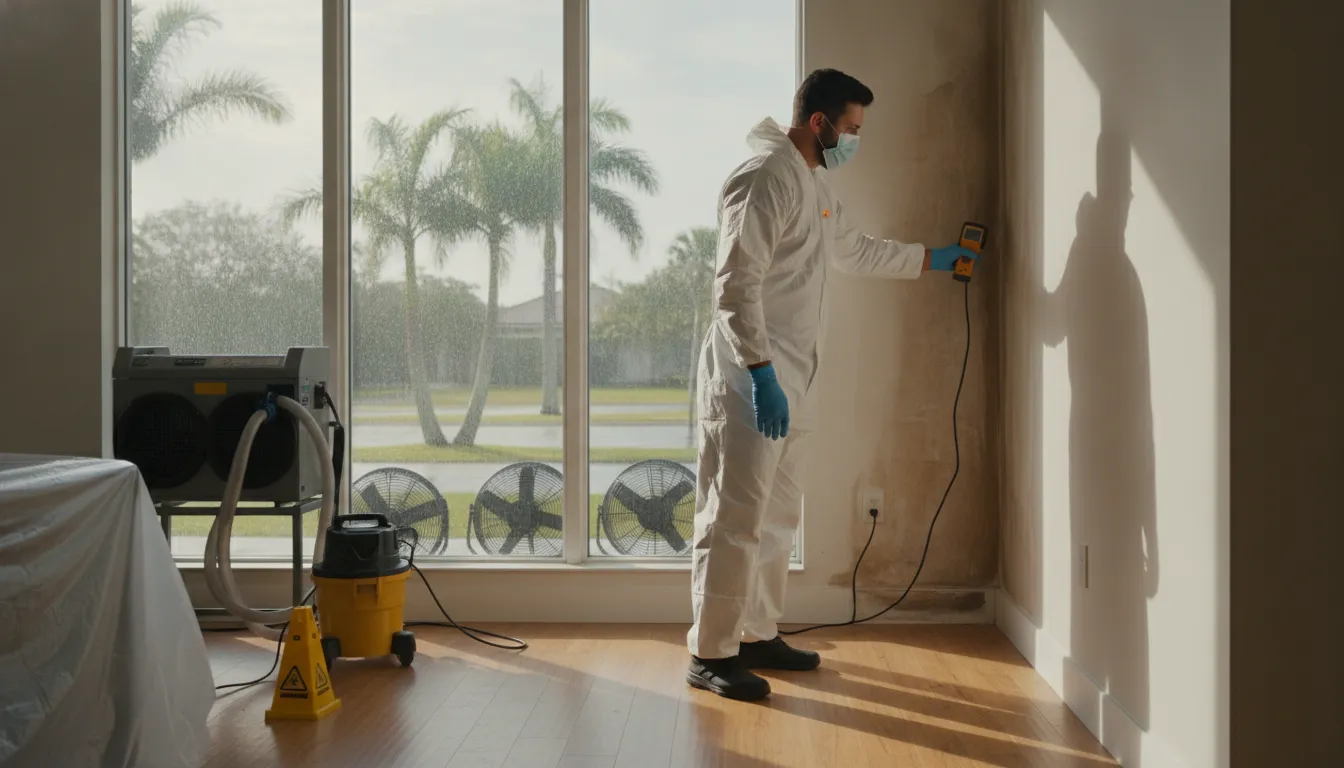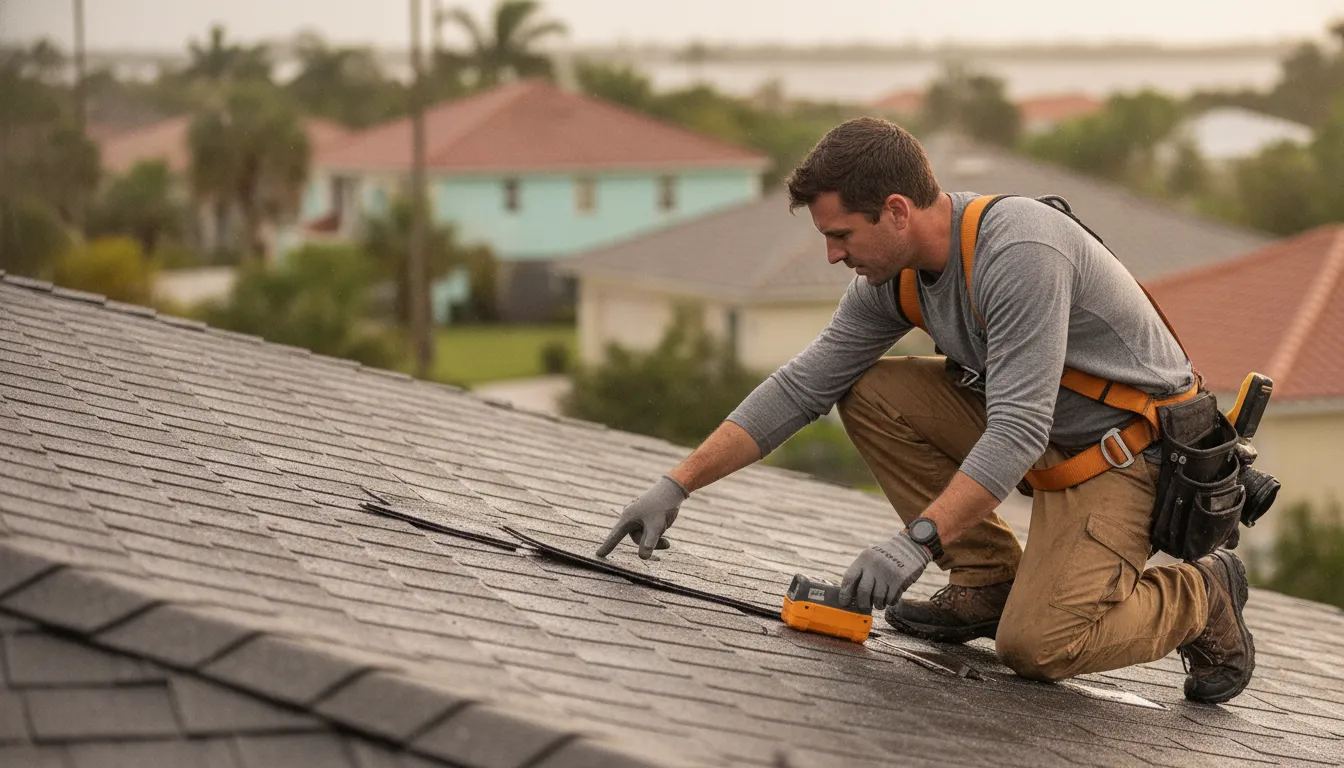
Choosing among roofing contractors in Clearwater FL is about more than finding the lowest estimate. Clearwater homes face intense sun, frequent rain, high humidity, and tropical-storm conditions. A careful comparison should establish who is qualified, what work is included, and how moisture and ventilation will be addressed if conditions change after the project starts.
Request a roofing quote from Go Time Roofing and Restoration
What should you verify before hiring a Clearwater roofer?
Verify the contractor’s Florida license and current insurance. Compare detailed written scopes rather than totals alone. Check the legal business name. Request liability and workers’ compensation certificates. Confirm the repair or replacement plan. Get payment, change-order, cleanup, and warranty terms in writing. The Florida Department of Business and Professional Regulation provides official contractor resources.
This guide has a different purpose from a roofing service page. It helps Clearwater homeowners evaluate any provider before signing. A company service page explains one provider’s capabilities. Use both types of information so your independent checks and project needs line up.
Check the license, insurance, and local accountability
Ask for the contractor’s legal business name and license information before discussing materials or scheduling. Search the official state record yourself. Confirm that the record matches the business that will sign your contract and perform the work. A number printed on an estimate is not enough if the name, status, or business relationship is unclear.
Request current certificates for general liability and workers’ compensation. Review the insured name and coverage dates. If anything looks inconsistent, ask the insurance agent to confirm the certificate. Liability coverage and workers’ compensation address different risks. Neither certificate proves workmanship, but missing or unclear coverage is a reason to pause.
Test local accountability, too. Ask who will manage communication and how warranty concerns are handled after final payment. Look for recent local references and ask whether the contractor kept the agreed scope, protected the property, communicated delays, and completed cleanup. Go Time Roofing and Restoration is a licensed, insured, owner-operated contractor serving St. Petersburg, Pinellas County, and nearby communities. Homeowners should still perform the same checks for every provider.
Compare a written scope instead of a low bid
A useful proposal should identify the existing roof condition, recommended scope, materials, labor, permits, removal, flashing, ventilation, decking allowances, and site cleanup. It should distinguish a defined repair from a partial replacement or full roof-system replacement. Those options solve different problems and should not be compared as if they were interchangeable.
Ask every contractor to describe the same assumptions. Which product is proposed? Which underlayment and flashing details are included? Is damaged decking an allowance or a written change order? Who obtains permits? How will landscaping, siding, windows, and outdoor equipment be protected? A proposal that leaves these questions open makes a low initial price difficult to evaluate.
Compare at least three written estimates when practical. Review scope, schedule, payment terms, change orders, cleanup, and warranties, not just the total. Do not accept a demand for the full project price before work begins. Unexpected decking, flashing, or water-related work should be described in a written change order with the added cost and schedule impact before you authorize it.
How do roofing contractors in Clearwater FL compare proposals?
Compare roofing contractors in Clearwater FL by matching each proposal against the same checklist: diagnosis. Repair or replacement scope, materials, permits, ventilation, change orders, schedule, payment terms, cleanup, and warranty coverage. The clearest proposal is easier to price, approve, and verify than a low bid with missing assumptions.
Use the same questions with every provider. Ask what is included, what is excluded, and which conditions could change the price. The written answer matters because it gives you a record to review before work begins and a reference point during the project.
How should Clearwater homeowners document storm damage?
After a Clearwater storm, stay off a wet or damaged roof and document visible damage from the ground. Photograph roof areas, ceiling stains, wet drywall, fallen branches, and belongings. Preserve receipts and records, notify your insurer according to the policy, and obtain a written contractor scope before authorizing repairs.
- Limit further damage safely. Move belongings away from leaks and place containers under drips when safe. Save receipts for reasonable emergency measures.
- Record the condition. Photograph each affected area and note the date and location before cleanup changes the evidence.
- Screen the contractor. Be cautious of unsolicited storm chasers, pressure to sign immediately, or unusual payment methods. Request licensing, insurance, findings, and a written scope.
- Notify the insurer according to the policy. Keep copies of correspondence. Do not promise yourself a coverage result because the carrier makes that decision.
- Review completed work. Compare the result with the contract and signed changes before final payment, including visible cleanup and interior restoration if included.
For a ground-level reference, review Go Time’s guide to checking roof damage after a storm. Documentation protects your records, but it does not replace a professional inspection when roof access or hidden damage is involved.
Ask how ventilation and materials fit Clearwater’s climate
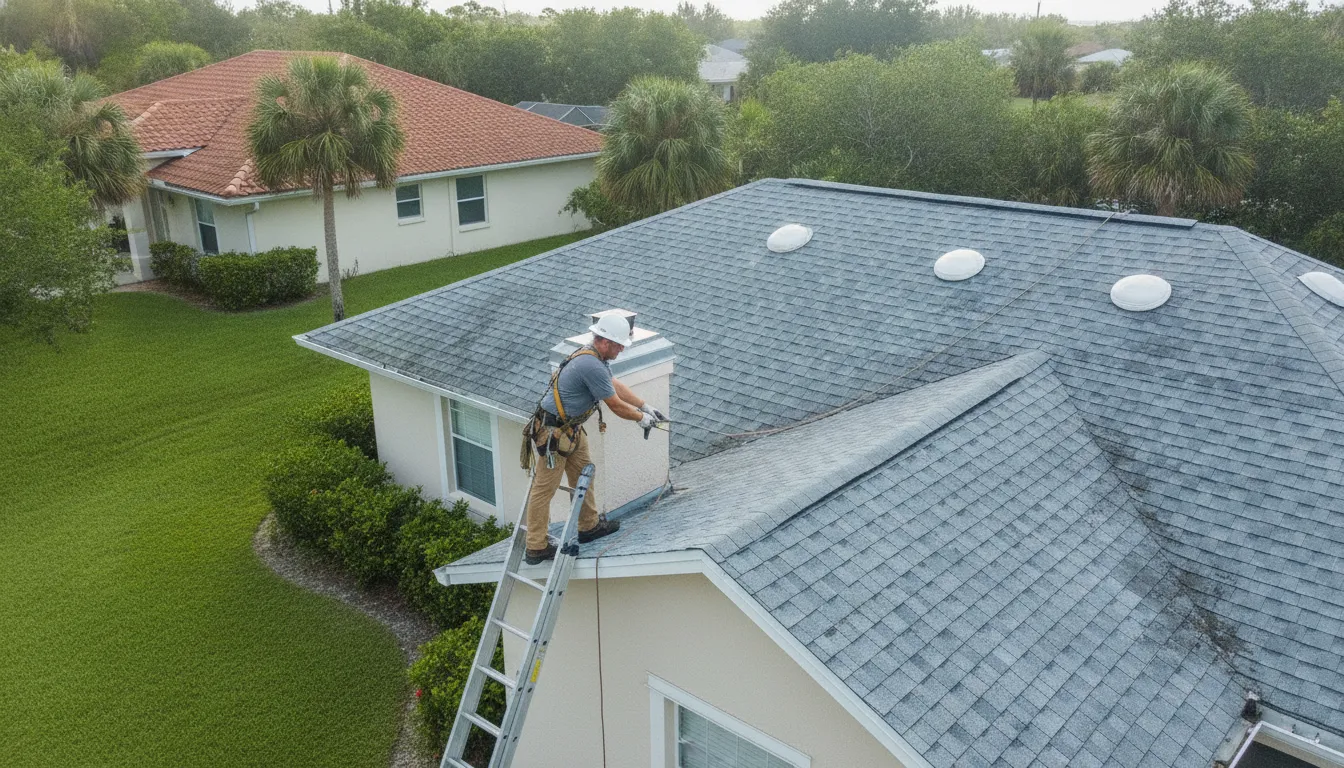
Heat and humidity make the roof system, attic, and moisture path part of the same conversation. Ask whether the proposal includes an attic ventilation evaluation and which components will be installed or retained. The contractor should explain how the plan addresses heat buildup and moisture movement without presenting ventilation as an unexplained add-on.
Material selection should account for sun, rain, wind exposure, algae, and coastal conditions. Ask for the product name, specifications, maintenance expectations, and reasons it fits the home. Go Time’s Florida roofing material guide can help you prepare questions. The final selection should reflect the home’s design, existing system, budget, and written recommendation.
| Detail | Question to ask |
|---|---|
| Scope | Is this a repair, partial replacement, or full roof-system replacement? |
| Materials | Which product, underlayment, flashing, and ventilation components are included? |
| Protection | How will landscaping, siding, windows, and equipment be protected? |
| Closeout | What cleanup, documents, walkthrough, and warranty terms are included? |
Separate product warranties from workmanship coverage
Ask for both warranty documents before signing. A manufacturer generally provides product coverage, while the contractor explains installation workmanship coverage. These are separate responsibilities. Review exclusions, maintenance requirements, transfer terms if applicable, claim instructions, and the party responsible for responding to a problem.
Do not rely on a verbal summary. Keep the documents with the contract and confirm what happens if a concern appears after severe weather. A clear warranty process is useful, but it cannot substitute for a sound scope, proper installation, and realistic maintenance expectations.
How can you compare roofing contractors in Clearwater FL?
A fair comparison starts with consistent questions and ends with written answers. Check licensing and insurance, match the proposed scope, ask how storm or hidden damage will be handled. Review ventilation and materials, and understand payment and warranty terms before signing with roofing contractors in Clearwater FL.
- What is your legal business name, and how can I verify your Florida license? Check the current state record.
- Can you provide current liability and workers’ compensation certificates? Confirm the insured business and dates.
- Is the work a repair, partial replacement, or full roof-system replacement? Ask for findings that support the recommendation.
- Which materials, underlayment, flashing, ventilation, permits, and cleanup are included? Make sure the scope lists each item.
- How will hidden decking or water damage be documented and priced? Require written approval before added work.
- What payment schedule applies? Avoid paying the full project cost before work begins.
- Can you provide recent local references for comparable work? Ask about communication, cleanup, and results.
- Which warranty covers materials, which covers workmanship, and who handles claims? Request both documents.
Compare the answers for clarity and completeness. A dependable contractor should explain the work without replacing documentation with urgency. Review Go Time’s roofing services information and compare its scope with the needs identified during your evaluation.
Contact Go Time Roofing and Restoration about your Clearwater-area roofing project
Frequently Asked Questions
Are roofing contractors in Clearwater required to be licensed?
Florida requires contractors performing regulated roofing work to hold the appropriate license. Verify the legal business name and current status through the state’s official contractor resources before signing.
How many roofing estimates should I compare?
Compare at least three written estimates when practical, using the same project assumptions. Evaluate scope, materials, schedule, payment terms, change orders, cleanup, and warranties, not only the total price.
Should I sign with a contractor who arrives after a storm?
Do not sign under pressure. Request licensing, insurance, references, written findings, and a complete scope. A legitimate emergency response still allows time for basic verification and documentation.
What should a Clearwater roof estimate include?
It should identify the recommended repair or replacement, materials, labor, permits, ventilation, possible decking work, schedule, payment plan, change-order process, cleanup, and warranty responsibilities.