Roof Repair in St. Petersburg After a Storm
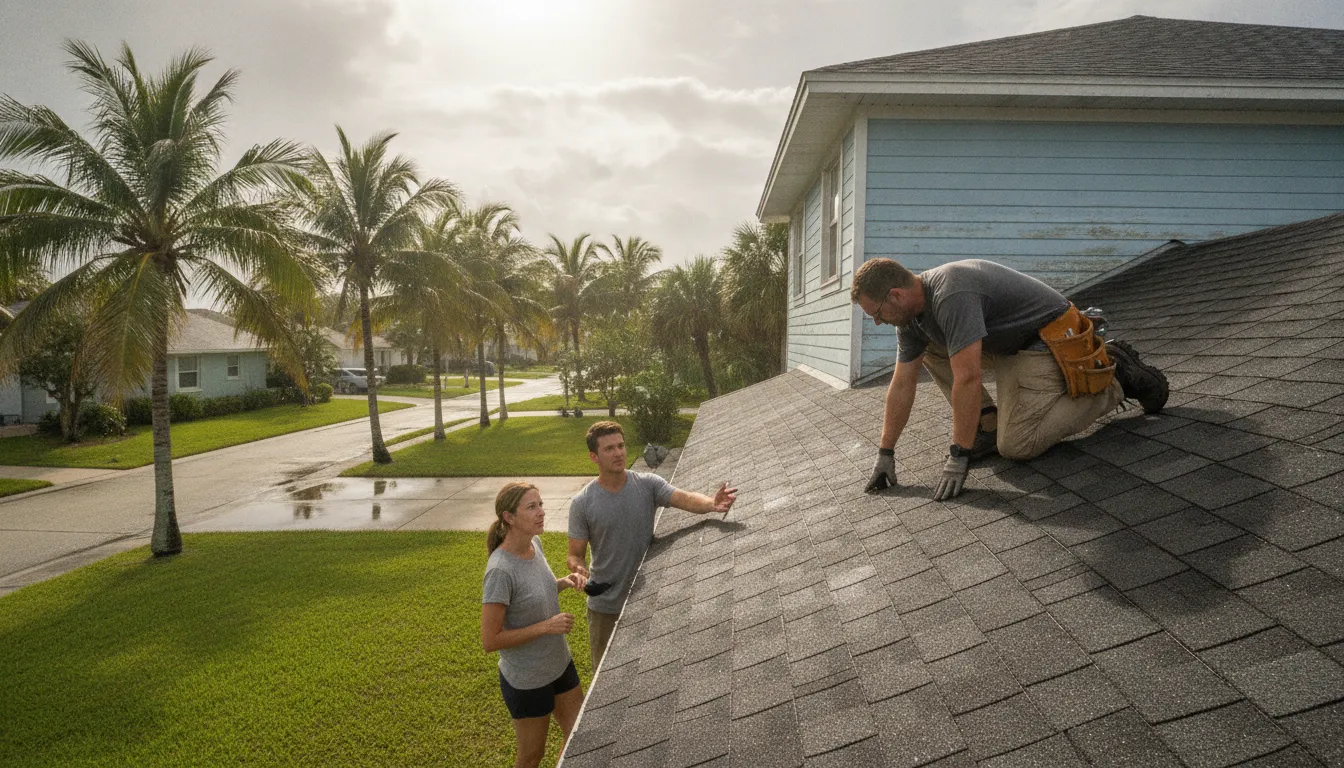
After a St. Petersburg storm, your roof may look intact from the driveway while wind-driven rain has opened a path under shingles, tile, flashing, or the roof edge. Do not climb onto a wet or damaged roof. Make the area safe, document visible conditions from the ground, and choose the next step based on the damage.
Need help after a storm? Contact Go Time Roofing and Restoration.
Roof repair is usually appropriate when storm damage is localized and the underlying roof remains sound. Missing or lifted materials, active leaks, damaged edges, exposed decking, and sagging areas should be assessed promptly by a licensed professional before you choose repair or replacement. A prompt assessment can separate urgent protection from permanent work.
This guide follows the post-storm decision process in St. Petersburg, from safe observation to a reasoned repair decision.
What should you do first after a storm?
Start with safety, documentation, and moisture control. Wait until the storm has passed, stay away from downed power lines and unstable trees, and never use a ladder during unsafe conditions. From the ground or a safe interior location, record what you see before materials are moved or cleanup begins.
- Check for hazards. Keep people away from sagging ceilings, wet electrical fixtures, standing water near outlets, and visibly unstable roof areas.
- Look from a safe location. Note missing shingles or tiles, lifted edges, damaged soffits or fascia, visible openings, and wet spots on ceilings or walls.
- Take photographs. Use wide and close images from the ground. Record the storm date, when water appeared, and which rooms or belongings were affected.
- Limit interior damage. Move belongings away from drips if safe. Use containers for small leaks, but do not stand beneath a bulging ceiling or cut into it.
- Arrange an assessment. A professional can determine whether the problem involves the covering, flashing, roof edge, structure, ventilation, or drainage.
For more ground-level guidance, review how to check for roof damage after a storm. A temporary weather barrier may limit additional water entry, but it is not a completed repair. Keep photographs, notes, receipts, and damaged-material records organized.
How does roof repair work after a St. Petersburg storm?
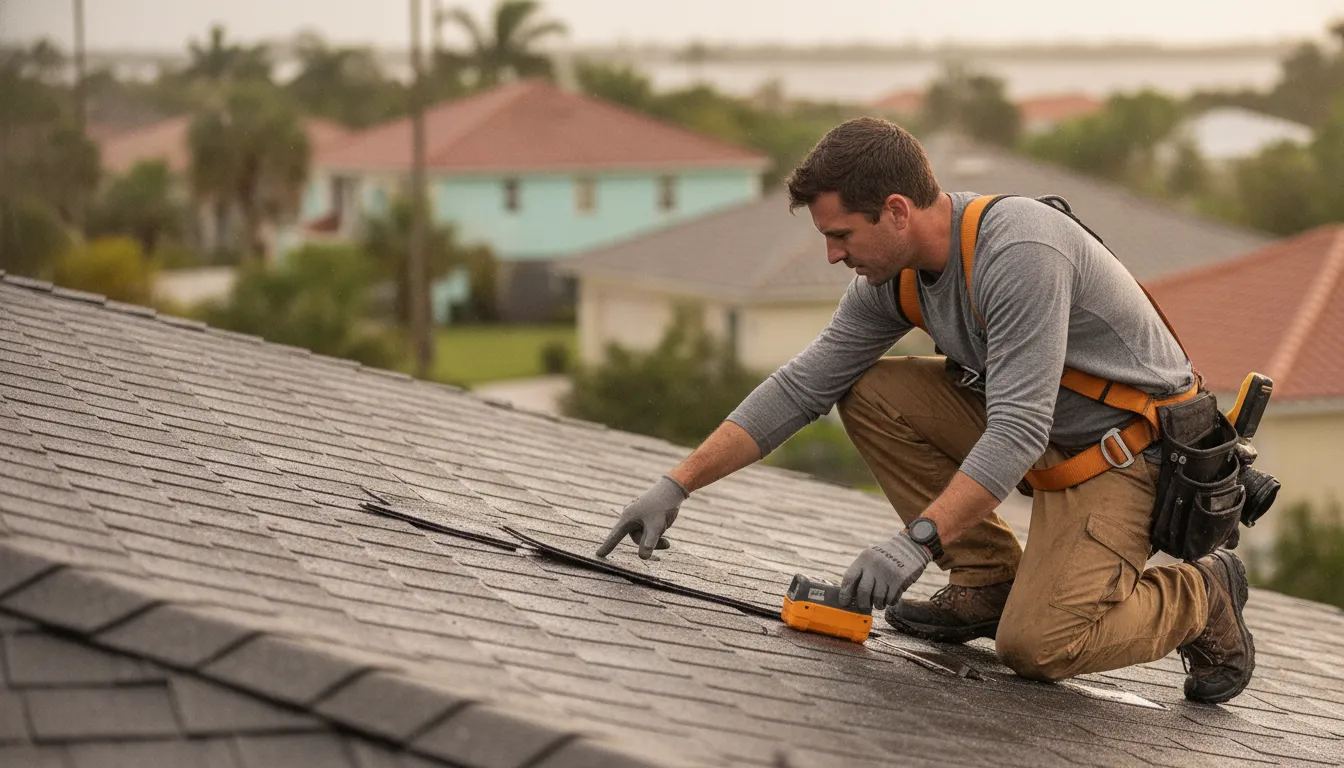
Roof repair after a St. Petersburg storm begins with identifying the entry path and the condition of the surrounding roof. The scope may involve the roof covering, underlayment, flashing, fasteners, decking, vents, edges, or drainage. A localized repair fits only when the remaining system can be restored without hiding deeper damage.
Shingles, tile, and metal panels
Wind can lift, crack, loosen, or remove roofing materials. The correct method depends on the material, extent of displacement, fastener condition, and whether water reached the underlayment or deck. Asphalt shingles, tile, and metal panels require material-appropriate work. A universal patch can conceal a larger failure.
Flashing and roof-edge damage
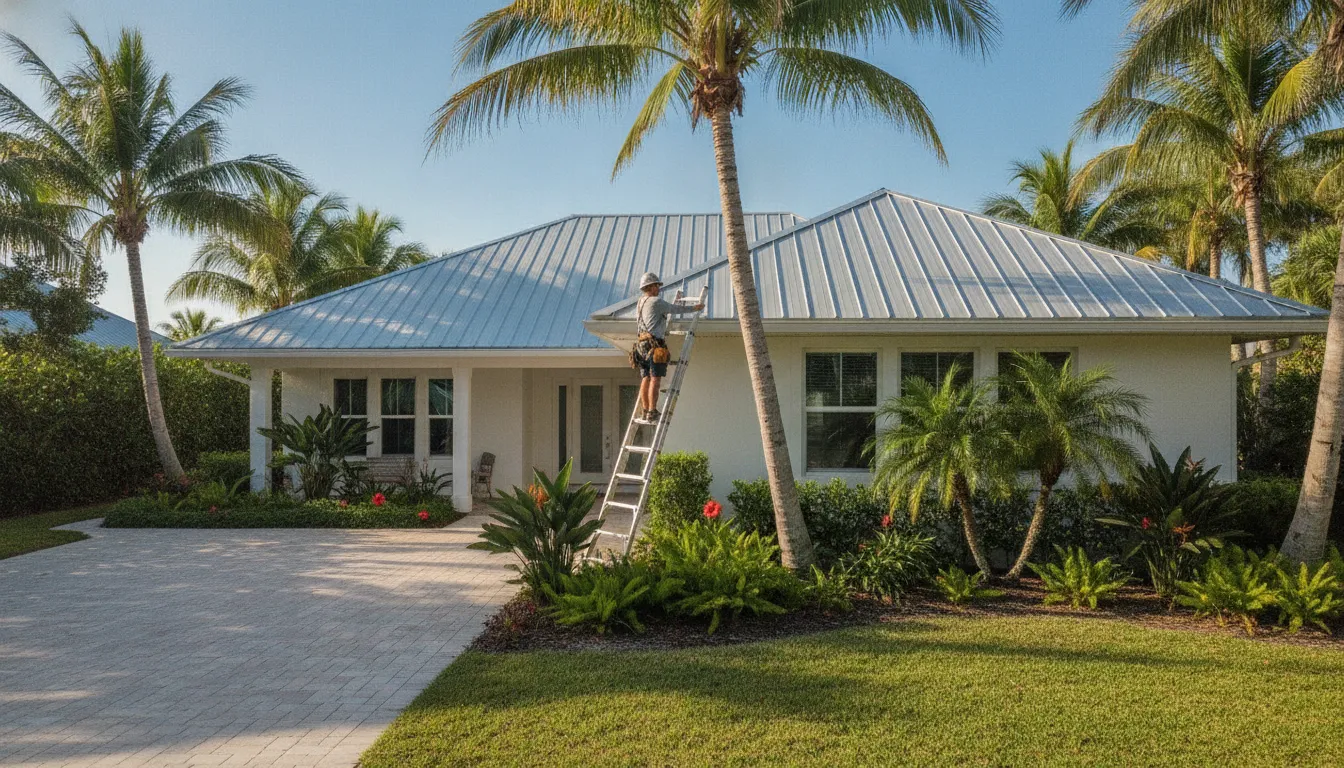
Flashing at walls, valleys, penetrations, and roof-to-wall transitions can loosen or bend. Eaves, soffits, and fascia are also exposed to wind uplift and wind-driven rain. See the roof flashing repair guide for flashing-specific warning signs, and review soffit and fascia repair information when edge damage is present.
Decking, vents, and drainage
Replacing a surface material without addressing compromised decking, loose connections, damaged vents, or blocked drainage may leave the entry path in place. Water can travel away from the original opening before it becomes visible inside. In St. Petersburg, heat, humidity, and repeated rain make a small opening more consequential if moisture remains in insulation, sheathing, or wall cavities.
How urgent is roof repair after wind or heavy rain?
Roof repair is urgent when water is actively entering, materials are missing or lifted, the roof edge is open, the ceiling is bulging, or the structure appears unstable. A small stain without active moisture still deserves prompt evaluation because another Florida rain event can turn a minor opening into wider interior damage.
Call promptly for active hazards
Keep people away from unstable roof areas and wet electrical fixtures. Do not climb to inspect or cover damage during rain. If water is entering, protect belongings from a safe position and contact a professional. Temporary barriers can reduce additional moisture, but they do not replace a complete assessment and permanent repair.
Schedule an inspection for less visible damage
If there is no active leak or obvious displacement, schedule an evaluation soon instead of assuming the roof is fine. Wind can damage fasteners, edges, and flashing without creating an immediate interior symptom. Use the roof leak causes and fixes guide for related warning signs.
Should you repair or replace the roof?
Repair is more likely when damage is limited to a defined area and the surrounding roof structure and materials remain sound. Replacement becomes more likely when damage is widespread, leaks persist, sagging is visible, or the system is near the end of its useful life. The decision should account for the complete roof system, not only the most obvious missing material.
| Repair may fit when | Replacement may fit when |
|---|---|
| Damage is limited and surrounding materials remain sound. | Shingle or tile damage is widespread. |
| The weather barrier can be restored without masking deeper damage. | Leaks continue or visible sagging is present. |
| The roof has substantial remaining service life. | Repeated repairs no longer address overall condition. |
Do not decide from an online cost range. Materials, access, damage extent, and labor affect the scope, while insurance coverage depends on the policy, cause, exclusions, and adjuster’s findings. Photograph damage when safe, keep receipts, and ask your insurer for claim instructions. A condition-based roof inspection is more useful than a quick visual guess.
Review Go Time’s St. Petersburg roof repair service before scheduling storm work.
What should you ask a roofing professional?
Choose a licensed and insured contractor who can explain the findings, temporary measures, proposed repairs, and condition of the surrounding roof. The goal is a clear scope based on actual damage, not a promise about an insurance result or a pressure-filled replacement decision.
- Ask for photographs or written notes identifying affected areas.
- Confirm whether the scope includes covering, flashing, edges, decking, ventilation, and drainage where relevant.
- Ask why the recommendation is a localized repair, broader repair, or replacement.
- Confirm who will handle temporary protection and how completed work restores water resistance.
Go Time Roofing and Restoration is a licensed and insured, owner-operated contractor serving St. Petersburg and Pinellas County. When storm water enters the home, coordinated roofing and restoration can address both roof damage and resulting interior moisture. Learn more about roofing services in St. Petersburg and Pinellas County.
What should a clear repair scope include?
A useful scope identifies the affected roof plane, material, repair boundary, access needs, and temporary measures. It should also state whether the contractor found damage to flashing, underlayment, decking, vents, gutters, soffits, or fascia. If interior moisture is present, ask whether drying or restoration is part of the response or requires a separate plan.
How can homeowners avoid unsafe storm repairs?
Do not climb onto the roof, walk on wet shingles or tile, handle fallen electrical equipment, or enter areas with structural instability. A temporary covering should be installed by someone equipped to work safely. Be cautious with anyone who demands a fast replacement decision. Ask for identification, a written scope, and time to review the recommendation.
What changes when storm water reaches the interior?
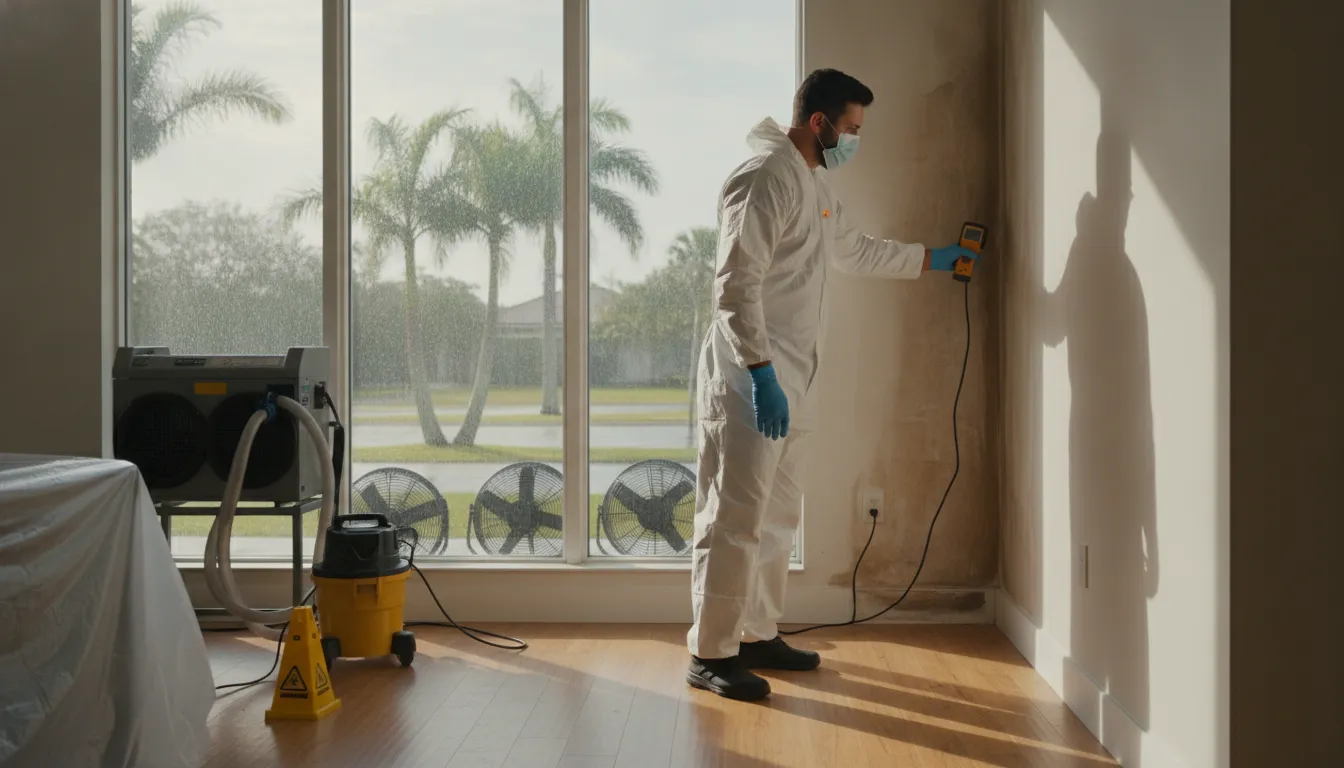
Roof damage and interior water damage can be connected, but they are not the same repair. Wet insulation, drywall, flooring, or stored belongings may need separate assessment and drying. Review water and flood damage restoration resources when storm water has entered the home, and tell the roofing professional where and when you first saw moisture.
Frequently Asked Questions About Roof Repair After a Storm
What should I do if my roof starts leaking?
Move belongings away from the leak, document visible damage, and avoid walking beneath sagging ceilings. If safe from the ground, note missing materials or damaged edges. Contact a professional about temporary protection and a complete assessment. The EPA flooded-home guidance also recommends limiting additional rain from entering during cleanup.
Can I repair storm damage myself?
Do not climb onto a wet, damaged, or unstable roof. Ground-level photographs and minor interior protection may be reasonable, but roof access, structural concerns, flashing repairs, and storm-damaged coverings should be handled by a licensed professional.
How do I know whether repair or replacement is needed?
Localized damage on a sound roof may be repairable. Widespread material loss, sagging, repeated leaks, or an aging system can point toward replacement. The decision depends on the covering, deck, fasteners, drainage, and full extent of damage, so request an inspection.
When should I call a roof repair professional?
Call promptly for active leaks, missing or lifted roofing, damaged soffits or fascia, exposed decking, sagging, or water inside the home. Choose a licensed and insured contractor who can explain the scope and coordinate restoration if interior moisture is present.
Contact Go Time for practical storm-damage roof guidance.
Contact Go Time for storm-damage roof guidance
If wind or heavy rain has left you unsure what the roof needs, contact Go Time Roofing and Restoration. The team can discuss safe temporary protection, localized roof repair, or a larger evaluation for St. Petersburg and Pinellas County properties.