In St. Petersburg and across Pinellas County, a roof can look intact from the ground while heat. Salt air, heavy rain, and storm winds work steadily on its most vulnerable points. A small ceiling stain or occasional drip is not something to watch indefinitely. In Florida’s humid climate, an unresolved leak can contribute to significant interior water damage and create conditions for mold growth within 24 to 48 hours.
Schedule your free roof inspection in St. Petersburg today. Call (727) 361-6905.
Roof leak repair St. Petersburg is usually the right first step when the damage is isolated, the roof is relatively young, and the underlying materials remain sound. Replacement may be more practical when leaks occur in several areas, storm damage is extensive, or an aging roof needs repeated repairs.
The first decision is locating how water is getting inside, not simply where it appears indoors. Understanding the common failure points helps you respond quickly and make a more informed repair-or-replace decision.
What Causes Roof Leaks in St. Petersburg Homes?
Roof leaks in St. Petersburg commonly start with failed flashing, storm damage, aging materials, or installation problems, then worsen under Florida’s heat, humidity, and heavy rain. Finding the entry point early matters because water can move through roof coverings into sheathing and interior framing. The University of Florida notes that water intrusion often results from aging materials, improper construction, or inadequate maintenance, rather than only major hurricane events: UF water-intrusion guidance.
Flashing and roof penetrations
Flashing protects the seams and transitions around chimneys, skylights, plumbing vents, walls, and roof edges. When it bends, separates, or corrodes, rain can enter beneath the roofing surface. Salt air is especially hard on exposed metal near St. Petersburg’s coastal neighborhoods. Roof valleys, where two roof planes meet and concentrate runoff, also deserve close attention when their materials deteriorate.
Rubber pipe boots are another frequent failure point. Florida’s intense ultraviolet exposure can crack or shrink these seals in approximately 8 to 12 years, even when the surrounding roof is newer. A small gap around a plumbing vent can send water into the attic during a downpour.
Storm damage and Florida sun
After a tropical system, wind is often the leading cause of new roof leaks. Strong gusts can loosen shingles, lift flashing, and drive debris into the roof covering. Damage is not always visible from the ground, so a roof that looks acceptable may still have compromised seals or underlayment.
Between storms, ultraviolet radiation continues to age asphalt shingles. Prolonged exposure can make them brittle, reduce protective granules, and contribute to cracking or curling. Persistent moisture can then reach the underlying sheathing. UF guidance warns that ongoing water intrusion can contribute to rust, rot, and structural weakening in affected building materials.
Maintenance and workmanship problems
Summer downpours quickly expose clogged gutters and downspouts. When leaves and debris restrict drainage, water can back up beneath shingles or overflow against fascia and roof edges. Poor workmanship creates similar vulnerabilities through misplaced nails, inadequate underlayment, improperly installed flashing, or poorly sealed penetrations. These defects may appear months or years after installation.
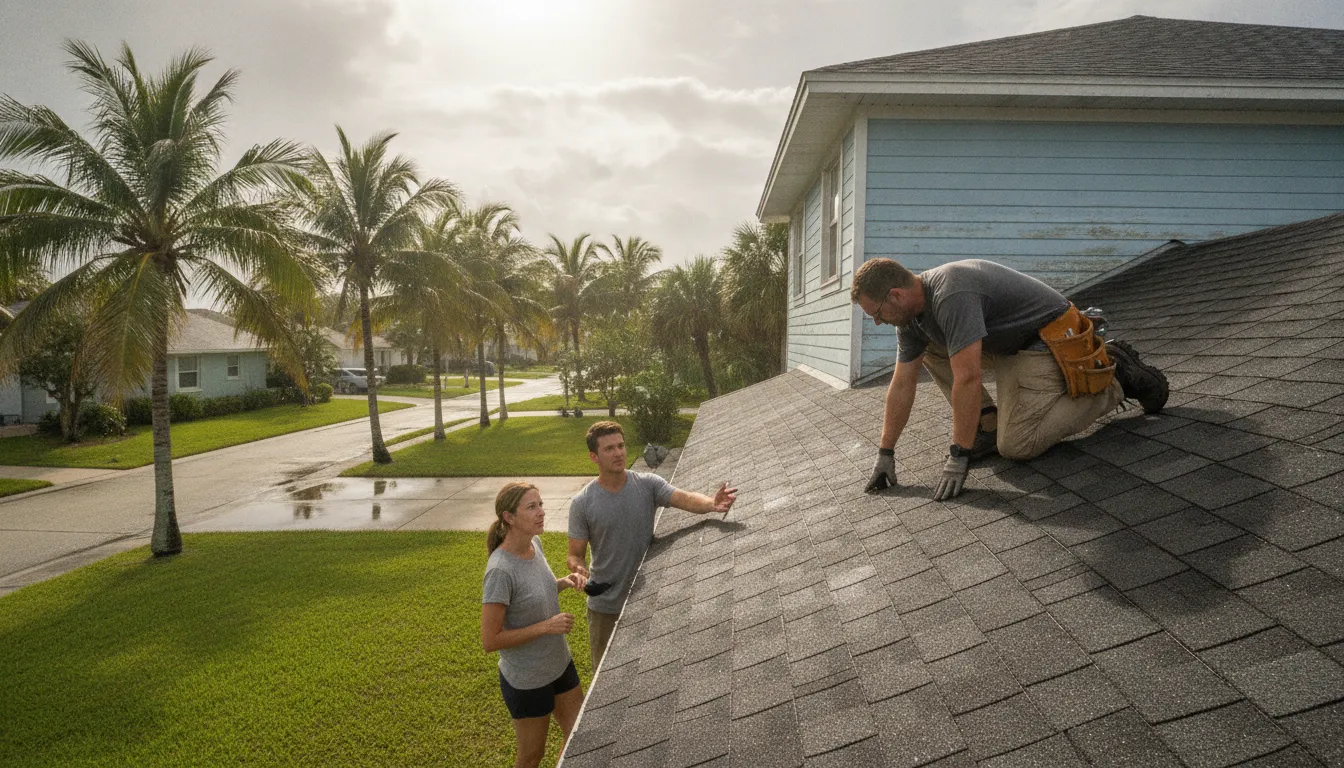
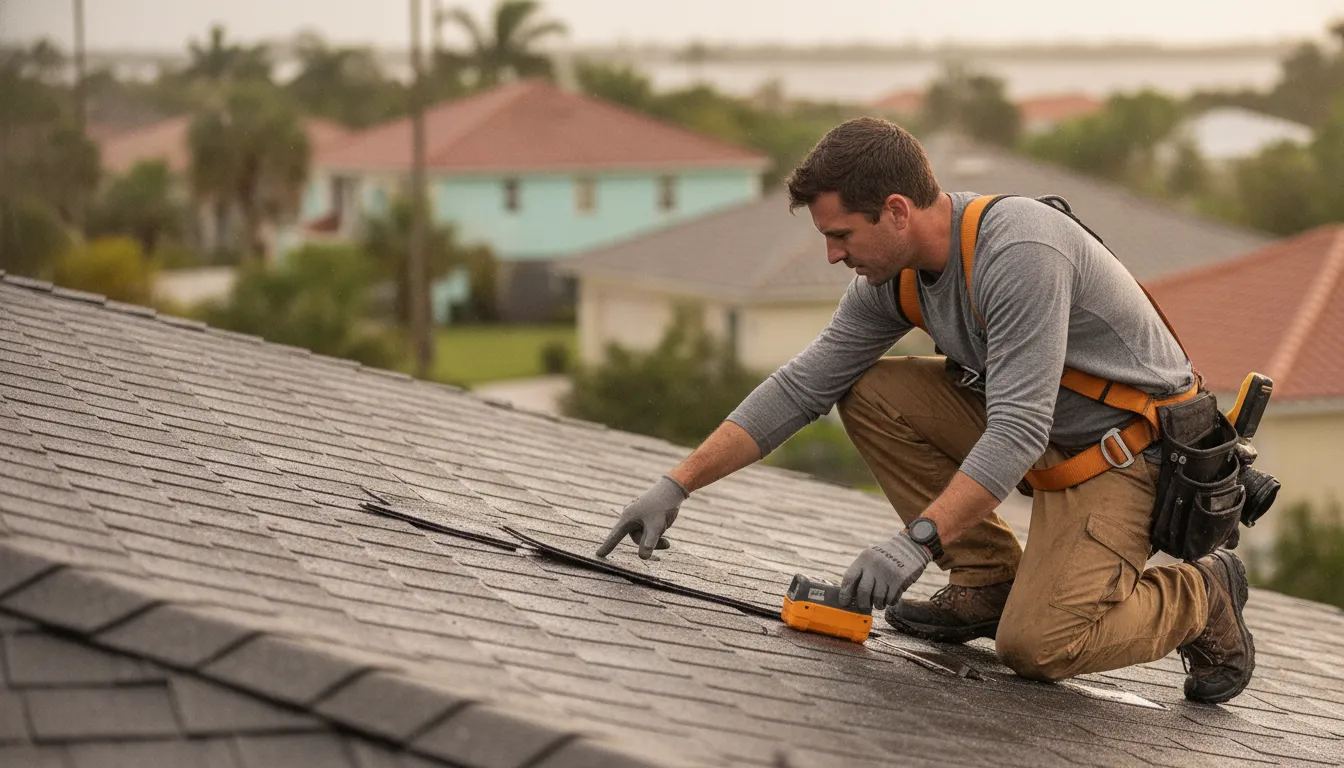
A professional inspection can distinguish a localized failure from broader deterioration. For dependable roofing services in St. Petersburg, have the flashing, valleys, pipe boots, drainage, shingles, and storm-related damage evaluated together rather than sealing only the visible drip. If water has already reached interior materials, timely disaster recovery services can help prevent secondary mold damage.
How to Identify Where a Roof Leak Is Coming From
The place where water drips is not always the place where it enters. In a St. Petersburg home, rainwater can travel along rafters, trusses, roof decking, or insulation before it reaches the ceiling. Use the following process to narrow down the entry point, but avoid walking on a wet or steep roof.
-
Start with the interior signs
Look for ceiling stains, bubbling or peeling paint, damp drywall, and musty odors. A brown ring may indicate an older leak, while a fresh, spreading stain suggests active moisture. Check rooms directly below the roof first, then inspect nearby areas because water may be moving sideways before it becomes visible.
-
Inspect the attic during or just after rain
If conditions are safe, enter the attic with a bright flashlight while rain is falling. Look above the stained area for dark trails on rafters, wet roof decking, compressed or damp insulation, and beads of water around nails. Mark the wettest point, but remember that the roof penetration may be several feet uphill from the drip location.
-
Check roof penetrations
Examine the areas around plumbing vents, exhaust vents, skylights, and chimneys. Look for cracked or deteriorated pipe boot seals, gaps, loose components, or water marks on the underside of the decking. These openings interrupt the roof surface and require carefully sealed transitions to keep St. Petersburg’s heavy rain outside.
-
Trace the path to flashing and valleys
Follow the water trail toward roof valleys and flashing where roof planes, walls, chimneys, or other materials meet. Look from the ground for lifted shingles, missing pieces, exposed fasteners, or debris, but do not climb onto the roof without proper safety equipment. Valleys carry concentrated runoff, so failed materials there can send water into a lower section of the attic.
-
Compare the timing and pattern
Note whether the leak appears only during wind-driven rain, after a long downpour, or even on dry days. A leak that begins after a storm may point to displaced roofing materials or damaged flashing. While a slow stain near a vent may indicate a seal that has gradually failed. Photos and notes help a roofing professional locate the source faster.
If the entry point remains unclear, stop probing and arrange a professional inspection. Finding the source is often more difficult than finding the drip, and opening the wrong section of ceiling or disturbing roofing materials can increase the damage.
Deciding If Roof Leak Repair St. Petersburg Is Worth It vs. Full Replacement
Repair is usually the right choice for a newer roof with one localized leak, while replacement often makes more sense when age. Widespread wear, or repeated failures point to a system nearing the end of its service life. A professional inspection can distinguish an isolated pipe boot or flashing problem from deterioration that extends beneath the visible shingles.
| Decision factor | Repair | Replacement |
|---|---|---|
| Typical cost | Pipe boot: $150-$400; shingle repair: $200-$600; flashing: $300-$800; valley repair: $400-$1,200. | Approximately $8,500-$35,000 or more, depending on roof size, material, complexity, and required deck work. |
| Timeline | Often completed in a single service visit when the damaged area is accessible and the roof remains sound. | Requires planning, material selection, tear-off or preparation, installation, and cleanup. The schedule depends on weather and project scope. |
| Roof age suitability | Best suited to roofs under 15 years old with localized damage and otherwise healthy shingles, flashing, and underlayment. | More appropriate for roofs around 15-25 years old or older when wear is widespread and repairs are becoming recurring expenses. |
| Number of leaks | A single leak, or one clearly defined failure point, generally supports targeted repair after the source is confirmed. | Three or more separate leaks within two years suggest that repeated patching may no longer be cost-effective. |
| Long-term value | Preserves a serviceable roof and avoids the larger upfront investment of replacement. | Resets the roof’s service life, improves system-wide reliability, and can reduce the disruption and expense of repeated emergency repairs. |
When a repair is the practical choice
Localized failures are common after heavy rain or a storm. A cracked pipe boot, a small flashing gap, one damaged shingle, or a limited valley defect can often be corrected without disturbing the entire roof. Repair makes the most sense when surrounding shingles still hold their granules, the roof deck is dry and sound, and water is not entering at multiple locations.
When replacement deserves serious consideration
Age alone does not automatically require a new roof, but it changes the financial calculation. On an older St. Petersburg roof, ultraviolet exposure, heat, humidity, and storm cycles can leave several components vulnerable at once. If inspections keep finding new leak sources, or the roof has needed three or more separate repairs in two years. Investing in a complete system may provide better long-term value than continuing to patch isolated symptoms.
A qualified roofer should document the leak locations, roof age, material condition, and any deck or underlayment damage before recommending either path. Review roofing services in St. Petersburg to learn how Go Time Roofing and Restoration evaluates repair and replacement needs.
Can You DIY a Roof Leak in Florida, or Should You Call a Professional?
Answer: Simple, ground-level maintenance may be appropriate for a careful homeowner, but roof access and structural repairs should be left to a licensed contractor. For roof leak repair St. Petersburg homeowners can trust, the safest choice is to match the repair to the roof’s height, material, slope, and damage level.
Florida roofs face intense sun, sudden downpours, high humidity, and storm debris. A repair that appears minor from inside the house may involve damaged flashing, underlayment, or roof decking beneath the visible stain. If you cannot identify the entry point confidently, stop at temporary water containment and arrange an inspection.
Repairs you may be able to handle safely
Stay on the ground or use a stable, properly positioned ladder only for low-risk maintenance. Cleaning leaves and debris from gutters can help prevent water from backing up under shingles during heavy rain. You may also seal a small, clearly visible flashing gap with roofing cement or install a boot collar over a cracked plumbing-vent boot. A basic boot collar commonly costs about $15 to $20 at a hardware store.
These measures are temporary or limited repairs, not a substitute for checking the surrounding roof system. Never work during rain, wind, or extreme heat, and do not climb onto a wet or damaged roof.
When professional roof repair is the safer choice
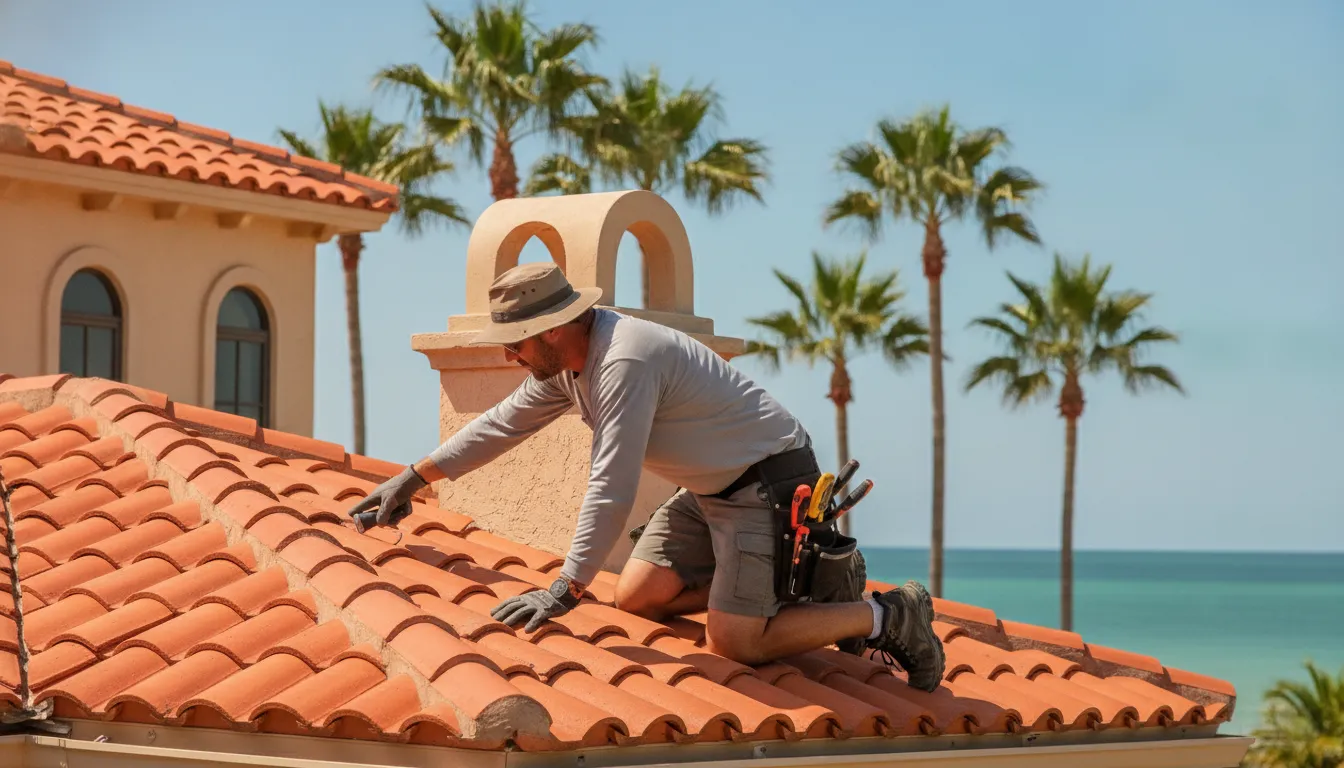
Call a licensed roofing contractor for roofs steeper than a 6/12 pitch, multi-story homes, valleys, flashing replacement, roof-deck damage, or any repair involving tile or metal roofing. Storm damage also deserves professional documentation, especially when an insurance claim may be involved. A contractor can distinguish repairable damage from hidden deterioration and document conditions before temporary patches obscure the evidence.
Falls from residential roofs cause thousands of injuries each year. The risk increases when homeowners carry tools, step across uneven surfaces, or misjudge a roof’s condition. Florida licensing rules also require a licensed contractor for covered work totaling more than $500 in labor and materials. When the job exceeds a quick maintenance task, a free inspection from Go Time can cost far less than a ladder-fall hospital visit.
What to Do When You Discover a Roof Leak in St. Petersburg
When you find an active leak, contain the water, document the damage, and arrange roof leak repair St. Petersburg homeowners can rely on as soon as possible. Florida’s heat and humidity can create conditions for mold growth within 24 to 48 hours, so a small drip should not be treated as a minor inconvenience.
1. Limit Interior Damage
Place buckets or other suitable containers beneath active drips, then move furniture, electronics, and rugs away from the affected area. If water is near light fixtures, outlets, or appliances, shut off power to that area only if you can do so safely. Do not climb onto a wet roof during rain or attempt a temporary repair from a ladder in high winds.
Cover valuable belongings with a tarp or plastic sheeting, but avoid trapping water against ceilings, walls, or flooring. If a ceiling is bulging, keep people out from underneath it and contact a professional promptly. A bulge can indicate pooled water and may fail without warning.
2. Document the Leak for Insurance
Take clear photos and video of the roof area if it can be viewed safely, as well as stained drywall, wet insulation, damaged flooring, and personal property. Record when you discovered the leak and note whether it followed heavy rain, wind, or a recent storm. Do not discard damaged materials before your insurer provides guidance, and keep receipts for reasonable emergency measures.
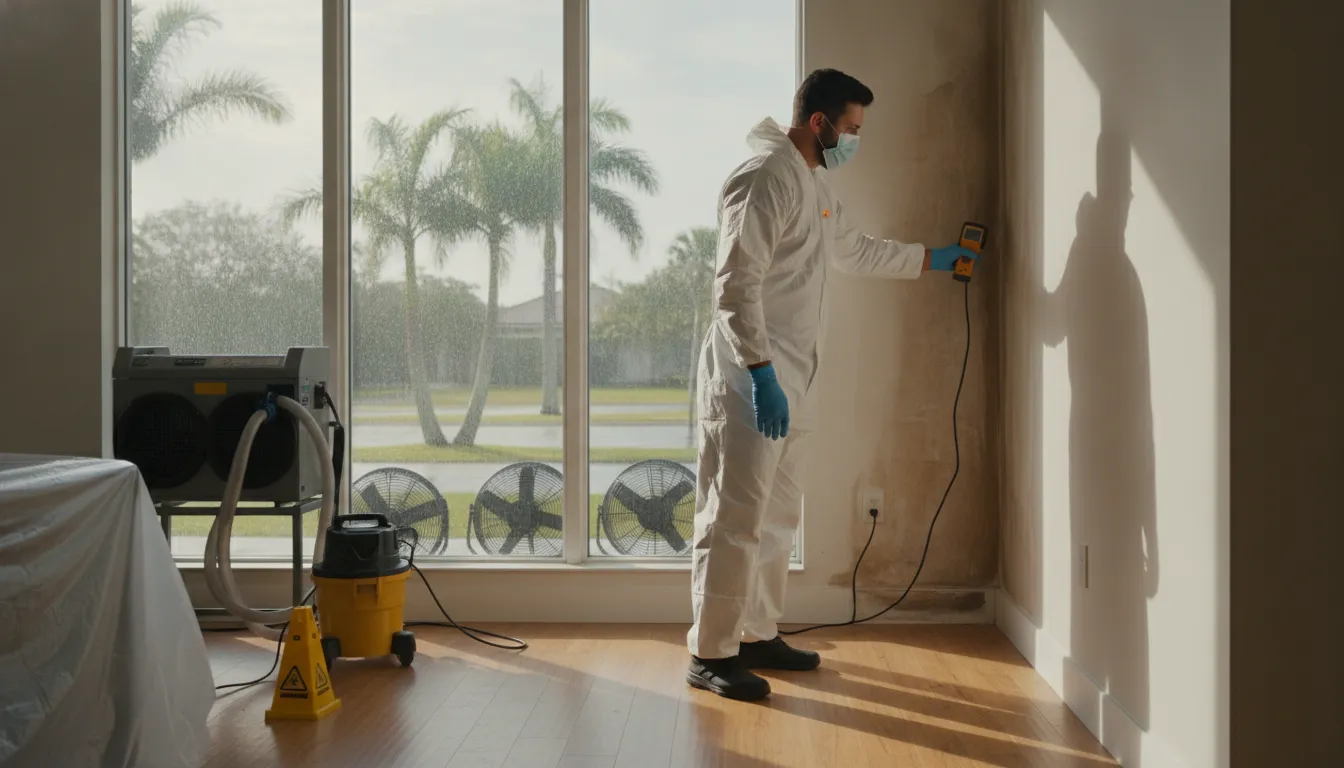
Roof damage and interior water damage may involve different parts of an insurance claim. If water has spread beyond the original leak, water damage restoration services can help address affected materials before moisture creates a larger problem. For confirmed microbial growth, use qualified mold remediation experts rather than attempting extensive removal yourself.
3. Call a Licensed Roofer
Arrange a professional assessment immediately, even if the dripping stops when the rain ends. Water can enter beneath shingles, flashing, or underlayment and remain hidden in the roof assembly. A licensed roofer can identify the entry point, make a safe temporary repair when appropriate, and explain whether permanent repair or broader restoration is needed. Contact Go Time Roofing and Restoration for a prompt evaluation.
Prevent Future Emergency Leaks
Pinellas County homeowners can reduce risk by scheduling an annual roof inspection and cleaning gutters before the rainy season, which typically runs from June through November. Trim branches that overhang the roof, keep attic ventilation functioning properly, and inspect pipe boots for cracking. Because Florida’s UV exposure can shorten rubber seal life, proactively replacing aging pipe boots around the 10-year mark can prevent avoidable leaks.
Frequently Asked Questions
How much does it usually cost to fix a roof leak in St. Petersburg?
Typical repair pricing depends on the failed component and the extent of hidden damage. A pipe boot repair may cost $150 to $400, shingle repairs often run $200 to $600. Flashing repairs may range from $300 to $800, and valley repairs can cost $400 to $1,200. These are planning ranges, not a quote; an inspection is needed to identify the source and condition of the roof.
Is roof leak repair covered by homeowners insurance in Florida?
Coverage depends on the cause, your policy, and the adjuster’s findings. Sudden damage from a covered wind event or storm may qualify, while deterioration, deferred maintenance, and normal wear are commonly excluded. Photograph the damage, protect the interior from additional water, and notify your insurer promptly before making permanent repairs.
Why is finding a roof leak source difficult?
The ceiling stain is not always directly below the entry point. Water can travel along roof decking, rafters, insulation, or other framing before it reaches the interior. A proper inspection checks penetrations such as vents and pipe boots, flashing, valleys, and the attic side of the roof rather than relying on the drip location alone.
How can I tell if my roof needs repair or a full replacement?
A localized leak on a relatively young roof may be repairable, especially when the issue is a single shingle, pipe boot, or flashing gap. Multiple leak locations, recurring failures, widespread granule loss, or a roof approaching 15 to 25 years generally warrant a replacement discussion. A professional assessment can distinguish an isolated defect from broader deterioration.
What should I do immediately after discovering a roof leak?
Place a container beneath the drip, move furniture and electronics, and use plastic sheeting to limit interior damage. Do not climb onto a wet or steep roof. Document ceiling stains, damaged belongings, and visible exterior damage for your insurer. Then arrange a prompt inspection because Florida humidity can create favorable mold conditions within 24 to 48 hours. Water damage restoration services may be appropriate when the leak has already affected interior materials.
Schedule a Roof Inspection in St. Petersburg
A professional inspection can help identify the source of a leak and clarify whether a focused repair or broader solution is appropriate for your home. Go Time Roofing and Restoration can review the roof conditions affecting your property and explain the next steps clearly. To schedule your free roof inspection, call (727) 361-6905.