After you’ve mopped up a spill or a leak, it’s tempting to think the problem is solved. But the water you can see is only a small part of the story. Moisture quickly seeps deep into your home’s structure, hiding in drywall, wood framing, and subfloors. This hidden water is what causes long-term damage. So, the question isn’t just about drying the surface; it’s about how long does structural drying take to remove the moisture you can’t see. This is where professional equipment and expertise become essential. We use a scientific process to pull moisture from the very bones of your house, preventing the kind of damage that leads to rot and the need for mold remediation.
Key Takeaways
- Structural drying is more than surface deep: True restoration targets moisture trapped within walls and floors, a critical step for preventing long-term issues like mold growth and structural decay.
- There is no single timeline for drying: The process can take anywhere from three to seven days or more, depending on the extent of the damage, the materials involved, and our humid Florida climate.
- Your first actions are critical: Before help arrives, prioritize safety, document the damage with photos for your insurance claim, and move any belongings you can to a dry, unaffected area.
What Is Structural Drying?
When you find water in your home, your first instinct is probably to grab every towel you own and maybe point a fan at the wet spot. While that’s a great first step, it often only addresses the surface. Structural drying is the professional process of removing moisture that has soaked deep into the building materials of your home, like the wood framing, drywall, insulation, and subfloors. Think of it as a science-backed method to dry your house from the inside out, tackling the water you can’t see.
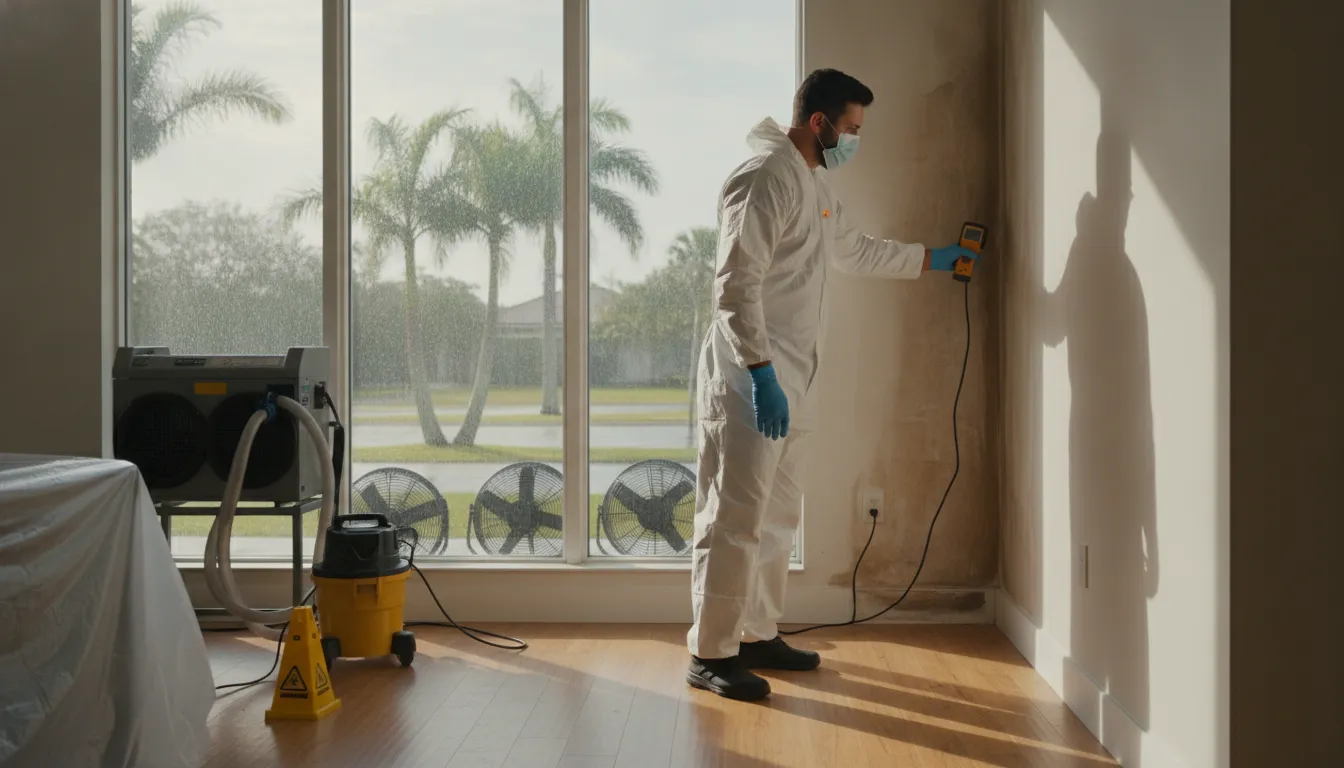
This isn’t just about making things feel dry to the touch. Professionals use specialized equipment like industrial-grade dehumidifiers, high-velocity air movers, and moisture meters to find and eliminate hidden water. The goal is to return the materials to their normal, pre-damage moisture content. Proper water damage restoration is a meticulous process because what you can’t see can cause the most harm. By thoroughly drying the entire structure, we prevent long-term problems that can be both costly and hazardous to your health. It’s the only way to ensure your home is truly safe and sound after a leak, flood, or storm, protecting your investment and your peace of mind.
Surface Drying vs. Structural Drying: What’s the Difference?
Surface drying is exactly what it sounds like: drying the visible surfaces in your home. It’s the mopping, wiping, and air-drying you do after a small spill. While helpful, it doesn’t address moisture that has seeped below the surface.
Structural drying, on the other hand, is a comprehensive approach. It targets the water trapped within walls, beneath flooring, and inside other building materials. We use advanced tools to measure moisture levels in these hidden areas and deploy equipment to pull that moisture out. It’s the difference between wiping down a damp wall and ensuring the studs and insulation inside are completely dry. Without it, you’re only solving half the problem.
Why Proper Drying Is Non-Negotiable After Water Damage
Skipping professional drying after water damage is a gamble you don’t want to take. The most immediate risk is mold. Damp, dark spaces inside your walls are the perfect breeding ground for mold, which can begin to grow in as little as 24 to 48 hours and can pose serious health risks. Our professional mold remediation services are often needed when drying is delayed.
Beyond mold, lingering moisture compromises your home’s structural integrity. Water weakens wood, causes drywall to crumble, and can lead to rot that jeopardizes the stability of your house. Even a seemingly small leak can cause significant, expensive problems over time if the moisture isn’t fully removed. Proper, thorough drying is essential to protect your property and your family.
What Determines the Structural Drying Timeline?
If you’re dealing with water damage, one of your first questions is probably, “How long will this take?” It’s a fair question, but the answer isn’t always simple. The time it takes to dry your home’s structure depends on a few key factors. Think of it less like a fixed schedule and more like a process that adapts to your specific situation. Understanding these variables can help you know what to expect as we work to get your home back to normal.
The Materials in Your Home (e.g., Drywall, Wood, Concrete)
Different materials absorb and release water at very different rates. Porous materials like drywall, carpet, insulation, and wood framing act like sponges, holding onto moisture for a long time. They require more focused drying efforts. On the other hand, less porous materials such as tile, concrete, or vinyl flooring tend to dry much faster because water mostly sits on the surface. The combination of materials affected in your home plays a significant role in creating a custom drying plan and timeline.
The Extent of the Water Damage
The amount of water you’re dealing with is another critical factor. A small leak from a supply line that was caught quickly will naturally take less time to dry than a room that was submerged after a pipe burst or a major storm. The more widespread the water and flood damage, the more time and equipment are needed to remove the moisture from every affected area. We have to consider not just the water you can see, but also the moisture that has seeped into subfloors, wall cavities, and other hidden spaces.
Florida’s Climate: Humidity and Temperature
Here in St. Petersburg, we know all about humidity. Florida’s climate, with its high humidity, can make the drying process more challenging. When there’s already a lot of moisture in the air, it’s harder for water to evaporate from wet materials. While our warm temperatures can help with evaporation, the humidity often works against us. This is why professional dehumidifiers are so essential; they pull that excess moisture directly out of the air, creating an environment where your home can actually dry out efficiently.
The Professional Equipment We Use
Using the right tools makes all the difference. While you could set up a few household fans, they simply can’t match the power of professional-grade equipment. We use high-velocity air movers to push air across wet surfaces, which speeds up evaporation. At the same time, powerful commercial dehumidifiers pull that newly evaporated moisture out of the air. This combination, along with precise moisture monitoring, allows us to accelerate the drying process safely and effectively, ensuring no hidden moisture is left behind to cause future problems.
How Long Does Structural Drying Take?
After you’ve found water in your home, one of the first questions you’ll have is, “How long will this take to fix?” It’s a completely valid question. You want your life and your home back to normal as quickly as possible. While there isn’t a single magic number, we can give you an honest, clear timeline based on the level of damage. The total time depends on what materials were affected (drywall versus concrete), how much water is involved, and even our humid Florida climate.
The goal of professional structural drying is not just to make things look dry. It’s to remove moisture from deep within your home’s structure to prevent long-term problems like wood rot and mold growth. Think of it this way: a puddle on the floor is easy to wipe up, but the water that soaked into the subfloor beneath it is a different story. Our process for water and flood damage restoration is designed to address both the visible and hidden moisture. Using specialized equipment, we create an environment that pulls water vapor out of materials like wood framing, insulation, and drywall. This is a scientific process, not a guessing game, and getting it right is the only way to truly restore your property. Below is a breakdown of what you can generally expect based on the severity of the situation.
Minor Damage: A Few Days
Let’s say you had a small leak from your washing machine hose that you caught right away, or a bathtub overflowed for a few minutes. This is typically considered minor damage. For these situations, the structural drying process usually takes about 3 to 5 days. You might be surprised it takes that long, especially if the surfaces feel dry to the touch after a day. However, moisture quickly seeps into porous materials like drywall, wood studs, and insulation. Our professional air movers and dehumidifiers need this time to circulate dry air and pull that hidden moisture out completely, ensuring no dampness is left behind to cause problems later.
Moderate Damage: Up to a Week
Now, imagine a pipe under your kitchen sink burst and ran for a few hours, or a heavy storm caused a noticeable roof leak that affected the ceiling and a wall. This would be considered moderate damage. In these cases, the drying timeline often extends to about 5 to 7 days. With more water involved, materials become more saturated. The water has had more time to soak deeper into your home’s structure, so our equipment needs to run longer to draw it all out. Rushing this step would be a huge mistake, as it could leave behind enough moisture to compromise your home’s structural integrity.
Severe Damage: A Week or More
Severe damage is what we see after major events like a coastal storm surge, widespread flooding, or a fire that was extinguished with thousands of gallons of water. In these scenarios, the structural drying process can easily take one to two weeks, and sometimes longer. When building materials are completely saturated for a prolonged period, the drying process becomes much more intensive. It’s a meticulous effort to save as much of the structure as possible and prevent a total loss. This extended timeline is absolutely critical to avoid widespread structural decay and the need for extensive mold remediation down the road.
Is the “3-Day Drying Rule” a Myth?
You may have heard that it takes about three days to dry out a property after water damage. It’s a common idea, but it’s also a myth. The truth is, there’s no standard timeline for structural drying. Every situation is unique, and the time it takes to dry everything properly depends on several key factors. The type of materials that got wet, how long they were exposed to water, and the drying methods used all play a huge role in the process. Thinking it’s a simple three-day job can unfortunately lead to bigger problems down the road.
Why Surface-Level Dry Isn’t Really Dry
When you run your hand over a wall or floor, it might feel dry to the touch. But that surface-level feeling can be deceiving. Moisture is excellent at hiding deep within materials like drywall, wood framing, and carpet padding. How long it takes to truly dry depends on what kind of materials are wet and how deeply the water soaked into them. Professional water damage restoration isn’t about just making things feel dry; it’s about reaching specific “drying goals.” These goals are target moisture levels that confirm a material is returned to its normal, pre-damage state, preventing issues like warping, rot, and mold.
The Limits of DIY Drying
After finding water damage, your first instinct might be to grab some towels and set up a few fans. While this is a good first step, it’s rarely enough to handle the entire job. The problem with a DIY approach is that you can’t see the moisture trapped beneath the surface. Professionals use specialized tools like moisture meters to find hidden water and track the drying process daily. They have the right equipment and knowledge to dry your building efficiently, prevent long-term damage, and make sure your home is safe again. Without this expertise, you risk leaving behind moisture that can lead to serious structural issues and mold growth.
Our Structural Drying Process, Step by Step
When you’re dealing with water in your home, you want to know that the team you hired has a solid plan. Guesswork just doesn’t cut it. At Go Time Restoration, we follow a proven, step-by-step process for every water damage restoration project to ensure we get every last drop of moisture out of your property. We believe in transparency, so we want you to understand exactly what we’re doing and why each step is so important for getting your home back to normal. This methodical approach is the key to preventing long-term issues like mold and structural weakness. It’s not just about drying what you can see; it’s about addressing the moisture you can’t. Here’s a look at how our licensed and insured team handles the structural drying process from start to finish.
Step 1: Assess the Damage and Map Moisture
The moment our team arrives, our first priority is to understand the full scope of the problem. We conduct a thorough assessment, going beyond what’s visible to the naked eye. Using specialized tools like thermal imaging cameras and moisture meters, we map out exactly where the water has traveled. This allows us to see moisture hidden behind walls, under floors, and in ceilings. This “moisture mapping” creates a detailed blueprint for our drying strategy. It tells us which materials are affected and how saturated they are, allowing us to create a customized and efficient plan to dry your specific structure.
Step 2: Extract Standing Water
Before we can begin drying the structure itself, we have to remove any standing water. The faster we get this water out, the less time it has to seep deeper into your floors, walls, and furniture. Our team uses powerful, truck-mounted and portable extraction units to pump out water quickly and effectively. This equipment is far more powerful than any shop vac or consumer-grade tool. Removing the bulk of the water right away is a critical first step that immediately stops the damage from getting worse and sets the stage for the next phase of drying.
Step 3: Set Up Dehumidifiers and Air Movers
Once the standing water is gone, we tackle the moisture that has been absorbed into your home’s materials. This is where our professional-grade equipment really shines. We strategically place high-velocity air movers to sweep across wet surfaces like floors, walls, and carpets. This airflow accelerates evaporation, pulling moisture from the materials and releasing it into the air as vapor. At the same time, our powerful dehumidifiers work to pull that moisture out of the air. This powerful combination is a core part of our disaster recovery services and creates an optimal drying environment, removing moisture much faster than air drying alone ever could.
Step 4: Monitor Progress and Make Adjustments
Structural drying is a science, not a guessing game. We don’t just set up the equipment and hope for the best. Our technicians return to your property regularly, often daily, to monitor the drying process. We use our moisture meters to track the moisture content of the affected materials and check the humidity levels in the air. This constant monitoring allows us to see what’s working and make any necessary adjustments. We might reposition air movers, adjust dehumidifier settings, or bring in additional equipment to target stubborn spots, ensuring the drying process is as efficient and effective as possible.
Step 5: Confirm Everything Is Dry
Our job isn’t finished until your home is truly dry. “Dry to the touch” is not good enough for us. In this final step, we use our moisture meters one last time to verify that all affected materials have returned to their normal, pre-damage moisture levels. This scientific confirmation is your assurance that the job is done right and that the risk of secondary damage, like mold growth, has been eliminated. Only when we can confirm the structure is completely and properly dry will we remove our equipment, giving you the peace of mind to move forward with any necessary repairs. If you need help, don’t hesitate to contact us.
What Happens If You Skip Professional Drying?
After dealing with a leak or flood, it’s tempting to think that once the visible water is gone, the problem is solved. You might run a few fans, open the windows, and call it a day. Unfortunately, skipping a professional drying process is one of the biggest mistakes you can make. What you can’t see can cause the most harm, leading to expensive and hazardous problems that could have been easily prevented. Think of it as an investment in your home’s health and your peace of mind. Proper drying isn’t just about removing puddles; it’s about eliminating the hidden moisture that seeps into your home’s very structure. Ignoring this crucial step can set off a chain reaction of damage that unfolds over weeks, months, or even years.
The Risk of Mold Growth
One of the most immediate and dangerous consequences of trapped moisture is mold. In Florida’s humid climate, mold can begin to grow in as little as 24 to 48 hours. It thrives in damp, dark places that you can’t see, like the space behind your drywall, under your flooring, or within your insulation. This isn’t just an unsightly problem; it’s a health hazard. Mold releases spores into the air that can trigger allergies, asthma attacks, and other respiratory issues. If you notice a persistent musty smell or your family starts experiencing unexplained health problems after water damage, hidden mold is a likely culprit. Professional mold remediation is often necessary to safely remove it and address the source of the moisture.
Damage to Your Home’s Structure
Water is incredibly destructive to the materials that hold your home together. When moisture is left to linger, it can cause serious structural damage. Wood framing can rot and lose its strength, drywall can swell and crumble, and subfloors can warp and become unstable. Over time, this can compromise the integrity of your entire home. What started as a simple leak could eventually lead to sagging ceilings, weakened floors, or even foundational issues. Professional structural drying removes moisture from these core materials, halting the damage before it becomes a threat to your home’s stability and your family’s safety. This is a critical part of any complete water damage restoration plan.
Lasting Damage from Hidden Moisture
Even if you manage to avoid major structural issues or widespread mold, hidden moisture creates its own set of persistent problems. Trapped water can cause paint to peel, wallpaper to bubble, and wood floors to cup or buckle. It can also lead to stubborn, musty odors that never seem to go away, no matter how much you clean. These issues not only decrease your enjoyment of your home but also hurt its resale value. DIY drying methods simply can’t reach the moisture trapped deep within building materials. Professionals use specialized meters to find these hidden wet spots and targeted equipment to ensure every last bit of moisture is gone, protecting your home from long-term cosmetic and functional damage.
What to Do Right After You Find Water Damage
Discovering water damage in your home can feel overwhelming, but what you do in the first few hours is critical. Taking immediate, calculated steps can prevent the problem from getting worse, protect your belongings, and make the restoration process smoother. Before our team arrives, there are a few things you can do to take control of the situation and set the stage for a successful recovery. Think of it as first aid for your home; your quick thinking can make all the difference.
Your First Steps Before Help Arrives
First, prioritize safety. If water is near electrical outlets or appliances, shut off the power at the breaker box, but only if you can do so without stepping in water. If you know where the source of the water is, like a burst pipe, turn off your home’s main water valve. Once the immediate area is safe, your next call should be to a professional. Getting an expert assessment quickly is the best way to prevent bigger problems down the line. While you wait, you can start removing smaller items from the affected area and use mops or towels to soak up excess water on hard surfaces. For significant standing water, it’s best to wait for our team and our professional-grade pumps.
How to Document Damage and Protect Your Belongings
While you wait for help, grab your phone and start documenting everything. Your insurance company will need proof of the damage to process your claim, and detailed records help our team understand the scope of the work. Take photos and videos of the affected areas, capturing both wide shots and close-ups of the damage. Make a list of any items that have been damaged, from furniture to electronics. As you document, move what you can. Get furniture, rugs, and personal belongings to a dry spot. For heavy furniture you can’t move, place a small piece of aluminum foil under the legs to prevent the finish from staining your carpet.
Why Acting Fast Helps Your Insurance Claim
Moving quickly isn’t just about preventing mold; it’s also crucial for your insurance claim. Most policies require you to take reasonable steps to mitigate further damage. By calling for professional water damage restoration and taking these initial steps, you’re showing your insurer that you’re a responsible homeowner. Delaying repairs can lead to secondary issues like structural rot or widespread mold growth, which can complicate your claim and potentially lead to denials. Acting fast protects your home’s value and gives you the best chance of having your restoration costs covered.
Get Expert Structural Drying in St. Petersburg
When your home is hit with water damage, getting it dry as quickly as possible is the top priority. The speed and thoroughness of the drying process are what stand between you and bigger problems, like aggressive mold growth and lasting structural issues. While every situation is unique, professional structural drying typically takes about three to five days.
Of course, that timeline can shift. According to restoration industry experts, factors like the amount of water and the types of materials affected play a big role. A small leak might be handled in just a day or two, whereas a major flood could require a week or more to fully dry out. This is why professional intervention is so critical. Our team uses powerful, commercial-grade equipment like industrial dehumidifiers and high-velocity air movers that you simply can’t rent at a local hardware store. This technology dramatically speeds up evaporation and removes moisture from the air.
More importantly, we don’t just guess when things are dry. We use specialized moisture meters to take daily readings, ensuring that your home’s materials are returned to safe, stable moisture levels. In a humid climate like ours in St. Petersburg, this scientific approach is non-negotiable. Choosing a qualified team for water damage restoration ensures the job is done right, protecting your property and your peace of mind.
Related Articles
- Water Damage Restoration: Your Guide to DIY vs. Pro
- Fast Water Damage Restoration St Petersburg FL | Go Time
Frequently Asked Questions
Can I just use my own fans to dry out water damage? While setting up your own fans is a good immediate step, it’s rarely enough to prevent long-term problems. Household fans only move air across the surface. Our professional equipment, which includes high-velocity air movers and commercial dehumidifiers, creates a powerful drying system. This system pulls deep-seated moisture out of materials like drywall and wood framing and then removes that moisture from the air, which is something your fans can’t do alone.
How do you know when my walls and floors are completely dry? We rely on science, not guesswork. A surface that feels dry to the touch can still hold a dangerous amount of moisture inside. We use professional moisture meters to take specific readings from the affected materials, like your drywall, subfloor, and wood studs. We monitor these readings daily and only consider the job done when the materials have returned to their normal, pre-damage moisture content.
Will I have to move out of my house during the structural drying process? This really depends on the extent and location of the damage. For a small, contained area, you can often live in the home while we work. However, for more severe damage or if the affected area is a critical space like your only kitchen or bathroom, it might be more comfortable or necessary to stay elsewhere. We can help you assess the situation and make the best decision for your family’s safety and comfort.
What’s the biggest risk if I wait to call someone? Time is the most critical factor. The biggest risk of waiting is mold growth, which can start in as little as 24 hours in Florida’s humid climate. Beyond the health concerns of mold, delaying also allows water to soak deeper into your home’s structure, turning a manageable problem into a major one that could cause wood to rot, drywall to crumble, and floors to warp.
The water was cleaned up hours ago. Why do I still need professional help? Cleaning up the visible water is only the first step. The real challenge is the water you can’t see, which has already soaked into your flooring, drywall, and insulation. This hidden moisture is what leads to mold and structural damage. Our job is to find and eliminate that trapped moisture, ensuring your home is truly dry from the inside out and protecting you from future problems.