AC Leak Water Damage Florida: Cleanup and Prevention Guide
When an air conditioner leaks inside a Florida home, the water can move faster than it looks. A clogged drain line, overflowing air handler pan, or attic AC leak can soak drywall, insulation, flooring, and framing before you see a stain. AC leak water damage Florida homeowners face is especially risky because warm, humid air makes hidden moisture harder to dry and easier for mold to develop.
Need help now? Contact Go Time Roofing and Restoration for water damage restoration in St. Petersburg before hidden moisture spreads.
This guide explains what to do first, how to reduce damage safely, what not to overlook, and when professional moisture mapping is needed. It is written for homeowners in St. Petersburg, Pinellas County, and other Florida communities where air conditioners run for much of the year.
Why AC Leaks Cause Serious Water Damage in Florida
Air conditioners remove humidity from indoor air. That moisture collects as condensate and should drain through a PVC line to the outside of the home. When the drain line clogs, the pan rusts, the float switch fails, or a connection separates, that water can overflow into the home instead.
In Florida, AC systems often run daily for long stretches. A small overflow can become a steady source of water. If the unit is in an attic, closet, hallway, garage, or above a finished ceiling, the leak may travel through insulation and drywall before anyone notices it. By the time a ceiling stain appears, water may already be trapped above the visible surface.
The biggest problem is not only the water you can wipe up. It is the moisture that remains inside porous materials. Drywall paper, wood trim, engineered flooring, carpet padding, and insulation can hold moisture even when the surface feels dry. That is why a quick towel cleanup is often not enough after an AC leak.
Common Causes of Air Conditioner Water Leaks
Most AC water damage starts with a drainage problem. Knowing the likely source helps you explain the situation to an HVAC technician and a restoration company.
Clogged condensate drain line
The condensate drain line can clog with algae, dust, sludge, and debris. When water cannot leave the system, it backs up into the drain pan and can overflow. This is one of the most common causes of AC leaks in humid climates.
Damaged or rusted drain pan
Older drain pans can rust, crack, or shift out of position. When that happens, water may drip directly onto the ceiling, into a closet, or onto flooring below the unit.
Disconnected or loose drain line
Vibration, age, poor installation, or maintenance work can loosen a drain line connection. A disconnected line can release water into a wall cavity or attic space instead of draining outside.
Frozen evaporator coil
A dirty filter, low refrigerant, or airflow problem can cause the evaporator coil to freeze. When it thaws, excess water can overwhelm the drain pan and surrounding materials.
Attic air handler overflow
Attic units are a major concern because leaks often start above ceilings. Water can soak insulation, spread across drywall, and create sagging or staining before the source is obvious.
What Should You Do First When Your AC Leaks?
Move quickly, but do not put yourself at risk. Water and electricity can be a dangerous combination, and wet ceilings can fail without much warning.
- Turn off the AC system. Use the thermostat first. If water is near electrical components, avoid touching wet equipment and turn power off at the breaker only if you can do so safely.
- Stop using the affected area. Keep children and pets away from wet flooring, sagging drywall, and any area where water is close to outlets, switches, or light fixtures.
- Place a container under active dripping. If water is dripping from a ceiling, collect what you can, but do not poke holes in the ceiling unless a qualified professional tells you it is safe.
- Move furniture and belongings. Relocate rugs, boxes, electronics, and upholstered items away from the wet area.
- Document the damage. Take photos and short videos of the AC unit, ceiling stains, wet floors, damaged belongings, and visible water before major cleanup begins.
- Call the right professionals. An HVAC contractor fixes the AC problem. A restoration team dries and documents the water damage.
For more general emergency steps, see Go Time’s guide on emergency water damage repair.
Why Surface Drying Is Not Enough
After an AC leak, many homeowners wipe the floor, run a fan, and assume the problem is handled. That may work for a very small spill on a hard, nonporous surface. It is not reliable when water reaches drywall, baseboards, carpet padding, laminate, wood, cabinets, or insulation.
Water follows gravity, seams, fasteners, and gaps. It can run behind baseboards, under floating floors, into subfloors, and along ceiling framing. The visible stain may be only the edge of the affected area.
Household fans can dry the surface while leaving moisture inside the assembly. That creates a false sense of progress. In Florida’s humidity, building materials can also pull moisture from the air while they are trying to dry. If indoor humidity is not controlled, the drying process can stall.
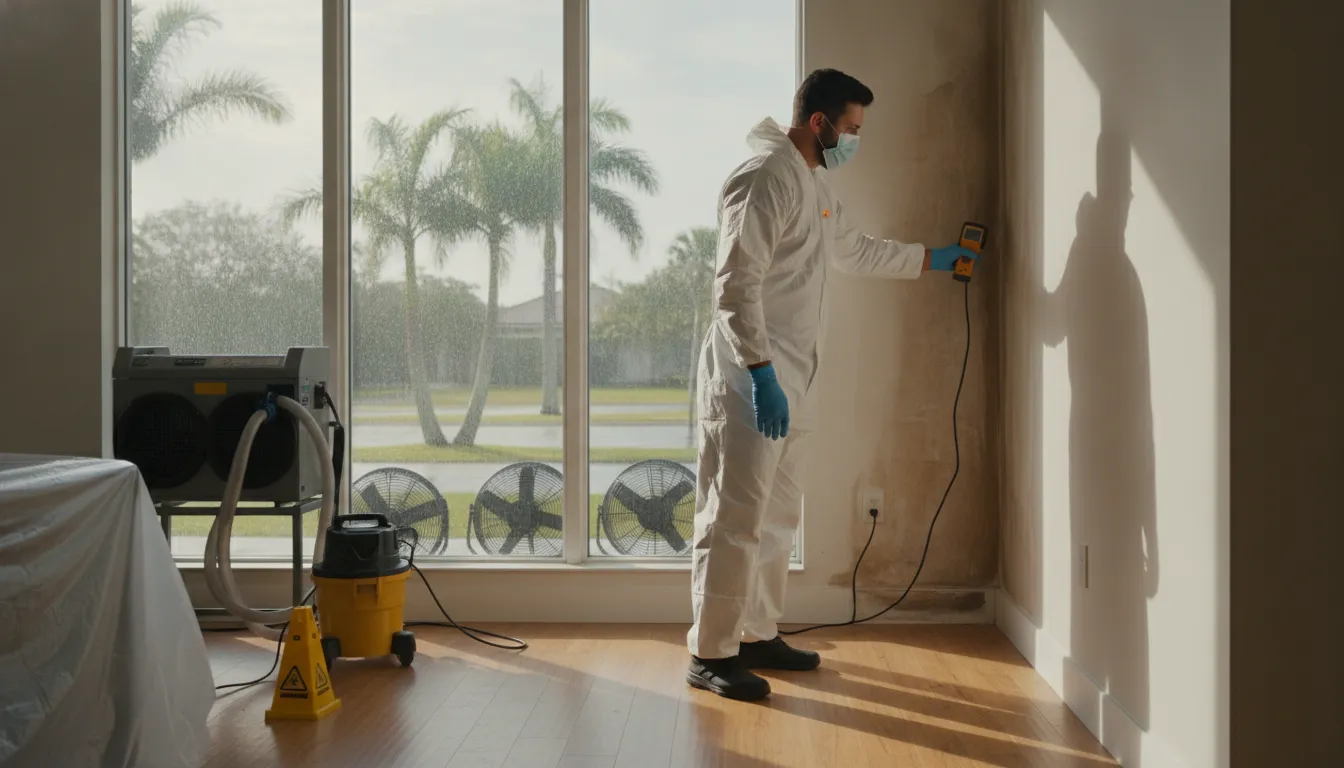
Professional structural drying uses air movement, dehumidification, moisture meters, and monitoring. The goal is not just to make the room look dry. The goal is to return materials to acceptable moisture levels and confirm that hidden wet areas are not being missed. Go Time explains this process in more detail in how long structural drying takes.
Signs AC Leak Water Has Spread Behind the Surface
Call for help if you notice any of these warning signs after an air conditioner leak:
- Yellow, brown, or gray ceiling stains near the air handler or vents
- Drywall that feels soft, swollen, bubbled, or crumbly
- Paint that blisters, peels, or separates from the wall
- Baseboards pulling away from the wall
- Laminate, wood, or vinyl flooring that cups, buckles, or feels spongy
- Carpet that stays damp or smells musty after cleanup
- Insulation that is wet, compressed, or falling from an attic area
- Musty odors when the AC runs
- Repeated stains that return after being painted
These signs suggest water may be trapped in materials that need professional evaluation. If the leak happened while you were away, if you do not know how long it ran, or if water entered more than one room, assume the affected area is larger than it appears.
When Is Professional Moisture Mapping Needed?
Moisture mapping is the process of checking where water traveled and how wet affected materials are. A restoration technician uses tools such as moisture meters, thermal imaging, and hygrometers to locate hidden moisture and track drying progress.
Professional moisture mapping is especially important when:
- The AC unit is in the attic or above finished living space
- Water dripped through a ceiling or light fixture
- Drywall, flooring, carpet padding, cabinets, or insulation got wet
- The leak may have been active for more than a few hours
- You smell musty odors after the area appears dry
- The home has previous water damage or mold history
- You need documentation for an insurance claim
Moisture mapping gives homeowners a clearer answer than guesswork. It helps determine what can be dried in place, what may need removal, and whether drying equipment is working. It also creates a record of the affected areas, which can be helpful if an insurance adjuster asks for documentation.
If an AC leak reached ceilings, walls, or flooring, schedule a professional moisture check with Go Time Roofing and Restoration before repairs cover up the problem.
How Mold Can Develop After an AC Leak
Mold risk rises when moisture remains in warm, poorly ventilated spaces. Florida homes already deal with high humidity, so an AC leak can create ideal conditions behind drywall, under flooring, above ceilings, or inside insulation.
Mold does not always appear as a visible patch right away. A musty smell, recurring allergy symptoms indoors, or discoloration near vents and ceiling stains can be early clues. If wet materials are closed up before they dry, mold can spread inside cavities where it is harder and more expensive to address.
The safest approach is to dry the structure correctly and respond quickly to suspected growth. If mold is already present, cleanup should follow proper containment and remediation practices. Learn more from Go Time’s guide to mold growth after water damage and the company’s mold remediation services.
What Homeowners Should Not Do After an AC Leak
Some common reactions can make damage worse or create safety problems. Avoid these mistakes:
- Do not restart the AC before the leak source is fixed. The system may continue producing water and worsen the damage.
- Do not paint over a ceiling stain. Paint hides the symptom, not the moisture source.
- Do not rely only on a box fan. Fans without dehumidification can move humid air around without drying hidden materials.
- Do not remove wet materials without documentation. Photos, videos, and moisture readings can matter for insurance conversations.
- Do not ignore a small stain. A small stain under an attic unit can point to a larger wet area above the ceiling.
- Do not treat suspected mold with casual spraying. Disturbing contaminated materials without containment can spread particles through the home.
If you are unsure whether the damage is minor or serious, use the safer assumption. Get the moisture checked before closing the ceiling, reinstalling baseboards, or replacing flooring.
Prevention Tips for Florida AC Leak Water Damage
Not every AC leak can be prevented, but regular maintenance can reduce the risk of a surprise water loss.
- Change filters regularly. Restricted airflow can contribute to coil freezing and drainage problems.
- Check the drain line outlet. When the AC is running, look for steady drainage from the exterior condensate line.
- Flush the condensate line as recommended by your HVAC professional. Many Florida homes need routine drain line maintenance because algae grows quickly in warm conditions.
- Inspect the drain pan. Look for rust, standing water, cracks, or debris around the air handler.
- Install or test a float switch. A float switch can shut the system off when water rises in the pan.
- Schedule HVAC maintenance before peak heat. A technician can check drainage, coils, airflow, and safety switches.
- Watch attic units closely. If your air handler sits above living space, inspect nearby ceilings and attic areas after heavy AC use.
- Keep humidity under control. If indoor humidity stays high, drying takes longer and mold risk increases.
Prevention is a combination of HVAC maintenance and quick restoration response. The HVAC repair stops the leak. Restoration work addresses the water that already escaped.
Will Insurance Cover Water Damage From an AC Leak?
Coverage depends on your policy, the cause of the leak, how long the damage continued, and whether the loss is considered sudden and accidental. Some policies may treat a sudden overflow differently from long-term neglect or repeated leakage.
Because insurance rules vary, document everything and contact your insurance carrier directly. Photos, videos, repair invoices, drying logs, and moisture readings can help show what happened and what work was needed. A restoration company can provide documentation, but your insurer decides coverage based on your policy.
Do not wait for claim approval before taking reasonable steps to stop ongoing damage. Most homeowners are expected to prevent additional damage when it is safe to do so. Turning off the AC, moving belongings, and calling qualified help are practical first steps.
How Go Time Helps With AC Leak Water Damage
Go Time Roofing and Restoration serves St. Petersburg and Pinellas County with water damage restoration, structural drying, mold remediation, and related property recovery services. The team brings a local understanding of Florida humidity, storm season, and the way water moves through homes in this climate.
For AC leak water damage, a professional response may include:
- Inspecting affected rooms and nearby hidden areas
- Moisture mapping ceilings, walls, flooring, and trim
- Setting drying equipment where needed
- Monitoring moisture levels during the drying process
- Documenting damage for the homeowner’s records
- Identifying when mold remediation may be needed
- Coordinating restoration steps after the AC source is repaired
That combined approach matters because AC leaks are rarely only an HVAC issue. The equipment failure may be simple, but the water damage can affect building materials long after the drain line is cleared.
For AC leak water damage in Florida, especially in St. Petersburg or Pinellas County, request water damage cleanup from Go Time Roofing and Restoration and get the hidden moisture checked.
Frequently Asked Questions About AC Leak Water Damage
Is a leaking AC an emergency?
It can be. If water is dripping through a ceiling, reaching electrical components, soaking flooring, or spreading into walls, treat it as urgent. Turn off the system and call for help.
Can I dry AC water damage myself?
You may be able to clean a small amount of water from a hard surface if it is caught immediately. If drywall, flooring, carpet padding, cabinets, or insulation got wet, professional drying and moisture checks are safer.
How fast can mold grow after an AC leak?
Mold risk can increase within 24 to 48 hours when materials stay wet, especially in Florida humidity. Hidden moisture behind walls or ceilings can keep the risk active even after the surface looks dry.
Who should I call first, HVAC or water damage restoration?
If water is actively leaking from the AC system, call an HVAC professional to repair the source and a restoration company to address the water damage. Both roles matter.
Should wet drywall always be removed?
Not always. The answer depends on how wet it is, how long it has been wet, whether insulation is affected, and whether contamination or mold is present. Moisture mapping helps guide that decision.
Do Not Let an AC Leak Hide in Your Home
An AC leak may start with a small drip, but in a Florida home it can quickly become ceiling damage, flooring damage, and a mold concern. The safest response is to stop the system, protect the area, document the damage, repair the AC source, and verify that the structure is actually dry.
If the leak affected ceilings, walls, floors, or insulation, do not rely on appearance alone. Go Time Roofing and Restoration can help identify hidden moisture, dry affected areas, and guide the next steps for recovery.