Mold Inspection vs Mold Remediation in Florida
When you find a musty smell, ceiling stain, or suspicious growth after a leak, the first question is usually not “what type of mold is this?” It is “who do I call first?” Understanding mold inspection vs mold remediation Florida homeowners deal with can save time, reduce confusion, and help you avoid hiring the wrong provider for the wrong step.
Need help with a confirmed mold problem in Pinellas County? Request a free mold remediation assessment from Go Time Roofing & Restoration and get clear next steps for containment, removal, drying, and repair.
In simple terms, a mold inspection or assessment identifies whether mold is present, where moisture is coming from, and how far the issue may extend. Mold remediation is the controlled cleanup and removal process that addresses contaminated materials, protects the rest of the home, and corrects the moisture conditions that allowed growth in the first place.
Florida homeowners need to understand the difference because our humid climate, storm exposure, slab leaks, roof leaks, and HVAC condensation can turn a small moisture issue into a larger indoor air concern quickly. The right sequence matters. Inspection helps define the problem. Remediation solves the problem. Post-remediation verification helps confirm the work was successful.
Quick Answer: What Is the Difference Between Mold Inspection and Mold Remediation?
A mold inspection, often called a mold assessment in Florida licensing language, is the diagnostic step. A qualified assessor looks for visible mold, moisture intrusion, damp building materials, odor sources, and areas that may need air or surface sampling. The goal is to determine whether mold is present, how widespread it is, and what scope of work is needed.
Mold remediation is the corrective step. A licensed remediation team contains the affected area, uses HEPA filtration and negative air pressure when appropriate, removes contaminated porous materials, cleans salvageable surfaces, dries the structure, applies proper treatments, and repairs or coordinates repair of affected materials.
| Service | Main purpose | Typical deliverable | Who usually needs it? |
|---|---|---|---|
| Mold inspection or assessment | Find and document the problem | Findings, testing results if performed, and a recommended scope | Homeowners who suspect mold, need documentation, or want independent confirmation |
| Mold remediation | Remove mold contamination and correct moisture conditions | Containment, removal, cleaning, drying, repair steps, and final walkthrough | Homeowners with confirmed mold, visible growth, water damage, or contaminated materials |
| Post-remediation verification | Confirm cleanup goals were met | Visual review and sometimes clearance testing | Homeowners, buyers, sellers, landlords, and insurance-related projects |
The simplest way to think about it is this: inspection answers “what is happening and where?” Remediation answers “how do we safely fix it?”
Why the Difference Matters More in Florida Homes
Florida homes face mold risk from two directions at once: sudden water events and constant humidity. A roof leak after a storm, a burst supply line, a slow plumbing drip, or an air conditioning issue can introduce moisture. Then the local climate can keep materials damp long enough for mold to grow.
The Florida Department of Health explains that controlling moisture is the key to stopping indoor mold growth because mold requires water to grow. It also notes that common molds can take hold when water stands for even 24 hours, and recommends drying wet building materials and carpets within 24 hours when possible.
That timeline matters after a tropical storm, wind-driven rain event, appliance overflow, or hidden leak. A homeowner may only see a small stain while moisture is spreading behind drywall, under baseboards, or inside a cabinet. An inspection can help locate the moisture path. Remediation can then address the contaminated materials and the moisture source rather than only wiping the surface.
Go Time Roofing & Restoration works in St. Petersburg and Pinellas County, where high humidity, older housing stock, storm exposure, and coastal conditions create recurring mold challenges. That local context affects how quickly you should act and how thorough the cleanup plan should be.
What Happens During a Mold Inspection or Assessment?
A mold inspection is not just someone looking at a stain and guessing. A proper assessment is a fact-finding process that looks for visible growth, moisture sources, building material damage, odors, and conditions that could support hidden mold.
Depending on the situation, an inspection may include:
- Visual review of affected rooms, adjacent areas, attic spaces, closets, cabinetry, and HVAC-related areas.
- Moisture readings with meters to check drywall, flooring, trim, and other materials.
- Thermal imaging to identify temperature differences that may point to hidden moisture.
- Air or surface samples when testing is needed for documentation or uncertainty.
- Review of recent leaks, storm damage, roof problems, plumbing failures, or humidity issues.
- A written scope or recommendation explaining whether remediation is needed.
Testing is not always required for every visible mold situation, but it can be useful when the source is unclear, symptoms are a concern, a real estate transaction is involved, or an insurance carrier requests documentation. The important part is that the inspection should help define the scope before cleanup begins.
Go Time notes on its mold remediation page that it works closely with certified professionals when mold testing or independent inspection is needed. Once the problem is identified, Go Time focuses on safe, effective remediation using containment, source control, HEPA air scrubbing, cleanup, and restoration.
What Happens During Mold Remediation?
Mold remediation is a controlled process, not a general housecleaning task. The goal is to remove mold-contaminated materials, keep spores from spreading into clean areas, correct the moisture issue, and return the affected space to a safer condition.
For a typical Florida home, a professional remediation process may include:
- Initial call and free assessment. The team learns what happened, checks urgency, and identifies immediate safety or moisture concerns.
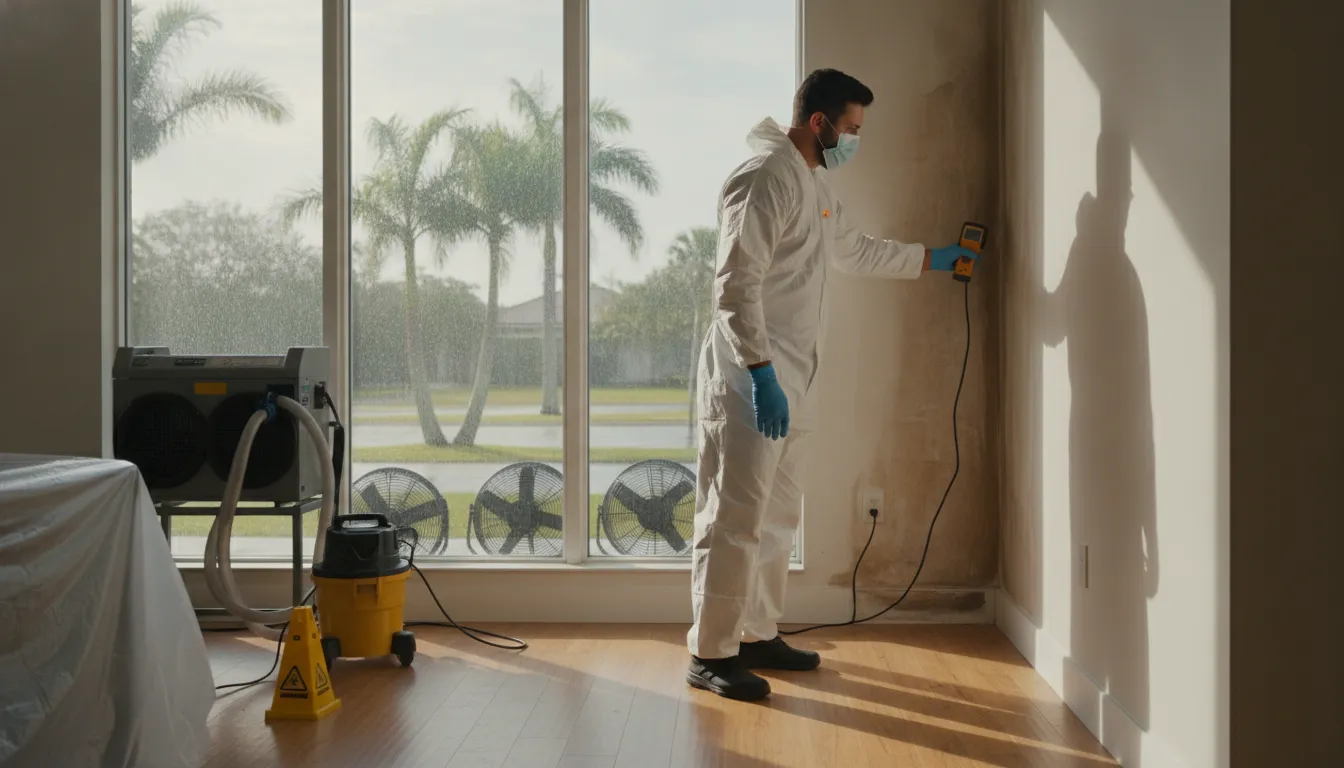
- Inspection and moisture mapping. Technicians use moisture meters and thermal imaging to understand how far water or dampness traveled.
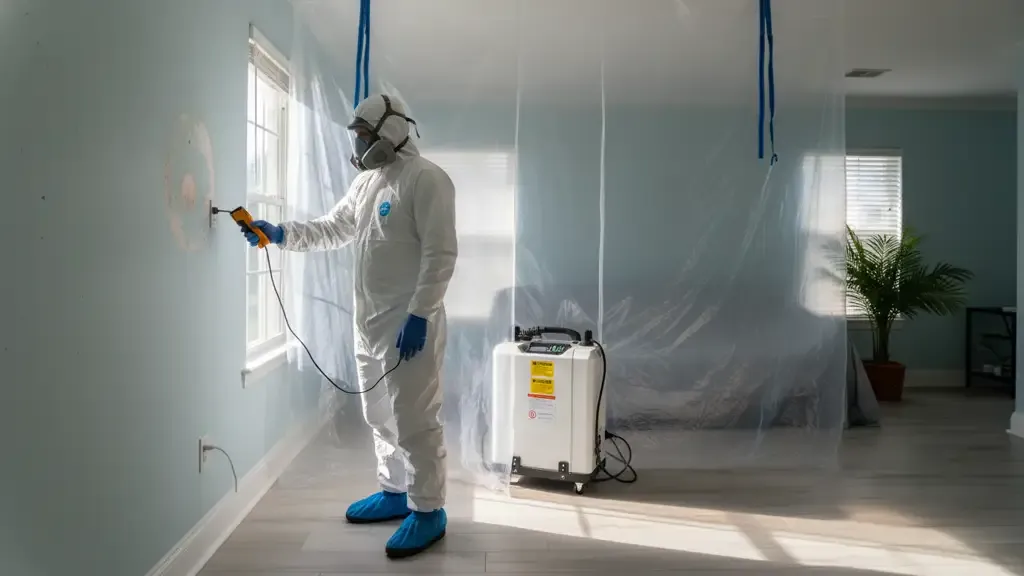
- Containment setup. Plastic barriers, sealed work zones, and negative air pressure may be used to isolate the affected area.
- Air filtration. HEPA air scrubbers and filtration devices help capture airborne particles during removal and cleaning.
- Material removal. Porous materials such as drywall, insulation, carpet, or trim may need removal if they are contaminated or cannot be cleaned safely.
- Surface cleaning and HEPA vacuuming. Remaining materials are cleaned with appropriate methods and antimicrobial products when warranted.
- Drying and moisture correction. Air movers, dehumidifiers, moisture monitoring, and source repairs help prevent the mold from returning.
- Repair and final walkthrough. Damaged areas are repaired or prepared for reconstruction, then reviewed with the homeowner.
Have visible mold after a leak, flood, or roof issue? Talk with Go Time about mold removal in St. Petersburg before the affected area spreads or hidden moisture causes more damage.
Go Time follows a remediation approach that includes containment, HEPA filtration, air scrubbing, physical removal, antimicrobial cleaning, moisture control, odor control, and repair of affected structural or material areas. The company also maintains Florida mold remediator licensing and IICRC microbial remediation training, which matters when the work involves occupied homes and insurance documentation.
Do You Need Inspection First, Remediation First, or Both?
The right order depends on what you know already. If you only suspect mold because of an odor, allergy-like symptoms, or a past leak, an inspection or assessment should usually come first. If you have visible growth, wet materials, or confirmed contamination, remediation may be the urgent next step.
Here is a practical way to decide:
- Call for inspection or assessment first if you smell mustiness but do not see the source, are buying or selling a home, need insurance documentation, or want lab testing.
- Call for remediation if visible mold is present, contaminated materials need removal, water damage has been sitting, or an assessor has already provided a scope.
- Call for emergency water damage help first if the area is still wet, water is active, or a roof or plumbing source has not been controlled.
Many mold problems start as water problems. If you are still dealing with wet flooring, damp drywall, a roof leak, or moisture behind walls, the priority is stopping the source and drying the structure. Go Time’s restoration model is built around that connection: water extraction, structural drying, moisture mapping, mold remediation, and repair can be coordinated under one local team when the situation calls for it.
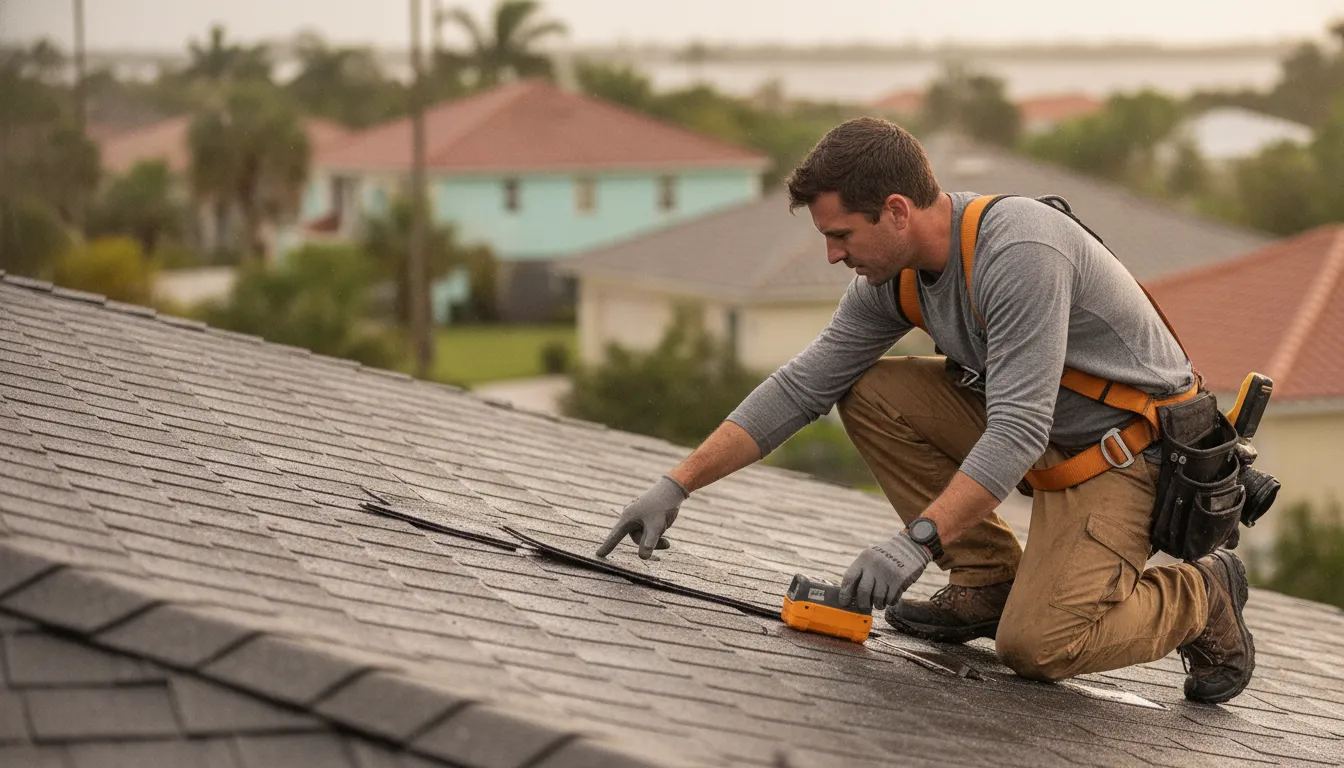
That is especially important after hurricanes and heavy rain. A roof issue can create interior water damage. Interior water damage can create mold. A contractor who understands both roofing and restoration can help trace the moisture path instead of treating mold like an isolated surface stain.
What Florida Law Says About Mold Assessment and Remediation
Florida has specific licensing rules for mold-related services. The Florida Department of Business and Professional Regulation oversees mold assessor and mold remediator licensing. In general, assessment and remediation are treated as separate services because one diagnoses the issue and the other performs the cleanup.
Florida Statute 468.8419 addresses conflicts between assessment and remediation work. It restricts mold assessors from performing remediation on a structure they assessed within the last 12 months, and restricts mold remediators from performing assessment on a structure they remediated within the last 12 months. The statute includes an exception for certain certified Division I contractors, with disclosure requirements related to the homeowner’s right to request competitive bids.
For homeowners, the takeaway is simple: ask who is inspecting, who is remediating, and whether the roles are separate or properly disclosed. You want transparency. If testing or clearance is needed, an independent certified inspector may be the right choice. If remediation is needed, you want a licensed, insured remediation contractor with the equipment and process to perform the work safely.
Go Time’s own service page makes this distinction clear. The company explains that it does not conduct mold testing or inspections directly, but works with certified professionals to ensure issues are accurately diagnosed. Once identified, Go Time provides remediation, containment, removal, cleaning, and restoration.
When Mold Testing Is Helpful and When It May Not Be Necessary
Mold testing can be valuable, but it should have a purpose. Testing only tells part of the story if the moisture source is ignored or the scope is obvious from visible contamination.
Testing may be helpful when:
- You smell mold but cannot find visible growth.
- A household member has symptoms and documentation is needed for next steps.
- You are involved in a real estate purchase or sale.
- An insurance carrier asks for lab documentation.
- You need post-remediation verification after cleanup.
- The affected area is complex, hidden, or disputed.
Testing may be less urgent when visible mold is already present on damaged porous materials and the needed action is clear removal and correction of the moisture source. In that case, spending time debating the species of mold may delay cleanup.
The Florida Department of Health emphasizes moisture control and cleanup rather than fear-based testing. If mold returns quickly or spreads, it often means there is an underlying water leak or moisture problem that must be fixed. That is why a remediation plan should always include moisture correction, not only removal.
Why DIY Mold Cleanup Often Falls Short
A small amount of surface mold on a nonporous surface may be manageable for some homeowners if they are healthy, protected, and the moisture source is fixed. But larger or hidden mold problems are different. Scrubbing visible growth without containment can disturb spores and move contamination into other parts of the home.
The EPA’s mold remediation guidance uses 10 square feet as an important threshold for small areas and recommends more containment and professional judgment as the affected area grows. Florida homes with water-damaged drywall, cabinets, insulation, or flooring often exceed the “simple wipe-down” category before the homeowner realizes it.
DIY cleanup can also fail because it misses:
- Moisture behind walls, under flooring, or inside wall cavities.
- Contaminated insulation or porous materials that cannot be cleaned in place.
- HVAC or humidity issues that keep feeding the problem.
- Safe containment during demolition and cleaning.
- HEPA filtration and air scrubbing during removal.
- Documentation that may be needed for insurance or future home sale questions.
Bleach on a surface does not solve a wet wall cavity. Paint over staining does not correct humidity. A fan blowing across contaminated material can spread particles. The safest approach is to identify the moisture source, contain the affected area, remove what cannot be saved, clean what can be saved, and verify dryness before rebuilding.
What to Ask Before Hiring a Mold Professional in Florida
Whether you are hiring an assessor, a remediator, or both, ask questions before work begins. A reputable provider should be able to explain the process in plain language and show that the work will be handled safely.
Ask an assessor:
- Are you licensed for mold assessment in Florida?
- Will you provide a written scope or report?
- When do you recommend air or surface sampling?
- Can your report be used for remediation planning or insurance documentation?
- Do you have any financial relationship with the remediation contractor?
Ask a remediator:
- Are you licensed for mold remediation in Florida?
- What containment will be used?
- Will HEPA air scrubbers or negative air pressure be used?
- How will you identify and correct the moisture source?
- What materials will be removed, cleaned, dried, or repaired?
- Will you support post-remediation verification if needed?
Go Time Roofing & Restoration maintains Florida licensing for mold remediation, building contracting, and building inspection, along with IICRC credentials for water restoration, applied structural drying, fire and smoke restoration, and applied microbial remediation. For homeowners, that combination matters because mold cleanup often overlaps with water damage, reconstruction, and storm-related repairs.
How Go Time Handles Mold Remediation in Pinellas County
Go Time’s mold remediation work is built for the way Florida homes actually get damaged. Mold is rarely a standalone issue. It often follows roof leaks, plumbing failures, flood cleanup, storm damage, or humidity problems. The process starts by understanding the moisture source, then building a cleanup plan that protects the rest of the property.
On a typical project, Go Time may provide:
- Free initial consultation and remediation guidance for next steps.
- Moisture mapping with professional meters and thermal imaging.
- Coordination with independent certified mold inspectors when testing is needed.
- Containment barriers and negative air pressure for affected areas.
- HEPA air scrubbers, HEPA vacuuming, and professional air filtration.
- Removal of contaminated materials and cleaning of remaining surfaces.
- Antimicrobial treatment, odor control, and indoor air quality restoration steps.
- Structural drying with dehumidifiers and air movers.
- Repair of affected drywall, flooring, or building materials when needed.
- Final walkthrough and support for clearance testing if required.
If a leak, storm, or humidity issue has turned into a mold concern, do not wait for it to spread. Contact Go Time Roofing & Restoration or call (727) 430-3079 for local help in St. Petersburg and Pinellas County.
That combination of remediation, moisture control, and repair is important. Removing contaminated drywall does not help if the roof leak remains. Drying the floor does not help if hidden wall cavities stay damp. Go Time’s restoration background helps connect the cause, the cleanup, and the rebuild.
Florida Homeowner Checklist: What to Do When You Suspect Mold
If you suspect mold, move quickly but do not panic. The goal is to protect people first, stop moisture second, and document everything before major cleanup begins.
- Protect vulnerable occupants. Keep children, older adults, and anyone with asthma, allergies, or immune concerns away from the affected area when possible.
- Stop the water source. Shut off water if a plumbing leak is active. If the issue is roof-related, arrange temporary protection safely.
- Do not disturb large areas. Avoid tearing out moldy materials without containment.
- Take photos and notes. Document stains, visible growth, water lines, damaged materials, and dates.
- Lower humidity. Use air conditioning or dehumidification if it is safe to do so and does not spread contamination.
- Call the right professional. If you need diagnosis, start with assessment. If mold is confirmed or visible, call a licensed remediator.
- Ask about clearance. For larger jobs, sensitive occupants, or real estate documentation, ask whether post-remediation verification is appropriate.
Do not rely on smell alone to decide the problem is gone. A musty odor can fade temporarily while damp materials remain hidden. Professional moisture readings and a final walkthrough are better indicators that the source has been addressed.
Frequently Asked Questions About Mold Inspection vs Remediation
Is mold inspection the same as mold remediation?
No. Mold inspection or assessment identifies the problem, the moisture source, and the likely scope of work. Mold remediation is the cleanup and removal process that contains the affected area, removes contaminated materials, filters the air, dries the structure, and repairs damage.
Does Go Time perform mold testing?
Go Time’s mold remediation page states that the company does not conduct mold testing or inspections directly. Instead, Go Time works with certified professionals when accurate diagnosis or lab testing is needed, then provides safe remediation once the issue is identified.
Can the same company inspect and remediate mold in Florida?
Florida law separates mold assessment and remediation to reduce conflicts of interest, with specific restrictions and exceptions. Homeowners should ask for licensing, role clarity, and any required disclosures before hiring. Independent testing or clearance may be appropriate when documentation is important.
When should I call for remediation instead of inspection?
Call for remediation when mold is visible, contaminated materials need removal, water damage has been sitting, or an assessor has already confirmed the issue. If you only smell something musty or cannot find the source, an inspection may be the better first step.
How quickly can mold grow after water damage in Florida?
Moisture can create conditions for mold quickly, especially in Florida humidity. The Florida Department of Health notes that common molds can take hold when water stands for even 24 hours. Wet materials should be dried quickly, and hidden moisture should be checked with proper equipment.
What is post-remediation verification?
Post-remediation verification is a follow-up review after cleanup. It may include visual inspection, moisture checks, and sometimes air or surface testing by an independent assessor. The goal is to confirm the work area is clean, dry, and ready for repair or reoccupation.
Bottom Line for Florida Homeowners
The difference between inspection and remediation is the difference between diagnosis and correction. In a humid Florida home, both can be important. Inspection helps define the problem. Remediation removes contamination, controls spread, dries the structure, and addresses the source so the issue does not keep returning.
If you are unsure where to start, begin with what you know. Suspected hidden mold calls for an assessment. Visible mold, wet materials, or a confirmed scope calls for remediation. If the mold followed a roof leak, storm, flood, or plumbing issue, make sure the moisture source is part of the solution.
For homeowners in St. Petersburg and Pinellas County, Go Time Roofing & Restoration provides licensed mold remediation, containment, HEPA filtration, moisture control, and repair support. When disaster strikes, it is Go Time.