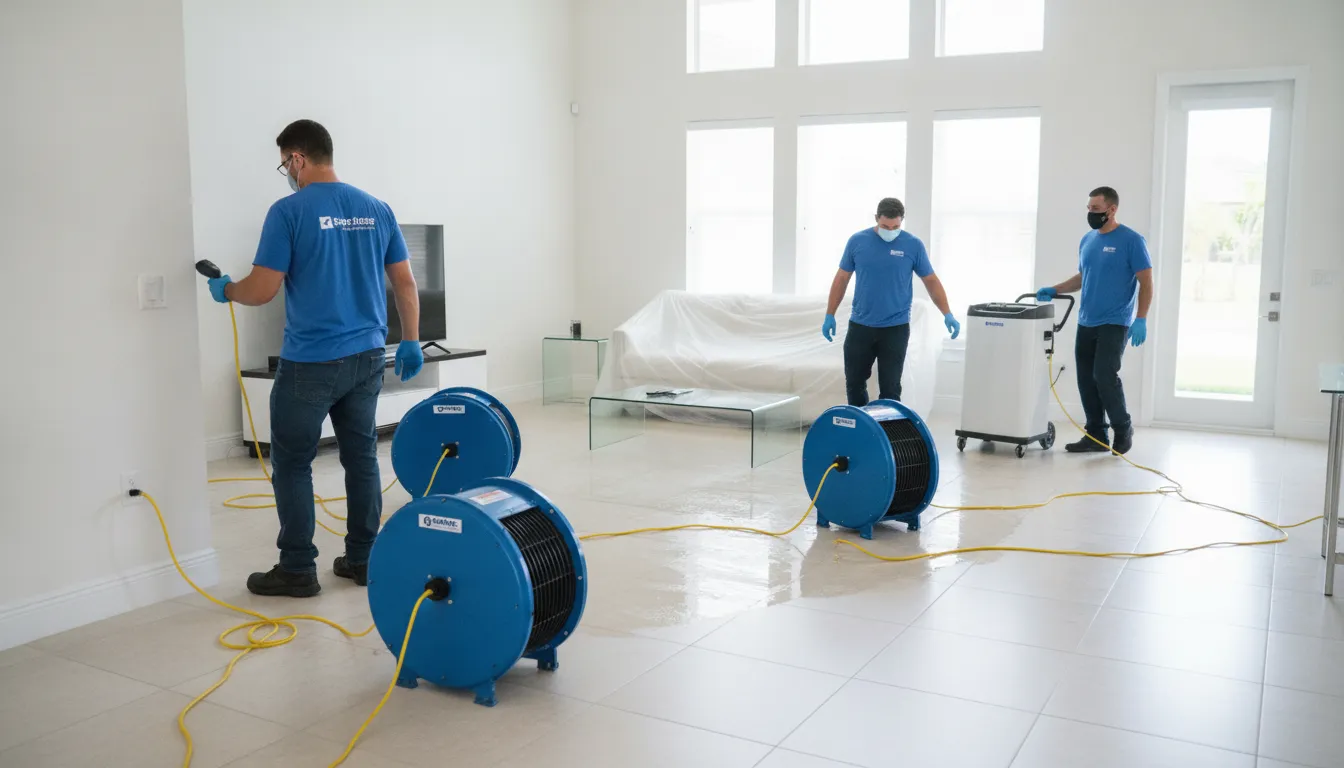
Standing water can become a weeks-long repair problem within just two days. The fastest restoration starts immediately, then advances only when moisture readings confirm each affected material is dry.
Need help now? Contact Go Time Roofing and Restoration for emergency water damage restoration.
How long does water damage restoration take depends on damage severity, water type, affected materials, the repairs needed afterward, and insurance approvals. For minor damage, crews can often extract water, dry the structure, and verify moisture levels within three to five days during the first active restoration phase. Larger losses may require demolition, dehumidification, repeated moisture monitoring, and several weeks of reconstruction after the building is dry before repairs can safely begin. Severe flooding with structural problems can take months, especially when soaked drywall, flooring, or framing needs replacement. Acting quickly matters because the EPA recommends responding within 24 to 48 hours to reduce damage and help avoid mold remediation.
That broad range becomes useful once you know which stages control the finish date for your property. We will first answer “How long does water damage restoration take?” before breaking down extraction, drying, demolition, repairs, and moisture checks. Here’s how.
How long does water damage restoration take?
Active mitigation often takes days, while complete restoration can take weeks or longer. For minor damage, water extraction and structural drying usually take 3 to 5 days. If crews must remove damaged materials and rebuild the space, the full project continues after drying ends.
The key distinction is the meaning of “restoration.” Mitigation stops the water, removes standing water, and dries the structure. Complete restoration includes repairs that return damaged rooms to their prior use and finish.
Restoration phases and expected timing
Each phase depends on the findings from the phase before it. This table separates the active water damage restoration process from later repair work.
| Phase | Expected duration | Main work | What can extend it |
|---|---|---|---|
| Assessment and extraction | Begins during the first service visit | Find the source, map moisture, and remove standing water | Hidden leaks, deep water, or limited access |
| Structural drying | Usually 3 to 5 days for minor damage | Run air movers and dehumidifiers, then track moisture | High humidity, soaked materials, or weak airflow |
| Removal and cleaning | Varies with contamination and damage | Remove materials that cannot be saved and clean affected areas | Contaminated water, mold growth, or large affected areas |
| Reconstruction | Starts after the structure is dry | Replace drywall, flooring, trim, roofing, or other materials | Structural repairs, material lead times, or insurance approval |
What changes the drying timeline?
The amount of water is only one factor. Drying also depends on which materials became wet, how deeply they absorbed water, indoor humidity, and airflow. A small surface spill can dry faster than moisture trapped behind cabinets or beneath flooring.
The water source also affects the work plan. Clean-water damage may need extraction and drying, while contaminated water can require removal and cleaning before repairs begin. Go Time Roofing and Restoration can also coordinate broader disaster recovery services when a major loss affects several parts of the property. Crews use moisture readings to decide when drying is complete, rather than relying on how a wall or floor feels.
Fast action can limit how far moisture spreads. The EPA advises responding to water damage within 24 to 48 hours to help avoid the need for mold remediation. That window is a response goal, not a promise that the property will be fully dry by then.
Mitigation versus complete restoration
A mitigation crew may finish extraction before the repair plan is final. Drying equipment can also leave before new drywall, flooring, or cabinets arrive. As a result, a home may be dry and safe for repair while still looking unfinished.
Ask for two schedule updates: one for active mitigation and one for reconstruction. The first should cover extraction, drying equipment, moisture checks, and material removal. The second should cover repair scope, approvals, ordered materials, and the planned work sequence.
What happens during the first 24 hours?
The first 24 hours focus on control, safety, and a clear record of the loss. The crew first works to stop ongoing water, then checks which rooms and materials are affected. This early work does not set the full repair schedule. It gives the drying plan a sound starting point.
Emergency control and safety
Before extraction starts, the active water source must be stopped when it is safe to do so. That may mean closing a supply valve, addressing a plumbing leak, or protecting a damaged roof opening from more rain. When the roof and interior are both affected, Go Time Roofing and Restoration can coordinate roofing services with an emergency water damage response to reduce gaps between those tasks.
Next, the crew checks for hazards such as wet electrical systems, unstable materials, or contaminated water. People may need to stay out of part of the property until those risks are controlled. The assessment also maps how far moisture traveled beyond the visible puddle. It helps the team choose safe work zones and the right extraction methods.
Extraction and drying setup
Crews remove standing water before they begin the main drying phase. They may also move soaked contents or remove materials that cannot be dried safely. The exact choices depend on the water source, affected area, and condition of each material. Following a clear water damage restoration process keeps the first visit focused and organized.
- Extract standing water from reachable areas.
- Measure moisture in floors, walls, and nearby spaces.
- Place drying equipment where readings show it is needed.
- Check whether water moved into hidden cavities.
Extraction is not the same as complete drying. Even after puddles are gone, porous materials may still hold moisture. Technicians use moisture readings to guide air movement, dehumidification, and follow-up checks. Material saturation, indoor humidity, and ventilation can all change how long the drying stage takes.
Documentation and next decisions
During the visit, the crew records affected areas, visible damage, moisture readings, and work performed. Photos and notes create a clearer record for the property owner. They may also help with an insurance claim and give the restoration team a baseline for later checks.
Quick action can limit secondary damage, but it cannot erase damage that has already occurred. The EPA advises responding to water damage within 24 to 48 hours to help avoid the need for mold remediation. That window is a reason to begin mitigation, not a promise that the property will be dry or repaired by then.
By the end of the first day, the source may be controlled, standing water may be gone, and drying may be underway. The team should also have a clearer view of affected materials and next steps. Those findings shape the answer to how long does water damage restoration take for that specific property.
Why drying and dehumidification take several days
Drying and dehumidification often take several days because removing standing water is only the first step. Moisture can remain inside porous materials and closed building assemblies after the floor looks dry. Go Time Roofing and Restoration uses professional moisture monitoring to follow the drying progress instead of relying on appearance alone.
How drying equipment works
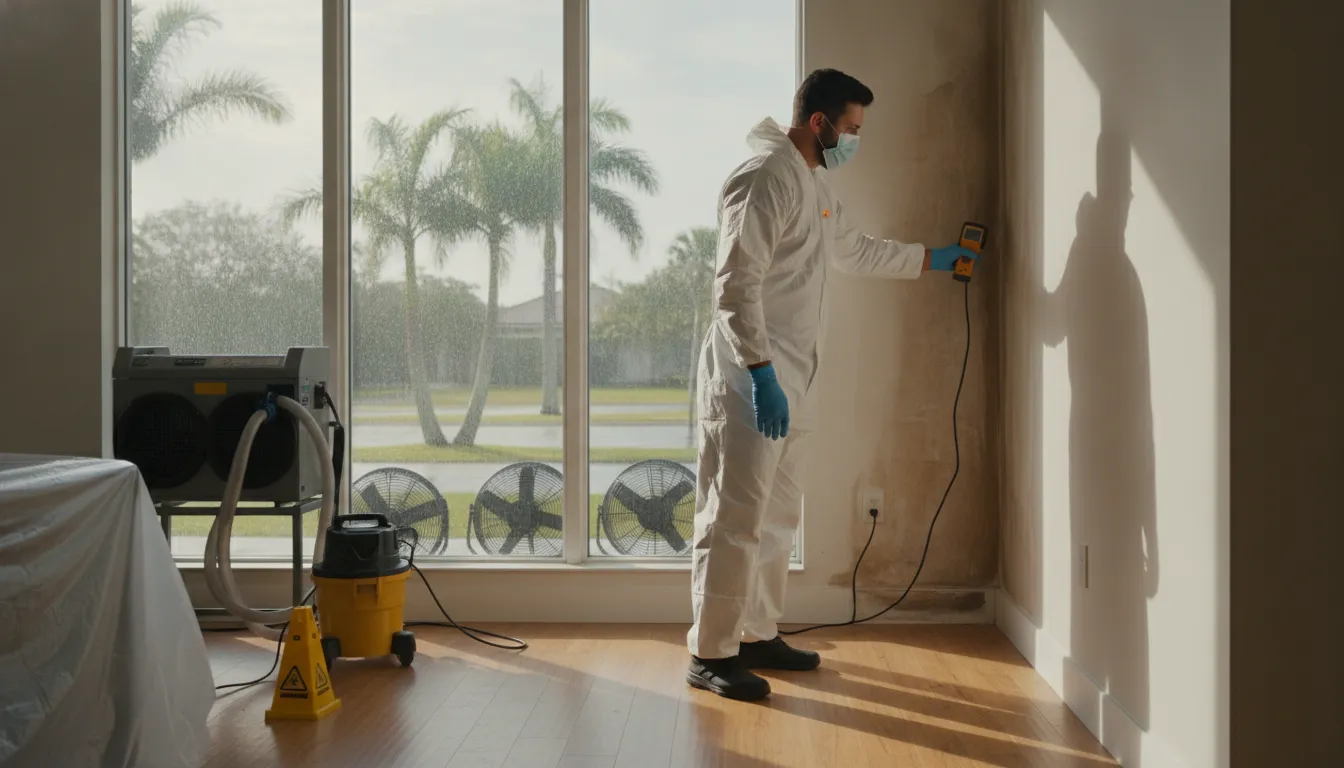
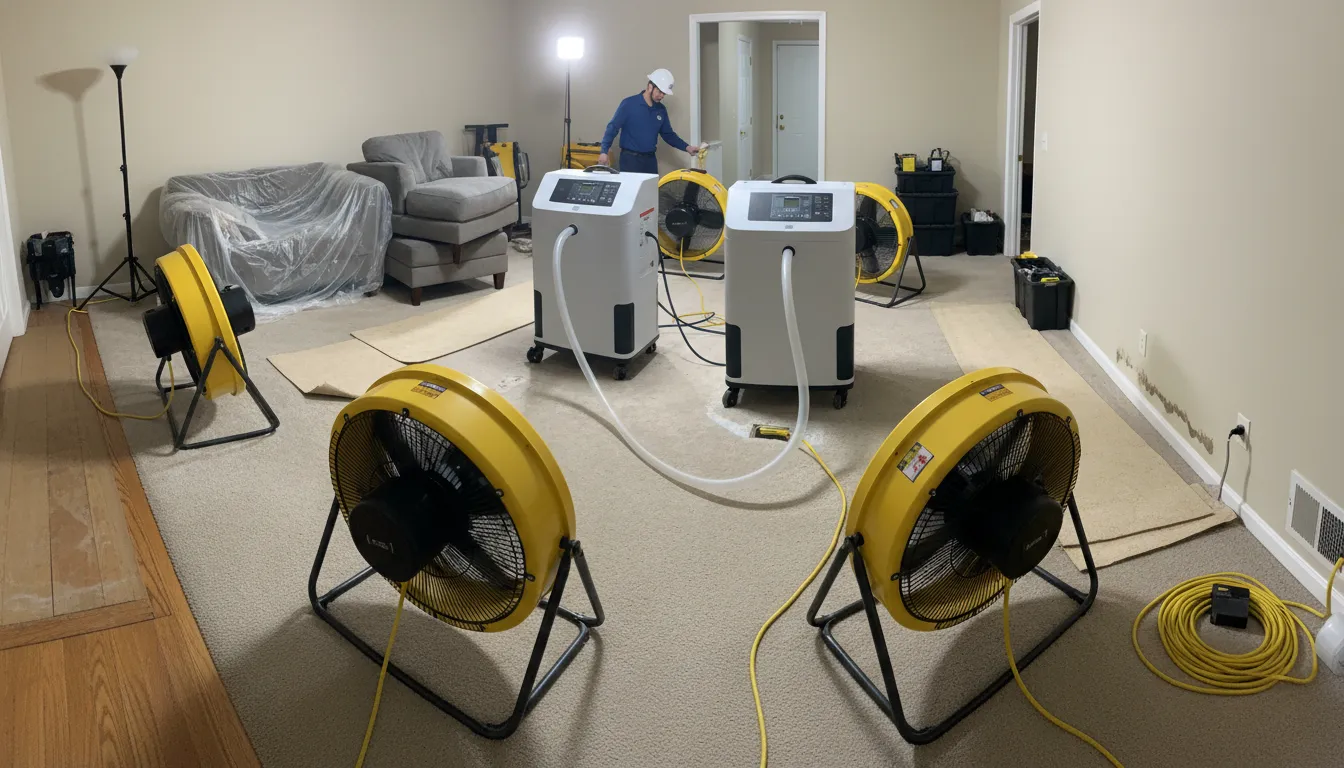
Air movers push dry air across wet surfaces, which helps moisture leave flooring, walls, and other materials. Dehumidifiers then pull that moisture from the air. Used together, the machines create steady drying conditions instead of letting damp air settle back into the affected space.
Equipment placement matters. Technicians adjust the number and position of machines based on the affected area, airflow, room layout, and material saturation. High indoor humidity or limited ventilation may slow the process. Dense or layered materials can also release moisture more slowly than open surfaces.
Hidden moisture and daily monitoring
Water can move behind baseboards, under flooring, inside wall cavities, and around framing. These areas may stay damp even when exposed surfaces feel dry. Removing equipment based on appearance alone can leave moisture trapped where it is hard to spot.
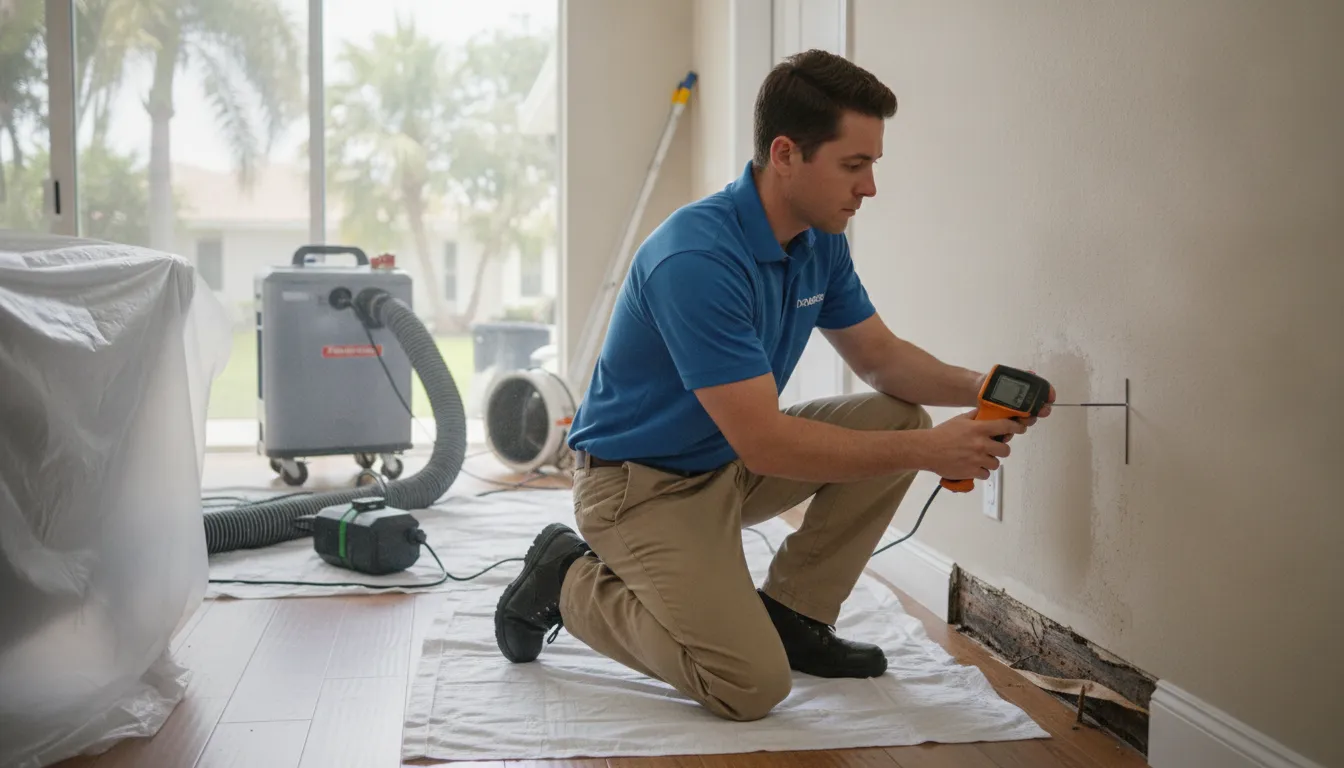
Restoration technicians use moisture meters and other readings to track the drying process. They compare results over time and check whether affected materials continue moving toward a dry target. This monitoring also helps the team change equipment placement when one area dries slower than another.
- Airflow readings show whether air is reaching the wet area.
- Humidity readings show how much moisture remains in the air.
- Material readings show whether walls, floors, and framing are still releasing moisture.
Why equipment stays until readings support removal
Drying equipment should remain in place until moisture readings support removal. A technician may compare affected materials with similar dry materials elsewhere in the property. Some rooms may reach the target sooner, while hidden or heavily soaked areas need more time.
Stopping early can allow damp conditions to continue and may increase the risk of added damage. The EPA advises taking quick action within 24 to 48 hours after water damage to help avoid the need for mold remediation.
The drying phase is one part of the broader water damage restoration process. Once readings support equipment removal, the team can plan cleaning, repairs, and final recovery with clearer information about the structure.
When does water damage require demolition?
Demolition is usually needed only when materials cannot be cleaned, dried, or kept structurally sound, or when crews need access to trapped moisture. Go Time Roofing and Restoration uses moisture readings and site conditions to help distinguish salvageable materials from those that require controlled removal.
Conditions that can make removal necessary
The water source is a key part of the decision. Materials touched by contaminated water may require removal because cleaning them in place may not be safe or practical. The affected area, exposure risk, and material condition all matter. The EPA notes that professional judgment should guide remediation decisions for each situation.
Porous materials can hold water deep below the surface. Drywall, insulation, carpet padding, and some wood products may become unsalvageable after heavy saturation. Swelling, crumbling, delamination, staining, or loss of strength can also point toward removal. Moisture readings help the restoration team separate materials that can dry from those that should come out.
Access to hidden wet areas
A surface can look dry while moisture remains behind it. Small, planned cuts may provide access for inspection, air movement, and drying equipment. Broader removal may be needed when water has spread across several wall cavities or beneath layered flooring. This controlled approach limits unnecessary damage while exposing the full wet area.
The water damage restoration process may change once hidden conditions are exposed. Crews may find wet insulation, damaged framing, or a larger moisture path than expected. Each finding can add removal, cleaning, drying, and repair time. That is why an early timeline may need to be updated after access work begins.
How demolition affects the timeline
Demolition adds steps, but delaying needed removal can slow the entire job. The EPA provides response guidance for water damage within 24 to 48 hours to help avoid added remediation needs. Fast removal of unsalvageable material can expose wet assemblies sooner and support more direct drying.
After removal, the team still needs to clean the exposed area and confirm drying progress. Repairs should begin only after the remaining assembly reaches the required moisture goal. Material availability, the repair scope, and insurance approval can then affect the rebuild schedule. These variables explain why demolition can extend how long water damage restoration takes.
How long do water damage repairs take?
The repair phase may take several days or stretch across weeks. Its length depends on the damaged materials, room size, required inspections, and material supply. Repairs should begin only after moisture checks confirm that the affected structure is dry.
Fast action during the first response can reduce the amount that later needs replacement. The EPA recommends quick action after water damage to help avoid added remediation needs. Still, drying is only the first part of restoring the property.
Rebuilding after drying
Once drying is verified, the crew can replace materials removed during cleanup. Common work includes hanging drywall, installing insulation, repairing trim, laying flooring, and painting. Cabinets may need repairs, new panels, or full replacement based on how far water traveled.
The exact scope becomes clearer after wet finishes and damaged materials are removed. A professional water damage restoration process should connect the drying record with a clear repair plan. This helps owners understand what must be rebuilt and what can stay.
Materials, inspections, and approvals
Some repairs cannot move forward until materials arrive or an inspection is complete. Flooring, cabinets, and matching finishes may have longer lead times than drywall or paint. Custom items can add more waiting time, even when the work area is already dry.
Insurance review can also affect the schedule when a claim covers the loss. The contractor may need to record hidden damage, confirm the repair scope, or wait for approval before ordering materials. Permit needs and inspection timing vary by the type of repair and local rules.
- Drywall and paint can often proceed once framing and insulation are ready.
- Flooring installation may wait for the subfloor to dry and the selected product to arrive.
- Cabinet work may require measurements, fabrication, delivery, and final fitting.
- Electrical, plumbing, or structural repairs may require separate trades and inspections.
Why repairs often take the longest
Mitigation crews focus on stopping damage, removing water, and drying the structure. Repair work follows a sequence, and each trade may depend on the prior task. Drywall must be finished before paint, while flooring and cabinets often come later.
Coordination matters when water affects both the roof and interior rooms. One repair plan can reduce gaps between trades and keep records in one place. Even so, the schedule must allow for safe drying, sound repairs, and required checks rather than a rushed finish.
What factors can extend the restoration timeline?
When homeowners ask how long does water damage restoration take, the honest answer depends on what the first assessment finds. Two similar leaks can follow different schedules because water moves through each building in a different way.
Water type, area, and materials
The water category affects the safety steps, cleaning work, and materials that may need removal. A larger affected area also needs more extraction equipment, drying equipment, labor, and moisture checks. Porous materials, such as drywall, insulation, carpet, and wood, can hold water longer than hard surfaces.
Hidden moisture can add time after visible water is gone. It may remain behind cabinets, inside wall cavities, beneath floors, or around framing. Fast action matters because the EPA recommends responding to water damage within 24 to 48 hours to help avoid mold remediation needs.
Access and affected contents
Crews need safe access to every wet area before they can measure moisture or place equipment. Tight crawl spaces, blocked rooms, occupied units, and electrical hazards can slow that work. Building rules may also limit work hours or require approval before equipment enters shared areas.
- Furniture and stored items may need to be moved, cleaned, dried, or documented.
- Wet flooring may hide moisture in the subfloor or padding below it.
- Built-in cabinets can restrict airflow and make wall access harder.
- High indoor humidity or weak ventilation can slow structural drying.
The number and condition of affected belongings also change the schedule. A mostly empty room is simpler than a packed office, rental, or home. Contents may need separate handling while the building itself moves through the water damage restoration process.
Repairs, approvals, and supplies
Drying is only one part of restoration. If damaged drywall, flooring, cabinets, roofing, or framing must be rebuilt, the repair phase adds another schedule. Permits and required inspections can add waiting periods before certain work begins or closes.
Insurance coordination may also affect when repairs start. The contractor may need to document the loss, prepare an estimate, answer questions, or wait for approval. Specialty flooring, cabinets, roofing products, and other matching materials can have longer order times.
A useful timeline separates mitigation, drying, and repairs instead of promising one finish date. Ask which stage is active, what moisture readings show, and what decision comes next. Updated milestones give a clearer view when hidden damage, approvals, or supply delays change the plan.
What should you do while restoration is underway?
Your actions during cleanup can protect people, preserve claim details, and help the work move forward. Start with safety, then keep clear records as conditions change. Quick action matters because the EPA recommends responding to water damage within 24 to 48 hours to help avoid mold remediation.
First steps after finding water damage
Do not enter standing water near outlets, appliances, or an electrical panel. Leave the area and wait for trained help if you see sparks or suspect an electrical risk. Stop the water source only when you can reach it without entering a hazardous area.
A professional emergency water damage response can begin extraction and structural drying. Contact your insurer as soon as practical, but do not delay urgent steps needed to limit further damage.
Your checklist during restoration
Use this checklist while waiting for help and throughout the work. Keep everyone away from affected rooms until the restoration team explains which areas are safe to enter.
- Photograph and record video of wet rooms, damaged belongings, and the likely water source before cleanup begins.
- Make a basic inventory of damaged items, including their location, condition, brand, and estimated purchase date.
- Avoid touching or cleaning water that may contain sewage, chemicals, or outdoor flood debris.
- Save emails, text messages, estimates, invoices, claim numbers, and the names of each person you contact.
- Ask the restoration team which materials they plan to dry, remove, clean, or replace.
- Request moisture-reading updates and ask which areas still need drying before repairs or finishes begin.
- Follow access and equipment instructions; do not move air movers or dehumidifiers unless the restoration team approves it.
Communication and progress checks
Ask for a simple update at each major stage of the water damage restoration process. The update should explain completed work, remaining wet areas, planned repairs, and any issue that may affect timing.
Moisture readings offer a clearer progress check than surface appearance alone. Ask where readings were taken and whether hidden areas have reached the team’s drying goals. Share these updates with your insurer when requested, and keep copies with your other claim records.
If the scope changes, request a written explanation before added work starts when circumstances allow. Clear records help the homeowner, restoration team, and insurer work from the same facts. They also make it easier to track why the answer to how long does water damage restoration take may change.
How professional moisture monitoring keeps work on track
Professional moisture monitoring keeps restoration on track by showing whether hidden materials are drying and when repairs can safely begin. Go Time Roofing and Restoration uses repeat readings, equipment checks, and a defined finish target, giving homeowners a clearer way to judge progress.
Readings that show drying progress
Fast action sets the drying plan on the right path. The EPA provides response guidance for water damage within 24 to 48 hours to help avoid the need for mold remediation. A prompt start also gives the crew an early moisture baseline for each affected area.
During the restoration process, the crew should record readings at the same marked points. These results show whether wet drywall, framing, flooring, or other materials are drying as planned. A stalled reading may signal trapped water, poor airflow, or a need to adjust the setup.
- Ask which materials and rooms are being tracked.
- Review daily readings instead of relying on surface appearance.
- Confirm that fans, dehumidifiers, hoses, and filters receive daily checks.
- Ask what moisture target must be met before equipment is removed.
A clear scope and daily equipment checks
The written scope should list affected spaces, planned removal, drying equipment, monitoring visits, and repair work. Daily checks confirm that equipment is running and placed where it can support the drying plan. They also let the crew respond when readings show slow progress.
Conditions can change after work starts. Hidden damage may appear behind a wall or beneath flooring, which can affect the schedule and cost. The contractor should explain any change order before added work begins. It should state why the work is needed and how it affects timing.
A defined drying-completion standard
Equipment should not be removed only because a room looks dry or feels comfortable. The crew should explain its drying-completion standard and provide final readings that support the decision. Those readings create a clear handoff from drying to cleaning, repairs, or reconstruction.
Homeowners can also ask for a short progress update after each monitoring visit. If a sudden leak or flood has just occurred, an emergency water damage response can begin extraction, drying, and documentation without delay.
Frequently Asked Questions
How long does it take to dry water damage?
Drying minor water damage often takes three to five days after standing water is removed. The actual timeline depends on material saturation, indoor humidity, airflow, and the size of the affected area. Restoration teams monitor moisture in walls, floors, and framing during this stage. Drying equipment should remain in place until readings confirm that affected materials have reached an appropriate moisture level.
What factors affect the duration of water damage restoration?
The main factors are the affected area’s size, the water source, the depth of saturation, and the materials involved. Contaminated water may require added cleaning and removal steps. Repairs also take longer when water reaches structural components or hidden spaces. Insurance approvals, material availability, indoor humidity, and the need for mold remediation can extend the overall restoration timeline.
How long does it take for water damage to be repaired?
Minor water damage may be dried and repaired within several days, while extensive damage can require weeks or months. Drywall removal, flooring replacement, structural repairs, and mold remediation add time after extraction and drying. According to the Angi restoration timeline, severe flooding with structural damage and mold growth can take up to six months to restore.
Is water damage restoration worth it?
Professional restoration is generally worthwhile when water has soaked into walls, flooring, insulation, or structural materials. Proper extraction, drying, and moisture monitoring can limit secondary damage and identify moisture hidden from view. The EPA recommends responding to water damage within 24 to 48 hours to help avoid the need for extensive mold remediation.
Ready to Stop Water Damage From Spreading?
Waiting to begin restoration can allow moisture to move deeper into floors, walls, and hidden spaces, adding more work to the recovery. Starting now gives the restoration team more time to extract standing water, begin controlled drying, and track moisture before conditions become harder to manage. A prompt response also helps establish a clear repair plan sooner, so you can understand the next steps and expected timeline for your property.
Ready to protect your property and begin recovery? Call (727) 430-3079 or contact Go Time Roofing and Restoration for emergency water damage restoration today. When you call, be ready to explain where the water started, when you noticed it, and which rooms or materials appear affected.