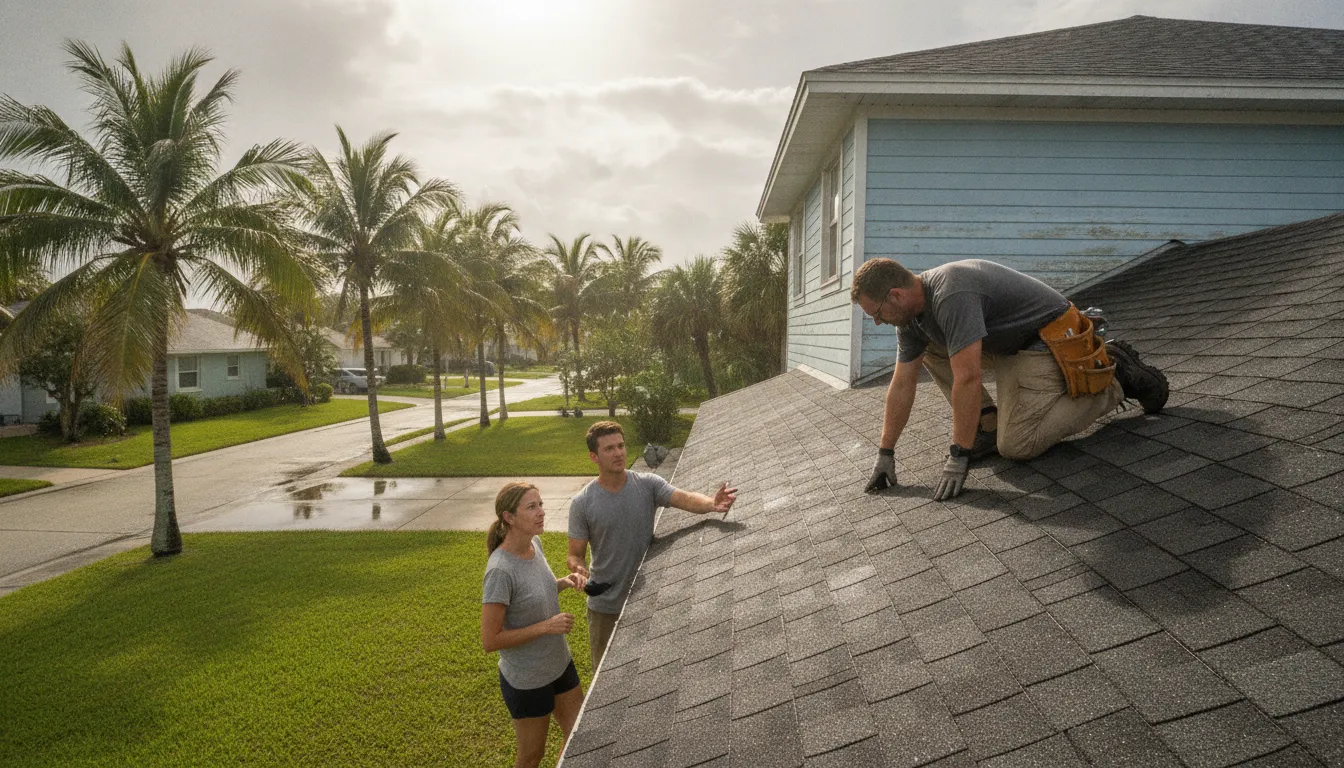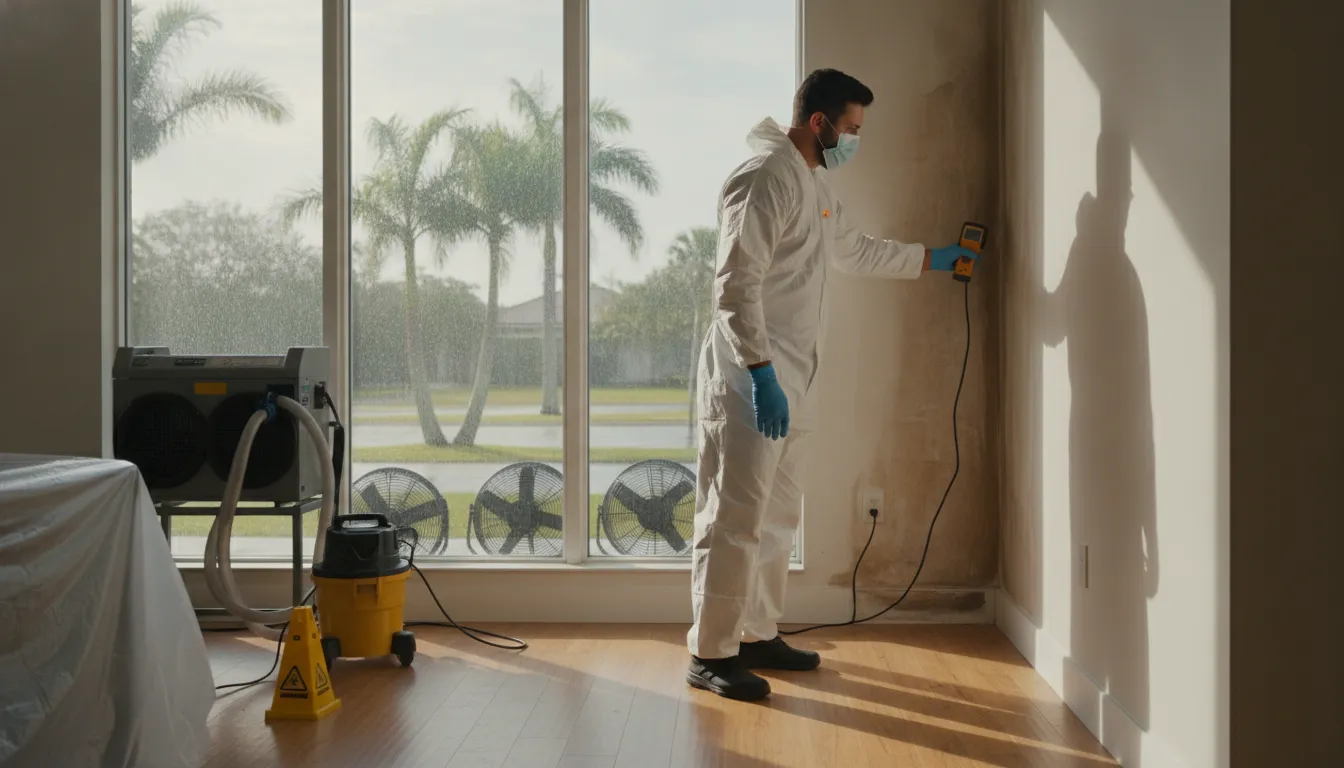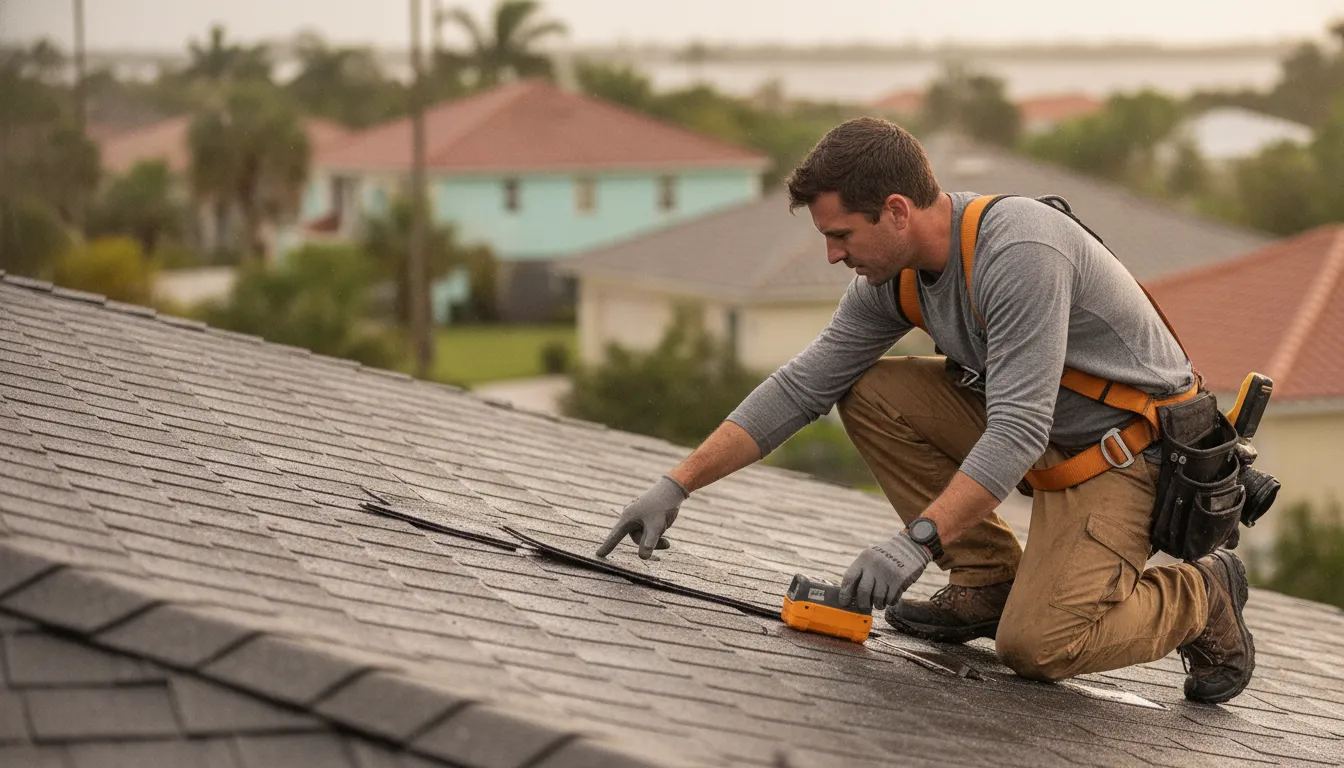
In St. Petersburg, a short burst of heavy rain can send far more water across a roof than most homeowners realize. One inch of rainfall on a 1,000-square-foot roof produces about 600 gallons of runoff, according to the University of Florida IFAS. Without a properly sized, securely attached gutter system, that water can collect along roof edges, saturate soil, and move toward the foundation.
Schedule your free gutter inspection in St. Petersburg today. Call (727) 361-6905.
Reliable gutter repair and installation St. Petersburg services help direct stormwater away from your home before it contributes to erosion, leaks, or foundation moisture. The right system also needs clear downspouts, sound connections, and maintenance suited to Florida’s rain, humidity, and seasonal storms.
Understanding where that water goes, and what can happen when it is left unmanaged, makes gutter care a practical part of protecting a St. Petersburg home. The first priority is recognizing how gutters support the rest of the home’s drainage system.
How Gutter Repair and Installation in St. Petersburg Protects Your Home
Gutters are a first line of defense against the heavy rainfall and storm runoff common in St. Petersburg. Properly sized and installed systems move water away from the roofline, walls, and foundation before moisture becomes a costly restoration problem.
St. Petersburg’s humid subtropical climate brings more than 45 inches of rain in a typical year, along with intense downpours during hurricane season. That combination is hard on every part of a home’s drainage system. Humidity keeps surfaces damp between storms, while wind can deposit leaves, pine needles, and other debris in the gutters. When a tropical system or summer thunderstorm arrives, a partially blocked channel may have to handle a sudden surge of water with nowhere to send it.
The volume can be larger than many homeowners realize. According to the University of Florida IFAS, one inch of rain falling on a 1,000-square-foot roof creates approximately 600 gallons of runoff. That runoff estimate shows why gutter width, slope, hangers, downspout placement, and discharge points all matter. A system that looks adequate during a light shower may spill over the fascia during a concentrated storm.
How gutters protect the foundation
Gutters collect water at the roof edge and direct it through downspouts and away from the home’s foundation. Without that controlled path, runoff can pool beside walls, wash soil away, and contribute to erosion or persistent moisture around the slab or crawl space. The University of Florida recommends managing drainage so water flows away from structures, helping reduce flooding and erosion risks.
One storm can overwhelm a poorly designed or poorly maintained system. UF/IFAS hurricane landscaping guidance emphasizes preparing the property before severe weather, and gutter capacity is part of that preparation. Repairs made after overflow may involve more than replacing a bent section. Water intrusion can affect soffits, siding, insulation, ceilings, and interior finishes.
Prevention is less disruptive than restoration
Go Time Roofing & Restoration regularly addresses the moisture and water damage that can follow uncontrolled runoff. That restoration expertise reinforces a practical point: prevention begins above the ground, at the roof edge and downspouts. Professional gutter repair and installation in St. Petersburg should account for the home’s roof area, pitch, surrounding trees, storm exposure, and the safest location for discharge.
Some local gutter pages focus mainly on quotes, cleaning, or a short service list. Those services have value, but a dependable evaluation should also explain how the system protects the structure in St. Petersburg’s weather. A careful inspection, honest recommendations, and quality workmanship help homeowners address weak points before the next major storm turns a drainage issue into water damage.
What Are the Warning Signs That Your Gutters Need Repair?
The clearest signs you need gutter repair and installation St. Petersburg homeowners can rely on include rust, sagging, leaks, overflowing during storms, and water collecting near the home. In Florida’s heavy-rain climate, addressing these problems early helps limit damage to the roofline, siding, soil, and foundation.
Gutters do more than improve a home’s appearance. They direct roof runoff away from vulnerable parts of the property. A single inch of rain falling on 1,000 square feet of roof can produce about 600 gallons of runoff, according to the University of Florida IFAS. When a gutter system is damaged or undersized, that water can quickly expose small defects and turn them into expensive repairs.
Visible rust, cracks, and leaking joints
Orange staining, flaking metal, pinhole corrosion, and split seams are signs that a gutter may no longer be watertight. Look for dark water marks on the fascia, siding, or pavement below the joints. Small leaks may be repairable, but widespread corrosion, repeated seam failures, or cracks along the gutter channel often indicate that replacement is more dependable than patching.
Sagging gutters or separation from the fascia
A properly installed gutter should maintain a consistent slope toward its downspout. Sections that bow, sag, or pull away from the fascia may be holding debris or water, or may have loose and deteriorated hangers. Separation also leaves openings where rain can run behind the gutter and wet the fascia or soffit. Have the attachment points inspected before the next major storm.
Standing water and overflowing during storms
Water remaining in the gutter after rain can point to an improper slope, a clogged outlet, or a blocked downspout. Overflow at the roof edge during a storm may have the same causes, but it can also mean the system cannot handle the volume reaching it. Florida’s intense seasonal weather can overwhelm poorly designed or neglected systems quickly, so recurring overflow deserves professional attention rather than another temporary cleaning.
Damage showing up around the home
Peeling paint near the gutters, stained exterior walls, eroded soil, new foundation cracks, or water entering a crawlspace can all indicate that runoff is not being controlled. These symptoms do not prove the gutter is the only source, but they warrant a broader drainage and roofline inspection. You can also compare them with the signs your roof needs repair, since roof and gutter problems often appear together.
Consistent maintenance and professional inspections help homeowners address developing issues before they become reactive repairs. A qualified contractor can assess whether the right solution is cleaning, localized repair, new sections, replacement, or gutter guards.

Seamless vs. Traditional Gutters: Which Is the Better Choice for Florida Homes?
Seamless gutters are usually the stronger choice for St. Petersburg homes because they reduce the number of joints where heavy rain can escape. Traditional sectional gutters can still perform well when properly sized, installed, and maintained, but Florida’s humidity, intense sun, and sudden downpours make connection points especially important.
| Consideration | Seamless gutters | Traditional sectional gutters |
|---|---|---|
| Leak points | Fewer field joints mean fewer seams that can separate, loosen, or leak. End caps and corners still require careful sealing. | Multiple sections create more joints and therefore more locations to inspect, reseal, and repair. |
| Durability | Long, continuous runs have a clean installation profile and fewer connections exposed to movement and weather. | Individual sections can be replaced more easily, but fasteners and seams may loosen over time. |
| Maintenance | Cleaning is still necessary, especially around pine needles and storm debris, but there are fewer seams to monitor. | Routine cleaning, inspections, and seam maintenance are important across the entire run. |
| Cost | Usually carries a higher initial installation cost because the system is measured and formed for the home on site. | Often has a lower upfront cost and can suit small repairs or limited DIY projects, depending on the layout. |
| Appearance | Provides a continuous, tailored line with fewer visible breaks along the roof edge. | Visible section joints can create a more segmented appearance, particularly on long elevations. |
| Florida longevity | Fewer seams can reduce recurring leak risks, but lifespan still depends on material, pitch, fastening, cleaning, and storm exposure. | Can last when maintained well, although seam and fastener problems may require more frequent attention in humid, sunny conditions. |
Why fewer seams matter during St. Petersburg rain
Capacity matters as much as construction. The University of Florida notes that one inch of rainfall on a 1,000-square-foot roof can produce approximately 600 gallons of runoff. That volume makes properly sized gutters, adequate downspouts, and secure connections essential, whether the system is seamless or sectional. A seamless design does not fix undersized gutters or poor drainage, but it removes many avoidable leak points from a high-volume water path.
When comparing gutter repair and installation in St. Petersburg, look beyond the product label. Ask how the installer will size the system, manage corners and outlets, secure the gutters, and protect the roofline and foundation from discharge. Workmanship and follow-through matter as much as the initial quote.
A broader property-protection approach
Gutter specialists are valuable, but Go Time Roofing & Restoration evaluates gutter health alongside the roof and the rest of the property. That matters when overflow has already contributed to fascia deterioration, siding staining, foundation-area erosion, or water intrusion. The right recommendation may be seamless installation, sectional repair, improved downspout routing, or coordinated roof and restoration work.
How Should You Route Downspouts for Stormwater Management?
Proper downspout routing keeps roof runoff away from your foundation, walkways, and low areas around the home. In St. Petersburg, flat terrain and sandy soil do not always move water naturally away from structures, so the discharge point matters as much as the gutter itself.
-
Map the natural flow around your home
Walk the perimeter during or soon after a heavy rain and note where water collects, erodes soil, or travels toward the house. Position downspouts at gutter low points and near corners, but do not assume the shortest route is the safest one. A downspout that empties beside a footing, crawl-space entrance, or low foundation wall can concentrate water exactly where you do not want it.
-
Extend discharge beyond the foundation zone
As a practical starting point, route each downspout at least 5 to 10 feet away from the foundation. Use a solid extension with a stable outlet, and check that the end does not point back toward the home. The University of Florida IFAS recommends managing water so it drains away from buildings and helps prevent erosion: learn more about Florida rainwater management.
-
Choose surface or underground routing for the site
Splash blocks can work well where the ground slopes away from the house and the outlet will not interfere with a walkway. Secure them so they do not shift during storms. Underground solid piping is often a cleaner option for longer runs, tight side yards, or properties where surface extensions create trip hazards. Keep buried lines separate from perforated drainage pipe unless the system has been specifically designed to disperse water safely.
-
Protect sidewalks, driveways, and neighboring lots
Do not discharge across a sidewalk or driveway, where runoff can create slippery surfaces, staining, or premature surface wear. Avoid sending water toward a neighbor’s property, seawall, street, or public drainage area without confirming local requirements. A properly routed outlet should release water into a stable, planted area that can absorb it without developing a channel.
-
Use rain barrels with an overflow plan
Rain barrels can support Florida-friendly landscaping by storing roof runoff for later irrigation. Place the barrel on a stable, level base beneath the downspout and direct its overflow at least 5 to 10 feet away from the foundation. Empty stored water regularly, keep screens in place, and inspect connections after storms. Improperly directed runoff can contribute to erosion and soil instability around foundations, according to UF/IFAS guidance.
Best Gutter Guard Options for St. Petersburg’s Pine Needle Problem
For St. Petersburg homes surrounded by pine trees, the best gutter guard is the one that keeps fine needles from forming a compacted mat while still allowing heavy rain to enter quickly. Mesh and micro-mesh systems usually offer the strongest balance, but roof pitch, gutter condition, nearby trees, and access for maintenance all matter.
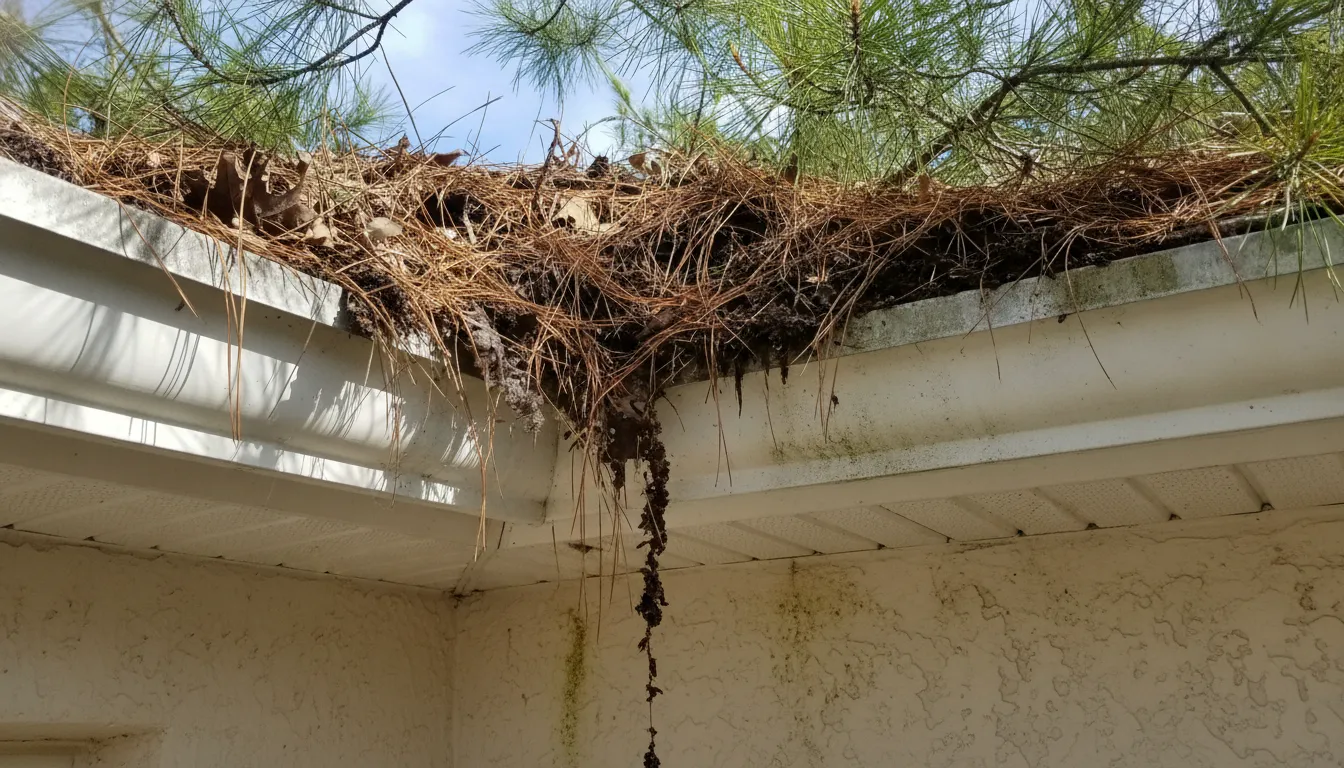
Pine needles are more difficult than broad leaves because they are narrow, lightweight, and able to collect in seams, corners, and downspout openings. Once wet, they can settle into a dense layer that blocks water flow. During St. Petersburg’s frequent thunderstorms and hurricane-season downpours, a clogged gutter may overflow against siding, landscaping, or the foundation. Florida’s hurricane-preparation guidance also emphasizes proactive landscape and drainage management, making debris control part of broader storm planning. Learn more about hurricane-season landscape management from UF/IFAS.
Mesh screens and micro-mesh
Standard mesh screens are a practical option for many homes. They allow rainwater through while catching larger leaves and much of the pine debris, and they are generally easier to inspect than enclosed systems. The tradeoff is that fine needles can lie across the mesh or work through larger openings. Screens also need a secure fit at the roof edge, because wind can lift a poorly installed section.
Micro-mesh uses much smaller openings and a tighter surface, which can be more effective against pine needles and other fine debris. It is often the leading choice when mature pines overhang the roof. However, pollen, shingle grit, and decomposing organic material can still collect on top. The system must be installed with the correct slope and water-entry design so intense rain does not skim over the guard.
Reverse-curve and helmet-style guards
Reverse-curve guards direct water around a rounded edge while debris falls away. Their enclosed design can reduce routine cleaning, but pine needles may gather along the front lip or become trapped where sections meet. They can also be more visually noticeable and may not suit every roofline. A contractor should confirm that the guard handles both the roof’s runoff volume and the home’s gutter pitch before installation.
Brush and foam inserts
Brush inserts are inexpensive and simple to place inside existing gutters. They catch pine needles above the trough, but needles can interlock with the bristles and create a layer that must be removed regularly. Foam inserts block many types of debris while letting water pass through their porous surface. In Florida’s humid environment, they may retain moisture and collect fine organic material, so they are not maintenance-free.
No guard eliminates upkeep. Before choosing an option, have the gutters checked for sagging, corrosion, loose fasteners, and restricted downspouts. Proper gutter repair and installation in St. Petersburg should address those underlying issues first, then match the guard to the property’s pine coverage and stormwater needs.
How Do Proper Gutters Protect Your Roof, Siding, and Foundation?
Properly installed gutters move rainwater away from the roofline and home, reducing the risk of roof deterioration, siding damage, and foundation erosion. In St. Petersburg’s humid, storm-prone climate, a gutter system is not merely an exterior accessory. It is part of the home’s water-management system.
For perspective, the University of Florida IFAS notes that one inch of rain falling on 1,000 square feet of roof can produce approximately 600 gallons of runoff. That volume needs a clear path from the roof to a safe discharge area. A properly sized gutter system, sound fasteners, and correctly positioned downspouts help keep that water from collecting where it can cause damage. See the guidance from UF/IFAS on managing rainwater.
Roof system and fascia protection
When gutters sag, clog, or overflow, water can run back beneath shingle edges and saturate the roof decking or underlayment. Repeated moisture exposure can contribute to wood deterioration, leaks, and premature roof repairs. Overflowing water also soaks the fascia boards behind the gutter. In Florida, moisture can wick into vulnerable roof-edge materials and cause rot. Keeping gutters clear and securely attached protects the roof’s lower edge and helps preserve the ventilation and flashing details around the eaves.
Gutter problems can also hide roof problems. Include the system in your seasonal roof maintenance instead of waiting for water stains or gutter overflow to catch your attention.
Siding and exterior wall protection
Splash-back from overflowing gutters can stain siding, accelerate paint failure, and keep exterior walls damp enough to support mildew or wood decay. Redirecting water through sound gutters and downspouts reduces that exposure. The benefit extends to windows, doors, and trim below the roofline.
Foundation and soil drainage
Concentrated roof runoff that pools beside a foundation can saturate the soil, increase hydrostatic pressure, and contribute to settlement or slab movement over time. Properly routed downspouts with splash blocks or extensions help prevent that. If the soil around a foundation often feels wet after rain, a gutter inspection is a logical follow-up.
Frequently Asked Questions
How much rainwater must a gutter system handle?
A 1,000-square-foot roof can produce about 600 gallons of runoff from just one inch of rain, according to the University of Florida IFAS. Proper sizing, secure installation, and clear flow paths help a St. Petersburg system manage heavy rainfall without overflowing.
What is the role of downspouts in a gutter system?
Downspouts move collected roof runoff away from the roofline and toward an appropriate drainage area. If runoff is discharged too close to the home, it can contribute to erosion and soil instability around the foundation. Routing is an important part of gutter repair or installation.
When should St. Petersburg homeowners schedule gutter maintenance?
Maintenance should be proactive rather than limited to repairs after a storm. Florida’s seasonal tropical weather can quickly overwhelm poorly designed or neglected systems. Professional contractors commonly provide installation, cleaning, and gutter-guard maintenance to support year-round performance.
Are gutter guards useful for homes with pine trees?
Gutter guards can reduce the amount of pine-needle debris entering the channels, but they do not eliminate maintenance. Guards still need inspection and cleaning, especially before periods of intense rainfall, and the entire system should be checked for clear drainage and secure connections.
How often should gutters be inspected in St. Petersburg?
Twice-yearly inspections are a solid baseline, with additional checks after major storms or during hurricane season. Spring and fall inspections allow contractors to address wear from winter storms or summer heat before the next heavy rain period. Properties surrounded by pine trees or large oaks may benefit from quarterly checks because debris accumulates faster.
Schedule Your Free Gutter Inspection in St. Petersburg
Well-maintained gutters help direct heavy rain away from your roofline, siding, and foundation. A professional inspection can identify loose sections, poor drainage, or storm-related wear before these issues affect your home. Call Go Time Roofing and Restoration at (727) 361-6905 to schedule your free gutter inspection in St. Petersburg today.