Standing water on your wood floors is an emergency that needs fast help from an expert. In the wet Florida air, standing water quickly seeps into the wood and causes lasting warping. You must act fast to save your home from costly repairs.
Hardwood floor water damage needs a fast response to prevent lasting warping and mold growth in the wet Florida climate where moisture seeps deep into your floor planks. Most wood floors can be saved if you address water within 48 hours to stop mold; the National Institutes of Health says this window is very critical for home health. Expert repair teams use moisture mapping and strong tools to extract deep water that homeowners cannot reach with simple fans, towels, or any other home drying tools. Taking fast action today protects your home value and keeps your family safe from the health risks that come with damp living spaces and potential mold growth now.
You need to know how to spot early signs of water damage before the wood is ruined. Our guide explains the visible Signs of Hardwood Floor Water Damage (Cupping, Crowning & Buckling) so you can catch the problem early. Finding these changes to your planks is the first step toward a good repair. The path begins with
Signs of Hardwood Floor Water Damage (Cupping, Crowning & Buckling)
Water can ruin hardwood floors quickly. If you have a leak or flood, you must watch for signs of damage. Most wood floors can be saved if you act fast. You should call Go Time Roofing and Restoration for a pro check if you see changes in your wood.
Visible wood swelling and cupping
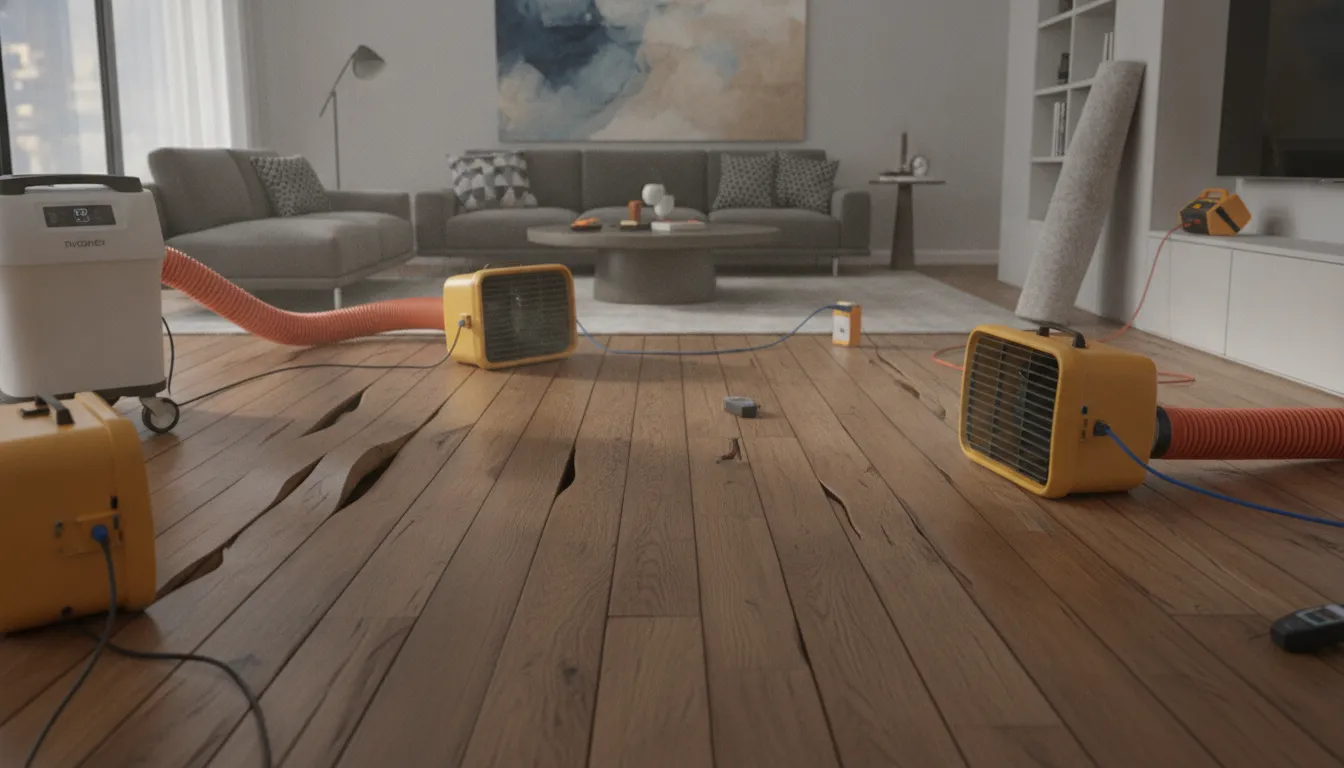
Wood swells when it gets wet. One common sign is cupping. This happens when the edges of a board rise higher than the center. It creates a U-shape across the wood. High moisture often causes this shift in the wood grain.
Cupping shows that the bottom of the wood is wetter than the top. This often comes from a leak under the floor or a wet crawl space. You must find the source of the water first. The NIH states that the first step is to see if the water is clean or dirty.
Crowning and buckling issues
Crowning is the opposite of cupping. The center of the wood board sits higher than the edges. This looks like a hump in the floor. It often happens when the top of the wood gets wet or if the floor was sanded too soon after a leak. Crowning shows that the wood is still holding too much water.
Buckling is the most severe sign of water damage. This occurs when the wood pulls away from the subfloor. The boards may lift up several inches. This happens after long exposure to water. At this stage, the wood needs pro help to dry or replace. Pro tools and moisture meters are needed to fix this level of damage.
Warping and dark spots
Warping refers to any change in the flat shape of the wood. This includes twisting or bending. You may also see dark spots or stains. These spots show where water has soaked deep into the wood. Discoloration is a clear sign that water has sat for too long.
If you see these signs, you must start drying right away. Moving fast helps stop mold and saves the wood. You should check your floors often after any storm or pipe leak to catch these signs early.
Can a Wood Floor Be Fixed After Water Damage?
Many people think they must pull up wet wood floors right away. But most water-damaged hardwood can be saved if you act fast. As said by the National Institutes of Health, you should fix water damage within 24 to 48 hours to stop mold. How well the fix works depends on how long the wood was wet and how much water there was.
Why timing matters
The longer water sits on your floor, the more damage it does. Wood acts like a sponge. It pulls in moisture and starts to swell. If you find the leak early, experts can use tools to pull the water out. This helps save the wood before it warps too much. Most floors can be saved if the wood has not spent too much time in standing water.
Solid wood versus engineered wood
The type of wood in your home changes how we fix it. Solid wood reacts in another way to water than engineered planks. Drying time also varies by the wood type and the room state. You may need professional water damage restoration to check the moisture as it leaves the wood. Each type of wood has its own risk when it gets wet.
| Feature | Solid Hardwood | Engineered Hardwood |
|---|---|---|
| Main build | One solid piece of wood | Thin wood layer on top of ply |
| Water reaction | Swells and cups slowly | Layers may peel or pull apart |
| Can it be saved? | High if dried within 48 hours | Low if the glue layers fail |
| How to fix it | Dry, sand, and refinish | Replace broken boards |
Fixing solid hardwood
Solid hardwood is one thick piece of wood. It can swell and change shape when it gets wet. This is often called cupping. Once the wood is dry, we can often sand it down. This makes the floor flat and smooth again. Since the wood is the same all the way through, you can sand it many times. This makes it easier to save than other floor types.
Fixing engineered hardwood
Engineered hardwood has a thin layer of real wood on top. Below that are many layers of wood or fiber. These layers are glued together. If water gets inside, the glue can fail. The layers may pull apart, which is hard to fix. You cannot sand these floors as much as solid wood. Often, the best way to fix the floor is to replace the boards that got wet.
The 24-to-48-Hour Mitigation Window to Avoid Mold
Timing is key when you have to save your floors after a leak. Water that sits for too long does more than just rot wood. It creates the perfect home for mold. If you act fast, you can stop this growth before it starts. Your main goal is to get the water out and dry the wood as fast as you can.
Why the first two days are critical
The first 24 to 48 hours are the most vital part of any water cleanup job. This is the window of time where you can stop mold from taking hold in your home. According to the National Institutes of Health, this short window is your best chance to stop mold growth. If the wood stays wet after this time, the risk of a mold problem goes up fast.
Mold spores are always in the air, but they need moisture to grow. When water gets under your wood floor, it often stays there. This dark and wet space is exactly what mold needs to live. Once it starts to grow, it can spread to your walls and subfloors. This makes the repair job much harder and more costly for you.
How Florida humidity speeds up mold
In places like St. Petersburg, high humidity makes things even tougher. Florida air is often full of moisture, which slows down the natural drying of your floors. If you have hardwood floor water damage, the humid air can trap wet spots under the planks. This is why you cannot just wait for the floor to dry on its own.
You need tools to pull moisture out of the air and the wood at the same time. Using water damage restoration services can help you control the air and save your floors. These pros use large tools to dry the area fast and keep the humidity low. This stops mold from getting the extra moisture it needs to grow.
When to seek professional mold help
If you find mold growth during the drying process, the job changes. You may need more than just fans and heat to fix the issue. The Environmental Protection Agency states that you should seek help if you find mold on your materials. This is when the task moves from simple drying to mold remediation.
Remediation is a full process to find, stop, and remove the mold. You should never try to just scrub mold away if the wood is still wet. Doing so can release spores into the air, which can make the problem worse. It is best to let a team handle the cleanup to keep your home safe. A quick response helps you avoid these extra steps and keeps your floors healthy.
Immediate Steps for Drying Hardwood Floors After a Leak
Finding water on your wood floors is a major stress. You must act fast to save your home. Most hardwood floor water damage can be fixed if you start within 24 to 48 hours. This short window is also the best way to stop mold from growing under your floor boards.
Find the source of the water
The first step is to find out where the water comes from. You need to know if the water is clean or dirty. Clean water might leak from a sink pipe or a fridge line. Dirty water could come from a toilet or a storm flood. Knowing the type of water helps you choose the right way to clean it up. It also keeps you and your family safe from germs.
Clear the area and remove water
Do not let water sit on your wood planks for long. Water can soak into the wood and cause it to swell or warp. First, move all rugs and couches out of the room. This lets the wood breathe and helps you see all the wet spots. Use a wet vacuum to suck up every drop of water you can find. For small spills, use dry towels to blot the surface until it is dry to the touch.
Set up tools for drying
Once the surface looks dry, you still have to deal with hidden moisture. Water can hide in the cracks between boards and in the subfloor. To fix this, you need to use the right tools. The EPA suggests using fans, gentle heat, and dehumidifiers to help the drying process. Be careful when you use heat. Too much heat can dry the wood too fast and cause it to crack or split.
- Stop the leak. Find the valve for the water line and turn it off right away to stop more damage.
- Check for safety. Make sure the water is not touching any power outlets or wires before you step into the room.
- Remove all items. Take rugs, chairs, and tables to a dry place so air can reach the entire floor.
- Extract standing water. Use a high-power wet vacuum to pull water out of the wood grains and cracks.
- Set up air movers. Place large fans around the room to blow air across the floor and help the wood dry faster.
- Use a dehumidifier. Keep this tool running to pull the damp air out of the room and keep the wood stable.
If you see your floors start to cup or lift, you should call for help. Some water damage restoration services use special mats to pull water from deep inside the wood. These tools can often save a floor that looks like a total loss. Acting fast is the best way to keep your repair costs low and your home healthy.
How Professionals Test and Map Wood Floor Moisture
Fixing hardwood floor water damage needs more than just a quick look. To save your home, experts use tools to find hidden water. They must know exactly where the wet spots are and how deep they go. This work ensures that the wood dries the right way without causing more harm. If you leave even a small wet spot, it can lead to bigger issues like rot or mold.
High-tech moisture meters
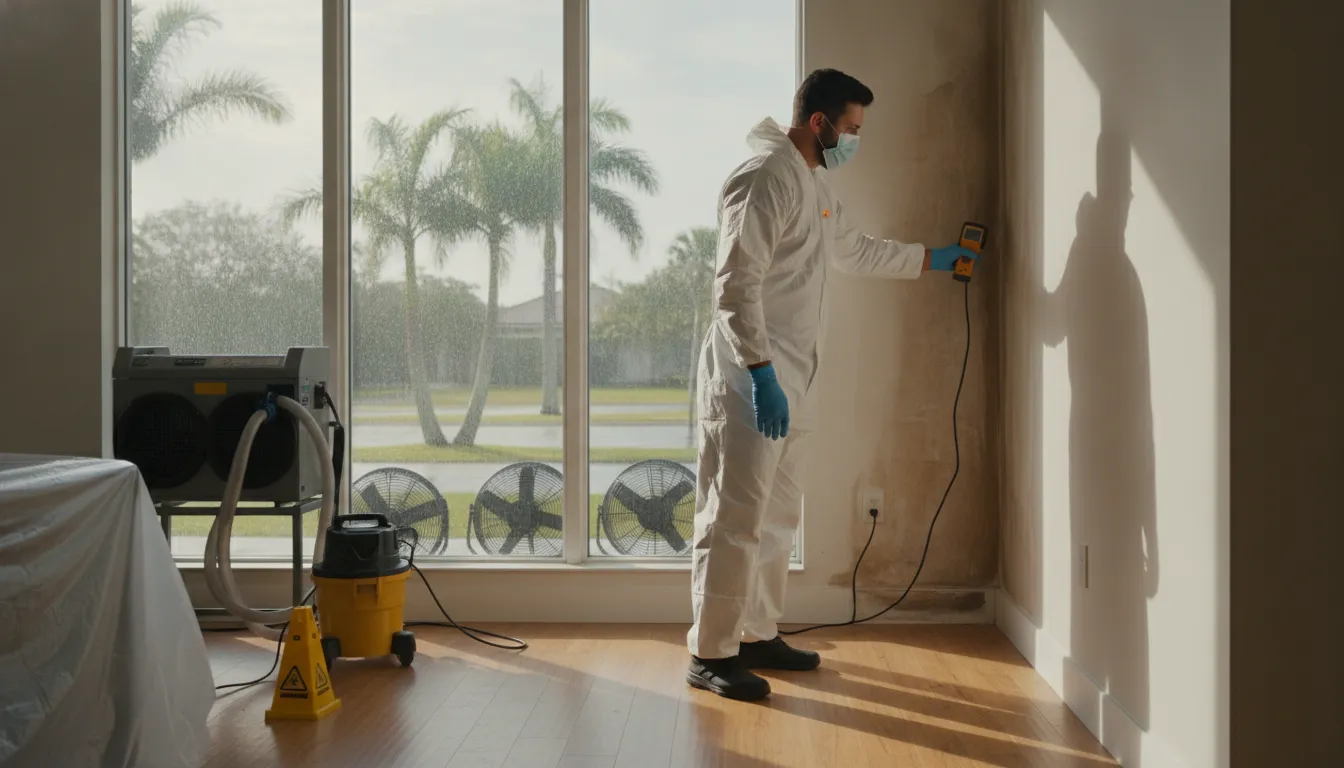
The first step in any job is using a moisture meter. These small tools tell us the exact amount of water inside your wood planks. Experts often use two types of meters. One type has pins that go into the wood. The other uses a flat plate to scan the surface. Both tools help find water that you cannot see with your eyes. We use these tools to check walls and subfloors too.
To know if a part of your home is dry, we compare the wet area to a dry one. The National Institutes of Health suggests using a moisture meter to check wet areas. You should then compare those numbers to a control reading from a dry spot. This baseline helps us set a goal for the drying process. It tells us when the wood is back to its normal state.
Smart moisture mapping
Once we have the data, we create a moisture map. This is a visual guide that shows the path of the water. It helps our team see where the water traveled under your floors. Mapping is a key part of professional water damage restoration because it directs our drying gear. Instead of guessing, we place air fans and dehumidifiers exactly where they are needed most.
A good map shows the wet and dry zones in your home. This allows us to track progress day by day. We watch the numbers drop as the drying goes on. If one spot stays wet, we know we need to change our plan. This careful tracking helps avoid over-drying, which can make wood crack or split.
Using strong extraction tools
Modern drying uses more than just fans. Experts use moisture mapping to guide the use of extraction tools. These tools pull water out of the wood grain and the subfloor below it. This is much faster and better than just drying the top of the floor. By using these strong tools, we can often save floors that look like they might need to be replaced.
The goal is to get the wood back to its dry standard as fast as we can. This standard is based on the local Florida air and the exact wood type. We keep testing until every plank hits that target. This full approach stops the damage and keeps your home safe for years to come.
Does Homeowners Insurance Cover Water-Damaged Wood Floors?
Whether your home insurance covers hardwood floor water damage depends on your exact policy and what caused the leak. Most plans cover water issues that are sudden and happen by chance, like a burst pipe or a broken tank. But coverage is not a sure thing. The water damage restoration services you need often start with a pro check to find the root cause of the leak.
Sudden vs. slow water damage
Insurance firms look at how the water got to your floor. If a pipe breaks and floods your room in an hour, your policy likely pays for the fix. This is because the event was sudden. But if a small leak under the sink drips for months, the firm might say no. They often view slow leaks as a lack of home care. Taking fast action is key because water can ruin wood in a short time.
As said by the National Institutes of Health, the first step is to check the water source. You must find if the water is clean or dirty to help with your claim. This data helps the firm see the type of work needed and the cost to fix the wood. Clean water from a pipe is much easier to dry than dirty water from a sewer drain.
Policy limits and flood rules
A home policy often has limits on how much it will pay for floor work. You should read your policy to see your caps. This helps you know the max amount the firm will pay for a new wood floor. Most plans also have a deductible that you must pay first.
It is also key to know that most home insurance does not cover floods. In Florida, water that rises from a storm or heavy rain is called a flood. You need a new flood policy to cover damage from these events. Without it, you may have to pay for the new floors out of your own pocket.
How to show your floor damage claim
To get the most from your claim, you must show proof of the damage. Start by taking clear photos and videos of the wet wood. Do not throw away any broken items until the pro sees them. Good records make it much easier for the firm to help you with your request.
- Take photos of the leak source and the wet floors.
- Save any broken parts, like a cracked pipe or a worn hose.
- Write down the date and time you first saw the water.
- List any other items, like rugs or furniture, that got wet.
Hiring a pro can help with this task. Experts use tools to map the wet areas in your home. This gives you hard facts to show the insurance firm. A clear report can speed up your claim and help you get the cash needed to fix your home fast.
Frequently Asked Questions
How long does it take for hardwood floors to dry completely?
Drying times for wood floors vary based on the wood type and how much water they soaked up. In wet areas like Florida, the process often takes a few days or even weeks. Based on Go Time Roofing and Restoration, how bad the damage is and the local air play a big role. Experts must check the water levels daily to make sure the wood is dry before any repair work starts.
Is it possible to repair water damaged hardwood without refinishing?
You can sometimes save water-damaged wood without a full refinish if you act fast. According to Go Time Roofing and Restoration, most wood floors can be saved if the damage is caught early. If the water was clean and the planks only have minor cupping, drying tools might pull the moisture out. However, if the wood has deep stains or bad warping, you will likely need to sand the surface.
How long does it take for hardwood floors to show water damage?
You might see signs of water damage like cupping or swelling within just a few hours of a leak. However, some issues take days or weeks to show up as water moves deep into the wood. The NIH says the first 24 to 48 hours are the most vital for stopping long-term problems like mold. Catching leaks early is the best way to prevent permanent stains or wood that needs to be replaced.
Can I use fans to dry out water damaged wood floors?
High-speed fans help move air, but they are rarely enough to dry wood floors on their own. Experts often use a mix of fans, large tools to remove damp air, and gentle heat to pull water from deep inside the wood. The EPA suggests using these tools together to speed up the work. Without the right gear, you might just move damp air around, which can lead to mold growth in Florida’s wet climate.
Ready to request an expert wood floor moisture inspection?
Leaving water on your wood floors for one day can cause lasting warping and mold growth and leads to repair bills that take weeks to finish. If you wait, the wetness will seep deep into the subfloor and ruin the frame of your home, so you must act fast to save money. Our expert team uses water damage restoration tools to dry your home quickly and avoid long-term damage to keep your family safe. Acting now protects your property and your wallet before the damage gets worse and you must replace the entire floor system in your Florida home.
Ready to request a professional moisture inspection? Call (727) 430-3079 to request a professional moisture inspection and emergency water extraction.