A flat roof rarely fails all at once. In Tampa Bay, heat, sun, humidity, and storms steadily weaken seals, flashings, and membrane surfaces. Those problems stay easy to miss from the ground. For a commercial property owner, a maintenance plan turns hidden risks into scheduled, manageable work.
Schedule your free commercial roof inspection in St. Petersburg today. Call (727) 361-6905.
Commercial roofing maintenance tampa bay programs help extend the service life of roofing materials, reduce premature failures, and support warranty requirements through documented upkeep. The right plan focuses on inspections, drainage, roof penetrations, storm preparation, and prompt correction of small defects before moisture reaches the building interior.
The most effective approach is preventative rather than reactive. It begins with understanding how routine inspections and timely maintenance protect your operating budget, tenant spaces, equipment, and long-term capital plans. For building owners who need a starting point, Go Time’s commercial roofing page outlines the service options available to Tampa Bay properties.
Why Commercial Roofing Maintenance in Tampa Bay Pays for Itself
Commercial roofing maintenance matters because routine care helps a roof reach its intended design service life, rather than failing early from overlooked damage. For property owners, scheduled inspections provide a controlled way to identify drainage, membrane, and flashing problems before they become disruptive capital expenses.
That is why commercial roofing services should include a documented maintenance plan, not only emergency response after a leak appears.
Maintenance protects the roof’s service life
Every commercial roof is designed to perform for a service life under expected conditions. Routine maintenance is critical to achieving that service life, according to the National Roofing Contractors Association’s maintenance guidance. Inspections give a roofing professional an opportunity to find small defects, clear drainage paths, and address vulnerable details while the repair scope remains focused.
This is especially important in Tampa Bay, where heat, humidity, heavy rain, and storm activity place repeated demands on low-slope roof systems. A missed issue can remain hidden until water reaches insulation, decking, or occupied space. The resulting work may involve more disruption than a planned inspection and repair visit.
Documentation supports warranty protection
Maintenance records also protect more than the physical roof. Most manufacturers require documented annual maintenance to keep product warranties in force. A central file should record inspection dates, observed conditions, completed repairs, photographs, and relevant material information.
These records help demonstrate that the property owner followed a reasonable upkeep program. They can also give facility managers a clearer basis for budgeting and communicating with building owners, tenants, insurers, and roofing contractors.
Drainage problems create avoidable costs
Standing water is one of the clearest reasons to keep inspections on schedule. Ponding that persists beyond 48 hours is a performance failure and can significantly reduce the lifespan of flat roofing materials. Water adds ongoing stress to seams and other roof components, while blocked drains can allow the problem to continue after each storm.
Scheduled inspections usually cost less in operational disruption than premature replacement, even when the exact financial difference depends on roof size, system type, access, and damage severity. The practical comparison is predictable maintenance with planned repairs versus an unplanned replacement, interior damage, tenant interruption, and urgent scheduling. A written inspection program helps property owners make that decision with evidence instead of reacting under pressure.
NRCA maintenance education provides additional guidance on protecting commercial roofing performance through ongoing care.
How St. Petersburg Heat, Humidity, and UV Stress Commercial Roofs
St. Petersburg’s coastal climate places commercial roofing systems under repeated heat, moisture, sunlight, and salt exposure. These conditions do not always create an immediate leak, but they can weaken the details that keep water outside the building.
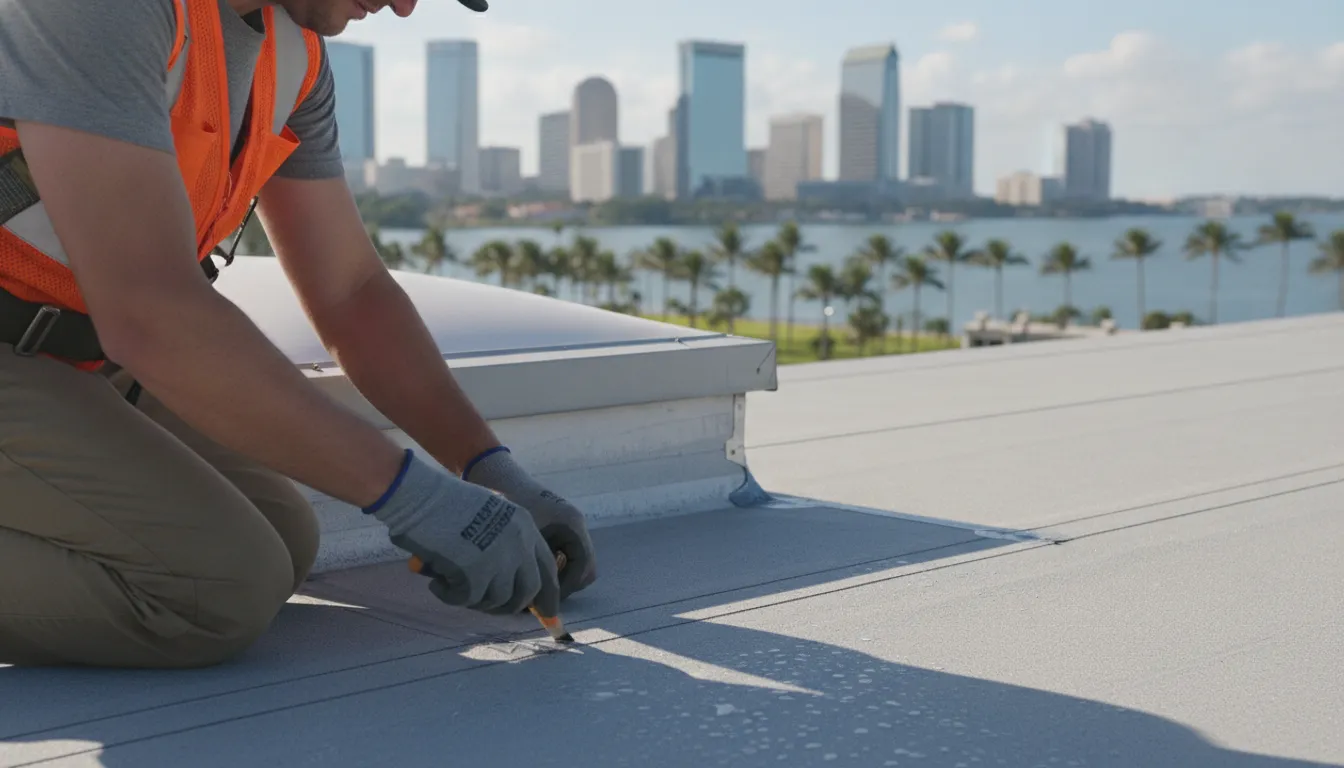
Heat and moisture cycles accelerate sealant degradation around flashings, curbs, and other transitions. As sealants lose flexibility, small gaps can develop around roof penetrations and edges. A maintenance inspection should look for brittle, shrinking, or separated sealant before heavy rain turns a minor weakness into interior damage. The National Roofing Contractors Association’s maintenance guidance supports regular inspection and upkeep as part of protecting roof performance.
Salt air increases corrosion risk near the coast
Commercial properties near St. Petersburg’s waterfront, barrier islands, and coastal Pinellas communities face additional exposure from salt-laden air. Salt-air corrosion can degrade metal fasteners and flashings faster than in inland environments. During inspections, property managers should check exposed metal for rust, surface deterioration, loose attachments, and failed protective finishes. Corroded components may no longer provide a reliable connection or watertight transition.
Florida sun exposes pitch pans and surface materials
Intense Florida sunlight can dry and crack the sealant inside pitch pans around pipes. Because these penetrations are common leak points, they deserve close attention during scheduled roof maintenance rather than a quick visual check from the ground. A contractor can determine whether the sealant needs repair or whether the surrounding assembly has also been affected.
Heat and ultraviolet exposure also make surface condition important. Inspectors should document cracking, brittleness, open seams, and other changes that may allow moisture beneath the membrane. Early documentation helps separate normal aging from damage that requires immediate correction.
Humidity supports biological growth
St. Petersburg’s humidity can support algae and other biological growth on commercial roof surfaces. The growth may appear cosmetic at first, but some biological growth can physically deteriorate membrane surface layers. Scheduled maintenance should identify growth, assess the affected material, and use a cleaning approach compatible with the roof system. Aggressive pressure washing or unsuitable chemicals can create additional damage.
A climate-specific maintenance plan connects these observations instead of treating them as isolated defects. By tracking sealants, metal details, pitch pans, and membrane surfaces over time, facility managers can prioritize work before Tampa Bay weather exposes a larger failure.
What a Tampa Bay Commercial Roof Inspection Schedule Looks Like
A dependable inspection schedule includes at least two reviews each year: one before peak hurricane conditions and one after the season ends. This cadence supports commercial roofing maintenance tampa bay property owners can use to identify small vulnerabilities before heat, heavy rain, or wind turns them into a disruption.
- Complete the pre-hurricane inspection. Before the most active storm period, inspect the roof surface, drainage paths, edges, and visible membrane seams. Clear loose branches, trash, and other debris that could become dangerous projectiles in high winds. Pay close attention to seams and edge details that may be vulnerable to wind uplift, especially where the membrane appears loose, separated, or inadequately secured. The National Roofing Contractors Association’s roof repair and maintenance education also emphasizes planned upkeep instead of waiting for a failure.
- Inspect after significant storms and after hurricane season. A post-storm review should look beyond obvious punctures or interior leaks. Wind uplift can loosen seams or other roof components without creating damage that is visible from the ground. Document suspicious movement, lifted edges, or changes in the membrane, then arrange a closer professional evaluation before water enters the assembly.
- Check flashings and roof penetrations. Examine flashing and seals around HVAC equipment, vents, pipes, curbs, and other penetrations. These transitions are common moisture entry points on commercial roofs. Because Tampa Bay heat and moisture cycles can accelerate sealant deterioration, a visual check should note cracking, gaps, open joints, or failed attachment that needs correction.
- Review pitch pans and sealant condition. Pitch pans around pipes deserve their own inspection rather than being treated as ordinary flashing. In Florida’s intense sunlight, the sealant can dry and crack. Verify that each pan remains properly sealed, and flag brittle or separated material for professional repair before the next period of heavy rain.
- Evaluate drainage and ponding. Confirm that drains, gutters, scuppers, and surrounding surfaces are free of debris and vegetation. After rainfall, note areas where water remains. Ponding that lasts beyond 48 hours indicates a performance failure, can increase pressure on seams, and may shorten the life of the roofing materials. Record the location and escalate recurring ponding for corrective evaluation.
Keep dated notes and photographs from every inspection so the property team can compare conditions over time. A consistent record also makes it easier to prioritize repairs and coordinate the next review with a qualified commercial roofing services provider.
Ponding Water: Why Standing Water Is a Flat Roof’s Worst Enemy
Ponding water that remains on a flat roof beyond 48 hours is a performance failure, not a harmless puddle. Prolonged standing water can significantly reduce the roof’s service life by keeping the membrane wet, stressing seams, and increasing the chance of leaks.
In Tampa Bay, drainage deserves particular attention after heavy rain and tropical weather. Vegetation, leaves, and windblown debris can obstruct drains and create the conditions for ponding. The NRC-IRC’s guidance on flat roof inspection and maintenance supports routine checks of drainage, membrane condition, and other details that affect performance.
| Condition. | Membrane life. | Leak risk. | Structural load. | Action needed. |
|---|---|---|---|---|
| Free-draining roof. | Supports the roof’s intended service life. | Lower drainage-related risk. | Normal design conditions. | Keep drains, scuppers, and surrounding areas clear. |
| Debris-restricted drain. | Performance can decline if moisture remains. | Risk increases as water collects near seams and details. | Additional water weight may accumulate. | Clear debris and inspect the drainage path promptly. |
| Ponding over 48 hours. | Significantly reduced service life. | Higher risk of water infiltration. | Hydrostatic pressure can stress seams. | Arrange professional evaluation of drainage and membrane condition. |
Why clogged drains create more than a maintenance nuisance
Clogged drains allow water to remain on the roof instead of moving through the intended drainage system. That water creates hydrostatic pressure on membrane seams, raising the risk of seam compromise and leaks. Clearing vegetation and debris from drains is therefore a preventive measure, not merely a cosmetic cleanup.
Maintenance crews should look for recurring ponding, separated seams, membrane movement, and signs that water is following an unintended path. A drain that is clear today may still point to a slope or drainage design issue if the same area repeatedly holds water after rainfall.
When to call for a closer assessment
Contact a qualified roofing professional when ponding lasts beyond the 48-hour threshold, returns after routine cleaning, or appears near penetrations and seams. A targeted inspection can distinguish a blocked drain from a broader drainage or membrane problem and help prioritize corrective work.
For buildings that need follow-up, Go Time Roofing can assess options for commercial flat roof repair in St. Petersburg. Addressing drainage conditions early helps property managers protect the roof system and reduce avoidable disruption.
Membrane Repairs and Small Fixes That Stop Big Leaks
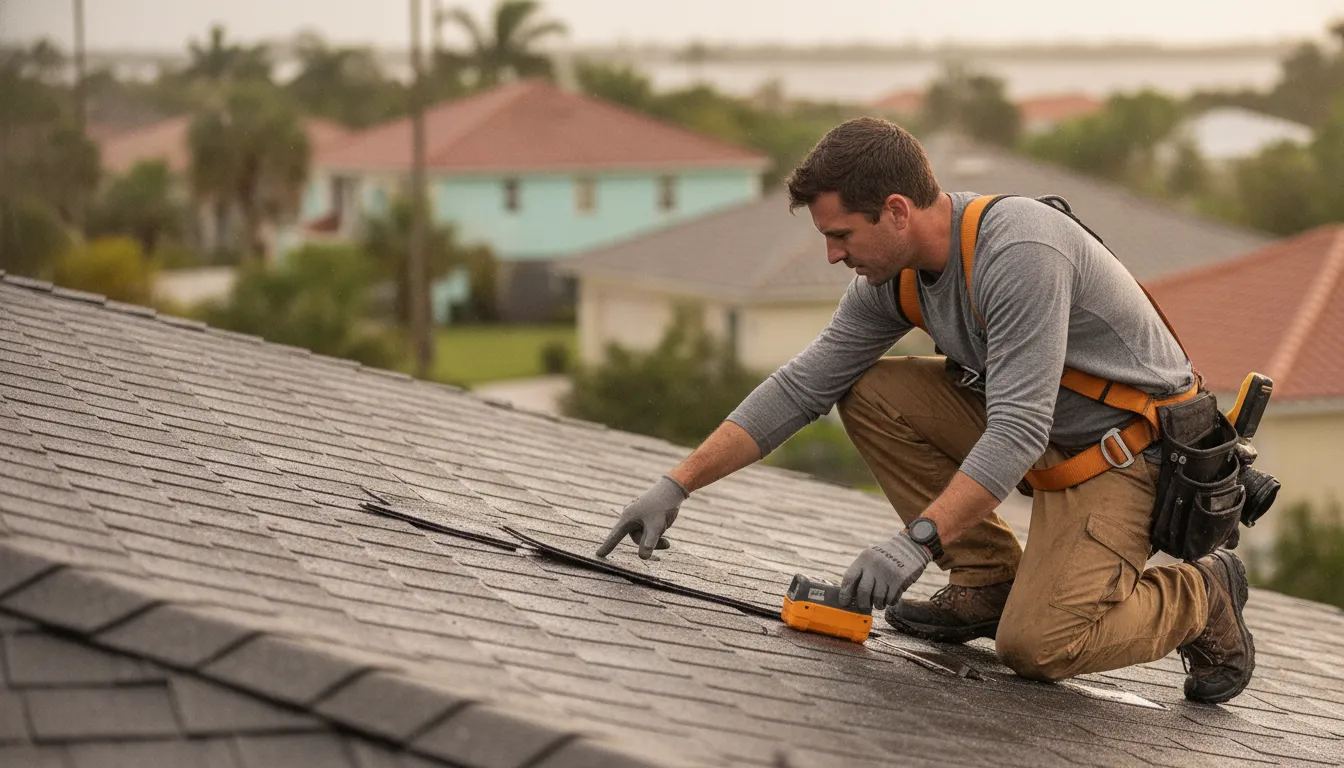
Small membrane defects deserve prompt attention because a minor leak can become interior damage or mold growth in a humid Tampa Bay building. A focused maintenance visit can often identify and correct weak points before the roof requires a larger repair.
NRCA guidance emphasizes routine inspection and maintenance as essential to preserving a commercial roof’s service life. Read the NRCA roof repair and maintenance guidance for additional background on evaluating roof conditions and planning corrective work.
Inspect the places where water enters first
Flashings and penetrations around HVAC units, vents, and pipes are among the most common moisture entry points. These transitions deserve close attention during every maintenance visit, especially after heavy rain or work performed on rooftop equipment.
Pitch pans are another frequent trouble spot. In Florida’s intense sunlight, the sealant around pipes can dry out and crack. Replacing deteriorated sealant while the opening is still localized can prevent water from migrating into insulation and interior finishes.
Protect the membrane during rooftop work
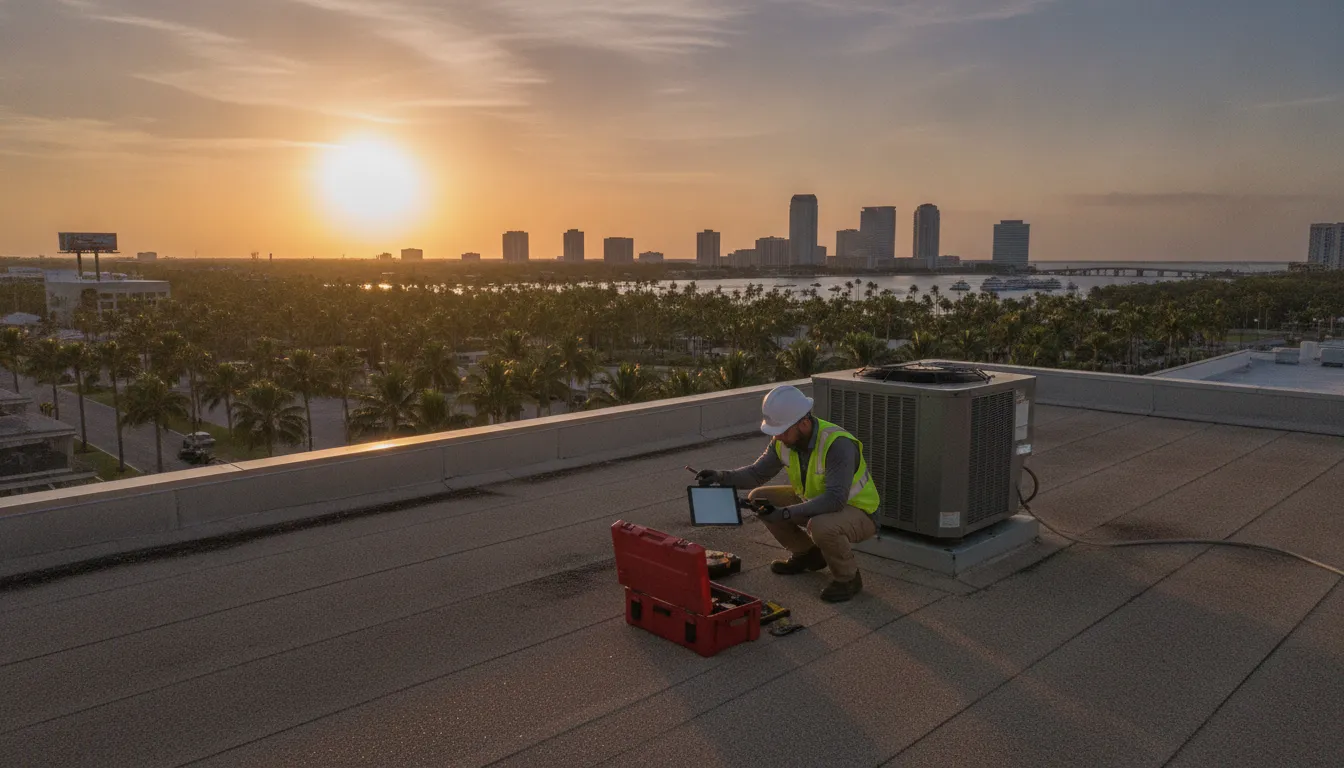
HVAC servicing is a frequent cause of accidental roof damage. Technicians should use appropriate walk paths, protect the membrane from tools and equipment, and avoid dragging components across the surface. A service call that leaves behind a puncture can create a leak long after the HVAC work is complete.
Property managers should also document any rooftop activity and request a quick visual check after contractors leave. Look for fresh cuts, loose flashing, displaced protective materials, or debris near drains and penetrations. These simple checks make it easier to connect a new defect with the work that caused it.
Know when a surface symptom needs evaluation
Blistering often signals trapped moisture beneath the membrane. Do not puncture or flatten a blister without professional evaluation, since opening the surface can spread damage or introduce more water. A qualified roofing professional can determine whether the area needs localized repair, drying, or broader investigation.
This preventative approach is different from responding to an active failure across a larger roof area. If a defect has already developed into recurring leaks, compare the needed scope with this guide to commercial flat roof repair. The goal of maintenance is to catch the puncture, cracked seal, or membrane symptom while the correction remains limited and manageable.
Roof Coatings and Restoration vs. Replacement: A Tampa Bay Decision
A well-maintained commercial roof may be a candidate for restoration or a reflective coating when its membrane remains fundamentally sound. Replacement is the safer course when moisture, widespread failures, or underlying damage means a surface treatment cannot restore dependable performance.
When restoration or coating may make sense
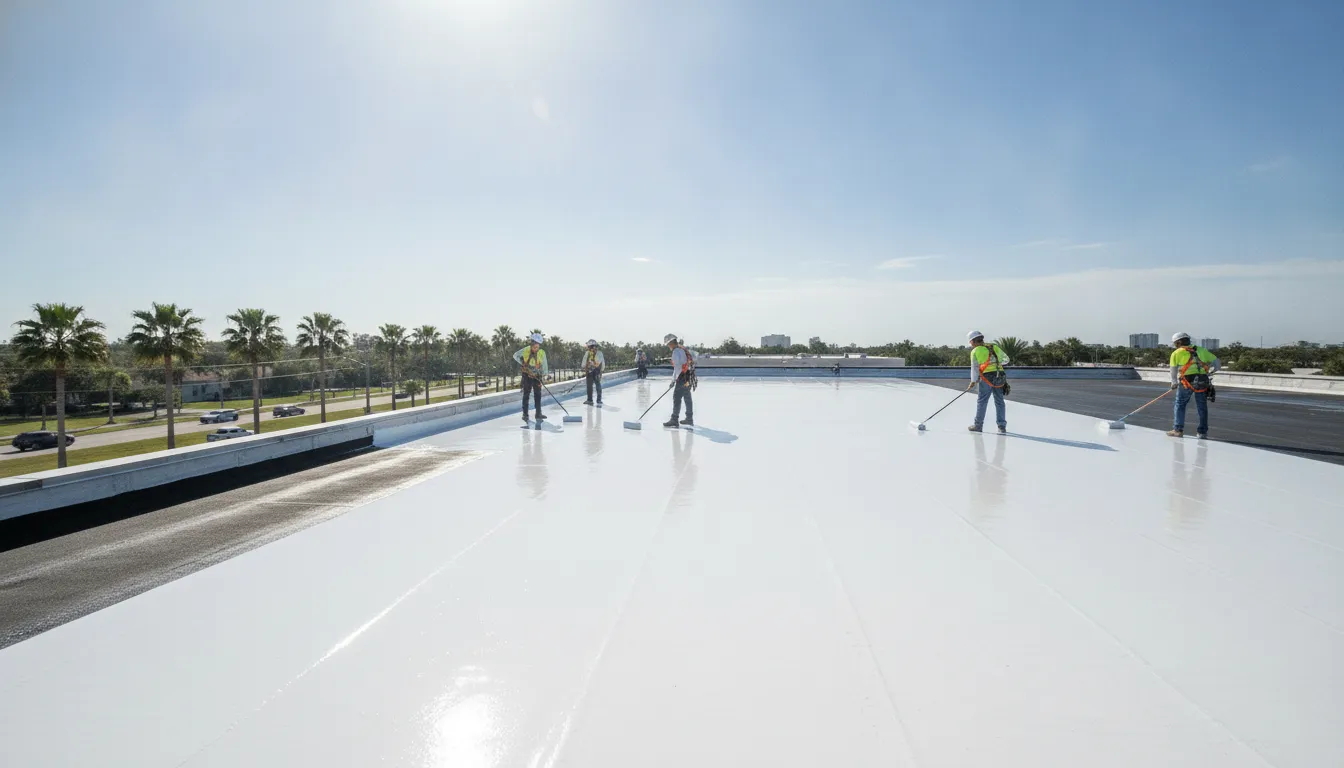
Coating is a maintenance upgrade, not a way to conceal an unresolved roof problem. It may be appropriate when inspection confirms that the existing membrane is attached, reasonably intact, and free of extensive wet insulation or structural concerns. The preparation work matters as much as the coating itself. A professional assessment should identify leaks, open seams, damaged flashings, blisters, and areas that need repair before any coating is considered.
Reflective systems can also suit Tampa Bay buildings exposed to intense sun and heat. The EPA explains that cool roofs reflect solar energy and reduce heat transfer into a building. For commercial and industrial structures, light-colored reflective coatings can increase solar reflectance and reduce cooling loads. EPA guidance on cool roofs provides the technical background, but the right product and application still depend on the existing roof system and site conditions.
When replacement is the better decision
Replacement deserves serious consideration when deterioration is widespread, moisture has migrated beneath the membrane, or recurring leaks continue after appropriate repairs. Extensive blistering, failed seams, saturated insulation, and compromised roof edges can indicate that the problem is deeper than the surface. In those situations, applying a coating without addressing the underlying condition may delay a larger decision rather than solve it.
Building owners should also consider the roof’s remaining service potential, drainage performance, equipment changes, and planned ownership horizon. If the system cannot provide a stable substrate for restoration, a new assembly may offer a more predictable path. Go Time Roofing’s commercial roof replacement service page can help property managers evaluate that option alongside inspection findings.
Why maintenance records improve the decision
A documented maintenance history makes the coating-versus-replacement decision more accurate. Inspection reports, repair invoices, leak locations, moisture findings, and records of prior coatings show how the roof has performed over time. They also help distinguish an isolated maintenance issue from a pattern of system-wide deterioration.
Ask for a written recommendation that identifies observed conditions, completed repairs, areas requiring monitoring, and the reason restoration or replacement is advised. That evidence gives owners a clearer basis for budgeting and scheduling work, without relying on an estimate detached from the roof’s actual history.
Hurricane Season Prep and the Maintenance Records That Protect You
For Pinellas County commercial properties, hurricane preparation should be part of the maintenance program, not a last-minute response. The Atlantic hurricane season runs from June 1 through November 30, and coastal exposure can place additional stress on roof edges, flashings, seams, and rooftop equipment. A documented inspection before the season and a prompt review after major weather give facility teams a clearer basis for action.
In practical terms, commercial roofing maintenance in Tampa Bay should include both physical preparation and disciplined recordkeeping. Together, they reduce preventable hazards, reveal developing damage, and give owners useful evidence for insurance and capital decisions.
Clear loose debris before high winds arrive
Pre-hurricane maintenance should begin with a careful roof-surface inspection. Remove loose materials, abandoned equipment parts, packaging, branches, and other debris that could become hazardous projectiles during hurricane-force winds. Crews should also check drainage paths and confirm that access points remain clear, since blocked drainage can leave water standing after heavy rainfall.
Document the work with the inspection date, roof areas reviewed, conditions found, corrective actions, and photographs. The National Roofing Contractors Association identifies routine maintenance as critical to achieving a commercial roof’s design service life. Its roof repair and maintenance guidance also supports treating upkeep as an ongoing program rather than an isolated repair.
Inspect for damage that ground-level views miss
After a storm, do not rely on a visual check from the parking lot. Wind uplift can loosen components or compromise seams without producing an obvious interior leak. A qualified inspection should examine membrane seams, perimeter details, flashings, penetrations, and rooftop equipment attachments for subtle movement or separation.
When moisture concerns are not visible, infrared thermal imaging can help locate trapped moisture beneath a low-slope membrane. Finding these moisture pockets early may help prevent more extensive structural damage and supports a more precise repair scope.
Turn maintenance records into an operating asset
Keep inspection reports, photographs, invoices, repair descriptions, warranty information, and storm-related findings in one centralized file. Maintained records and regular inspection logs can improve the speed and success of insurance claim processing after weather events. They also help owners distinguish storm damage from pre-existing conditions.
Over time, the same record supports capital planning. A clear history of recurring repairs, membrane condition, and moisture findings helps property managers prioritize restoration, coating, or replacement before an emergency forces the decision.
Frequently Asked Questions
How often should a commercial flat roof be inspected in Tampa Bay?
Schedule at least two professional inspections each year, ideally before and after the peak storm and hurricane season. Add inspections after significant storms, construction activity, or major rooftop equipment work. This schedule helps identify drainage, flashing, membrane, and penetration problems before they interrupt operations. NRCA maintenance guidance supports routine inspections as part of achieving a roof’s design service life.
How quickly should ponding water be addressed on a flat commercial roof?
Address standing water promptly, especially when it remains for more than 48 hours. Persistent ponding adds pressure to seams, increases water-infiltration risk, and can shorten membrane life. The inspection should look for clogged drains, blocked scuppers, damaged drainage components, and low areas that need correction. NRCA guidance identifies ponding beyond 48 hours as a performance concern.
What should a commercial roof maintenance inspection include?
A thorough inspection should cover the membrane, seams, flashings, roof edges, drains, penetrations, pitch pans, HVAC service areas, and signs of trapped moisture. In coastal Pinellas locations, inspect metal fasteners and flashing for salt-air corrosion. After a storm, the technician should also check for subtle wind-uplift or seam damage that may not be visible from the ground.
Can a roof coating or restoration program delay replacement?
It may, when the existing roof is structurally sound and the membrane, drainage, and substrate are suitable for restoration. Reflective coatings can reduce solar heat absorption and cooling loads in warm climates, according to the U.S. Environmental Protection Agency. A professional evaluation should confirm whether coating is appropriate or whether widespread moisture, deterioration, or structural concerns require replacement.
Why keep detailed commercial roof maintenance records?
Centralized records document inspections, repairs, material updates, storm findings, and recurring problem areas. They support capital planning, help demonstrate warranty upkeep, and provide useful evidence when weather damage leads to an insurance claim. Keep inspection reports, photographs, invoices, and repair recommendations together for each property.
Ready to Schedule Your Commercial Roof Inspection?
A scheduled inspection can help you understand your flat roof’s current condition and plan maintenance around Tampa Bay’s demanding weather. Go Time Roofing and Restoration can review the system with your property’s needs in mind. To schedule a free commercial roof inspection, call (727) 361-6905 and speak with our team.