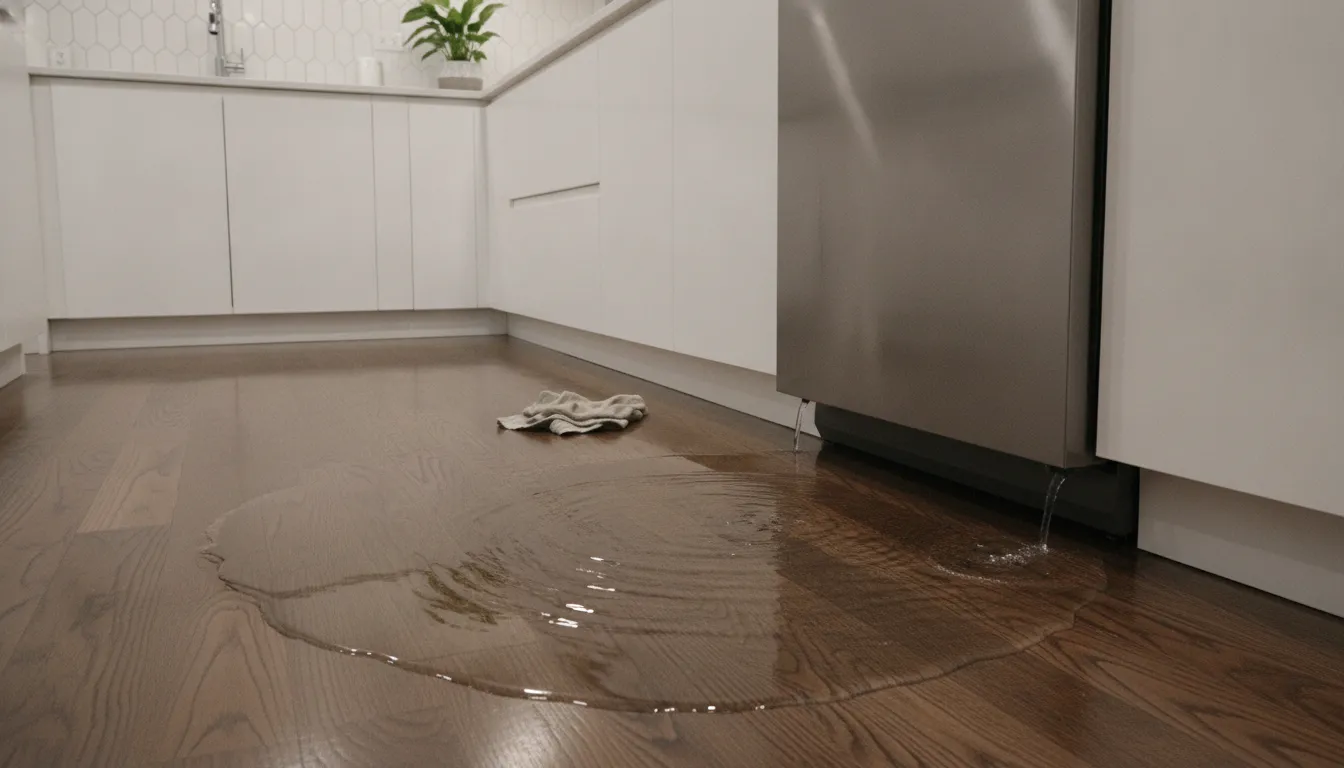
A silent dishwasher leak can rot your kitchen subfloor and breed mold behind your cabinets within two days. You should act fast to save your home from water damage.
Faced with a kitchen appliance leak? Contact Go Time Roofing & Restoration at (727) 361-6905 for an emergency water damage assessment, or learn about our professional mold remediation services.
Professional dishwasher leak water damage cleanup must start within 48 hours to stop rot and mold in your kitchen floor and cabinets. This cleanup involves stopping the leak, removing all water, and using large fans to dry wood, cabinets, and drywall before they bend or rot. Since dishwashers use very hot water, the heat can melt glue and ruin floor tiles much faster than a cold water pipe leak. According to the EPA, keeping things dry is the best way to stop mold from growing after a flood or appliance leak. Acting fast saves your floor and cuts the risk of high repair costs or long-term health issues from hidden wet spots behind your kitchen walls.
Many people do not know why their appliance started leaking or how to spot the early warning signs of a failure. Solving this problem requires knowing exactly what went wrong in your kitchen so you can fix it for good. Protecting your home starts with finding the root of the issue, and the path begins with Common Causes of Dishwasher Leaks in Florida Homes.
Common Causes of Dishwasher Leaks in Florida Homes
Dishwashers are hard workers in our homes. In Florida, they face tough times. High heat and wet air can wear down parts faster than in other places. Finding a leak early helps you avoid big repair bills. If you see water on the floor, you need to act fast. A small pool of water can lead to a big mess if you wait.
Damaged door seals and gaskets
The door seal is a thick rubber piece that keeps water inside. Over time, this rubber can get dry and brittle. This is common in Florida because of the moist air. When the seal cracks, water seeps out during the wash cycle. You should check for these signs of a bad seal:
- Water spots on the floor near the door.
- Loose or peeling rubber pieces.
- Cracks in the gasket surface.
- Food bits stuck in the seal gap.
You should check the edges of your door often for any signs of wear. Catching a small gap now saves you from a big floor repair later.
Clogged drain lines and faulty valves
A clogged drain line is another top cause of leaks. Food waste can build up and block the flow of water. This force can make the hose leak or even burst. The inlet water valve is also a key part. It lets water into the machine. If this valve breaks, it might not shut off all the way. This can cause the tub to fill up too much and spill out.
Florida’s climate and your kitchen
The air in Florida is full of moisture most of the year. Wet air can make metal parts rust and rubber parts fail. It also makes it harder for the area under your dishwasher to dry on its own. If water gets under your cabinets, the wet air keeps it there. This can cause the wood to rot or warp. Quick action is the best way to save your floors and home.
Florida’s heat makes risks of DIY dishwasher leak cleanup higher for many owners. Moist air helps mold grow fast. In fact, mold can grow on wood and drywall in just 24 hours if they stay wet. This makes a dishwasher leak water damage cleanup job urgent. You must dry the area well to keep your kitchen safe and clean.
The Hidden Risks: Water Damage Under Cabinets and Flooring
A slow dishwasher leak can be hard to spot until it causes big problems. Most people do not see the water because it pools under the unit or behind the kickplate. Over time, this small drip creates a wet area where mold thrives. Since a dishwasher uses water that reaches 110 to 170 degrees Fahrenheit, the heat can cause wood and glue to break down even faster. If you do not start dishwasher water damage professional restoration quickly, the costs to fix your kitchen will grow.
How slow leaks hide in plain sight
Small leaks often start at the door seal or the supply line. Because the water moves slowly, it may never reach the open floor where you can see it. Instead, the liquid seeps into the subfloor or stays under the cabinets. This trapped moisture is dangerous because mold can start to grow on wood and drywall in just 24 hours. The EPA says that keeping areas dry is the best way to stop mold growth. Without a tool to check for moisture, you might miss a leak that is rotting your home from the inside out.
Signs of water damage under cabinets
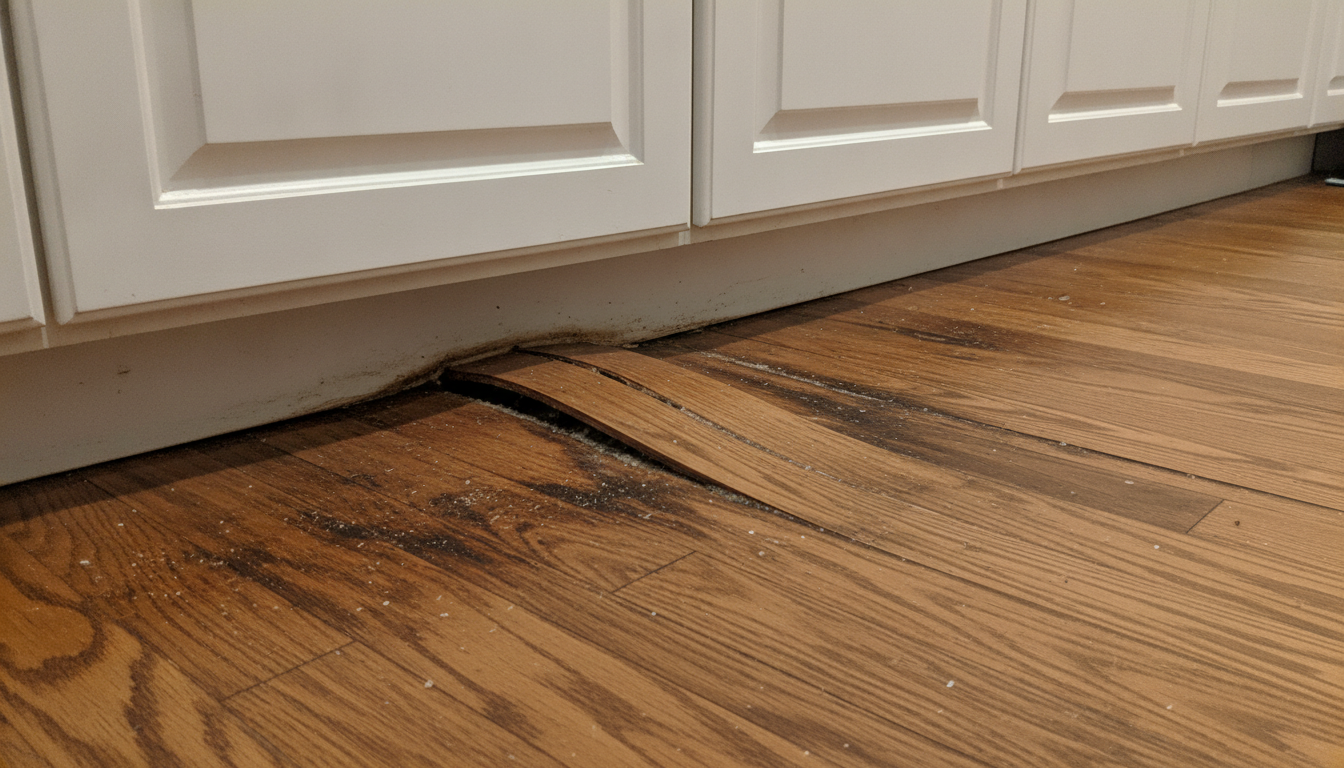
Your kitchen cabinets are often the first to show signs of a leak. Look closely at the baseboards and the bottom of your sink or dishwasher area. You might see the wood begin to swell or warp. This happens when the porous wood fibers soak up water and expand. Stains that look like dark rings are also a common sign of a hidden drip. If you notice a musty smell, it is a strong signal that mold has already started to form behind the wood. Taking immediate water damage cleanup steps helps to dry these tight spaces before the wood rots away.
- Warped or buckling cabinet floors.
- Discolored baseboards near the appliance.
- Peeling paint or finish on wood surfaces.
- Musty odors that do not go away.
Damage to kitchen flooring and baseboards
Kitchen floors often hide water damage until the boards begin to lift. If you have wood or laminate, look for edges that curl up. This is called cupping. It shows that the bottom of the floor is wetter than the top. Tile floors may have loose grout or tiles that feel hollow when you step on them. Because water follows the easiest path, a leak in one spot can travel several feet under the floor. This makes a full check of the subfloor vital to your home’s health. Acting within the first 48 hours prevents wood rot and keeps your kitchen safe.
In St. Petersburg, the damp air can make these hidden leaks even worse. The humid air holds onto moisture, which slows down the drying process. Our team uses heavy tools to pull water from deep inside the walls and floors. We make sure the home is safe and dry before we start any repairs. This step is a key part of IICRC-certified work that helps with your insurance claim. By starting the dishwasher leak water damage cleanup early, you save your kitchen from a much larger and more costly rebuild.
Immediate Dishwasher Leak Water Damage Cleanup Steps
A dishwasher leak can start as a small drip or a large flood. Either way, you must act fast. Water from these units is often hot. This heat can warp wood floors or damage kitchen boxes fast. If you do not start immediate water damage cleanup steps within 24 to 48 hours, you may face mold. The EPA says that moisture control is the best way to stop mold after a leak. You need to stop the flow of water and dry the area to save your home from harm.
Safety and shutting down the source
Your first move should always be safety. Since dishwashers use both water and power, a leak creates a risk of shock. Do not step into a puddle if the unit is still plugged in. You should turn off the power at your breaker box before you touch the wet area. Once the power is out, you can focus on stopping the leak. Most units have a shut-off valve under the sink. Turn this handle to the right to stop the flow. If you cannot find it, you may need to turn off the main water line for the whole house.
- Shut off the water. Find the valve under your sink or behind the machine. Turn it off to stop the flow of water.
- Cut the power. Flip the switch at your breaker box. This keeps you safe from any risk of shock from wet wires.
- Clear the area. Move wet rugs, towels, or kitchen tools away from the spot. Do not let them trap more moisture.
- Soak up the mess. Use a mop, old towels, or a wet vac to remove all water from the floor surface.
- Check the wood. Open the doors under your sink. Use a light to find any drips that may be soaking into the cabinets.
- Start a fan. Point a high-speed fan at the wet spot. This helps move the air and makes the drying process go fast.
Clearing surface water fast
Clearing standing water is a vital part of dishwasher leak water damage cleanup. If water sits for more than 24 hours, it can soak into the floor. Mold can grow on wood and walls quickly in these damp spots. You should use a wet vac to pull water out of gaps in your floor. If you have wood floors, they may bend or pop if the water stays too long. It is also smart to remove the plate at the base of the unit. This lets you see if water has pooled under it, where it can cause rot you cannot see.
Once you have cleared the surface water, you must focus on deep drying. Even if the floor feels dry to the touch, wetness might be trapped in the walls. You can use large fans and drying tools to help. If the damage looks big or the water has reached your carpets, you might need help from an expert. The EPA says that for wet items that stay damp for over 24 hours, mold growth is a real risk. Acting now will save you time and money on repairs later.
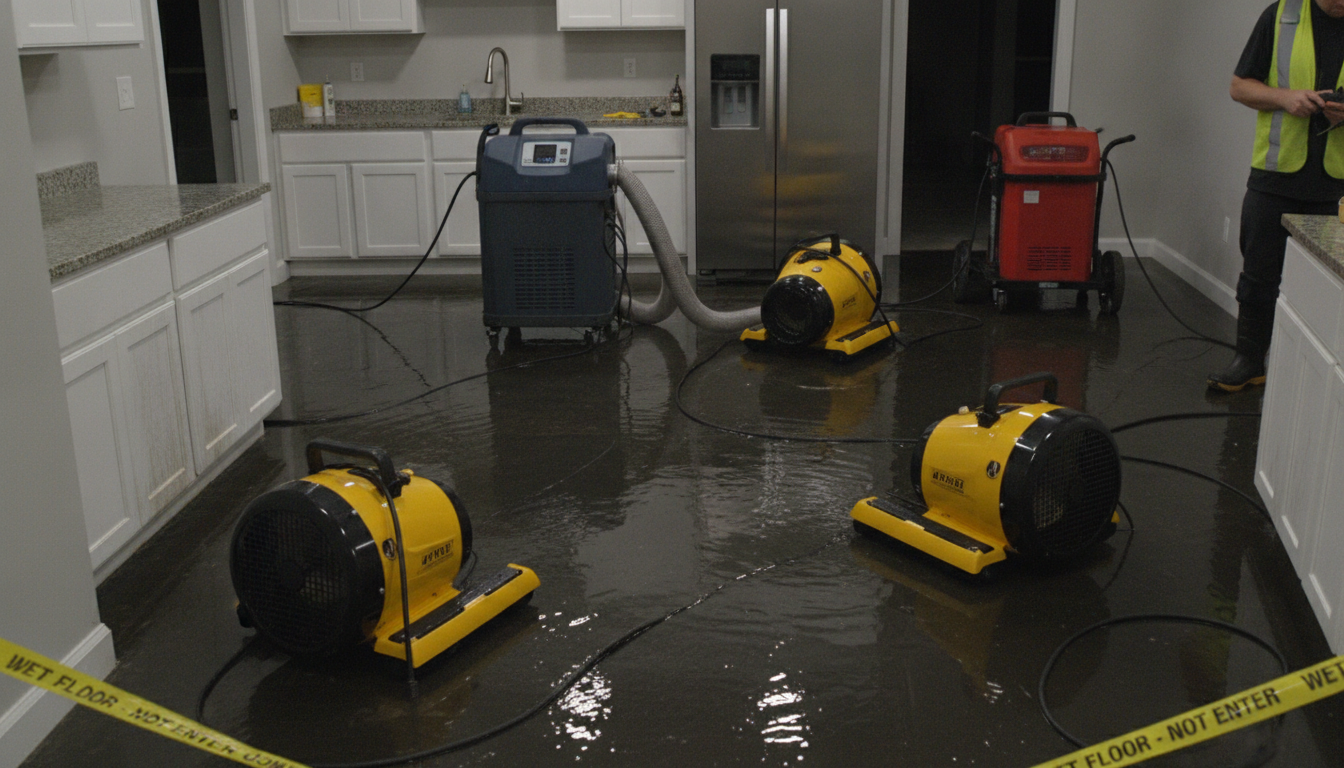
Does a Dishwasher Leak Require Professional Water Damage Restoration?
A small puddle on the kitchen floor might look like a simple fix. You may think that a mop and a bucket are all you need for a dishwasher leak water damage cleanup. But water from a dishwasher is rarely just a spill. It often seeps into tight spaces where it can cause hidden harm. Deciding between a DIY fix and professional help depends on how far the water went. If the leak was large or lasted for a long time, you likely need expert care to save your home.
Understanding Water Categories
The restoration industry uses three categories to describe water quality. Category 1 is clean water from a fresh pipe. Most dishwasher leaks start as Category 2, also known as “grey water.” This water contains food bits, soap, and grease from your dirty dishes. It can grow bacteria quickly, especially since dishwasher water stays between 110 and 170 degrees Fahrenheit. If left for more than two days, grey water can turn into Category 3. Or “black water.” This type of water is dangerous and requires expert handling to keep your family safe.
Professionals with IICRC training know how to treat each type of water. They use specific cleaning agents to kill germs without harming your floors. Home cleaning products often fail to fully sanitize the area. This leaves behind smells or invisible health risks that can linger for months. For the best results, you should look for dishwasher water damage professional restoration when the leak involves large amounts of grey water.
Why DIY Cleanup Often Falls Short
The biggest problem with DIY cleanup is what you cannot see. Water travels along the easiest path. It often flows under baseboards, behind cabinets, and into the subfloor. A standard house fan or a shop vac cannot reach these areas. If these materials stay wet for more than 24 hours, mold can start to grow on wood or drywall. Since moisture control is the key to stopping mold, you must dry these hidden spots fast.
Failing to reach every wet spot is one of the main risks of DIY dishwasher leak cleanup. You might dry the surface of your tile floor, but the wood underneath could still be soaking wet. Over time, this trapped moisture causes wood to rot and metal to rust. You might not notice the damage until your floor starts to sag or a musty smell fills the room. By then, the cost of repair will be much higher than the cost of early drying.
The Value of Professional Structural Drying
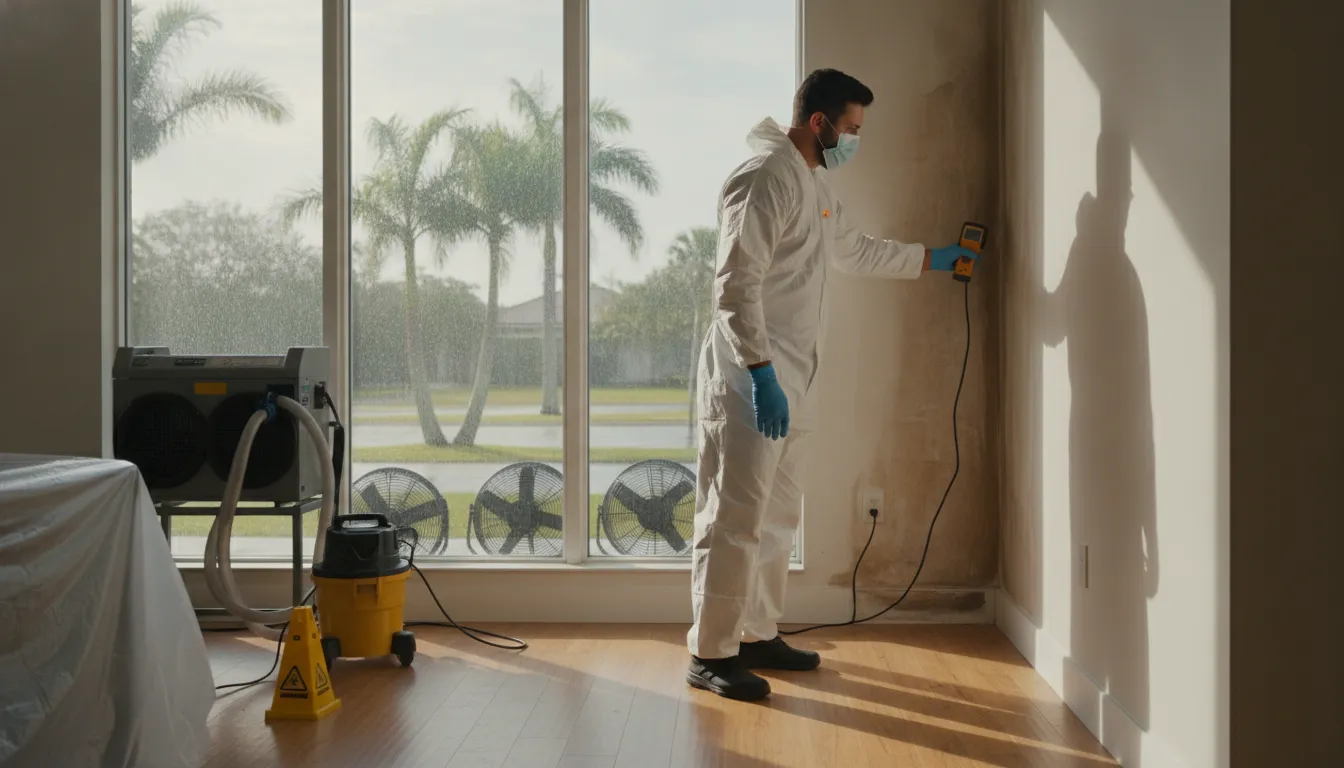
Professional teams use a process called structural drying to save your property. This involves using industrial-grade tools to pull moisture out of the air and the building materials. They use high-power air movers and large dehumidifiers to speed up the process. Experts also use moisture meters and thermal cameras to track progress. These tools show exactly when a wall or floor is dry. This data is vital if you need to file an insurance claim, as it proves the work was done to industry standards.
In St. Petersburg and Pinellas County, the humid air makes it hard for water to dry up on its own. A pro team knows how to balance the air to get the best results. They focus on drying the subfloor and the studs behind your cabinets first. This prevents the need to tear out and replace your entire kitchen. Acting within the first 24 to 48 hours is the best way to keep your costs low and your home safe.
How to Prevent Mold Growth After a Kitchen Appliance Leak
Mold is a major risk after a dishwasher leak water damage cleanup. In Florida, the warm and wet air helps mold grow fast. It can start to show up on wood, drywall, and carpet in as little as 24 to 48 hours. If you do not stop it early, the damage can spread deep into your home. The best way to stop mold is to control the moisture right away. You can find more immediate water damage cleanup steps to keep your kitchen safe.
The danger of trapped moisture
Water from a leak often hides in spots you cannot see. It can soak into the subfloor under your tiles or get behind the baseboards. These dark areas stay damp for a long time. Even if the floor looks dry on top, the space below could be full of water. You must dry these structural parts to stop mold from taking root. If you are unsure how to handle it, you may want to call for mold remediation to protect your house.
Porous materials are the biggest worry. Items like wood cabinets and carpet pad soak up water like a sponge. According to the EPA, you may need to throw away porous materials if they stay wet and get moldy. This is because mold grows deep inside the tiny holes of these items. It is hard or even impossible to clean them once the mold has moved in. Replacing them is often the only safe choice to keep your air clean.
Professional drying techniques
To stop mold for good, you need to dry the deep parts of your kitchen. Shop vacs and fans from the store are not enough for a big leak. Experts use high-grade tools to pull water out of wall cavities and subfloors. This process, called structural drying, ensures that no damp spots remain. Getting help fast is key. Most pros try to start the work within 24 to 48 hours to stop more damage from happening. You can learn about the risks of DIY dishwasher leak cleanup before you try to do it alone.
Once the area is dry, you can look for signs of damage. If you see mold on hard surfaces like metal or plastic, you can scrub it off with soap and water. Just make sure the surface is totally dry before you paint or fix it. Painting over mold will cause the paint to peel and will trap the water inside the wall. Keeping your kitchen dry is the most vital step to managing mold growth after a leak.
Dishwasher Leak Cleanup Cost and Recovery Timelines
The total cost to fix a dishwasher leak depends on how much water spilled and how long it sat. Small leaks that you catch fast may only cost a few hundred dollars for fans and towels. But a large flood that soaks into your floor can cost much more. Most owners spend between $3,000 and $7,000 for a common kitchen flood cleanup. This price covers the work of drying the room and fixing small damage to the cabinets or floors.
Timing is the most important part of keeping costs low. If you start the work within 24 to 48 hours, you can often save your wood floors and cabinets. Waiting longer lets water seep deep into the subfloor. This can lead to rot and mold, which are much harder and more expensive to fix. Acting fast also helps you avoid the risks of DIY dishwasher leak cleanup that many people face when they try to work alone.
Comparing water types
Pros group water damage into types based on how clean the water is. This helps them decide what tools to use and how to stay safe. A dishwasher leak can start as clean water. But it can quickly turn into grey water if it mixes with food waste or soap. The type of water changes how much you will pay and how long the job takes.
| Criteria. | Category 1 (Clean Water). | Category 2 (Grey Water). |
|---|---|---|
| Average Cost. | $3 to $5 per square foot. | $4 to $7 per square foot. |
| Drying Time. | 2 to 3 days. | 3 to 5 days. |
| Tools Used. | Fans and dehumidifiers. | Air movers and HEPA filters. |
| Safety Level. | Safe for most people. | May have soap and bacteria. |
Things that drive costs
The price for dishwasher water damage professional restoration depends on the size of the wet area. Most pros charge about $3 to $7 per square foot for basic drying. If the water gets under your kitchen island or behind the cabinets, the work gets harder. Pros may need to remove the base of your cabinets to blow air underneath them.
Floor types also play a big role in your final bill. Laminate floors often swell and need to be replaced if they get wet. Solid wood floors can sometimes be saved with a special drying mat system. If the water soaks through to the subfloor, the cost rises because the top floor must come up. This is why pros use moisture meters to find hidden wet spots before they start.
How long cleanup takes
Most kitchen drying jobs take about three to five days to finish. The first day is for removing the pooled water and setting up the machines. After that, the fans and dehumidifiers must run 24 hours a day to pull moisture out of the air and wood. You should not turn these machines off, as that slows the work and lets mold grow.
Per the EPA, keeping moisture low is the best way to prevent mold after a leak. If the room stays damp for more than 24 hours, mold can start to grow on wood and drywall. This turns a simple drying job into a mold removal project. Following the 24 to 48 hour rule helps ensure your home returns to normal as fast as possible.
Frequently Asked Questions
What are the first steps to take when a dishwasher leaks?
You must act fast to stop the water. First, turn off the dishwasher and pull the plug if it is safe. Find the water shut-off valve under the sink and turn it off. Next, use towels or a wet vacuum to soak up all standing water. You should also pull out the unit to check for water hiding under the cabinets. Quick action helps stop the water from soaking into your wood floors or subfloor.
How long do I have to clean up a dishwasher leak before mold grows?
You have about 24 to 48 hours to dry the area before mold starts to grow. According to the EPA, mold can begin growing on wood, drywall, and carpet if they stay wet for more than a day. In the humid Florida climate, this process can happen even faster. It is vital to use fans and dehumidifiers to remove all moisture from the air and floor to keep your home safe.
Does homeowners insurance cover water damage from a dishwasher leak?
Many homeowners insurance policies cover water damage if the leak was sudden and accidental. This often includes a pipe that bursts or a hose that breaks. However, insurance may not pay for damage caused by a slow leak that you ignored for a long time. You should check your policy or call your agent to see what your plan covers. A pro team can often help you document the damage for your insurance claim.
Can a dishwasher leak cause structural damage to my kitchen floor?
Yes, a leak can cause serious harm to your kitchen. Water often seeps under tiles or wood planks and gets trapped in the subfloor. Over time, this moisture can rot the wood and make the floor weak. Professionals use tools to find hidden water that you cannot see. According to industry experts, wait times over 48 hours lead to much higher repair costs due to structural decay.
Ready to schedule a free water damage inspection?
Leaving a dishwasher leak alone for even a few days can lead to costly mold growth and bad smells in your kitchen. Even a small pool of clean water will often seep deep into your subfloor and rot the wood where you cannot see it. If you act now to get water damage restoration, you can stop the damage and avoid the high price of a full floor repair. Getting help today means you can save your wooden cabinets and keep your home safe from hidden rot. Our team is ready to help you get your home back to normal fast. You will have peace of mind knowing the job was done right by local pros.
Ready to schedule a free inspection? Call (727) 430-3079 to get your free inspection today.