Fast water damage restoration in St. Petersburg with 24/7 emergency response and certified professionals.
Share:

Summary:
Living in St. Petersburg means dealing with Florida’s unique water damage challenges. Your coastal location brings hurricane threats, tropical storms, and the kind of humidity that turns minor water intrusion into major mold problems fast.
Most homeowners don’t realize how quickly water damage escalates. In the first 24 hours, your furniture starts swelling and drywall begins softening. By hour 48, mold spores that are naturally present in Florida’s air activate and begin spreading throughout your home.
The clock is ticking, and DIY solutions simply can’t match the speed and thoroughness needed to prevent long-term damage to your property.
Florida’s climate creates the perfect storm for water damage complications. The year-round humidity means moisture doesn’t just evaporate—it gets trapped in building materials, creating ideal conditions for mold growth and structural deterioration.
St. Petersburg’s location along Tampa Bay adds another layer of complexity. Storm surge, coastal flooding, and the area’s aging infrastructure (many homes built in the 1950s and 1960s) mean water damage here often involves contaminated water sources that require specialized cleanup protocols.
Your standard homeowner’s insurance policy covers sudden water damage from burst pipes or storm-related issues, but Florida insurers have become increasingly strict about documentation requirements. Without proper professional assessment and documentation, you risk having your claim denied—something that happens to nearly half of all water damage claims in Florida.
The restoration process must address not just the visible water, but the hidden moisture that penetrates deep into concrete block construction, tile floors, and the unique building materials common in Florida homes. Professional-grade moisture detection equipment can identify problem areas that would be missed with basic visual inspection, preventing the kind of long-term structural issues that can cost tens of thousands to repair later.
This is why attempting to handle water damage cleanup yourself in Florida’s climate isn’t just ineffective—it’s financially risky. Insurance companies expect professional documentation, and the state’s humid conditions make thorough moisture removal absolutely critical for preventing mold growth that can render your home uninhabitable.
Every hour you wait to address water damage in your St. Petersburg home, the financial stakes get higher. What starts as a manageable restoration project quickly escalates into a major reconstruction job when Florida’s humidity accelerates the damage process.
Consider the real costs: flood damage averages $26,000 per incident for property owners, but that’s just the beginning. When mold takes hold in Florida’s climate, remediation costs can easily reach $15,000-$30,000 for a typical home. Structural damage from prolonged moisture exposure often requires complete drywall replacement, flooring removal, and in severe cases, rebuilding portions of your home’s frame.
Insurance complications add another expensive layer. Popular Florida carriers like Heritage, Security First, and Tower Hill have begun excluding water damage coverage entirely for homes over 40 years old. Even when coverage exists, claims get denied for improper documentation, delayed reporting, or evidence of gradual damage that could have been prevented with immediate professional response.
The secondary damage is where costs really spiral out of control. Electrical systems exposed to water create safety hazards and require complete replacement. HVAC systems contaminated by flood water need professional cleaning or replacement to prevent spreading mold spores throughout your home. Personal belongings like furniture, electronics, and family heirlooms become total losses when water damage isn’t addressed within the first critical hours.
Smart homeowners understand that professional water damage restoration isn’t an expense—it’s an investment in preventing catastrophic losses. The cost of immediate professional response is typically a fraction of what you’ll pay if water damage is allowed to progress unchecked in Florida’s challenging climate conditions.
Effective water damage restoration in St. Petersburg requires understanding how water behaves in Florida’s unique building environment. Professional restoration isn’t just about removing visible standing water—it’s about eliminating moisture from every affected material before mold and structural damage take hold.
The process starts with rapid water extraction using truck-mounted equipment that can remove up to 25 gallons per minute. This industrial-grade extraction is 1,200 times faster than dehumidification alone, making it essential for preventing secondary damage in Florida’s humid climate.
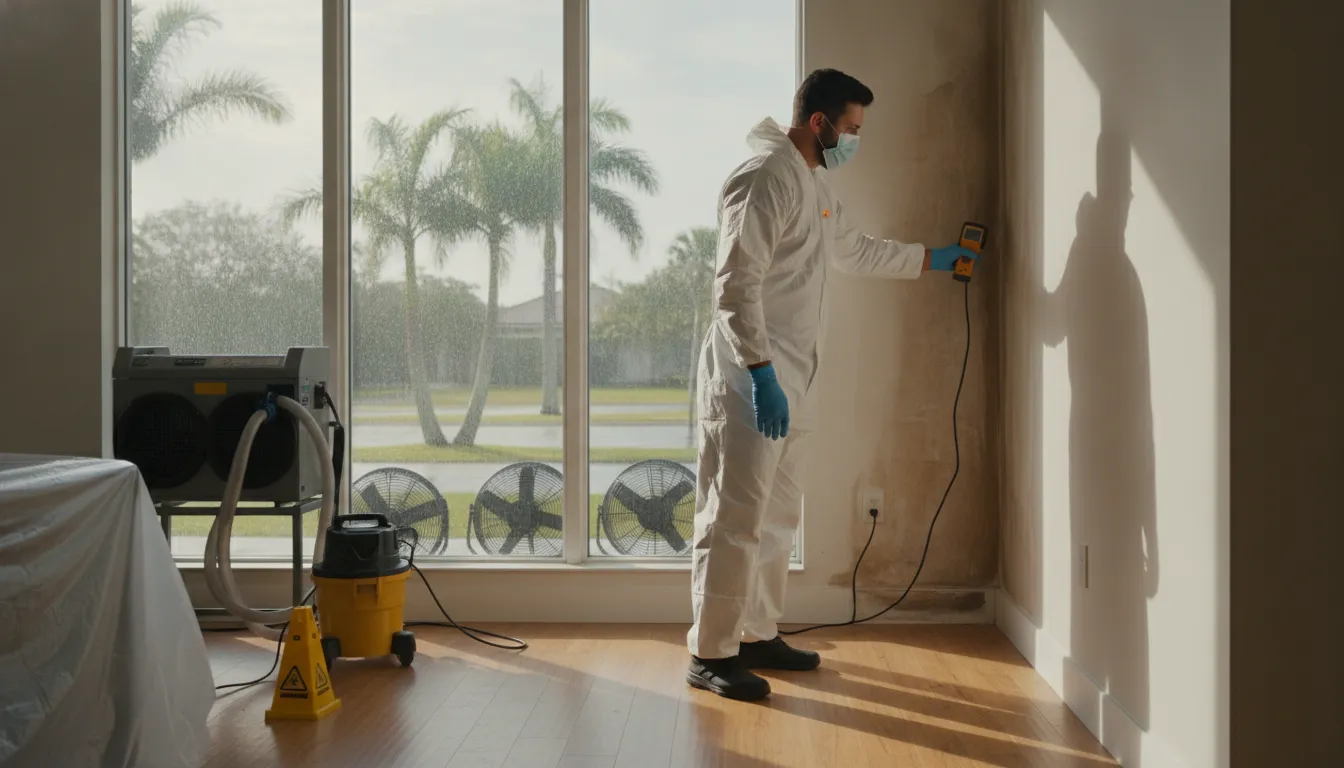
We use thermal imaging to detect hidden moisture in walls, under flooring, and in areas where water travels through your home’s structure but isn’t immediately visible.
Professional water damage restoration in St. Petersburg relies on technology that goes far beyond what homeowners can access. Moisture meters, thermal imaging cameras, and humidity monitoring equipment provide the precise data needed to ensure complete moisture removal from your home’s structure.
Thermal imaging reveals moisture patterns invisible to the naked eye, showing exactly where water has penetrated into walls, ceiling cavities, and subfloor areas. This technology is crucial in Florida homes where water can travel significant distances through concrete block construction before becoming visible as stains or damage.
Professional-grade dehumidifiers and air movers create controlled drying environments that work effectively even in Florida’s challenging humidity conditions. These units are strategically placed based on moisture readings and airflow patterns to maximize drying efficiency while preventing the kind of rapid temperature changes that can crack drywall or damage flooring.
Moisture monitoring throughout the drying process ensures that materials reach proper moisture levels before restoration work begins. This prevents the all-too-common problem of mold growth occurring behind new drywall or under replacement flooring because residual moisture wasn’t completely eliminated.
The documentation provided by professional moisture detection equipment is also essential for insurance claims. Adjusters expect detailed moisture readings, drying logs, and photographic evidence of the restoration process. Without this professional documentation, homeowners often face claim denials or significant delays in getting their losses covered.
This level of technological precision simply isn’t available through DIY approaches or general contractors who don’t specialize in water damage restoration. The investment in professional service pays for itself by ensuring complete moisture removal and providing the documentation needed for successful insurance claims.
Preventing mold growth after water damage in St. Petersburg requires understanding how Florida’s year-round humidity creates ideal conditions for rapid mold proliferation. We use specific protocols designed for the state’s challenging climate conditions.
Antimicrobial treatments applied during the restoration process create barriers against mold growth on affected surfaces. These treatments are particularly important in Florida where mold spores are naturally present in high concentrations and can activate within 24-48 hours of water exposure.
Air filtration systems run continuously during restoration to capture airborne mold spores before they can settle and establish new colonies. HEPA filtration combined with negative air pressure prevents cross-contamination between affected and unaffected areas of your home.
Humidity control is critical throughout the restoration process and beyond. We monitor and control humidity levels to stay below the 60% threshold where mold growth accelerates. This often requires specialized dehumidification equipment that can handle Florida’s challenging outdoor humidity levels.
Surface preparation and sealing prevent future mold problems by eliminating the organic materials that feed mold growth. This might involve removing and replacing drywall paper, treating wood framing with antimicrobial solutions, or applying moisture barriers in areas prone to future water intrusion.
The key to successful mold prevention in Florida is speed and thoroughness. Mold remediation after the fact can cost $15,000-$30,000 for a typical home, while proper prevention during initial water damage restoration adds minimal cost to the project. We understand this critical timing and have the equipment and experience to prevent mold problems before they start.
Water damage restoration in St. Petersburg isn’t just about removing water—it’s about protecting your family’s health, preserving your property value, and ensuring your insurance claim gets handled properly. The combination of Florida’s climate challenges and increasingly strict insurance requirements makes professional restoration essential for any water damage situation.
The right restoration team understands the unique challenges of working in Florida’s humid environment and has the specialized equipment needed to ensure complete moisture removal. They provide the documentation your insurance company requires and work within the tight timeframes that prevent secondary damage from taking hold.
When water damage strikes your St. Petersburg home, you need professionals who respond immediately and handle every aspect of the restoration process correctly the first time. We bring the experience, certifications, and local knowledge needed to get your home back to normal quickly and completely.
Article details:
Share:
Continue learning: