Explore professional mold remediation versus DIY methods. Understand why expert help is often necessary for Pinellas County homes dealing with mold growth.
Share:

Summary:
When considering mold removal, assessing the actual extent of the growth is the first step. DIY cleaning with household products might appear sufficient for very small, visible spots on hard surfaces. However, this approach frequently fails to address the underlying issue or hidden contamination. Mold often grows within walls, under flooring, or in ventilation systems, areas inaccessible to simple surface cleaning. Professional mold remediation involves a systematic process, starting with a thorough mold inspection and often mold testing, to locate all affected areas, including concealed ones. Technicians employ specific protocols for mold cleanup and mold mitigation, aiming for complete removal and preventing recurrence, which goes far beyond surface wiping. This professional approach targets both visible mold and airborne spores.
Attempting mold cleanup without professional assessment carries several potential drawbacks. Without accurate mold testing or adequate inspection tools like moisture meters, you might miss significant areas of growth, allowing the problem to persist and worsen over time. Standard cleaning methods can disturb mold colonies, inadvertently dispersing spores into the air and spreading contamination to other parts of your home. Additionally, some mold varieties can affect respiratory health or trigger allergic reactions, and handling them without appropriate personal protective equipment (PPE) and containment methods can be detrimental. Improper handling can turn a localized issue into a widespread one.
Some mold types pose health risks, especially to those with respiratory issues or allergies, and handling them without the right protective equipment and containment measures can be hazardous. Ultimately, improper cleanup can turn a small, manageable issue into a much larger and costlier problem.
Certain scenarios strongly indicate the need for professional mold remediation. A general guideline suggests calling specialists if the mold growth covers an area larger than 10 square feet. Persistent musty smells, even without visible mold, often signal hidden growth requiring a professional mold inspection. If anyone in the household experiences unexplained allergies or respiratory problems, mold could be a contributing factor needing investigation through mold testing. Furthermore, if your home has experienced past water damage from leaks, floods, or high humidity levels common in Pinellas County, the likelihood of extensive or hidden mold growth increases significantly, warranting expert evaluation. Timely, professional mold removal can prevent further damage and potential health issues.
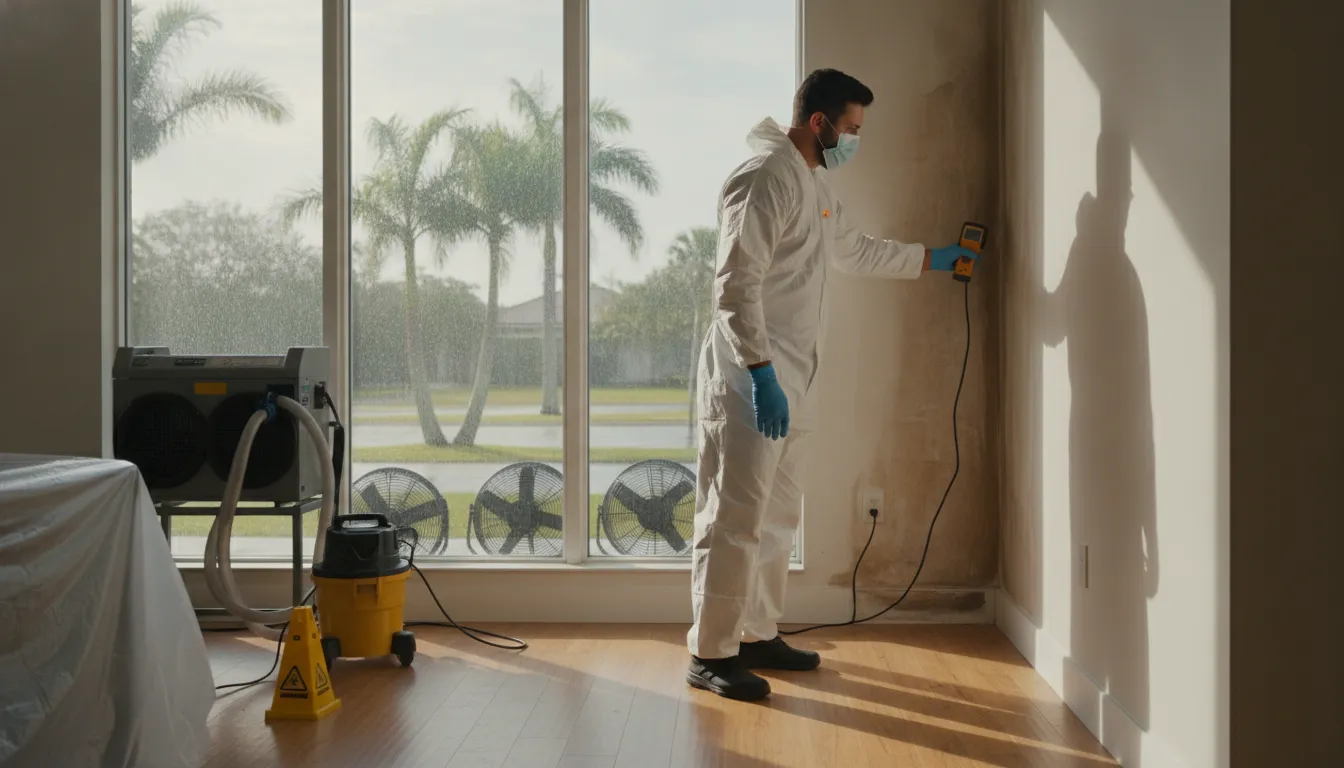
Professional mold remediation follows a structured approach. Firstly, technicians conduct a mold inspection, visually examining affected areas and often using moisture meters to detect dampness in building materials. Secondly, mold testing, such as air sampling or surface swabs, may be performed to identify the types of mold present and the concentration of spores. Thirdly, containment is established using plastic sheeting and negative air pressure machines to isolate the work area and prevent spores from spreading. Fourthly, the mold removal and mold cleanup phase involves removing contaminated porous materials (like drywall or carpet), followed by cleaning non-porous surfaces with antimicrobial solutions. HEPA (High-Efficiency Particulate Air) vacuums are used throughout to capture fine mold particles. Finally, mold mitigation focuses on addressing the initial moisture source to prevent regrowth.
The expense associated with professional mold remediation varies depending on factors like the size of the affected area, the location of the mold (e.g., crawlspace vs. living area), the type of materials affected, and the specific containment and removal methods required. Costs can range from several hundred dollars for small, contained areas to several thousand for more extensive contamination requiring significant structural cleaning or removal. While DIY cleaning appears cheaper upfront, incomplete removal can lead to recurring problems and potentially higher costs later. Professional service aims to resolve the issue correctly the first time.
To summarize, while minor surface mold might be manageable with careful DIY cleaning, substantial or hidden mold growth necessitates professional mold remediation. For homeowners in Pinellas County, FL, where humidity frequently encourages mold development, engaging specialists provides a more reliable path to complete mold abatement and helps protect your property’s value and your family’s well-being. If you suspect a mold issue or notice signs like musty odors or visible growth, consider reaching out for assistance. Contact us today to schedule a mold inspection and take the first step toward resolving mold concerns in your home.
Article details:
Share:
Continue learning: