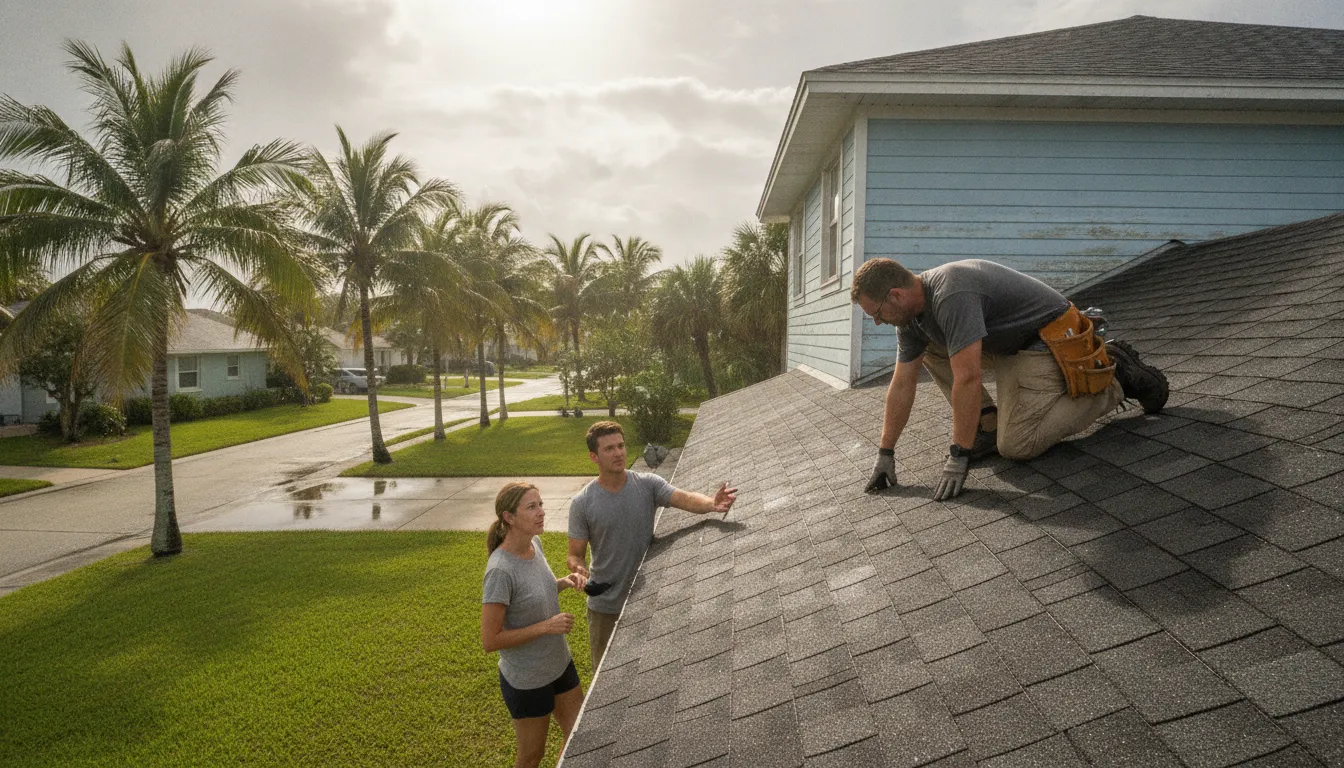
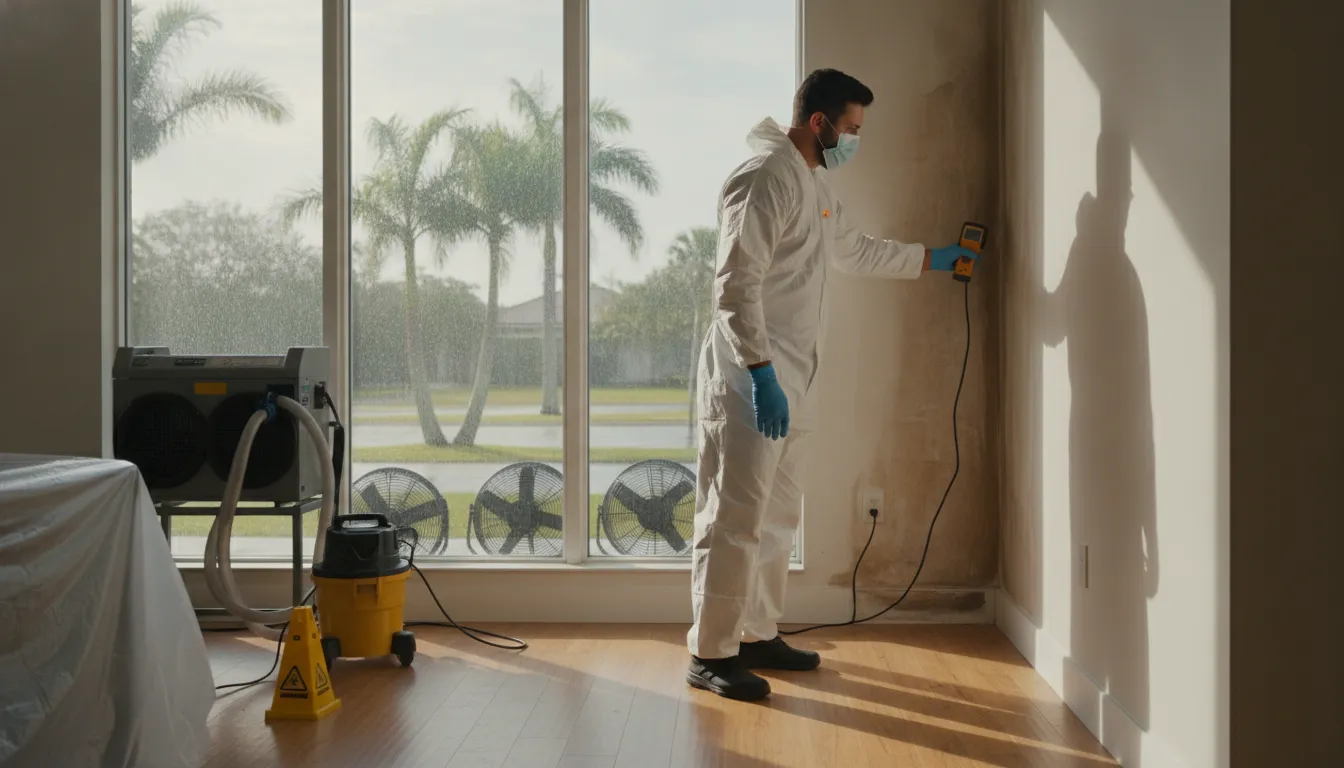
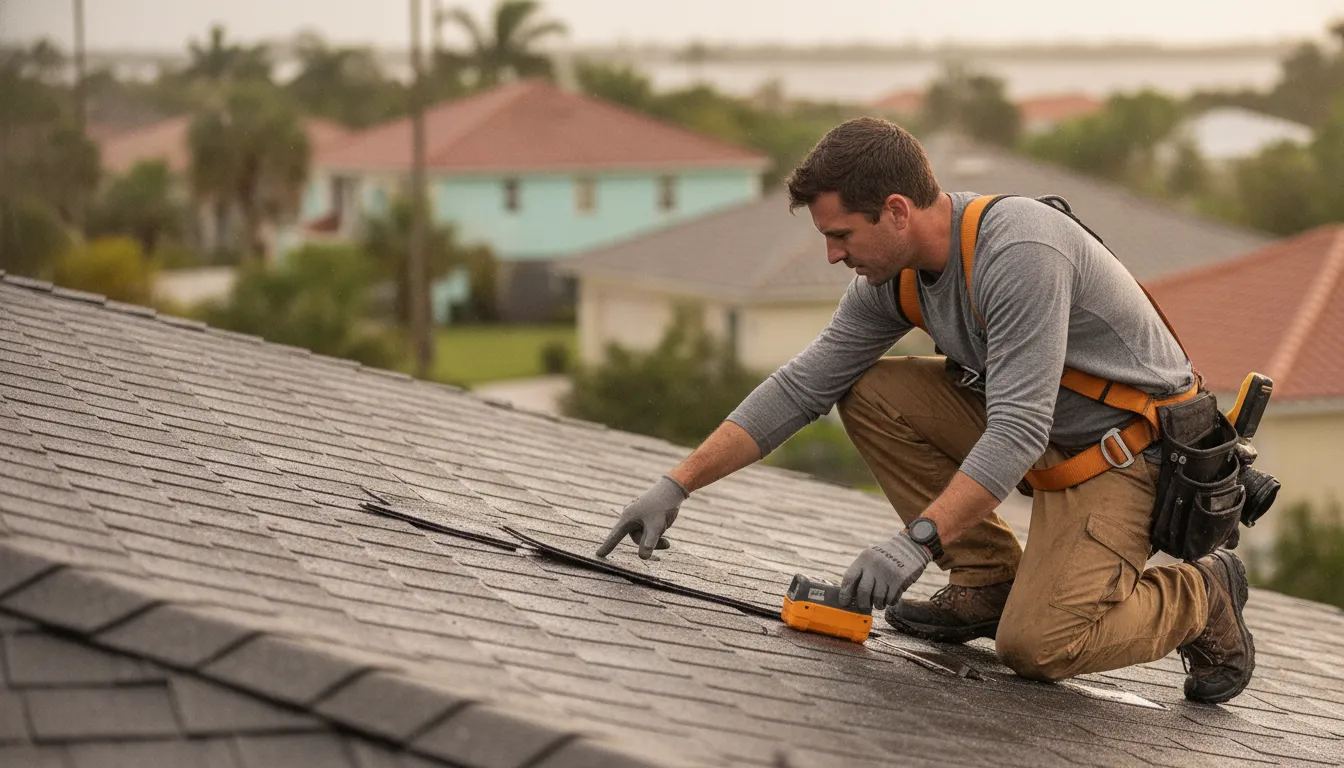
A Florida storm can leave a tile roof looking nearly unchanged from the ground while water is already finding a path beneath cracked, shifted, or lifted tiles. For Pinellas County homeowners, arranging tile roof repair after storm damage quickly can help contain a small opening before it affects the underlayment, roof deck, attic, or rooms below.
Request a professional storm-damage roof assessment from Go Time Roofing & Restoration.
Start with safety, document what you can see without climbing onto the roof, and address active leaks promptly. Then have Go Time Roofing & Restoration assess the complete roof system, not just the most obvious broken tile.
Tile roof repair after storm damage starts with safety
After the wind and rain stop, resist the urge to walk on the roof. Clay and concrete tiles can be slippery. Damaged tiles may crack underfoot or shift without warning.
What to do immediately after the storm
- Check for urgent hazards. Stay away from fallen power lines, sagging ceilings, standing water near electrical fixtures, and unstable building parts.
- Look from the ground. Scan for missing or displaced tiles, broken pieces, damaged ridge tiles, hanging gutters, and roof debris.
- Check the interior. Look for fresh ceiling stains, bubbling paint, damp drywall, attic moisture, wet insulation, or dripping water.
- Document visible damage. Take date-stamped photos and videos of exterior and interior conditions.
- Arrange temporary protection. A qualified professional can determine whether a tarp or another temporary measure is appropriate.
If water entered living areas, roofing work may be only one part of the response. Go Time Roofing & Restoration also provides water damage restoration after storms.
How do you spot storm damage on a tile roof?
Tile roofing is a system of field tiles, ridge and hip tiles, flashings, fasteners, underlayment, and a roof deck. Wind or debris can affect one component while leaving nearby tiles looking normal.
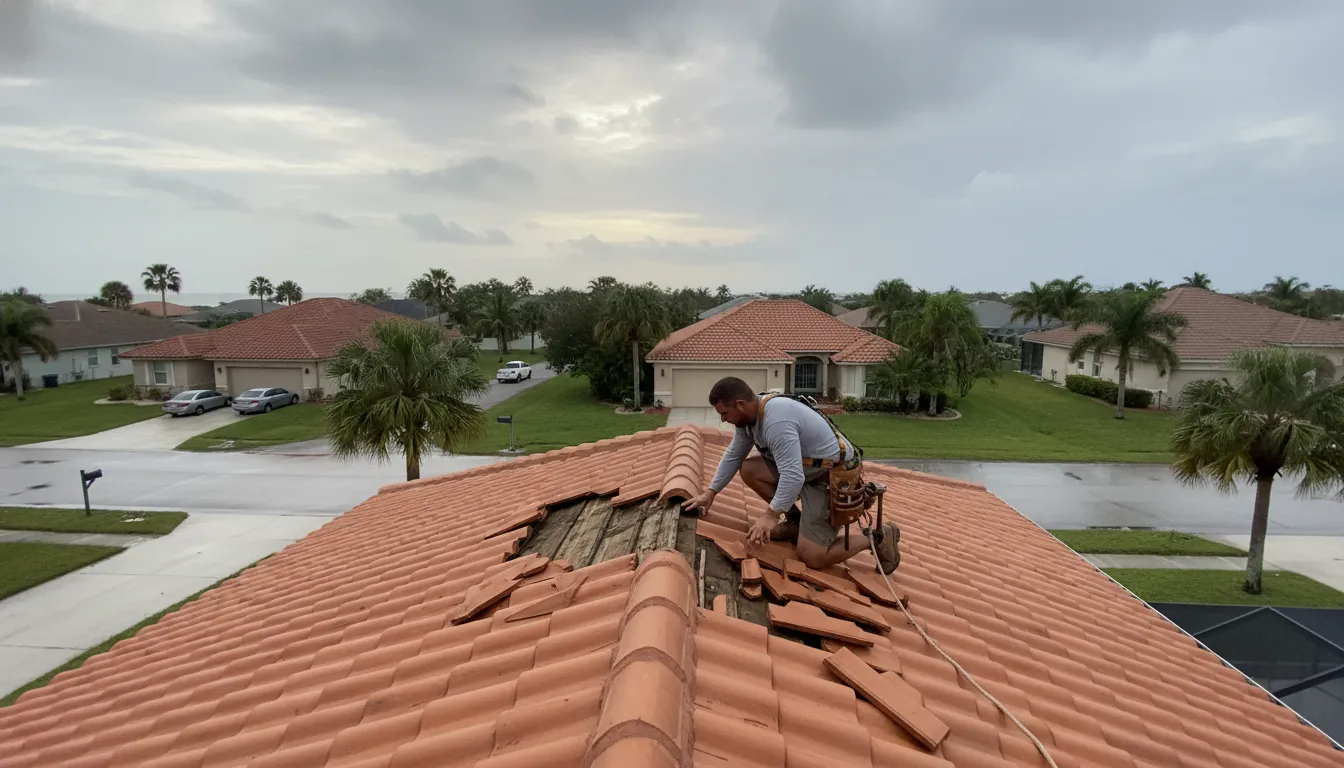
Exterior signs visible from a safe location
- Cracked, chipped, or shattered clay or concrete tiles
- Tiles that have slipped out of alignment or appear lifted
- Missing field, ridge, or hip tiles
- Damage near roof edges, valleys, vents, skylights, and flashing
- Branches or storm debris that may have struck the roof
Interior signs that may point to a roof leak
Watch for new ceiling discoloration, peeling paint, damp spots, attic moisture, compressed insulation, and musty odors. Water can follow underlayment or framing before it drips.
If you see these warning signs, schedule an assessment with Go Time Roofing & Restoration, a contractor experienced in tile roof repair services.
Why can a few broken tiles create serious leak risks?
Roof tiles are durable exterior coverings, but they are not the roof’s only water-control layer. Beneath the tile, underlayment helps direct water away from the structure. The deck supports the assembly, while flashing protects transitions and penetrations.
A cracked or displaced tile may expose the underlayment to wind-driven rain and sunlight. If the underlayment was also torn, aged, or punctured, water may reach the roof deck.
Contact Go Time Roofing & Restoration before the next rain exposes hidden roof damage.
What should a professional tile roof assessment cover?
A useful storm assessment should answer three questions: where did the roof system fail, how far did the damage extend, and what work will restore reliable protection?
Exterior roof-system review
A roofing professional should examine field tiles, edges, hips, ridges, valleys, penetrations, flashing, and attachment conditions.
Leak tracing and interior moisture review
The review should connect exterior findings with attic and interior evidence. If moisture entered the structure, restoration planning should address wet materials.
Clear documentation and repair scope
Ask for photographs, written observations, and a repair scope that separates confirmed damage from recommended work. Documentation can help homeowners communicate accurately with their insurer, but a contractor should not promise coverage or a claim outcome.
When is repair enough, and when should replacement be discussed?
Many storm-damaged tile roofs can be repaired. Others need a broader discussion because visible tile damage is only one part of the issue. The right path depends on the full roof system, damage extent, compatible tile availability, and what an assessment finds beneath the surface.
| Condition | Targeted repair may fit when | Replacement may need discussion when |
|---|---|---|
| Tile damage | A limited number of tiles are damaged in one area. | Damage is widespread across multiple slopes. |
| Underlayment and deck | Underlying layers remain serviceable. | Underlayment failure or deck damage extends beyond one small area. |
| Replacement tiles | Compatible tiles can be sourced. | Compatible tiles cannot be obtained. |
How should you document damage and plan the repair?
Organized documentation helps you make decisions and communicate with contractors and your insurer. Keep photos, storm dates, receipts, written findings, repair estimates, and policy communications together.
Frequently asked questions about storm-damaged tile roofs
Can concrete or clay tile roofs be repaired after storm damage?
Yes, many can be repaired when damage is localized and the underlying system remains serviceable.
Does insurance cover storm damage to tile roofs?
Coverage varies by policy, cause of damage, roof condition, and insurer evaluation.
Can I tarp a damaged tile roof myself?
Walking on a wet or damaged tile roof is dangerous and can break more tiles. Ask a qualified professional to install appropriate temporary protection.
How quickly should the roof be assessed?
Arrange an assessment as soon as it is safe, especially if you see active leaks, displaced tiles, ceiling stains, or attic moisture.
How much does tile roof repair after storm damage cost?
Cost depends on damaged tile quantity, access, underlayment and deck condition, flashing work, interior damage, material availability, and repair scope.
If you own a coastal property in Madeira Beach, tile roofs can be especially vulnerable to storm damage due to high winds off the Gulf. Our Madeira Beach roofing contractors specialize in barrier island properties and can help restore your tile roof quickly.
Get a clear tile roof repair plan in Pinellas County
Go Time Roofing & Restoration can assess the roof system, identify leak risks, document conditions, and coordinate roofing work with water damage restoration when needed.
Request your tile roof assessment to build a practical repair plan and protect your Pinellas County property.