Discover what to do when water damage strikes your St Petersburg home and why immediate professional response is critical.
Share:

Summary:
The clock starts ticking the moment water enters your home. Every minute you wait, the damage spreads deeper into your walls, floors, and belongings. Your first priority isn’t cleaning—it’s stopping the source and protecting what you can.
Turn off the water supply if it’s from a plumbing issue. Cut power to affected areas to prevent electrical hazards. Then grab your phone and start documenting everything with photos and videos. This isn’t just for your peace of mind—your insurance company will need this evidence, and professional restoration teams use it to assess damage severity.
Don’t try to be a hero with a shop vacuum. Professional water extraction requires industrial equipment that can remove moisture from places you can’t even see. What looks dry on the surface often hides saturated materials underneath, setting the stage for mold growth and structural damage.
Living in St. Petersburg means dealing with water damage risks that most of the country never faces. You’re in a high-risk hurricane zone where 70 hurricanes have been recorded since 1930. Every home in Pinellas County sits in a flood zone—not just the waterfront properties, but every single one.
The geography works against you here. Colliding air masses from the Gulf of Mexico and Atlantic Ocean create frequent thunderstorms and heavy rainfall that can dump inches of water in minutes. Recent Hurricane Milton proved this vulnerability when St. Petersburg received over 5 inches of rain in just one hour, with 18 inches falling in 24 hours.
Your home’s materials aren’t designed for this kind of moisture assault. Florida’s humidity already stresses building materials, and when sudden water intrusion occurs, it creates perfect conditions for rapid deterioration. Drywall that might dry safely in Arizona becomes a mold breeding ground here within 24-48 hours.
The insurance landscape adds another layer of complexity. Many Florida policies now include “Limited Water” provisions that cap payouts at $10,000 and only cover damage from specific sources like appliances or plumbing. Damage from roof leaks or gradual seepage often isn’t covered at all. Understanding these limitations makes professional documentation and rapid response even more critical for protecting your investment.
Here’s what most St. Petersburg homeowners don’t realize until it’s too late: water damage costs escalate exponentially with time. What starts as a $1,500 cleanup can become a $15,000 reconstruction project if you wait just a few days.
Florida homeowners spend an average of over $4,000 to repair a single water damage incident. Add mold remediation—which becomes necessary when moisture sits for more than 48 hours—and you’re looking at another $6,000. That doesn’t include medical expenses if family members develop respiratory issues from mold exposure.
The structural damage timeline is unforgiving. In the first 24 hours, water soaks into drywall, flooring, and insulation. By day two, mold spores begin germinating. Within a week, wooden structures start warping and metal components begin rusting. After two weeks, you’re often looking at full replacement rather than restoration.
Insurance companies know these timelines too. Many Florida policies now limit coverage to “sudden and accidental” damage, excluding claims for damage that occurs beyond 14 days. The challenge? It’s often difficult to determine exactly when water damage began versus when you noticed it. This makes immediate professional assessment and documentation crucial for protecting your claim.
Your property value takes a hit with every day of delay. Even after professional restoration, homes with documented water damage history can see reduced market values. Quick, professional response with proper documentation helps maintain your home’s value and marketability.
Professional water restoration isn’t just about removing standing water—it’s a systematic process that addresses visible damage and hidden moisture that causes long-term problems. Understanding this process helps you evaluate restoration companies and know what to expect.
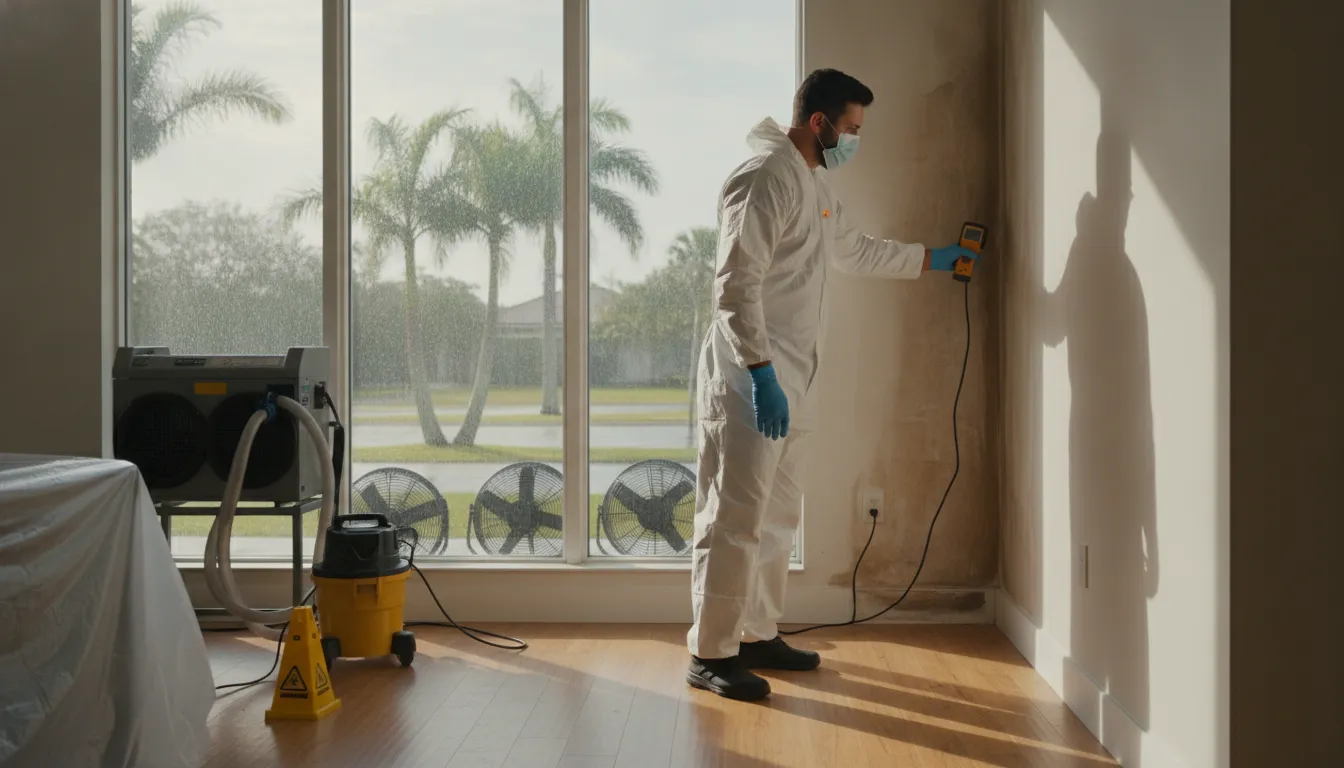
The process starts with moisture mapping using thermal imaging and moisture meters to identify all affected areas, including hidden pockets behind walls and under flooring. This technology reveals damage that’s invisible to the naked eye but critical to address for complete restoration.
Proper restoration follows IICRC standards with specific protocols for different types of water damage. Clean water from supply lines requires different treatment than gray water from appliances or black water from sewage backups. Each category demands specific safety measures and restoration techniques.
Florida’s humidity means standard drying methods don’t work. Professional restoration requires industrial-grade equipment specifically designed for high-moisture environments like St. Petersburg’s.
Industrial dehumidifiers don’t just remove moisture from the air—they create controlled drying environments that prevent secondary damage. These units can process hundreds of gallons of moisture per day, something impossible with residential equipment. Air movers create strategic airflow patterns that accelerate evaporation from surfaces and materials.
Moisture detection goes beyond what you can see or feel. Thermal imaging cameras reveal temperature differences that indicate moisture presence behind walls and under flooring. Pin-type and pinless moisture meters provide precise readings in different materials, ensuring complete drying before restoration work begins.
The antimicrobial treatment process prevents mold growth during the drying phase. Professional-grade antimicrobials are applied to all affected surfaces, creating a protective barrier while materials dry. This step is crucial in Florida’s climate where mold can establish colonies within 24-48 hours.
Documentation throughout the process protects your insurance claim and provides proof of professional restoration. Photos, moisture readings, and detailed reports create a paper trail that insurance companies require for claim processing. This documentation also helps with future property sales by proving professional restoration was completed.
Not all restoration companies understand St. Petersburg’s unique challenges. Choosing the wrong company can turn a manageable situation into a prolonged nightmare with incomplete restoration and insurance complications.
IICRC certification isn’t optional—it’s essential. Look for companies with certified technicians in Water Restoration (WRT), Applied Structural Drying (ASD), and Applied Microbial Remediation (AMRT). These certifications ensure technicians understand proper protocols for Florida’s climate and building materials.
Local licensing matters more than you might think. Florida requires specific licenses for different types of restoration work. Licensed Building Contractors can handle structural repairs, while Licensed Mold Remediators can address contamination issues. Companies without proper licensing can’t complete full restoration projects, leaving you to coordinate multiple contractors.
Response time directly impacts your final costs. Companies that truly offer 24/7 emergency service can begin mitigation within hours, preventing damage escalation. Look for companies with local technicians who can respond quickly rather than those that dispatch teams from distant locations.
Owner-operated companies often provide better service than large franchises because decision-makers are directly involved in your project. This means faster approvals for necessary work and more personalized attention to your specific situation. When dealing with water damage stress, having direct access to decision-makers makes a significant difference in project timeline and quality.
Insurance experience is crucial for protecting your claim. Companies that work regularly with insurance adjusters understand documentation requirements and can help navigate claim complexities. They can also identify damage that might be overlooked during insurance inspections, ensuring your claim covers all necessary restoration work.
Water damage restoration isn’t just about fixing current problems—it’s about protecting your home’s long-term value and your family’s health. Professional restoration creates a foundation for preventing future issues while ensuring your property maintains its market value.
Quick professional response with proper documentation preserves your insurance coverage for future claims. Insurance companies track claim history, and properly handled claims with professional restoration documentation demonstrate responsible homeownership. This can impact future coverage availability and premium costs.
The investment in professional restoration pays dividends in prevented future problems. Properly dried and treated materials resist future mold growth and structural issues. This is especially important in St. Petersburg’s humid climate where incomplete restoration often leads to recurring problems.
When water damage strikes your St. Petersburg home, contact us at Go Time Roofing and Restoration immediately. Our IICRC-certified technicians understand Florida’s unique challenges and provide the professional response your home needs to prevent minor water damage from becoming a major disaster.
Article details:
Share:
Continue learning: