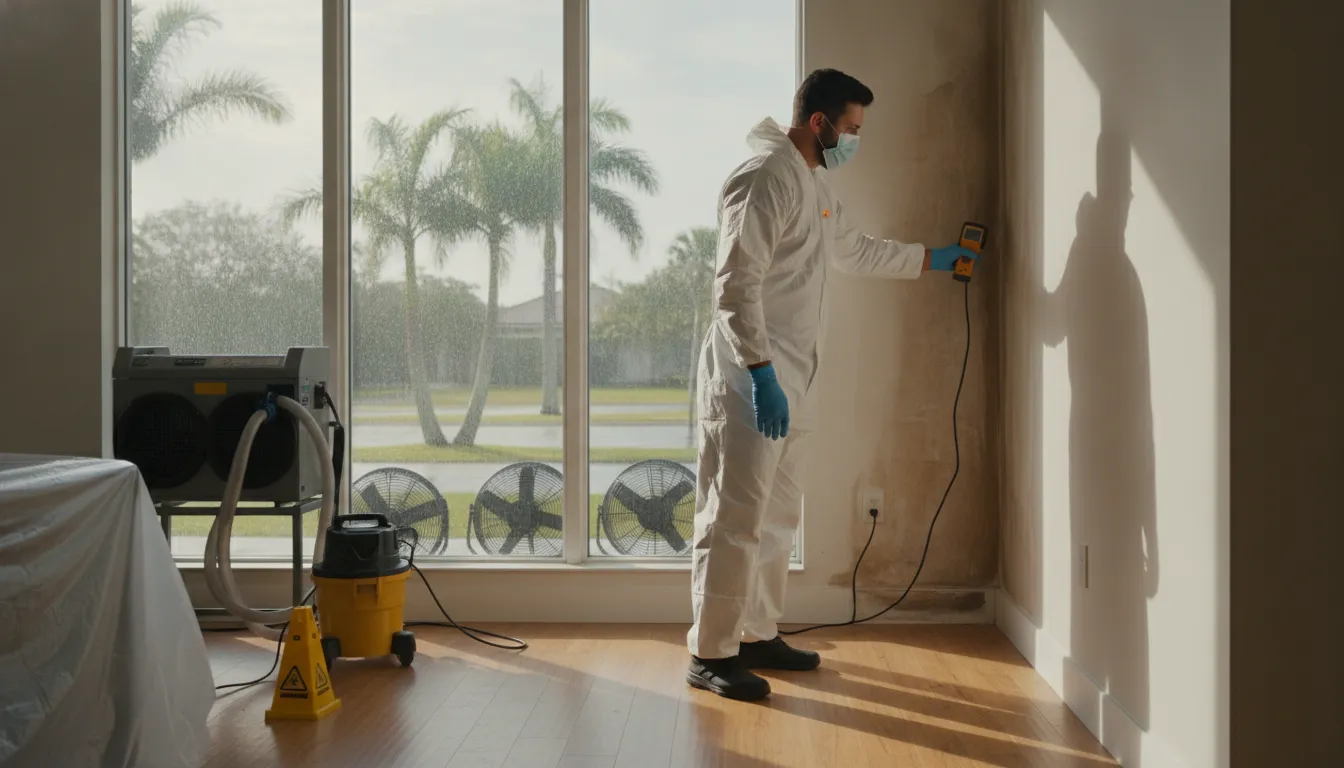
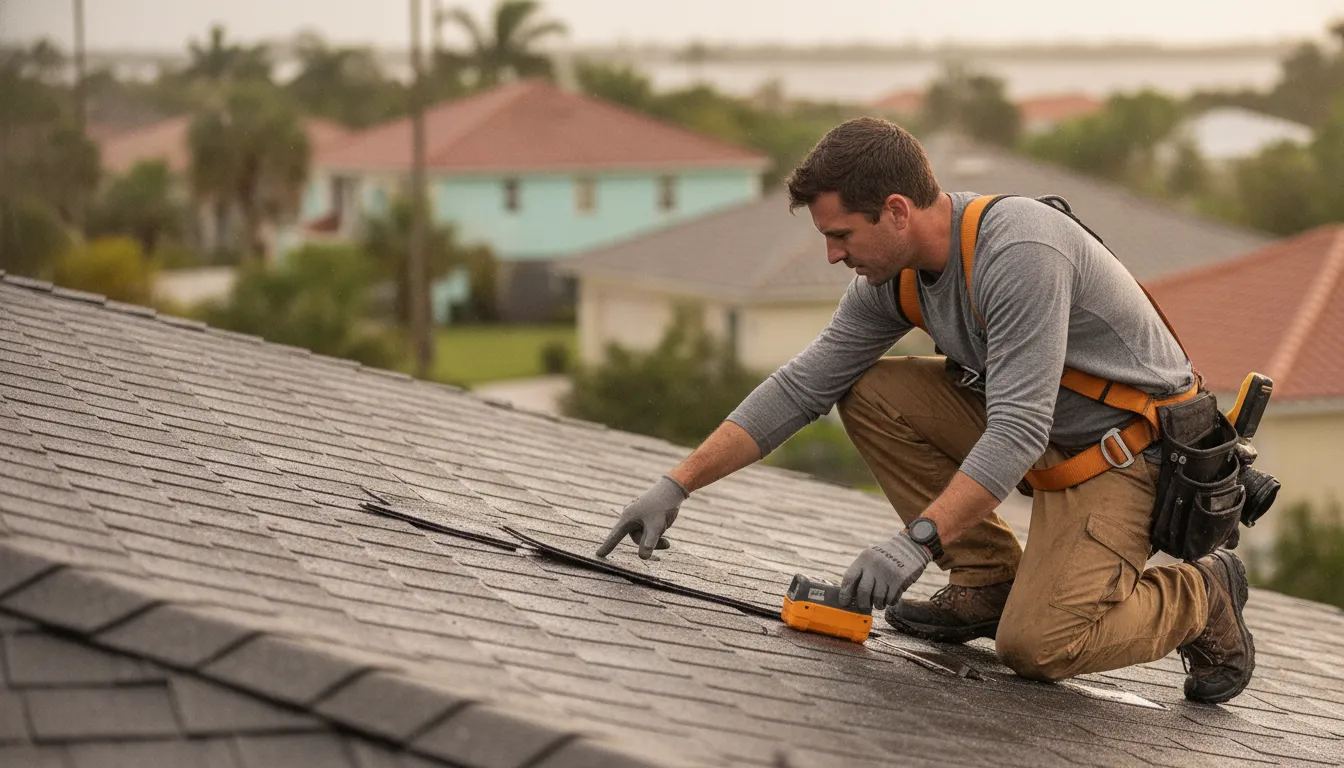
A small roof leak can become a mold problem fast in Florida humidity. Once growth spreads beyond a surface spot or water reaches porous materials, wiping it away is not a safe plan.
Free assessment: Concerned about mold or water damage in St. Petersburg or Pinellas County? Call Go Time at (727) 430-3079 for practical next steps.
The question, when is mold remediation required in Florida, matters when growth spreads, returns after cleanup, or reaches porous indoor building materials such as drywall. Professional help can contain affected materials and address moisture safely after floods, storm surge, persistent roof or plumbing leaks, or HVAC drain overflow. These events can leave moisture behind walls or beneath floors, so a dry-looking room may still hide conditions that feed mold. The Florida Department of Health states that moisture control is key because all molds require water to grow. For concerns after water damage or visible growth, request a free assessment from Go Time Roofing and Restoration at (727) 430-3079.
The question is not whether Florida homes ever face mold, but when damp materials and visible growth demand trained action. To make that call safely, start with the warning signs that matter most.
When is mold remediation required in Florida?
In Florida, mold remediation is the controlled cleaning or removal of mold-contaminated materials after moisture has caused growth. A property owner should seek professional review when growth is widespread, hidden, recurring, or linked to major water damage. Florida regulates professional mold assessment and remediation through its licensing framework. The Florida Department of Health mold guidance directs licensure questions to the Florida Statutes.
A quick decision test
Start with the source and the scope. If mold is in one small, reachable spot and the moisture cause is fixed, careful cleaning may be enough. If the area is larger, keeps returning, or cannot be seen fully, do not rely on surface cleaning. Arrange an assessment before disturbing materials.
Professional help is the safer path when any of these signs apply:
- Mold appears on drywall, ceiling tile, insulation, wood, carpet, or another porous material.
- A roof leak, plumbing leak, flood, storm surge, or air-conditioning overflow affected more than a small area.
- There is a musty odor, but the full source is not visible.
- Mold returns after cleaning, which suggests moisture remains.
- Work may require opening walls, removing materials, or isolating contaminated areas.
Water damage and hidden growth
Mold work is not only about wiping visible spots. Damp sheetrock and wood can support mold growth. Hidden moisture can also keep the problem active. Florida Health lists roof leaks, plumbing leaks, floods, poor venting, and high humidity as moisture sources. Controlling moisture is the key step in stopping indoor mold growth.
After a storm, leak, or indoor flood, the affected area may extend behind finishes. Property owners then need both moisture correction and a clear scope of mold work. Go Time provides water and flood damage restoration for wet materials and related property damage.
Licensing and next steps
Florida property owners should avoid treating a complex mold loss as a simple cleaning job. When the extent is unclear or materials may need removal, request an assessment from a qualified professional. Ask who will assess the condition and who will complete remediation. Also ask what moisture source must be repaired.
A professional can explain whether the planned work falls within Florida licensing rules. This guidance is practical information, not legal advice. Until the source is known, avoid disturbing damaged porous materials. Do not spread dust into rooms that were not affected.
Water leaks, flooding, and HVAC moisture: why the source matters
The answer to when is mold remediation required in Florida starts with the water source, not just a visible stain. The Florida Department of Health states that controlling moisture is key to stopping indoor mold growth. Mold needs water to grow. Finding where water entered, and how far it traveled, guides the next steps.
Roof leaks and plumbing or flood water
A roof leak may begin above a ceiling stain, then move into insulation or wall cavities. A broken pipe, toilet overflow, or outdoor flood can wet flooring, baseboards, cabinets, and drywall. Surface drying alone may miss damp material behind finishes. Restoration work must address both the wet area and the leak or flood source.
Look for a spreading ceiling mark, soft drywall, swollen trim, lifting flooring, peeling paint, or a musty odor after rain. After a plumbing event or flood, check rooms that share walls and the level below. These signs do not prove how much mold is present. They do show why the moisture path should be checked before repairs cover it.
For storm water, pipe failures, or overflow damage, the extent of wet materials can shape the cleanup plan. Go Time’s page on water and flood damage restoration explains the response available in St. Petersburg and nearby Pinellas County.
HVAC condensation and high indoor humidity
Moisture does not always enter through a roof or pipe. An overflowing air conditioner drain pan can add indoor water. Condensation can form when indoor humidity is too high or surfaces stay too cold. This pattern may affect spaces near an air handler, vents, ducts, closets, or rooms with weak airflow.
Watch for water near the air handler, stains by duct runs, damp vent covers, recurring odors, or spotting on nearby surfaces. If a spot returns after cleaning, moisture may still be feeding it. Cleaning the surface without correcting drainage, condensation, or humidity leaves the cause in place.
Source and spread matter because a small visible patch can sit in front of hidden wet material. A professional assessment becomes important when moisture reaches concealed spaces, keeps returning, or follows a broad water event. The goal is not only to remove visible growth. It is to find and correct the moisture condition that allowed it.
Small surface cleanup versus professional remediation
The first choice is not whether a stain looks bad. It is whether the moisture source is fixed and the material can be cleaned safely. The Florida Department of Health says controlling moisture is the key to stopping indoor mold growth.
When small cleanup may be reasonable
A small, isolated patch on a hard surface may be a cleanup task for a healthy adult. That is only a reasonable choice after a minor leak or humidity issue has been corrected. Wear basic protection and keep others away from the work area. Dry the surface fully.
Do not treat wiping as a repair. If dampness remains behind paint, trim, drywall, or cabinets, visible cleanup may leave growth in place. A spot that returns is a sign to stop surface cleaning. Find the moisture path instead.
Cleanup and remediation compared.
| Decision point. | Small surface cleanup. | Professional remediation. |
|---|---|---|
| Area involved. | Small and isolated. | Greater than 10 square feet or spreading. |
| Material. | Hard, cleanable surface. | Drywall, insulation, carpet, or another porous material. |
| Moisture source. | Found and corrected. | Leak, flooding, or hidden dampness remains. |
| Health and safety. | Healthy adult can work safely. | Health concerns or heavy exposure risk. |
| Pattern. | One visible event. | Returning growth, odor, or hidden spread. |
Use the table as a starting point. If the source or spread is not clear, get qualified help before disturbing the area.
For an affected area greater than 10 square feet, use a licensed remediation professional as the cautious path. The same applies when mold follows flooding, a roof leak, or long-term water damage. These conditions may affect materials that cannot be cleaned at the surface.
Signs to step back from DIY work
Professional action makes sense when mold is broad, hidden, or growing on porous building materials. It is also wise when residents have health concerns. Cleanup that disturbs a large area can pose more risk.
Florida identifies roof leaks, plumbing leaks, poor venting, and flooding as common moisture sources. A homeowner dealing with wet materials and suspected spread may need professional mold remediation, rather than another surface wipe. Focus first on safe drying, controlled removal, and correction of the water source.
What should you do after finding mold or water damage?
Finding damp materials, staining, or visible mold calls for a calm, safe response. Start with the source of moisture, not the surface mark. The Florida Department of Health explains that moisture control is key because mold needs water to grow.
Do not scrub, tear out drywall, or run fans across visible mold. Those actions may disturb the affected area before the moisture problem is understood. Keep the room quiet and avoid moving damp materials through the home.
Immediate safety and moisture control
Use this five-step sequence after a leak, storm event, or indoor water release. If electrical hazards or unsafe water may be present, stay out of the area. Let a qualified restoration professional guide safe access.
-
Stop the water source when safe. Shut off a supply line or appliance valve if you can reach it safely. For a roof leak or storm opening, avoid climbing and call for help.
-
Limit contact with affected materials. Keep children and pets away from wet rooms or visible mold. Do not brush, cut, or pull damaged materials apart.
-
Protect dry belongings. Move dry items away from nearby moisture only when the path is safe. Leave damp or mold-marked items in place until their handling can be planned.
-
Document what you can see. Take clear photos of water entry points, damp areas, damaged contents, and visible growth. Note when you found the issue and any steps taken to stop water.
-
Get qualified restoration help. A trained professional can review the water source, affected materials, drying needs, and safe next steps. This helps answer when mold remediation is required in Florida for the damage in your home.
Records and timely help
Keep photos, dates, receipts, and notes in one place. Record any shutoff, temporary cover, or move of dry belongings. These records help explain what happened without requiring you to handle damaged material again.
If water is still entering or visible mold is present, call (727) 430-3079 for a free assessment. Go Time Roofing and Restoration can review the next safe step for your Pinellas County home.
Professional restoration support
Mold and water damage can involve more than a stained surface. Wet drywall, wood, flooring, and contents may need a controlled drying or removal plan. Review Go Time’s mold remediation service if your St. Petersburg or Pinellas County home has affected materials.
Have your photos and notes ready when you call. Point out the first signs you saw, the location of the water source, and any ongoing moisture. Clear details help the restoration team plan safe next steps.
How to choose a qualified Florida mold remediator
Licensing and role boundaries
Homeowners often ask when is mold remediation required in Florida. Choosing help begins with the cause of moisture and the work needed to correct it. The Florida Department of Health says moisture control is key to stopping indoor mold growth. A remediator should explain how that rule applies to your home.
Ask which Florida license applies before work begins. Florida regulates mold assessors and mold remediators, so verify the provider’s role and license status. Also ask whether an independent assessment is needed for your situation. A contractor should explain role boundaries clearly and avoid offering both services where a conflict rule applies.
Safety and drying plan
Visible cleanup is only one part of a sound plan. Ask how crews will set containment, keep dust and spores from clean rooms, and select respiratory protection. Responses should name the work area and the planned safety steps. Vague promises are not a work plan.
A remediator should find the water source and describe how it will be corrected. Common sources include roof leaks, plumbing leaks, storm water, and indoor humidity. Then ask how damp materials will be dried and checked before repairs resume. Cleaning without drying can leave the same moisture problem in place.
Go Time lists water and mold damage support among its restoration services for St. Petersburg area properties. That page can help you learn available services. A project decision should still rest on the conditions found, an agreed scope, and answers to your safety questions.
Proof before work starts
Before work starts, request a written scope. It should list affected areas, containment steps, materials to clean or remove, drying tasks, and the update process. It should also state how changes are approved if concealed wet materials are found. This makes the plan easier to review and discuss.
- Confirm the business name, applicable Florida license, and insurance details.
- Ask who will manage containment, respiratory protection, and drying checks.
- Request proof of training that matches the work in the scope.
- Get the schedule, change process, and point of contact in writing.
Ask about training that fits the work. Go Time’s customer materials verify IICRC AMRT, WRT, and ASD capabilities. AMRT concerns microbial remediation; WRT and ASD support water restoration and structural drying work. For any provider, ask which trained person will oversee each part of your scope.
Do not select a remediator based on a quick promise or pressure. A qualified professional should answer questions about licensing, role boundaries, containment, respiratory protection, moisture correction, drying, and documentation. Clear answers help you compare support without guessing at what the job requires.
Preventing mold from returning after remediation
Cleanup removes affected mold, but it does not stop a new leak or damp surface. The Florida Department of Health explains that controlling moisture is the key to stopping indoor mold growth. After remediation, the goal is simple: find each water source, fix it, and keep repaired areas dry.
Fixing the moisture source
Start where water first entered. A roof opening, damaged flashing, plumbing drip, or wet window opening can soak the same material again. Have roof defects repaired, stop plumbing leaks, and correct drainage that sends water toward the home. Covering stains or replacing drywall will not solve an active water source.
Storm damage may affect the roof and rooms below it at the same time. If rainwater or floodwater reaches the interior, water and flood damage restoration can address wet materials while the entry point is corrected. That paired approach helps homeowners avoid a cycle of drying, repainting, and finding damp spots again.
Dry assemblies and control indoor moisture
Materials behind walls, below flooring, or inside cabinets may stay damp after visible water is gone. Do not close repaired spaces until affected materials have been dried and checked. The state health department also notes that wood and sheetrock can support mold growth when moisture is present.
Humidity control is part of prevention in a Florida home. Run bathroom and kitchen exhaust fans during moisture-producing use, and make sure dryer vents discharge outdoors. Check air conditioning drain pans and drain lines for overflow or backup. Cold surfaces and humid indoor air can also create condensation where new growth may start.
- Look for new staining, peeling paint, musty odors, or damp trim near the repaired area.
- Check ceilings and attic-facing rooms after heavy rain or wind-driven storms.
- Inspect under sinks, around toilets, and near the air handler for fresh moisture.
- Keep furniture and stored items away from walls that were recently dried or repaired.
Fast checks after storms and leaks
After a storm, inspect the home as soon as conditions are safe. Look for ceiling marks, lifted shingles visible from the ground, wet flooring, or water near openings. Photograph changes before temporary cleanup, then arrange repairs for the source and drying for affected materials.
A recurring odor or damp area is not a wait-and-see issue. Mold spores are normally present, but they can form new colonies when moisture returns. Florida health guidance lists roof leaks, plumbing leaks, flooding, poor ventilation, and air conditioner drain pans as moisture sources. Review the Florida mold guidance when deciding what needs attention after water returns.
When homeowners ask when is mold remediation required in Florida, recurrence is an important warning sign. New visible growth, repeated dampness, or suspected wet building materials call for a careful assessment. The lasting fix is not simply another surface cleaning. It is correcting the water source, drying the assembly, and watching it after the next storm.
Frequently Asked Questions
Is a professional license required for mold remediation in Florida?
In Florida, professional mold assessment and remediation are regulated activities. The Florida Department of Health directs licensing questions to sections 468.84 through 468.8424 of the Florida Statutes. It also identifies the Department of Business and Professional Regulation as the licensing agency. When growth is substantial or uncertain after water damage, select a properly licensed professional before work begins.
When can mold be cleaned without a licensed professional in Florida?
A homeowner may be able to clean a small, limited patch after stopping the water source and safely drying materials. Do not treat recurring growth, hidden contamination, widespread patches, flood-affected materials, or suspected structural damage as routine cleaning. The Florida Department of Health states that moisture control is key to stopping indoor mold growth. If the extent or source is unclear, arrange an assessment before disturbing materials.
Can the same company perform both mold assessment and remediation in Florida?
Florida restrictions can apply when an assessor and remediator work on the same structure. Before signing, ask whether the assessing party is permitted to perform the cleanup and request current license information. The Florida Department of Health directs licensure questions to Florida Statutes sections 468.84 through 468.8424 and identifies DBPR as the licensing agency. This step helps homeowners avoid conflicts during regulated mold work.
What is the legal definition of mold remediation in Florida?
Florida mold licensing provisions address professional work that removes, cleans, sanitizes, demolishes, or otherwise treats mold-contaminated matter. That work may also include preventive steps connected to contamination. The Florida Department of Health points homeowners to sections 468.84 through 468.8424 of the Florida Statutes for licensure questions. Practically, fixing moisture remains essential because cleanup without controlling water can allow growth to return.
Ready to Protect Your Florida Home From Mold?
Waiting after a leak, flood, HVAC moisture issue, or visible growth can leave uncertainty hanging over every affected room. The longer damp materials remain unaddressed, the harder it may be to understand what should be cleaned, dried, removed, or professionally handled. Starting now gives you a clearer next step, a faster path toward controlling the problem, and practical guidance for protecting your home.
Ready to make an informed plan for your Florida home today? Call (727) 430-3079 to request a free assessment for mold or water damage concerns. Talk directly to a restoration professional about what you are seeing, where moisture may be present, and which next step fits your situation.