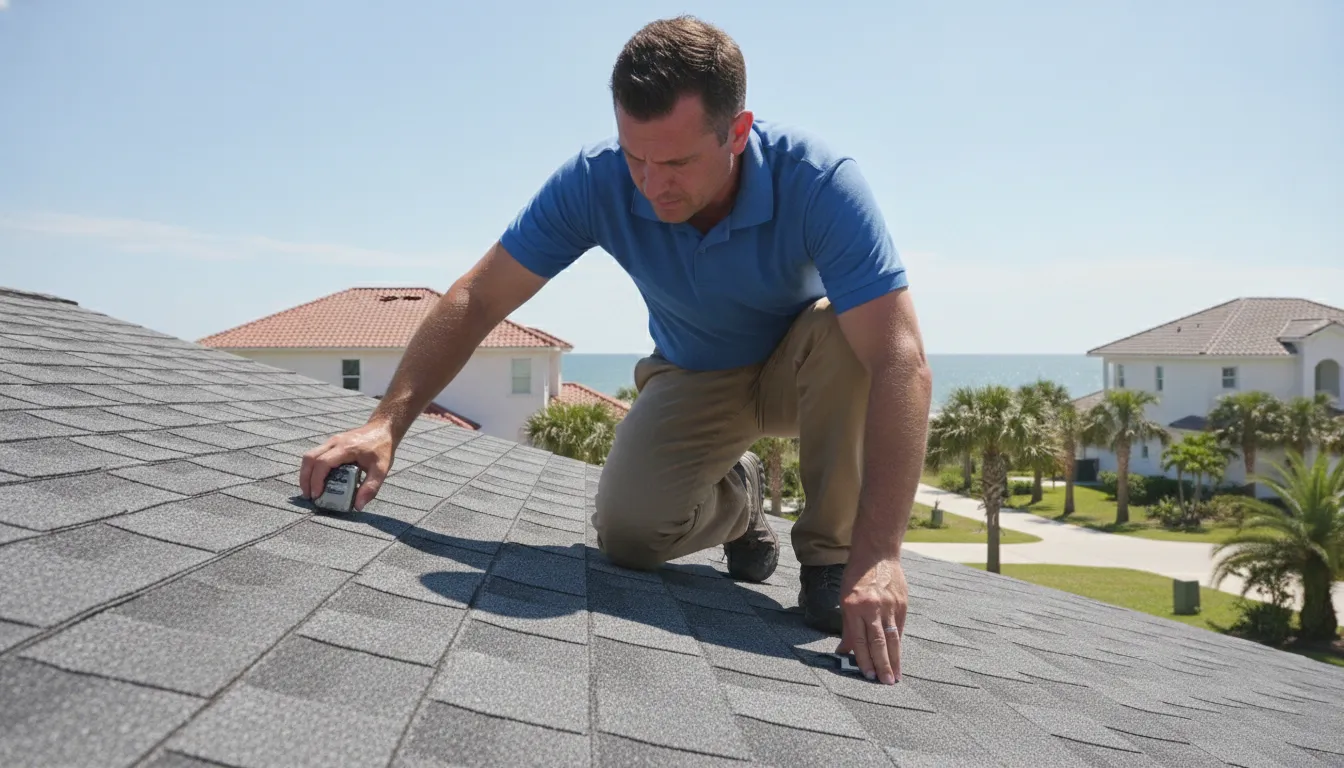
In St. Petersburg, a roof can look sound from the driveway and still raise questions during a home sale. Florida’s intense sun, humidity, salt air, and hurricane exposure make remaining roof life important to buyers, realtors, and insurance carriers. A certification completed before listing can identify concerns early, reduce closing surprises, and give everyone a clearer basis for moving forward.
Schedule your free roof assessment in St. Petersburg today. Call (727) 361-6905.
A roof certification St. Petersburg sellers can rely on documents the roof’s observed condition, safety concerns, and estimated remaining useful life. In many insurance situations, the roof needs at least five years of useful life remaining, although the carrier, roof type, and transaction requirements determine what is ultimately accepted.
Knowing why the document matters is the first step. From insurance eligibility to buyer negotiations, the certification connects the roof inspection to the practical requirements of a Florida real estate transaction.
Why Do St. Petersburg Home Sellers Need a Roof Certification?
A roof certification St. Petersburg sellers obtain before listing can help confirm that the roof is insurable and has enough useful life for the transaction. In Florida, many insurance carriers will not bind a new policy for a home with a roof more than 15 years old unless the seller provides current certification. The document also gives buyers, agents, and underwriters a clearer basis for moving forward.
Insurance requirements are often the practical reason a certification becomes urgent. The Florida Department of Financial Services notes that carriers may require documentation showing at least five years of remaining useful life. That guidance typically applies when a roof is older than 15 years for shingles, or older than 20 years for tile or metal. That does not mean every carrier uses identical rules, so sellers should confirm the requirements with the buyer’s insurer early in the process. A current certification can help address that question before it becomes a condition of closing.
The inspection records key details about the roof, including its material, estimated installation age, visible condition, and remaining useful life. It may also include photographs and notes that help an insurance reviewer understand what was evaluated. A qualified professional should assess the roof itself rather than relying on a quick view from the ground. As Still Insurable explains, drive-by certifications are frequently rejected by carriers that need more complete documentation.
That documentation matters in St. Petersburg, where intense sun, persistent humidity, heavy rain, and hurricane-force winds can affect roofing materials over time. A certification does not guarantee that an insurer will approve a policy, but it gives the carrier current information about the roof’s condition and remaining service life. It also gives the buyer a more objective answer than an estimate based only on the roof’s visible age.
For sellers, the timing can make a meaningful difference. A leak, deteriorated flashing, or short remaining useful life found late can trigger repair negotiations. It may also cause a delayed closing or a rushed replacement decision. Scheduling a roof inspection in St. Petersburg before listing allows the seller to identify documentation or repair needs while there is still time to address them. The result is a more predictable transaction and greater confidence for everyone reviewing the roof.
What a Roof Certification Inspection Covers
A roof certification inspection documents the roof system’s material, installation year, visible condition, and estimated remaining useful life. For a roof certification St. Petersburg homeowners can use during a sale, the inspection should include a physical roof walk-through, climate-related observations, and clear photographic records.
Most certifications are concise, usually one or two pages. But the information needs to be specific enough for an insurer, buyer, realtor, or closing team to evaluate the roof. The report identifies whether the home has architectural shingles, three-tab shingles, tile, metal, or a flat membrane system. It also records the year installed and describes visible conditions such as deterioration, damaged materials, exposed fasteners, ponding areas, flashing concerns, or evidence of leaks. The inspector then provides a professional estimate of how many useful years remain. These core elements are described by Still Insurable’s roof certification guidance.
How the certification fits a Florida four-point inspection
For older Florida homes, the roof certification may be included within a four-point inspection. The four-point process reviews the four major systems that affect insurability: roofing, electrical, plumbing, and HVAC. The roof is the first system evaluated, so its condition and remaining life can influence the broader insurance review. The Florida Chief Financial Officer’s inspection guide explains these four systems and the documentation insurers may request.
What happens during the roof walk-through
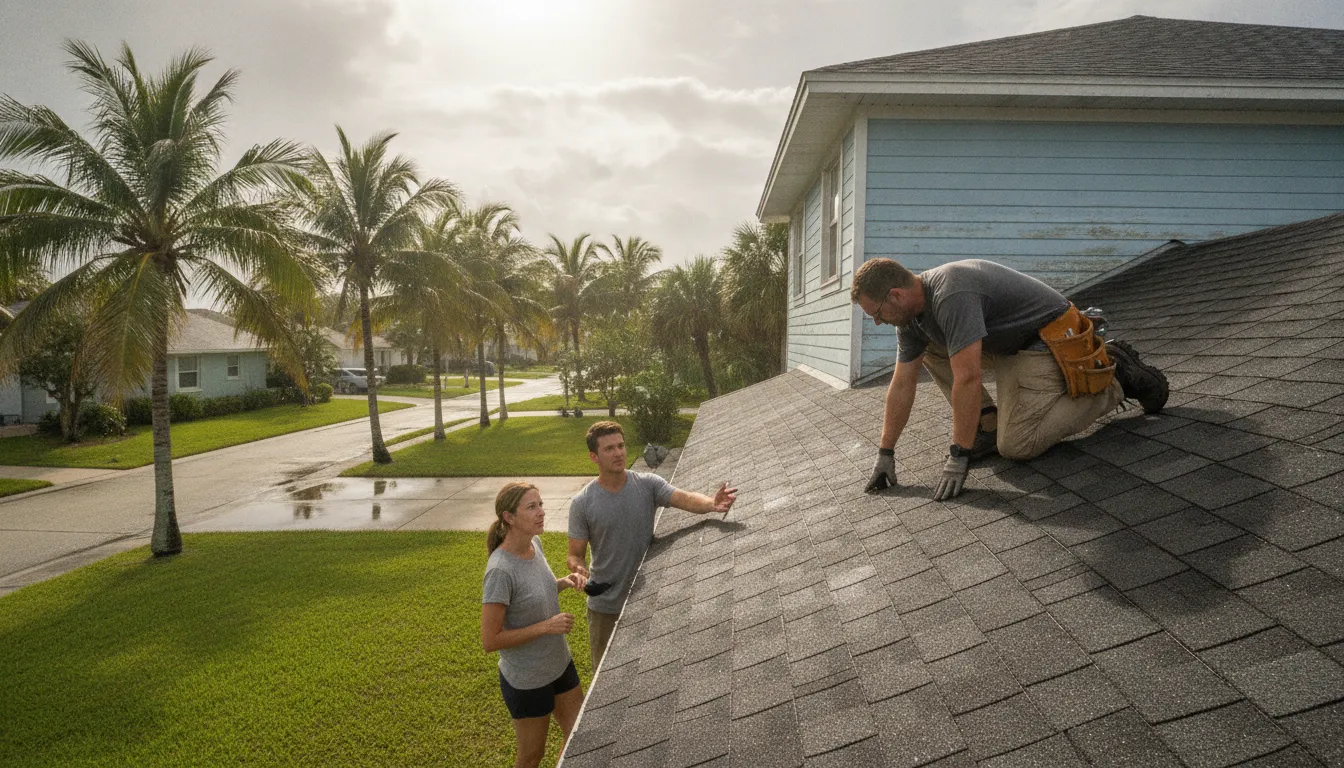
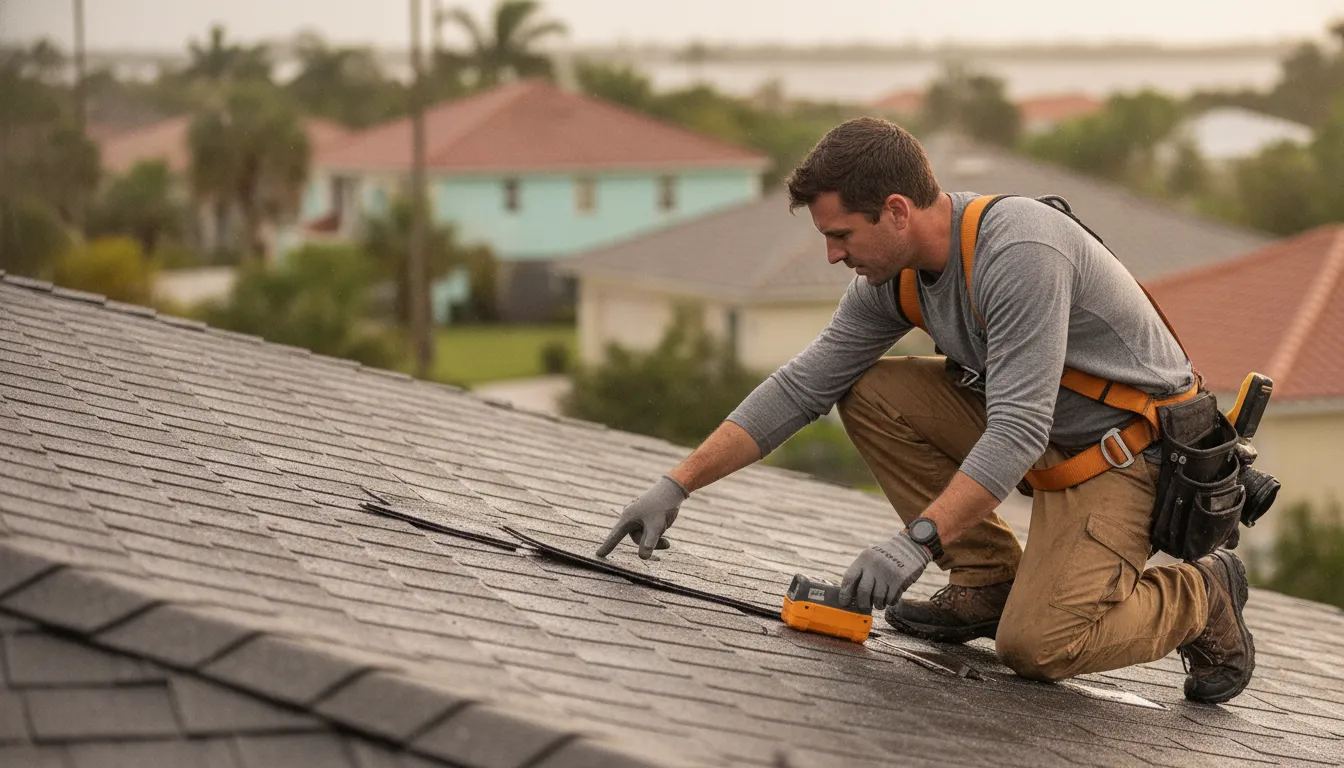
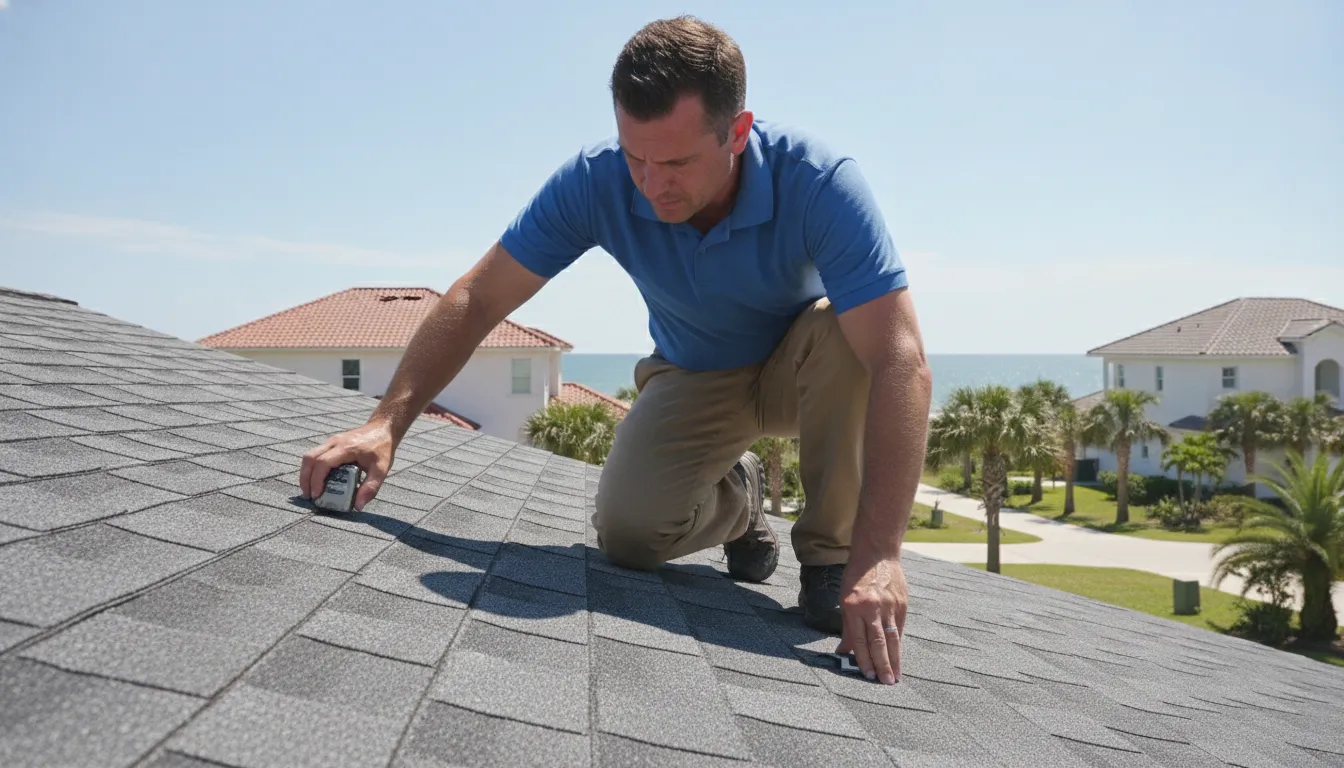
A thorough certification should not be based only on a view from the driveway. The inspector should walk the roof when conditions and safety allow, examining the field material, ridges, valleys, penetrations, vents, edges, flashing, and visible drainage components. Drive-by certifications that never assess the rooftop may be rejected by an insurance carrier. A licensed inspection professional or qualified roofing contractor should also identify safety or building-code concerns rather than simply provide an age estimate.
St. Petersburg’s humid subtropical climate makes this close inspection especially useful. Persistent humidity can accelerate surface wear and support algae growth, while intense heat. Heavy rain, and hurricane-force winds place stress on shingles, tile, metal panels, flashing, and attachment points. The report should distinguish ordinary cosmetic aging from conditions that could affect weather resistance or insurability.
Why photographs matter
Photographs give the reviewing insurer and transaction team evidence they can evaluate without relying on vague descriptions. Standard documentation includes photos of every roof elevation and the rooftop itself, along with images of notable defects or areas that remain in good condition. A complete file creates a clearer record of what was observed on the inspection date and can reduce avoidable questions that delay underwriting or closing.
How Long Is a Roof Certification Valid in Florida?
In most cases, a roof certification is valid for about one to three years. But the exact window depends on the insurance carrier, the roof’s age, and the details recorded by the inspector. A roof certification St. Petersburg sellers can use with confidence should be current when the buyer’s insurance is being arranged, not simply valid on the day the home is listed.
Planning to sell? Schedule your roof inspection early, then confirm with the buyer’s agent or carrier how close to closing the certification must be dated.
Florida transactions can move quickly, and an older document may not satisfy a carrier’s current underwriting requirements. This is especially important for homes in St. Petersburg and Pinellas County, where intense sun, high humidity, salt air near the coast, and tropical storm conditions can affect how an inspector evaluates remaining service life. If a certification is several years old, the insurer may request a new inspection, which can add time if repairs or additional documentation are needed.
Why timing matters before closing
Sellers generally benefit from arranging the inspection after they have decided to list, while allowing enough time to address visible damage. Avoid ordering it so early that the validity period could expire during negotiations. At the same time, waiting until the week of closing leaves little room to correct a leak. Replace damaged flashing, or provide photographs and other records requested by an insurer.
A recent storm is another reason to revisit the timing. Before relying on an older report, homeowners should check your roof for storm damage. Wind-driven rain, lifted shingles, and concealed moisture can change the roof’s condition after the original certification was issued.
Florida’s five-year useful-life protection
Certification timing is separate from Florida’s roof-age protections. Under Florida Statute 627.70115, an insurer may not refuse to issue or renew a residential property policy solely because of roof age. That protection applies when an authorized inspection indicates that the roof has at least five years of useful life remaining. The statute does not guarantee every policy or eliminate the need for carrier-specific forms, repairs, or underwriting review.
For a smoother Pinellas County closing, ask which certification format the carrier accepts, confirm its expiration date, and share the completed document promptly with the buyer’s insurance professional.
What Disqualifies a Roof from Certification in St. Petersburg?
Active leaks, serious damage, unsafe roof conditions, or less than five years of remaining useful life can disqualify a roof from certification in St. Petersburg. Florida insurers and realtors use the certification to judge whether the roof can keep protecting the home. That matters under local humidity, heavy rain, and hurricane-force wind exposure. A roof that fails may need repair, replacement, or additional documentation before closing or insurance underwriting can move forward.
Roof age thresholds
Age alone is not always an automatic rejection, but it raises the level of scrutiny. Shingle roofs that are roughly 25 years old or more commonly require proof of replacement or a current certification. Tile and metal roofs, along with mobile homes, may face a 50-year documentation threshold in Pinellas County inspection practice. These benchmarks are not a substitute for the roof’s actual condition, so an older system in excellent shape may still need a detailed inspection and supporting records.
Many carriers request certification for roofs older than 15 years. The Florida Department of Financial Services notes that insurers may require documentation showing at least five years of useful life for older roofs. Review the carrier’s requirements early instead of waiting until the buyer’s insurance application is submitted. Florida’s four-point inspection guide explains how roof condition fits into broader property underwriting.
Leaks and moisture penetration
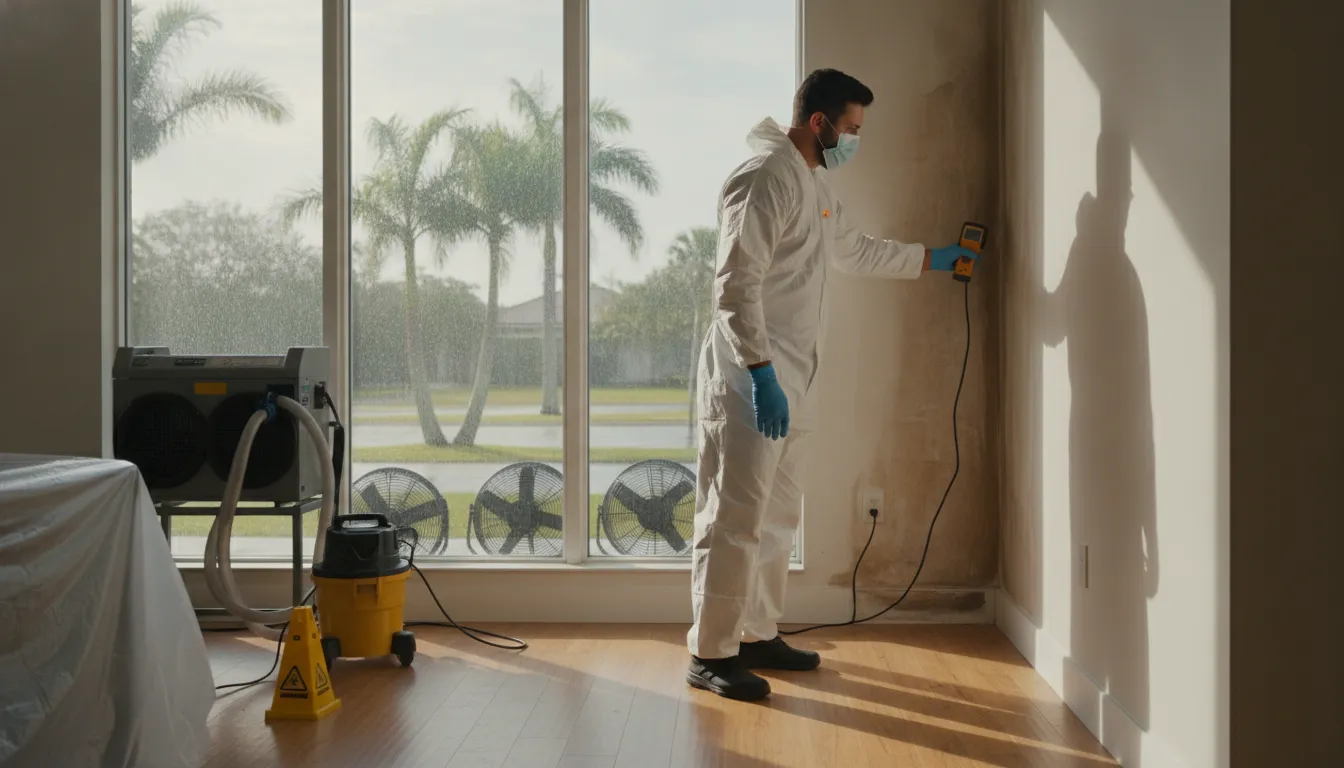
An active leak is a direct certification problem. Stained ceilings, damp decking, failed flashing, exposed underlayment, and recurring moisture around vents or penetrations can indicate that the roof is not currently watertight. In St. Petersburg’s humid, storm-prone climate, small openings can allow repeated moisture intrusion and accelerate deterioration that is not visible from the ground.
Before scheduling an inspection, address known leaks and keep repair documentation. If the problem is not yet clear, review guidance on roof leak repair in St. Petersburg. A repair may resolve the immediate defect, but the inspector still needs to determine whether hidden damage or broader system wear remains.
Insufficient remaining useful life
The roof generally needs at least five years of remaining useful life to satisfy common insurance certification requirements. A roof can appear clean and intact while still falling short if its materials are near the end of their expected service period. The certification should state the install year, material, visible condition, and the inspector’s best estimate of remaining life, as outlined by Still Insurable’s roof certification guidance.
Severe damage or structural concerns
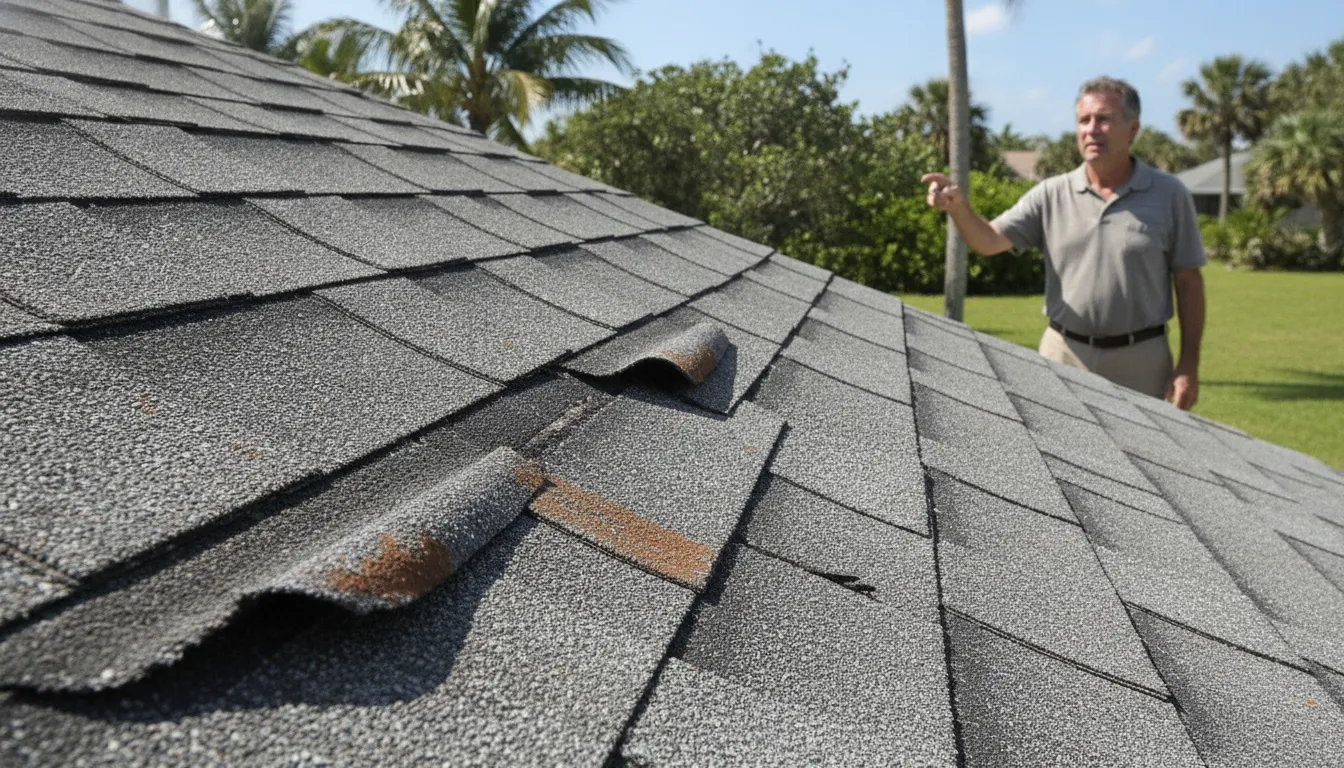
Missing shingles or tiles, widespread wind damage, sagging roof planes, deteriorated decking, unstable framing, and major flashing failures can also prevent certification. Florida Statute 627.70115 addresses insurer decisions involving roof age and inspections, but it does not make an unsafe or damaged roof insurable. Correct the underlying condition, obtain a follow-up inspection, and provide permits, invoices, or replacement records when available.
Who Pays for the Roof Certification: Seller or Buyer?
Usually, the seller arranges and pays for a roof certification before listing, but the buyer or the buyer’s insurer may request a separate inspection during the transaction. Agreeing on responsibility early helps prevent an insurance question from becoming a last-minute closing delay.
| Scenario | Who typically pays | Why |
|---|---|---|
| Pre-listing certification | Seller | The seller wants current documentation ready for buyers, agents, and insurers before offers are made. |
| Buyer-requested inspection | Buyer, unless negotiated otherwise | The buyer may request a certification during the inspection or contingency period to evaluate insurability. |
| Insurance requirement before binding coverage | Negotiated by the parties | The carrier may require current roof documentation before the buyer’s policy can be issued at closing. |
There is no universal Florida rule assigning this cost in every sale. The purchase contract, inspection addendum, and local practice determine whether the seller, buyer, or both parties share the expense. A seller who orders the document early generally has more control over the timeline and can address visible concerns before negotiations become urgent.
That preparation matters in St. Petersburg, where humidity, intense sun, and tropical weather can raise questions about remaining useful life or storm-related wear. If a buyer’s insurer asks for documentation after the inspection, the parties may need extra time. A licensed professional must inspect the roof, document its condition, and issue a report the carrier accepts. A roof certification is not a guarantee that an insurer will approve a policy, because underwriting requirements vary.
Before scheduling, ask the listing agent or insurance representative what form, inspection date, and roof-life details are required. If a recent storm caused damage, review guidance on storm damage insurance claims in Florida before assuming a certification alone will resolve the issue. Clear expectations at the start can protect both the closing date and the transaction.
How Much Does a Roof Certification Cost in St. Petersburg?
A roof certification in St. Petersburg commonly costs about $95 to $250, although more involved evaluations can reach a few hundred dollars. The price depends on who performs the inspection and the roof’s size and design. Its age, condition, and whether the work is part of a broader Four-Point Inspection also shape the total.
Local market examples show why quotes vary. One Pinellas and Tampa provider advertises a $95 roof certification, while a more detailed inspection from another firm may fall closer to the $150 to $250 range. These figures are useful planning benchmarks, not a guaranteed price for every property. Ask whether the quote includes the written certification, roof photographs, inspection forms required by the carrier, and any travel or reinspection fee.
What affects the certification price?
- Provider and credentials: A small inspection company may offer a lower-cost document based on a focused roof review. A licensed roofing contractor may charge more when the evaluation includes closer review of flashing, penetrations, storm wear, ventilation, and repair recommendations. The right choice depends on the insurance carrier’s requirements and the transaction timeline.
- Roof size and complexity: A single-story home with a simple gable roof takes less time than a large, two-story property. Multiple slopes, additions, tile, metal, or low-slope membrane areas can extend the job. Steep or difficult-to-access roofs can also require additional safety planning.
- Repairs and reinspection: The certification fee usually covers the inspection and report, not roof repairs. If the inspection finds an active leak, damaged shingles, failed flashing, or storm-related deterioration, correcting the issue and requesting a follow-up inspection may create a separate cost.
Some Florida insurers incorporate the roof review into a Four-Point Inspection, which evaluates the roof, electrical, plumbing, and HVAC systems. The Florida Chief Financial Officer’s guide explains that carriers may request documentation showing at least five years of remaining roof life for older roofs. Confirm with the insurer, lender, or real estate professional whether a standalone certification is acceptable before scheduling.
For a property-specific evaluation, compare the scope of each quote rather than choosing on price alone. A licensed and insured local contractor can also explain whether repairs are likely and connect the inspection to dependable roofing services when the report identifies a problem.
Frequently Asked Questions
Is a roof certification the same as a roof inspection?
They are closely related, but a certification is the written document produced after the inspection. It records the roof material, estimated installation age, visible condition, and remaining useful life for an insurer or real estate transaction. A thorough evaluation should include the roof surface, not only a drive-by view, because ground-only certifications may be rejected by carriers. Industry guidance on roof certifications explains the typical documentation.
Who can issue a roof certification in Florida?
A licensed Florida inspection professional or qualified, licensed roofing contractor should complete the evaluation and sign the document. The right provider depends on the buyer’s insurer, the transaction requirements, and whether the certification is part of a broader Four-Point Inspection. Florida’s insurance consumer guidance identifies licensed inspection professionals as the appropriate source for this documentation: Florida Four-Point Inspection Guide.
How long does a roof certification remain valid?
There is no single statewide expiration period for every transaction. Many certifications are accepted for one to three years, but the insurance carrier, roof age, roof condition, and policy requirements control. Ask the buyer’s insurer or realtor how current the document must be before scheduling the inspection.
What roof problems can prevent certification?
Active leaks, storm damage, structural concerns, unsafe conditions, or too little remaining useful life can prevent approval. Many Florida carriers look for at least five years of useful life, particularly on older roofs, so repairs or replacement may be needed before closing. Requirements vary by carrier, and a certification does not replace required code or insurance documentation.
Does the seller or buyer pay for the certification?
The seller commonly orders and pays for a certification before listing to reduce closing surprises. A buyer may request a new inspection during due diligence, or the buyer’s insurer may require current documentation before binding coverage. Confirm responsibility in the purchase contract and verify the exact form with the insurance carrier.
Schedule Your St. Petersburg Roof Inspection
A clear roof inspection can help sellers and realtors address certification questions before they affect the transaction. Schedule your free roof assessment in St. Petersburg today by calling (727) 361-6905. Go Time Roofing & Restoration can assess the roof and explain the next practical step in clear, straightforward terms.