After a house fire, the visible damage is only part of the problem. Smoke residue can settle into walls, ceilings, furnishings, and ventilation pathways, while firefighting water can leave moisture behind in a Pinellas County home. Substantial indoor ash also creates health and safety concerns that make casual cleanup a poor fit for many homeowners.
Schedule a free fire and smoke damage assessment in St. Petersburg today. Call (727) 361-6905.
Professional cleaning after a fire covers more than wiping soot from surfaces. Trained restoration crews assess safety, remove ash and smoke residue with appropriate equipment, improve indoor air quality, address moisture, and evaluate belongings for cleaning or disposal. Guidance from the Washington State Department of Health recommends professional help when visible ash substantially covers indoor surfaces.
Because heat, humidity, and storm-related moisture can complicate recovery in St. Petersburg and across Tampa Bay, the sequence of cleanup matters. The process begins with a careful assessment of what can be safely cleaned, restored, or removed.
What Professional Cleaning After a Fire Includes
Professional cleaning after a fire addresses more than visible soot or charred materials. A trained restoration team evaluates smoke residue, odors, contents, building surfaces, and moisture from firefighting.
The goal is to make the property safer, limit further damage, and identify which materials can be cleaned, restored, or responsibly removed. When substantial ash covers indoor surfaces, public health guidance recommends considering a professional contractor for indoor cleanup.
Soot and smoke residue removal
Soot can settle across walls, ceilings, floors, cabinets, HVAC components, and personal belongings. It may also penetrate porous materials, making ordinary dusting ineffective and spreading residue into otherwise clean areas.
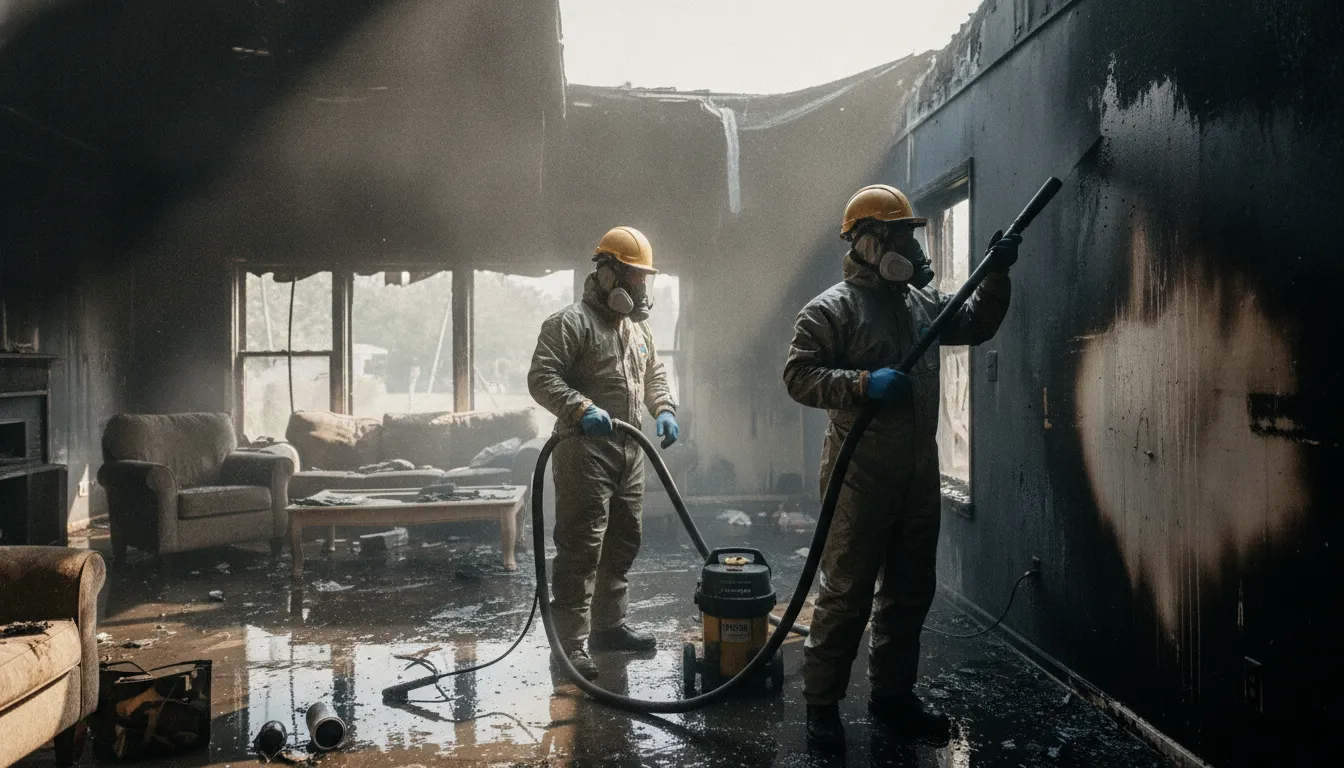
Restoration specialists use controlled methods that match the surface and residue type. HEPA-rated vacuuming helps capture fine soot particles from furniture, drapes, and other materials before detailed cleaning begins.
Hard surfaces may then be wiped with damp cloths and fragrance-free soap or mild detergent. This approach can reduce indoor concentrations of volatile organic compounds, or VOCs, associated with smoke residue.
Homeowners should avoid rubbing heavily soiled surfaces before they understand the material and residue involved. Aggressive cleaning can spread soot, drive contaminants deeper, or damage paint and finished surfaces.
Smoke odor elimination
Smoke odor often remains after visible debris is removed because smoke particles settle into fabrics, insulation, drywall, cabinetry, and other porous materials. Odor treatment therefore requires source removal rather than masking the smell with fragrance.
A professional assessment identifies affected materials and determines whether cleaning, deodorization, sealing, or removal is appropriate. Air filtration with HEPA and carbon filters can help reduce lingering particles and VOCs after visible ash has been removed.
In St. Petersburg and Pinellas County, humidity makes moisture control especially important during recovery. Firefighting water and damp materials can worsen odors and create conditions that support mold growth if they remain unresolved.
Contents and structural cleaning
Cleaning covers the home and its contents. Specialists may assess furniture, clothing, electronics, cabinetry, flooring, and other belongings for salvageability. For guidance on protecting these items, see our overview of smoke damage electronics cleanup.
Items that are heavily contaminated and cannot be cleaned safely may need disposal. A careful contents inventory helps separate restorable property from materials that could continue releasing odor or residue.
Structural cleaning also includes affected ceilings, walls, framing, ventilation areas, and other building components. Trained specialists coordinate this work with repairs when smoke, water, or roof damage affects the same property.
Go Time Roofing and Restoration combines fire, water, and mold restoration with roofing solutions for St. Petersburg homes. That integrated approach can simplify recovery when a single incident affects both the structure and its roof.
Because ash and smoke residues can present health hazards, residents should follow re-entry guidance and avoid cleanup when conditions are unsafe. Professional evaluation is especially important when damage is widespread or indoor surfaces are heavily coated.
The Washington State Department of Health provides detailed post-fire cleanup guidance, including precautions for ash, smoke residue, and indoor air quality.
Why Fire Damage Is More Than Just the Flames
Flames may disappear quickly, but smoke, ash, and heat-related damage can continue affecting a home long afterward. Professional cleaning after a fire addresses hazards that are easy to miss during a visual inspection.
Smoke and ash from burned buildings can contain toxic substances, including materials that become hazardous when inhaled or disturbed. These residues may settle on floors, walls, ceilings, furnishings, ductwork, and personal belongings.
Invisible residues can affect indoor air
A room can look mostly clean while microscopic particles and chemical residues remain on surfaces. Smoke can travel beyond the area touched by flames, leaving an odor and residue in rooms that appear unaffected.
The Washington State Department of Health explains that ash from burned structures may look like ordinary dust, but it can pose significant health risks. Its post-fire guidance also notes that indoor surface cleaning can help reduce volatile organic compounds, or VOCs, that may cause harmful health effects.
Those concerns make casual sweeping or dry dusting a poor first step. Disturbing settled ash can place particles back into the air and spread contamination to additional rooms. A trained crew evaluates the affected areas, selects appropriate cleaning methods, and limits unnecessary redistribution.
Fire-damaged homes also contain physical hazards
Smoke residue is only one part of the safety problem. Fire-damaged homes may contain unstable structures, broken materials, damaged electrical systems, debris, or other hazards that are not safe to handle without an assessment.
Local authorities must authorize re-entry before anyone returns to a fire-damaged property. Once entry is allowed, substantial visible ash is a clear reason to consider a professional contractor rather than beginning extensive cleanup alone.
Cleaning also requires protective equipment. Guidance from the Washington State Department of Health recommends protection such as nitrile gloves. Disposable Tyvek-style coveralls, shoe coverings, and a properly fitted N95 respirator during hazardous ash cleanup.
Who should stay away from cleanup?
People with respiratory or cardiovascular conditions, pregnant people, and adults over 65 face higher risks from smoke and ash exposure. They should not participate in post-fire cleanup activities.
Other household members should avoid entering contaminated areas without authorization and proper protection. Professional teams bring training, respiratory protection, controlled cleaning procedures, and equipment suited to smoke and ash removal.
In St. Petersburg and Pinellas County, restoration may also involve moisture left by firefighting efforts. Addressing smoke residues and related moisture together helps protect indoor conditions as the property moves toward recovery.
The Washington State Department of Health provides post-fire cleanup guidance for residents and restoration professionals.
Step-by-Step: How a Professional Fire Cleanup Crew Works
Professional fire cleanup follows a controlled sequence that protects occupants, limits secondary damage, and addresses smoke, soot, firefighting water, and indoor air quality. The process is especially important when visible ash covers surfaces, because public health guidance recommends hiring a professional contractor in that situation.
A trained restoration team coordinates safety, cleaning, deodorization, and verification rather than treating smoke residue as ordinary household dust. For an overview of the full fire damage restoration process, review each stage before work begins.
- Assess safety before entering or cleaning. The crew confirms that authorities have authorized re-entry and checks for unstable materials, electrical hazards, damaged utilities, and structural concerns. Technicians use appropriate protective equipment, including nitrile gloves, disposable coveralls, and fitted N95 respirators. Occupants with respiratory or cardiovascular conditions, pregnant people, and adults over 65 should not participate in smoke or ash cleanup. These precautions reflect guidance from the Washington State Department of Health.
- Remove loose soot and ash with HEPA equipment. Technicians begin with careful HEPA vacuuming rather than aggressive brushing or dry sweeping. Smoke residue can settle into furniture, drapes, flooring, and other materials. HEPA-rated equipment captures fine particles while reducing the chance of redistributing them through the home. The crew then determines which surfaces require additional cleaning and which porous items cannot be safely salvaged.
- Set up air cleaning and deodorization. After visible ash is removed, the crew uses air-cleaning equipment with HEPA and carbon filtration. HEPA filtration captures particles, while carbon filtration helps reduce lingering volatile organic compounds and odors. Persistent smoke odor may require professional remediation techniques, such as industrial air scrubbers or thermal fogging. Fragrances alone do not remove the residue that creates the odor.
- Clean contents and structural surfaces. Restoration specialists clean walls, ceilings, floors, cabinets, furnishings, and salvageable belongings using methods suited to each material. For some surfaces, fragrance-free soap or mild detergent applied with a damp cloth helps remove ash and reduce indoor VOC concentrations. Chemicals can create additional hazards when used incorrectly, so trained professionals select products and equipment based on the contamination. Heavily contaminated porous items that cannot be cleaned effectively may need disposal.
- Address firefighting water and flush water systems. Fire suppression can leave moisture in walls, floors, insulation, and contents. In Pinellas County’s humid climate, prompt drying, ventilation, and dehumidification help limit lingering moisture problems. Technicians also address water-related damage separately from smoke cleaning. Household faucets may need flushing before use, because pollutants can enter water systems during a fire response. Water quality should be confirmed before drinking if contamination is possible.
- Verify air quality and restoration readiness. The final review checks cleaned surfaces, remaining odor, moisture conditions, ventilation, and air filtration performance. The team documents completed work and any materials requiring repair or replacement. If particles or odors remain, additional cleaning or air treatment may be necessary. This verification stage helps ensure the home is not simply clean-looking, but safer and more suitable for reoccupancy.
Soot Removal from Walls and Ceilings: When to Call a Pro
Soot on walls and ceilings is more than a cosmetic stain. The right cleaning method depends on the amount of residue, the surface material, and whether smoke has penetrated behind the finish.
Light surface residue may respond to careful cleaning, but widespread deposits require professional assessment. If most indoor surfaces are covered with visible ash, public health guidance recommends considering a professional contractor for the cleanup.
What homeowners can safely try
For minor smoke residue, begin only after authorities have approved re-entry and the property is safe. Wear appropriate protection, including gloves and a properly fitted respirator, before disturbing ash or soot.
Use a damp cloth with fragrance-free soap or mild detergent on washable surfaces. This approach can remove surface residue and help reduce indoor concentrations of volatile organic compounds. Work gently, change the cloth often, and avoid spreading soot into clean areas.
Do not scrub aggressively when the wall or ceiling has soft drywall, peeling paint, blistered coatings, or water damage. Excess moisture can drive residue deeper into porous materials and create additional damage. Never mix cleaning chemicals, particularly bleach and ammonia-based products.
A homeowner can also use a HEPA-rated vacuum for loose soot on suitable furnishings and surfaces. Keep the vacuum nozzle slightly above delicate materials when possible. Ordinary household vacuums may release fine particles back into the room or lack the filtration needed for contaminated debris.
Why substantial soot needs professional equipment
Smoke residue can settle into textured ceilings, insulation, trim, wall cavities, and other areas that a damp cloth cannot reach. Soot particles can also penetrate structural materials, making thorough HEPA vacuuming and specialized cleaning important.
High-altitude deposits create another safety problem. Cleaning ceilings often requires ladders or lifts, stable footing, and controlled handling of contaminated dust. A restoration crew can assess overhead surfaces without asking a homeowner to work beneath unstable materials or near damaged electrical components.
Professional cleaning also helps distinguish removable residue from surfaces that need sealing, replacement, or additional restoration. That evaluation matters when smoke, heat, or firefighting water has affected drywall, insulation, paint, or framing.
Visit our guide to soot removal from walls for local service details. In St. Petersburg and Pinellas County, prompt cleaning also helps limit lingering odors while humid conditions increase the importance of moisture control.
Call a professional when soot covers multiple rooms, reaches ceilings, returns after cleaning, or produces a persistent odor. Professional cleaning after a fire should address the visible residue and the contamination that remains beyond the surface.
Smoke Odor Elimination and Indoor Air Quality
Smoke odor can remain after visible soot disappears because residues settle into porous materials, insulation, furnishings, and ventilation pathways. Professional remediation addresses both the odor source and the particles that affect indoor air quality.
In Pinellas County, humidity can make lingering smoke compounds and post-fire moisture harder to manage. A careful restoration plan therefore combines odor treatment, filtration, cleaning, ventilation, and moisture control.
How air scrubbers and filtration improve the air
Air scrubbers pull contaminated air through specialized filters and return cleaner air to the work area. HEPA filtration captures fine particulate matter, while activated carbon helps adsorb many odors and volatile organic compounds.
After visible ash has been removed, the Washington State Department of Health recommends a portable air cleaner with both HEPA and carbon filtration. The agency also recommends continuing to run the cleaner because particles and VOCs can linger after a fire.
Post-fire cleanup guidance from the Washington State Department of Health supports this approach for reducing remaining indoor contaminants.
Why thermal fogging may be necessary
Thermal fogging uses a specialized machine to distribute a deodorizing treatment into areas that ordinary wiping cannot reach. It can help treat odor compounds absorbed into fabrics, wall cavities, and other porous materials.
Fogging does not replace source removal. Crews must first remove soot, clean affected surfaces, address damaged materials, and identify moisture created by firefighting water. Otherwise, odor can return after the treatment dissipates.
Professional smoke remediation becomes especially important when indoor air quality does not improve after visible cleaning and ventilation. Smoke damage cleanup helps reduce exposure to lingering VOCs and toxic particulate matter, not merely mask an unpleasant smell.
Managing humidity and mold risk in Pinellas County
Fire suppression can leave walls, ceilings, insulation, and flooring damp. Warm, humid conditions around St. Petersburg and Tampa Bay can accelerate microbial growth when wet materials remain untreated.
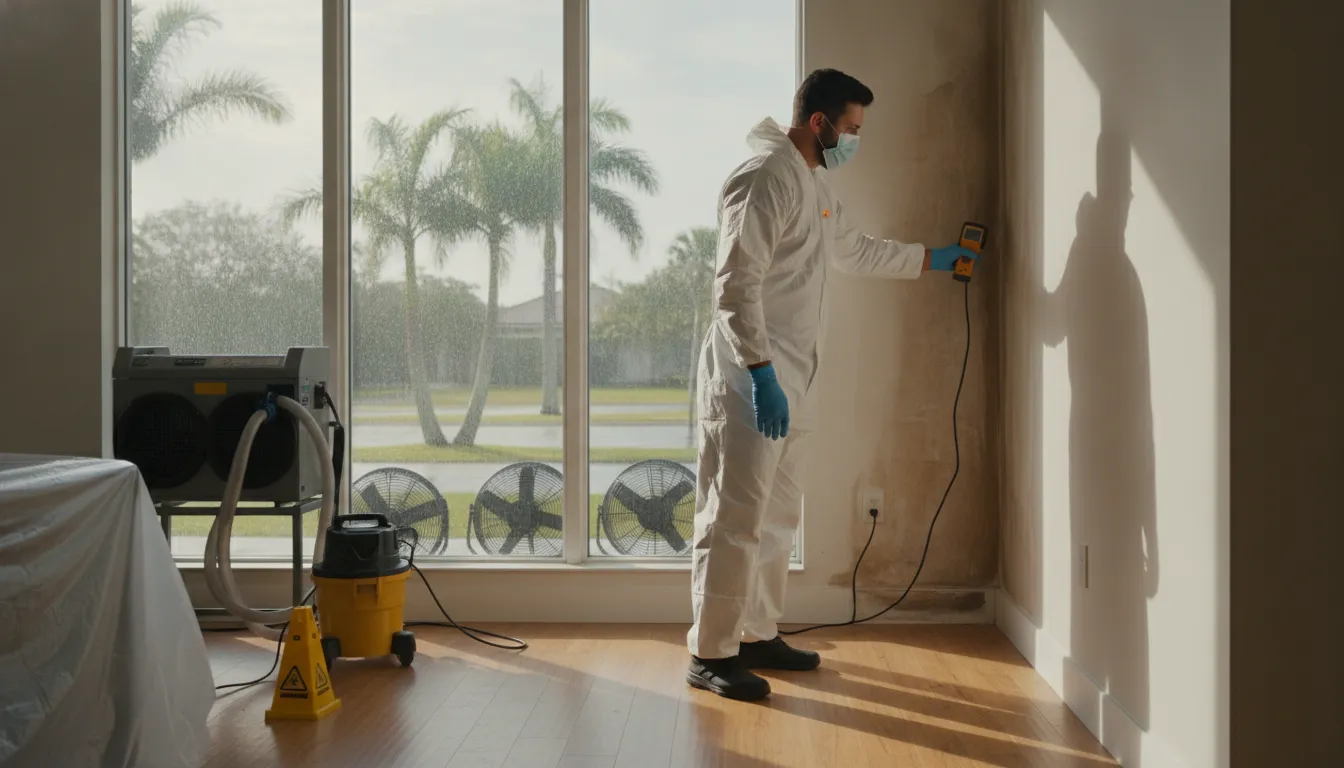
Restoration crews may use dehumidification, controlled ventilation, moisture measurements, and targeted removal of unsalvageable materials. These steps help prevent a smoke cleanup from becoming a secondary moisture problem.
Homeowners should avoid covering smoke odor with fragrances or running unfiltered fans through contaminated rooms. Those actions can spread particles or conceal conditions that still require professional attention.
Once cleaning and treatment are complete, continue operating a HEPA and carbon air cleaner as directed. If odor, irritation, or stale air persists, request a follow-up assessment rather than assuming the property is fully restored.
Professional Cleaning After a Fire vs. DIY
DIY cleaning can suit a small, contained smoke event after authorities approve re-entry. Professional cleaning is safer when ash is widespread, odors persist, or firefighting water created additional damage.
The right choice depends on contamination level, household health risks, affected materials, and the equipment required for complete remediation. The comparison below outlines practical differences for St. Petersburg and Pinellas County homeowners.
| Consideration | Professional restoration crew | DIY cleanup |
|---|---|---|
| Safety | Trained specialists assess unstable materials, ash exposure, electrical concerns, and related water damage before cleaning. They use protective equipment suited to hazardous residues. | Homeowners must identify hazards and use appropriate protection, including nitrile gloves, disposable coveralls, and a properly fitted N95 respirator. People with respiratory or cardiovascular conditions, pregnant people, and adults over 65 should avoid cleanup. |
| When it is appropriate | Recommended when substantial visible ash covers indoor surfaces, contamination is widespread, or smoke has entered walls, ceilings, furnishings, and ventilation pathways. | May be reasonable for limited surface residue after professional safety guidance and official authorization to re-enter. Extensive ash should not be treated as an ordinary housekeeping project. |
| Thoroughness | Crews evaluate structural materials and belongings, then use HEPA-rated vacuuming and controlled surface cleaning to address soot and fine particles. | Surface wiping can remove accessible residue, but it may miss contamination inside porous materials or difficult-to-reach areas. Fragrance-free soap or mild detergent on a damp cloth is recommended for indoor surfaces. |
| Equipment and odor removal | Professionals can use HEPA vacuums, carbon and HEPA air cleaners, and specialized air-quality equipment when ordinary cleaning does not resolve lingering smoke. | Home air cleaners may help after visible ash is removed, but household supplies cannot address every chemical residue or embedded odor source. |
| Upfront cost versus re-cleaning | The initial service cost is higher, but a documented, coordinated process can reduce incomplete cleaning, repeated odor treatment, and avoidable material loss. | The initial expense may be lower for minor damage. Re-cleaning becomes costly if soot spreads, porous items are mishandled, or moisture remains in a humid Pinellas County home. |
| Insurance and claims support | A restoration company can document conditions, organize damage assessments, and provide professional records that support communication with an insurer. | Homeowners retain full responsibility for photographs, inventories, receipts, estimates, and proving the scope of damage. |
For minor smoke residue, follow established guidance and avoid mixing cleaning chemicals. The Red Cross describes a traditional trisodium phosphate mixture, but chemical handling requires care, and bleach should never be mixed with ammonia or other cleaners.
Choose professional cleaning after a fire when ash is substantial, smoke odor continues, or materials remain visibly contaminated after careful surface cleaning. A qualified crew can coordinate fire, smoke, and water remediation rather than treating each symptom separately.
In Pinellas County, prompt drying and ventilation also matter because humid conditions can worsen moisture-related damage after suppression efforts. If you are uncertain, request an assessment before disturbing debris or discarding affected belongings.
How Much Does Professional Fire Cleaning Cost in Pinellas County?
There is no single price for professional cleaning after a fire in Pinellas County. Restoration costs depend on the affected area, smoke and soot severity, water damage, damaged materials, contents, and the work needed to make the home safe.
A small, contained smoke event may require limited surface cleaning and odor control. A larger loss can involve structural drying, air cleaning, debris removal, contents evaluation, deep soot removal, and repairs. Fire suppression water can create additional moisture concerns in St. Petersburg and throughout Pinellas County. The area’s humid subtropical climate can worsen odors and moisture problems when ventilation and dehumidification are delayed.
That is why a responsible contractor should inspect the property before presenting a restoration estimate. The assessment should identify visible damage, hidden smoke residue, affected belongings, and moisture that may remain behind walls or under flooring. It should also separate emergency mitigation from reconstruction, so you can understand what each part of the work accomplishes.
How insurance documentation affects the total
Professional restoration companies can support the claims process by documenting damage and providing an expert assessment of the work required. Insurance carriers commonly rely on restoration experience and industry procedures when reviewing fire-related cleanup and mitigation. However, your policy controls coverage, deductibles, limits, and exclusions, so the contractor cannot guarantee what an insurer will pay.
Photographs, moisture readings, room-by-room notes, contents inventories, and itemized estimates can make the claim easier to review. Ask your insurer about emergency authorization requirements before nonessential work begins. If conditions are unsafe, follow the carrier’s instructions while addressing urgent water intrusion and other active damage.
For local homeowners, fire and smoke damage restoration should address the fire, smoke, and firefighting water as one recovery plan. Go Time Roofing and Restoration provides fire, water, and mold restoration alongside roofing services for St. Petersburg and Pinellas County properties. This combined capability can reduce coordination between separate contractors when a roof, interior, or contents are affected.
Choose an estimate based on documented conditions rather than a generic per-room price. A qualified restoration team should explain the cleaning methods, equipment, drying plan, air-quality steps, expected timeline, and insurance paperwork. Go Time Roofing and Restoration can help property owners understand the next steps after a fire and coordinate the appropriate restoration response.
Frequently Asked Questions
How much does professional cleaning after a fire cost?
There is no reliable flat price because the scope depends on the affected rooms, soot depth, odor penetration, water damage, materials, and salvage needs. A restoration assessment can separate cleaning, drying, deodorizing, repairs, and contents work so your estimate reflects the actual loss.
How should smoke damage on walls and ceilings be cleaned?
Light surface residue may respond to a damp cloth with fragrance-free soap or mild detergent. Heavier soot can penetrate finishes and spread during improper wiping, so trained technicians typically assess the surface, use controlled cleaning methods, and HEPA-vacuum loose particles before deeper treatment. Learn more about soot removal from walls.
What items should be thrown away after smoke damage?
Do not discard belongings automatically. Porous items that are heavily contaminated and cannot be cleaned effectively may need disposal. While furniture, drapes, electronics, and other contents should first be evaluated for safe cleaning or restoration.
Why should homeowners hire professionals for fire and smoke damage cleaning?
Substantial visible ash creates both health and property risks. Smoke residues can contain toxic substances, and cleanup may involve structural hazards, firefighting water, odor, and indoor-air concerns. The Washington State Department of Health recommends considering a professional contractor when surfaces are mostly covered by ash: post-fire cleanup guidance.
What specialized products are used for smoke damage cleaning?
Depending on the material and contamination, professionals may use HEPA vacuums, fragrance-free detergents, odor-control treatments, air scrubbers, and HEPA-carbon filtration. After visible ash is removed, HEPA and carbon air cleaners can help reduce lingering particles and volatile organic compounds, according to the Washington State Department of Health.
Schedule a Fire and Smoke Damage Assessment
Professional cleaning can help address soot, smoke residue, and lingering odors while giving you a clearer restoration plan. For Pinellas County homeowners, the next step is simple: schedule a free fire and smoke damage restoration assessment by calling (727) 361-6905. Go Time Roofing and Restoration can discuss the property, explain what the assessment covers, and help you understand the appropriate path forward.