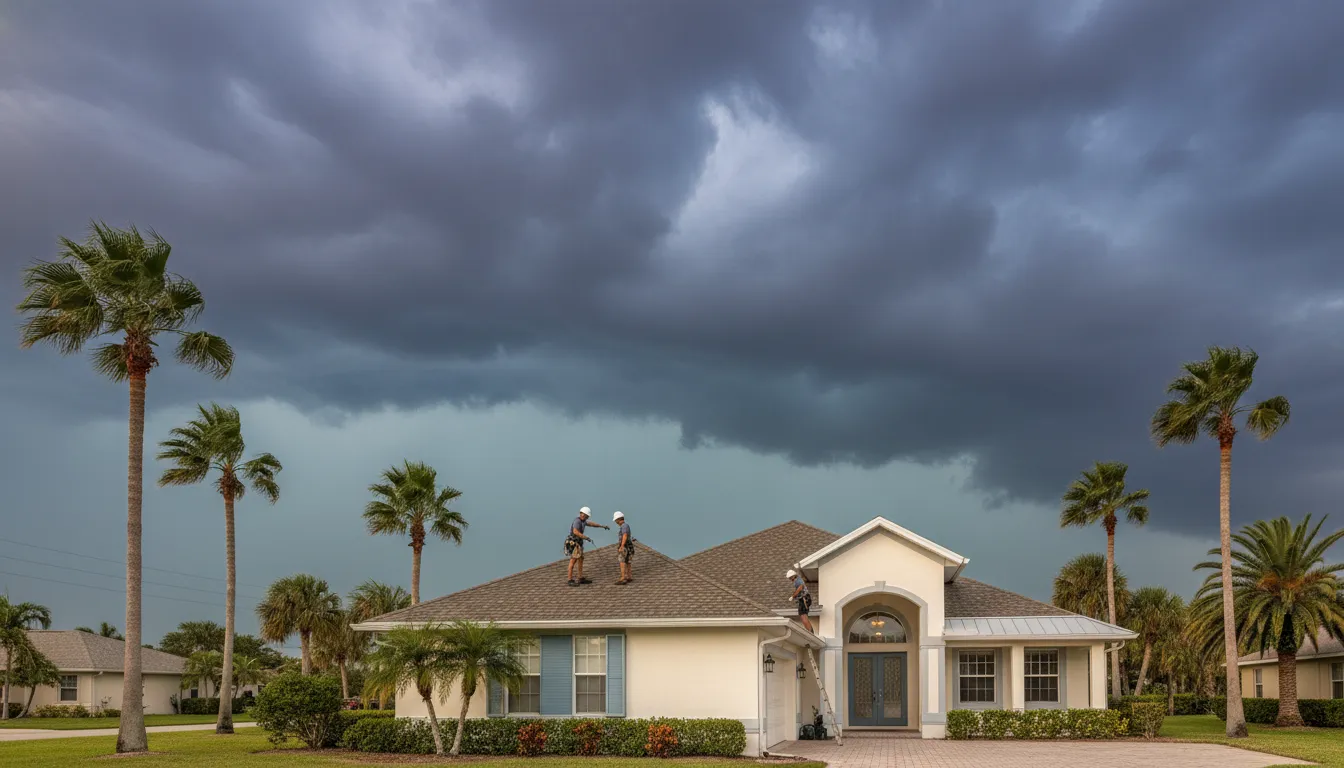
Storm season in St. Petersburg does not give homeowners much room for guesswork. Heavy rain, coastal humidity, sudden wind gusts, and months of heat can turn a small roof issue into an interior leak fast. The best time to deal with loose shingles, cracked tile, clogged gutters, worn flashing, or attic stains is before the forecast starts tracking named storms.
Need a local roof check before the next storm system? Schedule roofing service with Go Time Roofing & Restoration so a professional can inspect the areas most likely to fail in Florida weather.
These roof maintenance tips Florida storm season homeowners can use are focused on prevention, not panic. Use them to spot warning signs, understand what each roof type needs, and know when a professional inspection is the safer choice.
Roof maintenance tips Florida storm season homeowners should start with
The most useful roof maintenance plan starts with a simple goal: find weak points before wind-driven rain finds them for you. Florida hurricane season runs from June 1 through November 30, so homeowners in Pinellas County should try to finish roof maintenance before the season begins. If that window has already passed, schedule the work as soon as possible rather than waiting for a storm watch.
Use a pre-season checklist, not a last-minute scramble
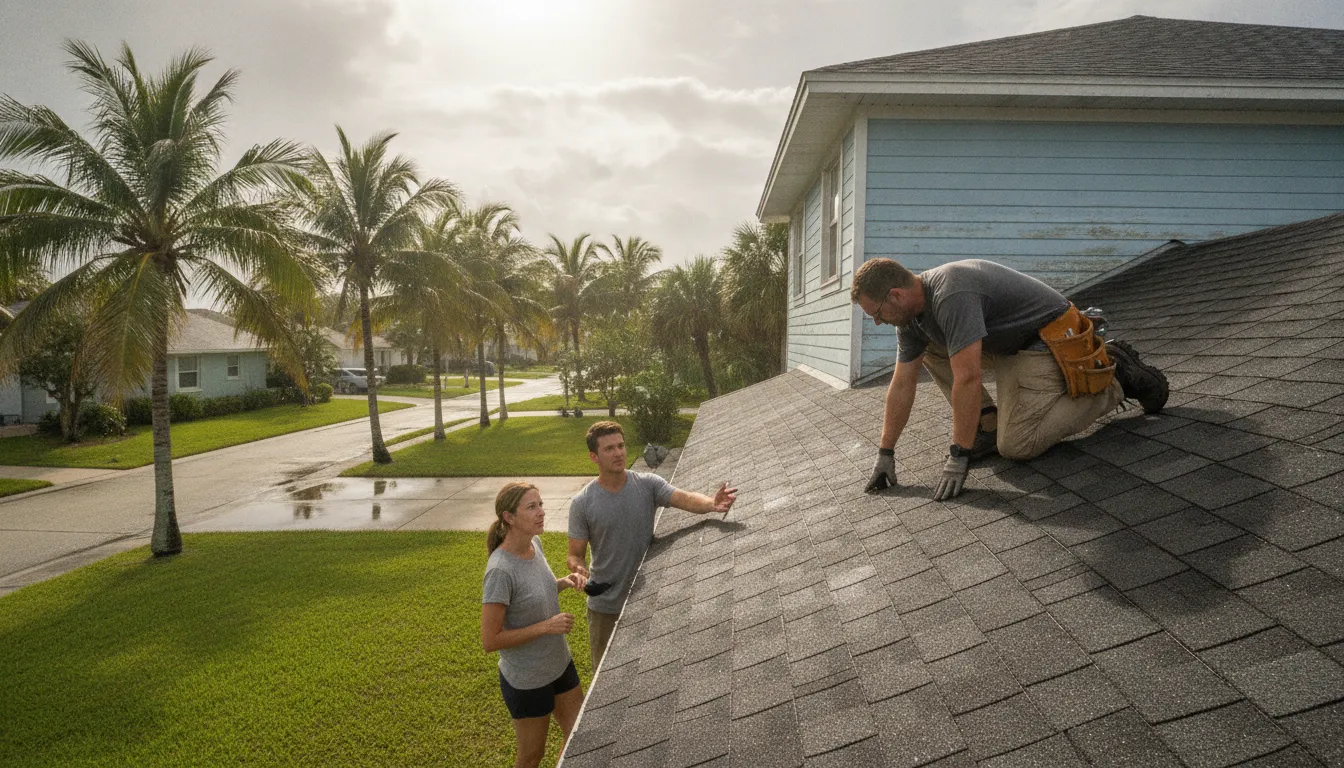
- Walk the property from the ground. Look for missing shingles, lifted edges, cracked tiles, sagging spots, exposed fasteners, or debris sitting in roof valleys.
- Clear gutters and downspouts. Gutters need to move intense rainfall away from fascia, soffits, walls, and the foundation. Overflow during a downpour can make a roof leak look like a wall leak.
- Trim nearby branches. Branches that scrape the roof surface can loosen shingles or tiles. During a storm, they can also become impact points.
- Check ceilings and attic areas. Brown stains, damp insulation, musty odors, and daylight around penetrations all deserve attention before heavy rain.
- Review flashing and roof penetrations. Vents, skylights, chimneys, valleys, and wall transitions are common leak paths when seals age or pull loose.
- Document the roof condition. Take dated photos before storm season. If damage happens later, documentation can help when discussing repairs or insurance questions.
- Bring in a licensed roofer for the roof surface. A ground check is helpful, but it does not replace a professional inspection of shingles, tile, flat roofing, flashing, decking, and drainage.
Florida roofs handle more than rain. UV exposure can make asphalt materials brittle over time, and older shingle roofs are more vulnerable during high winds. The Florida Division of Emergency Management notes that ultraviolet rays and heat can break down asphalt shingle components, which is one reason routine maintenance matters in this climate.
Do not climb on a wet, steep, tile, or storm-damaged roof. Walking the roof without the right training can break materials, create new leak points, or put you at risk of a fall. Ground-level observations, photos, and a professional inspection are the safer combination.
How do Florida storms expose shingle roof problems?
Shingle roofs are common across St. Petersburg and Pinellas County, but Florida weather is tough on them. Heat, UV exposure, salt air, humidity, and repeated afternoon storms gradually reduce flexibility. Once shingles become brittle or edges begin to lift, wind can get under them more easily.
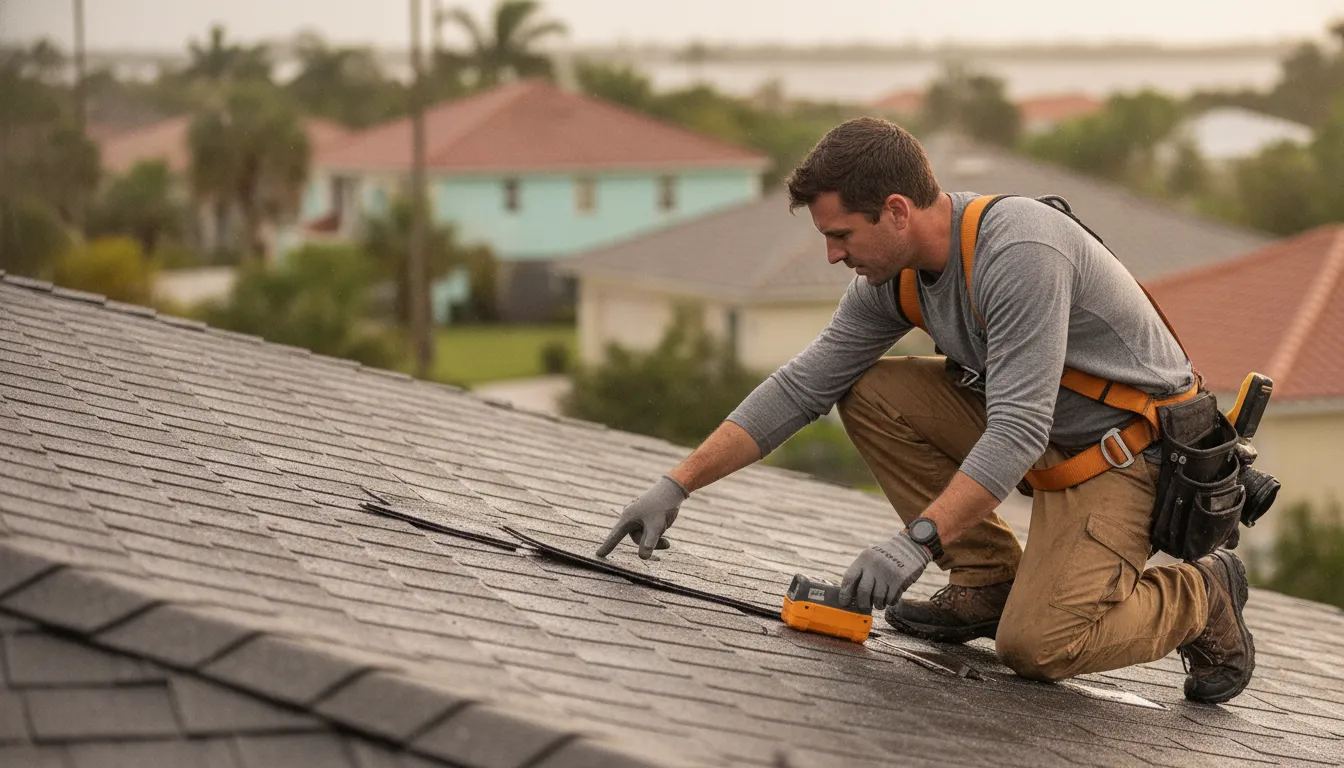
Before storm season, look for shingles that are missing, curled, cracked, buckled, or darker than the surrounding area. Also watch for granules collecting near downspouts. Granules help protect asphalt shingles from the sun, so noticeable granule loss can be a sign that the roof is aging or has been stressed by weather.
Small shingle issues can become bigger leak paths
A single missing shingle may look minor from the yard, but it can expose underlayment to sun and rain. Lifted edges can also allow wind-driven rain to travel under the roof covering. If you recently noticed that a roof shingle fell off, do not wait until the next storm to have the area checked.
Age matters too. The Florida Division of Emergency Management warns that shingle roofs over 10 years old are more likely to experience significant shingle damage during a strong hurricane. Especially when aging signs are already present. That does not mean every older roof needs replacement. It does mean an older shingle roof should be inspected before storm season so repairs can be prioritized.
If your roof is nearing the end of its useful life, read Go Time’s guide on how long shingle roofs last in Florida. It explains why local climate can shorten expectations compared with milder regions.
For homeowners with widespread wear, repeated leaks, or storm damage, a professional can explain whether targeted repair or shingle roofing service is the better path. The right answer depends on age, condition, damage pattern, ventilation, and whether the roof system can still shed water reliably.
What should tile and flat roof owners check before hurricane season?
Tile and flat roofs need different maintenance habits than shingle roofs. Tile is durable, but broken or displaced tiles can expose underlayment. Flat roofing relies heavily on seams, drainage, flashing, and surface condition. Both systems should be checked before heavy rain becomes routine.
Match the maintenance check to the roof system
| Roof type | What to check before storm season | Why it matters |
|---|---|---|
| Shingle roof | Missing shingles, curled edges, granule loss, nail pops, soft areas, and worn flashing | Wind can lift weak shingles and rain can reach underlayment or decking |
| Tile roof | Cracked tiles, slipped tiles, debris in valleys, exposed underlayment, ridge issues, and flashing transitions | Tile protects the roof system, but damaged tile can let water reach vulnerable layers |
| Flat roof | Ponding water, clogged drains, scuppers, membrane seams, blisters, punctures, parapet flashing, and edge metal | Flat roofs depend on drainage and sealed seams to move water off the building |
Tile roofs can be damaged by foot traffic, so homeowners should not walk them for a closer look. A cracked tile can become worse under pressure, and a displaced tile may expose underlayment to UV and rain. If you see broken tile pieces on the ground or an uneven roof line, schedule tile roofing service before the next severe weather pattern.
Flat roofs deserve extra attention before Florida storm season because drainage is everything. Standing water after rain can signal clogged drains, inadequate slope, or blocked scuppers. Water that sits too long can stress seams, flashing, and low spots. If the surface shows blisters, splits, punctures, or open laps, have a professional inspect it.
Go Time’s flat roofing services can help homeowners and property owners identify drainage and membrane concerns before tropical weather tests the system. Waiting until water enters the ceiling usually makes the repair more disruptive.
Gutters, flashing, and attic leaks matter before heavy rain
Roof maintenance is not only about the visible field of shingles, tile, or membrane. Many storm-season leaks begin at the edges and transitions: gutters, fascia, soffits, valleys, wall intersections, vents, plumbing stacks, skylights, and chimneys. These are the areas where water changes direction or tries to enter around an opening.
Gutters should be clear, secure, and pitched correctly. During Florida downpours, clogged gutters can overflow backward toward fascia or under roof edges. Downspouts should discharge water away from the home, not against walls or near low spots. If gutters pull away from the fascia, they can leave gaps where water can reach wood components.
Flashing is a small detail with a big job
Flashing protects roof joints and penetrations. When it loosens, corrodes, separates, or loses sealant, wind-driven rain can enter even if the main roof covering looks fine. Pay special attention to roof valleys, sidewalls, chimneys, vent pipes, skylights, and any place where the roof meets another surface.
Inside the home, the attic can reveal early warnings. Look for stained decking, damp insulation, rusted nails, musty odors, or daylight around penetrations. After a hard rain, check ceilings near bathrooms, kitchens, exterior walls, and vents. A small stain that appears only during wind-driven rain can still point to a roof or flashing issue.
Do not seal suspected roof leaks with random caulk as a permanent fix. Temporary patching may slow water briefly, but it can also trap moisture or hide the real source. A professional inspection can trace the leak path and determine whether the issue is flashing, underlayment, roofing material, ventilation, or drainage.
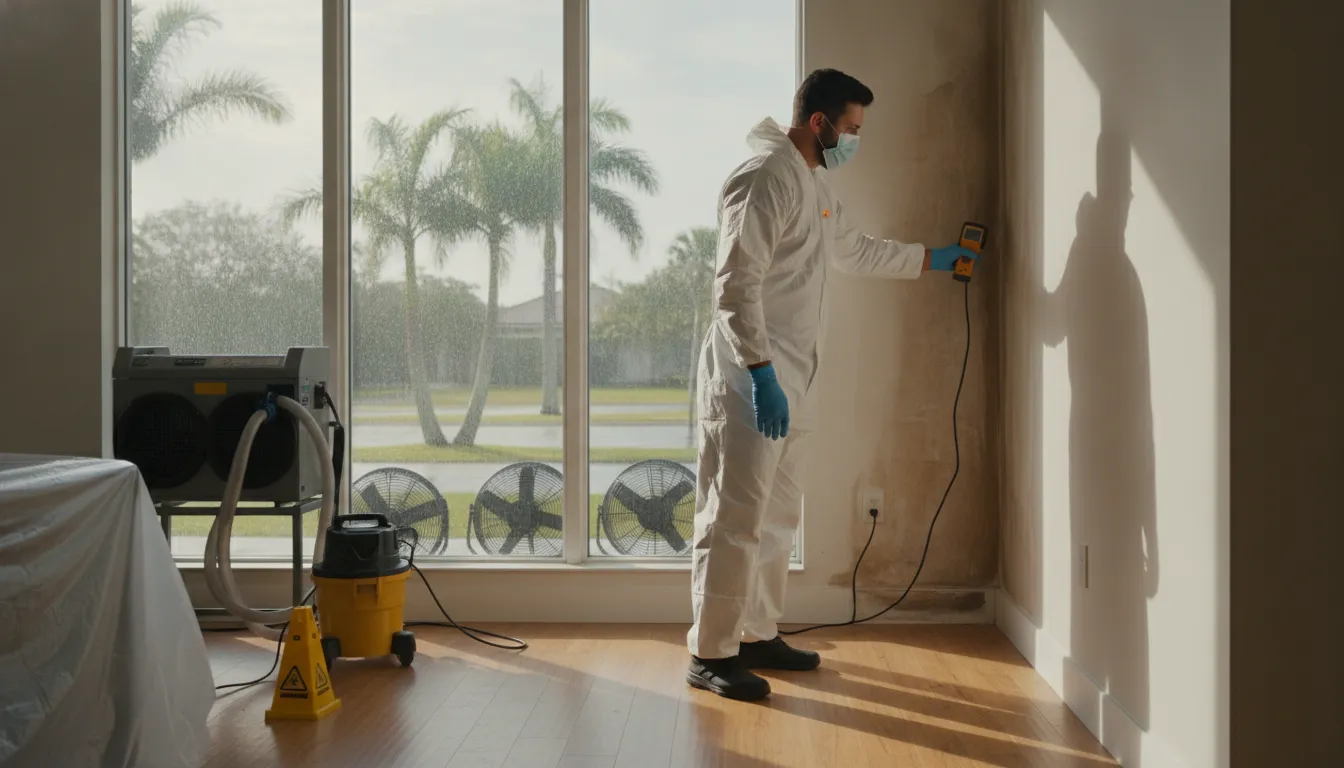
This is also where humidity matters. In Florida, roof leaks and attic ventilation problems can create damp conditions that increase the risk of mold and material deterioration. Keeping water out before storm season is less expensive than repairing interior damage after repeated leaks.
When should you schedule a professional roof inspection in Pinellas County?
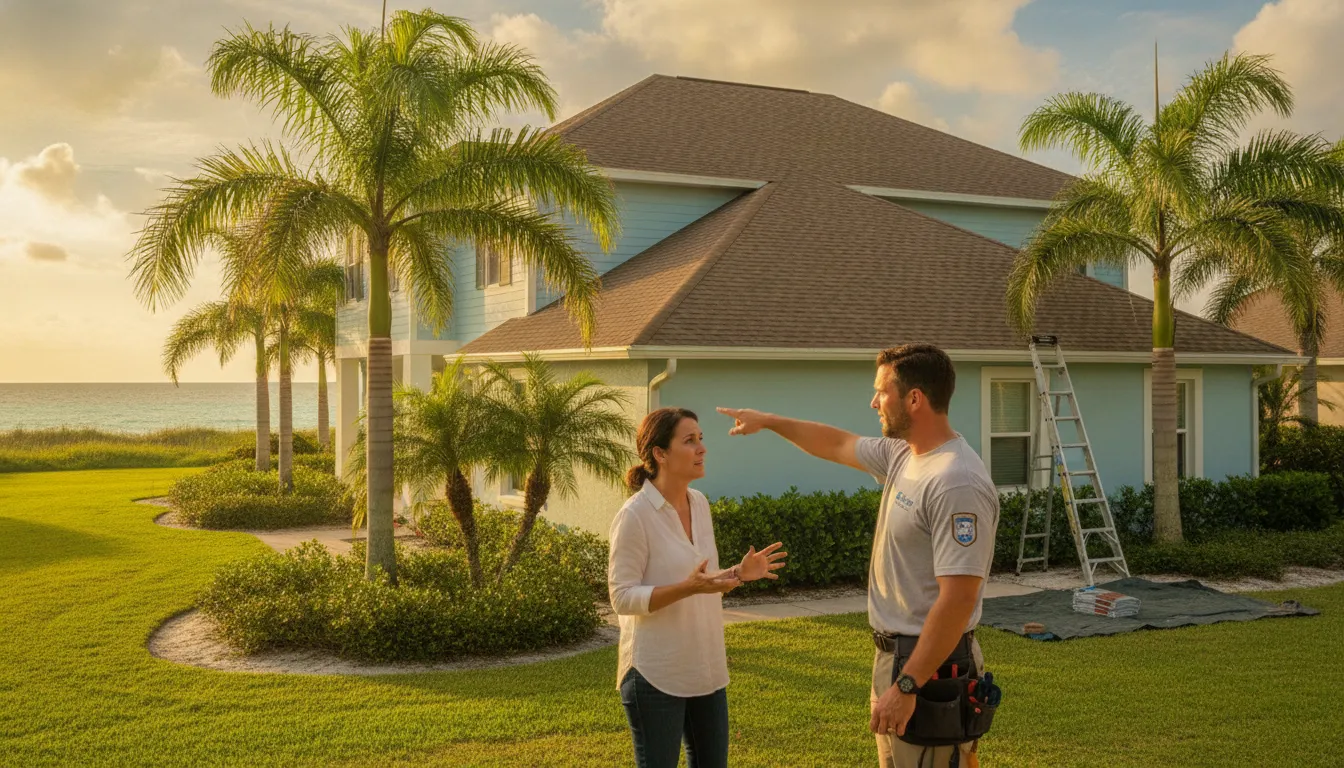
The best time to schedule a professional roof inspection in Pinellas County is before June 1. Or at least one to two months before the most active part of the season. That gives you time to complete repairs before contractors become busy and before supplies are harder to schedule around storm activity.
If you missed that pre-season window, do not wait for a named storm. A roof can be inspected whenever conditions are safe. You should also schedule an inspection after a strong storm if you notice missing shingles, broken tiles, interior stains, gutter damage, debris impact, or new attic moisture.
DIY checks help, but they have limits
Homeowners can safely check many things from the ground: visible missing materials, debris, gutter overflow, damaged fascia, ceiling stains, and fallen roof pieces. A roofer can check details that are easy to miss, including soft decking, fastener issues, flashing separation, underlayment exposure, flat roof seams, tile displacement, and ventilation concerns.
A professional inspection is especially important if your roof is older, has had prior repairs, has already leaked, or has multiple roof types. Florida roof systems often fail at transitions, not only in the obvious center sections. A trained eye can connect symptoms to the likely source.
Go Time also has a hurricane roofing guide for homeowners who want to understand broader wind and storm preparation. Use that guide for structural protection ideas, and use this checklist for routine maintenance before seasonal rain arrives.
If damage is found, ask for photos and a clear explanation of the recommended repair. Good documentation helps you understand priority, compare options, and keep a record of the roof condition before future storms.
What should you do after a storm if you suspect roof damage?
After a storm, start with safety. Do not climb onto the roof, touch downed lines, or enter rooms with active electrical hazards. Walk the property only when conditions are safe, then take photos of visible damage from the ground. Look for missing shingles, broken tiles, loose metal, gutter damage, branches on the roof, water stains, and debris around the home.
If water is entering the home, move belongings away from the leak if it is safe. Place a bucket under active drips, photograph the area, and call a roofing professional. Do not tear out wet materials before documenting the damage unless safety requires it.
Fast documentation can prevent confusion later
Take clear photos of the roof area, ceilings, attic stains, damaged gutters, and any fallen roofing material. Keep receipts for emergency mitigation or temporary protection. If you need to discuss an insurance claim, organized documentation can help explain what changed after the storm.
Storm damage is not always obvious. A roof can lose seal integrity, lift flashing, or suffer impact damage without a large hole. That is why a post-storm inspection is useful when you see any sign of trouble or when a major weather event passed close to your neighborhood.
Go Time Roofing & Restoration helps local homeowners evaluate roof condition before and after Florida storm season. The goal is not to create fear. It is to find damage early, prevent repeat leaks, and protect the home before moisture spreads into ceilings, insulation, and walls.
Frequently asked questions
How can I prepare my roof for Florida hurricane season?
Schedule a professional inspection, clear gutters, trim overhanging branches, check shingles or tiles from the ground, review attic areas for stains, and repair flashing issues before storms arrive. Focus on prevention before June 1 whenever possible.
What is the best time to schedule roof maintenance in Florida?
The best time is one to two months before hurricane season begins on June 1. If that timing has passed, schedule maintenance as soon as conditions are safe rather than waiting for a named storm.
What are the most important roof maintenance tips for Florida homeowners?
The most important tips are to inspect visible roof materials, clean drainage systems, secure loose components. Check attic warning signs, document roof condition, and use a licensed professional for roof-surface inspections and repairs.
Should I install hurricane straps on my roof?
Hurricane straps or clips can improve wind mitigation by helping connect the roof structure to the walls. They are structural upgrades, not routine surface maintenance, so ask a qualified professional whether they apply to your home.
Why is roof flashing maintenance important for Florida storms?
Flashing seals vulnerable transitions around vents, valleys, walls, skylights, and chimneys. If flashing is loose or deteriorated, wind-driven rain can enter even when the surrounding roof material appears intact.
Schedule roof maintenance before storm season gets busy
Florida storm season rewards preparation. If your roof has loose shingles, cracked tile, drainage problems, worn flashing, or attic leak signs, do not wait for the next tropical system to test it. Go Time Roofing & Restoration serves St. Petersburg and Pinellas County homeowners with local roofing and storm restoration support.
Schedule your roof inspection or roofing service with Go Time Roofing & Restoration before heavy rain exposes a preventable problem.