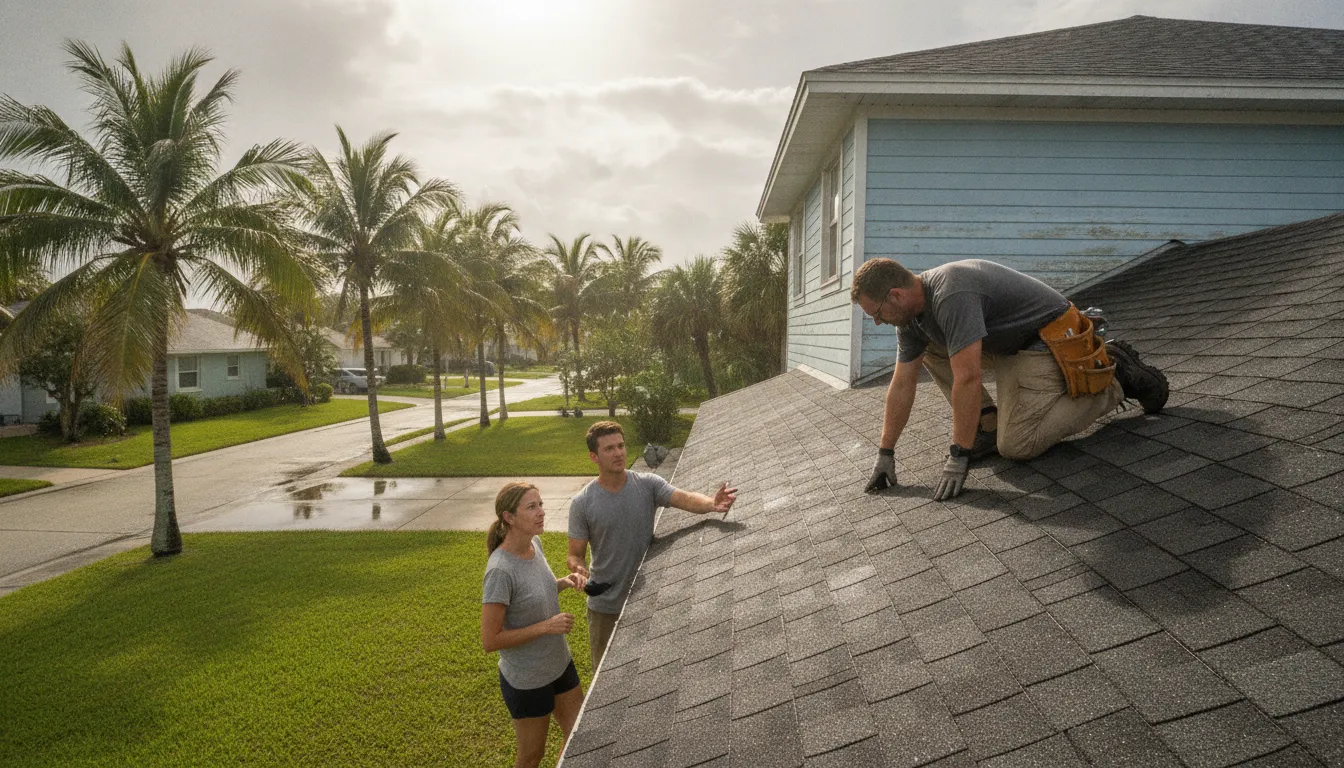
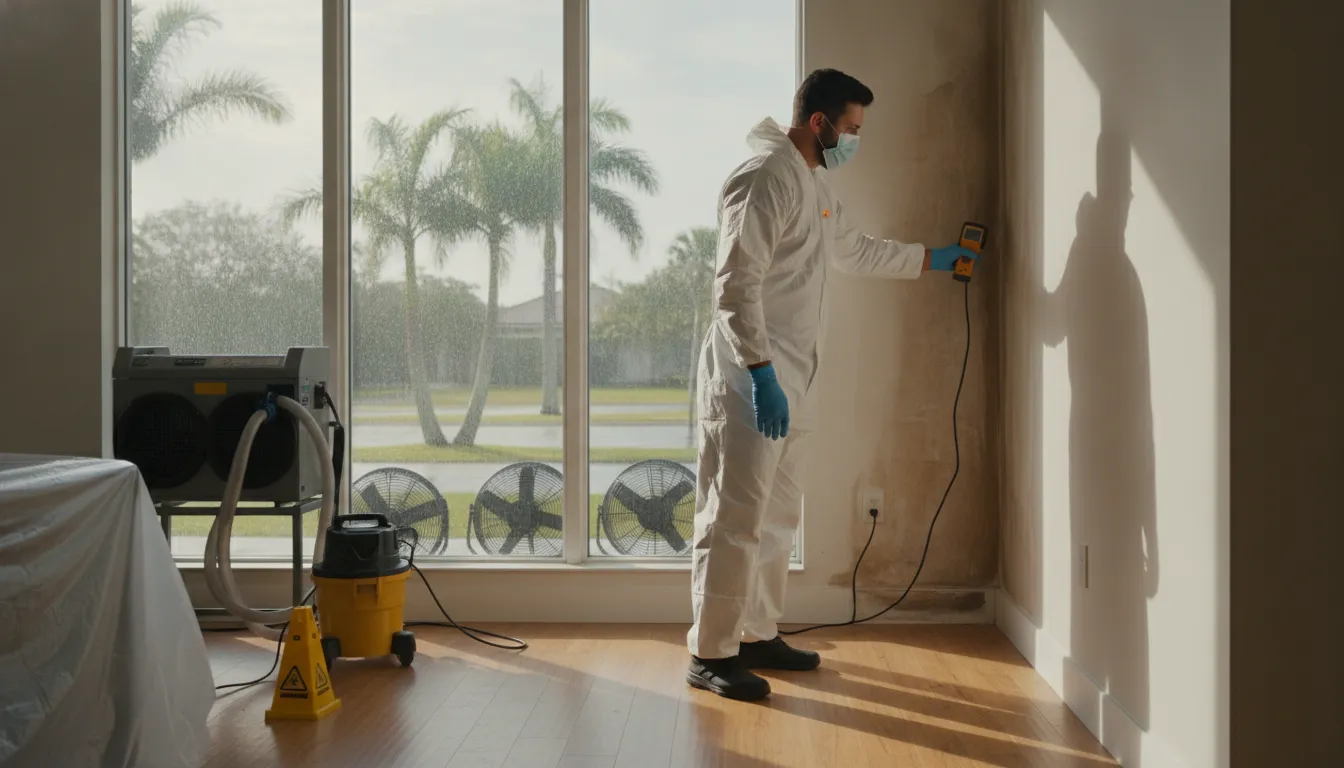
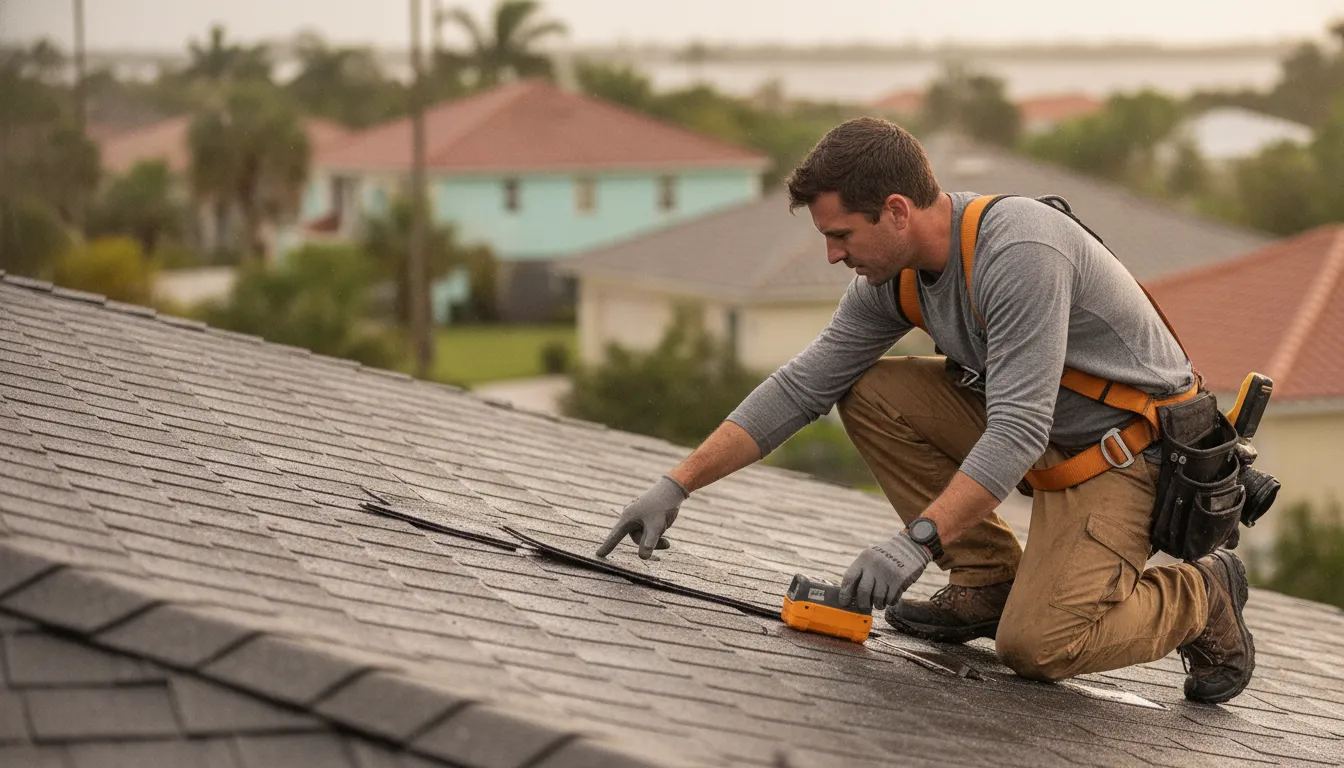
A flat roof leak after coastal rain is a warning, not a verdict. In St. Petersburg, the right response depends on where water entered, what the membrane shows, and whether drainage or wind exposure threatens another failure.
Concerned about a flat roof leak or standing water? Schedule a professional roof evaluation with Go Time before the next heavy rain.
Flat roof repair vs replacement in St. Petersburg is decided by the damage pattern and cause, not by the first ceiling stain. Repair may fit a localized puncture, open flashing detail, or isolated TPO seam problem when the surrounding membrane and insulation remain sound and drainage works correctly. Replacement is safer when leaks return, hidden moisture spreads, ponding shows failed drainage, or storm exposure leaves broad uplift or surface damage. That decision matters in St. Petersburg, where low-slope roof membranes must resist hurricane wind pressures, according to the U.S. Department of Energy Building America Solution Center. For a commercial property, the evaluation should also consider occupied space, inventory, tenant disruption, and the risk of another shutdown during heavy rain.
Owners and facility managers need a clear way to separate a repairable leak from a roof system that keeps putting interiors, tenants, and operations at risk. Start with the site conditions that control the call. Here is how.
Flat roof repair vs replacement in St. Petersburg: the decision framework
St. Petersburg flat roof owners often face this choice after a leak, standing water, or a severe storm. The first question is not whether a patch costs less today. It is whether the problem is limited to one sound, repairable area or points to a wider roof-system issue. Flat roof repair vs replacement should be based on damage pattern, drainage, storm exposure, and the condition below the surface.
Begin with the damage pattern
A repair may be a sound option when damage is isolated and the nearby membrane remains stable. Examples include one puncture, a small flashing concern, or a limited seam issue. The roofer still needs to confirm that water has not moved into nearby layers. A surface mark alone does not show the full path of a leak.
Replacement needs a closer look when concerns appear across the roof instead of in one area. Repeated leaks, broad membrane wear, many troubled seams, or soft areas can point to a system problem. In that case, fixing a visible spot may not address what is letting water return. A clear inspection separates a repairable defect from a roof that needs a broader plan.
| Condition. | Repair signal. | Replacement evaluation signal. |
|---|---|---|
| Damage area. | One limited defect. | Issues across several areas. |
| Leak history. | First known leak source. | Leaks return after prior work. |
| Membrane. | Sound material near the defect. | Broad splits, blisters, or wear. |
| Roof details. | One repairable detail. | Many failing transitions. |
| Drainage. | Outlet can be corrected. | Ponding with surface distress. |
Storm exposure and drainage
Storm context changes the review. Low-slope roof membranes must resist wind pressures during hurricane events, as explained by the Building America Solution Center. After high winds or wind-driven rain, a new leak deserves a full check of seams, edges, flashing, and penetrations. The visible drip may not identify the only affected area.
Drainage is also part of the repair-or-replace choice. Water should leave a flat roof through its designed drainage path, rather than remain at low areas. A blocked drain may call for correction and targeted work. Ongoing ponding paired with membrane distress calls for a wider evaluation of the roof system.
What an evaluation should answer
A useful evaluation explains the roof condition, not just the leak location. Ask what failed and how far moisture may have moved. Then ask whether drainage added to the issue and whether repair can restore a sound water barrier. For a commercial building, also ask how work may affect occupied spaces, inventory, or tenant access.
Go Time’s expert flat roof services cover residential and commercial roofing needs in the local area. The goal of an inspection is a documented choice. A limited, stable defect may support repair. Damage that is spread out or keeps returning warrants a replacement evaluation. This choice is more useful than a quick patch that leaves key questions unanswered.
When can a leaking flat roof be repaired?
A limited leak area
A flat roof leak does not always mean the full roof has reached the end of its useful life. A repair may fit when damage is limited to a puncture, loose edge detail, flashing defect, or one failed seam. That choice must be confirmed by an inspection, not by the size of an indoor stain.
Many flat roofs are low-slope systems that depend on a waterproof membrane to resist weather. The Pacific Northwest National Laboratory explains these low-slope roof assemblies and their hurricane wind exposure. For a St. Petersburg property, wind-driven rain can make a small defect urgent to assess.
A puncture may be repairable when the nearby membrane stays stable and the roof deck is sound. The same can apply to a separated seam or failed flashing detail. An edge issue may also be repaired if wind lift has not damaged a wider section.
Finding the true entry point
A drip indoors rarely marks the exact place where rain entered the roof. Water can enter beside a curb, seam, penetration, or edge detail. It may then move along insulation or the deck before it becomes visible inside.
This is why patching the membrane above a ceiling stain can miss the cause. A professional check traces likely water paths and reviews details that shed and seal water. It should include seams, flashing, penetrations, edges, drains, and any area with signs of stress.
The check should also look below the surface. Moisture in insulation or softness in the substrate can show that a leak has spread beyond one opening. When wet material or damaged decking extends farther, a small patch may not address the full scope.
Evidence for the repair decision
In the flat roof repair vs replacement decision, repair is more likely when the defect is isolated and the nearby system is dry. It also matters whether the existing membrane can accept a sound, compatible repair. The contractor should document those conditions before recommending work.
Property owners can ask for photos of the damaged detail, moisture findings, substrate condition, and planned repair area. Go Time’s roofing services page describes roof support for local properties. An inspection should define what can be repaired and what still needs monitoring.
If an inspection finds broad wear or moisture spread, a larger plan may need review. The guide to repair versus replace your flat roof can help frame that next discussion. A careful decision uses the leak source and the roof below it, not a promise that one patch solves every risk.
When is replacement the safer long-term choice?
Patterns a patch cannot solve
In the flat roof repair vs replacement decision, one leak does not settle the question. A small, clear puncture may be a repair issue. A series of leaks in different rooms points to a larger problem. Water may be traveling below the surface, or more than one part of the roof may be failing.
Look at the pattern, not just the last wet spot. Replacement deserves a closer look when repairs keep moving from area to area. The same is true when crews find wet insulation, soft decking, or membrane layers that cannot dry in place. A patch can seal one opening, but it cannot restore soaked parts below it.
Conditions that change the decision
Broad wear also matters. Cracking across large areas, loose edges, repeated blisters, or concerns at many seams suggest the roof is acting as an aging system. These signs do not mean replacement is automatic. They do mean that another isolated patch should not be the only option priced or discussed.
Drainage matters on a low-slope roof. U.S. Department of Energy guidance explains that water should move out and away from the building. If ponding returns after repair, a roofer should check drains, slope, insulation, and the deck. Repairing the visible split alone may leave the cause in place.
After wind-driven rain or a tropical storm, pay attention to more than ceiling stains. Lifted perimeter material, open seams, trapped moisture, and interior dampness can be connected. For a St. Petersburg property, the practical goal is simple: find whether the roof can still shed water as a full system.
A practical replacement review
A replacement review should give you facts, not pressure. Ask for a roof map that shows leak locations, wet areas, seam or edge concerns, prior patches, and drainage trouble. Ask which parts are sound and which are not. Photos and moisture findings help you compare a targeted repair with a full replacement plan.
- Consider repair when damage is limited, the nearby assembly is dry, and the cause can be corrected.
- Consider replacement when damage is broad, moisture is trapped below the surface, or new repairs keep chasing old failures.
- Consider timing when a planned project may reduce repeated disruption to tenants, customers, or family routines.
Go Time’s flat roof replacement guide covers the replacement process in more depth. Still weighing the core choice? The guide to repair versus replace your flat roof can help you prepare questions before an inspection. The right choice addresses the source of the trouble, not simply the most recent symptom.
How do ponding water and drainage change the decision?
Where standing water begins
On a low-slope roof, water should have a clear path to a drain or scupper. Leaves, pine needles, roof grit, and windblown debris can slow that path. When water remains after the roof should be dry, the wet area deserves inspection, not another quick sealant coat. A membrane patch can close one opening, but it cannot move water off a low spot.
Drainage matters because a flat roof is built to manage water, not store it. Federal building guidance states that water management depends on drainage that directs water down and away from the building. That principle is explained in the Building America Solution Center guidance for water-managed flat roofs. For a St. Petersburg property, repeated ponding can expose a drainage problem that patching alone does not address.
Inspection clues at drains and scuppers
Start at the outlets and follow the water path across the roof. Check drains for blocked strainers, scuppers for debris, and downspouts or leaders for a discharge path. Also look for dark sediment rings, algae marks, softened insulation beneath the surface, or repeated wet areas. These signs help show whether a leak is local or tied to drainage and slope.
A qualified inspection should record what happens at each trouble spot:
- Debris at an otherwise sound outlet may point to needed cleaning and a closer membrane check.
- Water centered in a sunken area may mean the roof assembly no longer sends water toward its outlet.
- Leaks near seams or penetrations still need membrane review, even when a clogged drain is present.
Repair scope versus replacement scope
In a flat roof repair vs replacement review, the source of ponding changes the scope. If debris has blocked drainage, clearing the outlet and repairing limited damage may be part of the plan. If water keeps returning to the same low areas, a patch may cover damage without correcting water flow. The inspection may then need to assess slope, insulation condition, drains, scuppers, and the roof system as a whole.
After heavy rain or a named storm, keep roof access safe and document visible water from a secure location. Go Time’s Florida storm-season roof maintenance tips explain practical checks that help property owners prepare for inspection. Photos of where water collects and which outlet was blocked can make the repair discussion more precise.
Chronic standing water is not a verdict that every roof needs replacement. It is a signal to diagnose drainage before choosing a surface fix. A roofer can then compare a focused repair with work that restores drainage and protects the larger roof assembly. That is a sounder decision than repeatedly patching the point where trapped water finally appears indoors.
Have leaks or ponding returned after past work? Request an evaluation to compare a targeted repair with a wider replacement scope.
TPO and other membrane systems: repair or replace?
What TPO changes in the decision
TPO is often used on commercial low-slope roofs, where the membrane forms the water-shedding surface. Go Time offers TPO roofing for commercial properties, so the first question is not simply whether a leak can be patched. It is whether the membrane system can still protect the building as a whole.
In building guidance, a low-slope or flat roof has a slope of less than 2:12. The U.S. Department of Energy building guide notes that its membrane must resist wind pressure during high-wind events, including hurricanes. In coastal Florida, that standard gives an inspection a clear purpose: find damage that may affect water control or wind resistance.
Seams, penetrations, and drainage paths
A TPO assessment begins at seams and the places where the roof is interrupted. These include drains, curbs, vents, pipe boots, edges, and rooftop equipment supports. A small opening near one detail may be repairable when the nearby membrane is sound and the issue is isolated.
A contractor also checks beyond the visible opening. Water can travel under a membrane before it appears inside the building. The review should note loose or separated areas, suspect details, trapped moisture signs, and drainage concerns that may allow water to remain on the roof.
- Seams: check for separation, splits, or prior patches that are no longer secure.
- Penetrations: review flashing and transitions at drains, vents, curbs, and equipment.
- Edges: look for storm-related lifting or movement at perimeter details.
- Drainage: identify blocked flow paths or areas where water stays after rain.
The same logic applies to other membrane systems. Material type matters, but it does not replace a full review of details, drainage, and the conditions below the surface. A repair decision should be tied to what the inspection finds, not to membrane name alone.
When the full assembly matters
For flat roof repair vs replacement, a patch makes sense only when it addresses the actual failure. If defects occur in several areas, or moisture has affected the layers below, replacing part or all of the assembly may need review. That choice should be based on documented conditions, not an assumption that every leak needs a tear-off.
The roof assembly can include the membrane, attachment method, insulation, deck, drainage, and edge details. Each part affects how water and wind damage are managed. An inspection should record visible membrane issues. It should also assess whether wet or damaged underlying materials require a wider scope.
Homeowners comparing options can read more about when to repair versus replace your flat roof. For a commercial TPO roof, the next step is a system-level assessment. It can separate a sound repair opportunity from damage that calls for replacement planning.
What should commercial property owners weigh after storms?
For a St. Petersburg commercial property, a storm can affect more than the roof surface. Water near offices, tenant suites, stored goods, or equipment can slow operations while the cause is still unclear. Property managers need a roof decision that accounts for interior impact, access needs, and the chance that water has moved beyond a visible leak.
Flat roofs must move water away from the building, even where equipment curbs, vents, or drains add weak points. Federal building guidance calls drainage the key principle of roof water management. After high wind and heavy rain, standing water or new ceiling stains deserve prompt attention, not a wait-and-see approach.
Business disruption and hidden water
Start by mapping where business may be affected. Look from the ground for loose edge metal, debris, and overflowing drains, then check safe indoor areas for drips or damp finishes. Record which suites, inventory zones, electrical rooms, or customer areas may be exposed. A repair that seals one spot may not solve wet insulation or moisture below the membrane.
Commercial properties also have people and schedules to protect. A manager may need to reroute foot traffic, move stock away from wet areas, or notify tenants about an affected space. These steps do not settle the repair versus replacement decision. They help limit added disruption while a qualified roofer and restoration team trace the water path.
Penetrations, equipment, and safe access
Many low-slope commercial roofs include rooftop units, pipe penetrations, vents, parapet walls, drains, scuppers, and previous patch areas. Each detail can change how water enters or travels after a storm. An inspection should check the membrane field as well as flashing, seams, curbs, drains, and roof edges. One damaged detail can appear far from an indoor stain.
Do not send staff or tenants onto a wet or damaged roof to gather proof. Safe documentation can begin inside and from the ground, with photos of stains, visible debris, and affected goods. A professional hurricane roof inspection in St. Petersburg can then focus on storm entry points and roof condition.
Roof findings and restoration needs
The right flat roof repair vs replacement choice depends on what the inspection shows. Localized damage with a dry, sound surrounding system may support targeted repair. Broad membrane damage, repeated leaks, soaked roof areas, or failed drainage may point toward a wider scope. The written findings should explain the affected areas and why the proposed work fits them.
Roof work and interior restoration should be planned together when water has entered the building. Closing the exterior opening is urgent, but wet materials inside may still need attention. For properties with membrane or drainage concerns, Go Time’s expert flat roof services page provides more context on commercial roof needs in the local climate.
What happens during a professional flat roof evaluation?
A professional evaluation turns a leak, stain, or post-storm concern into a documented plan. For a flat roof repair vs replacement decision, the contractor should look at the whole roof system and the spaces below it. The process is not a quick guess from one visible patch.
What the inspection covers
Flat roofs rely on a membrane and working water paths. The U.S. Department of Energy Building America Solution Center explains that drainage is central to roof water management. An evaluation should account for ponding areas, blocked exits, seams, edges, flashing, and penetrations.
-
Discuss symptoms and storm history. The evaluator starts with what you have seen, such as ceiling stains, recurring drips, damp odors, or ponding water. They also ask when the issue began and whether wind-driven rain or storm debris may be involved.
-
Inspect the roof safely. From safe access points, the evaluator checks the membrane for tears, splits, blisters, punctures, lifted seams, or old patches. They review flashing, parapet edges, drains, scuppers, rooftop units, and pipe openings for paths where water can enter.
-
Check for moisture effects. A surface defect may not show how far water traveled. The evaluator may look for signs of wet insulation, soft decking, ceiling damage, or conditions that call for added testing. Those findings help define the true repair area.
-
Compare the workable scopes. A limited defect on a sound roof may support a targeted repair. Spread-out damage, repeat failures, or affected components may require a replacement evaluation. For added context, review how to repair versus replace your flat roof.
-
Receive findings and next questions. The evaluator should explain the observed damage, proposed scope, material choices, drainage concerns, and what the estimate includes. Ask how wet materials are handled, how access is planned, and what could change after work begins.
Turning findings into a scope
A clear estimate ties each recommended action to an observed condition. It should distinguish patch work from work that removes damaged materials or addresses drainage. This helps owners and property managers compare bids on scope, rather than choosing from totals that do not describe the same work.
In St. Petersburg and Pinellas County, storm history and interior effects deserve attention in the same visit. If water has reached ceilings or occupied areas, roof work may be only one part of recovery. Keep photos, inspection notes, and estimate details together for easier review.
Questions before work begins
Before authorizing work, ask which areas will be repaired, which will be evaluated for replacement, and how the contractor reached that recommendation. Ask whether drains or edge details need correction. You can request a flat roof evaluation to review visible roof concerns and next steps.
Frequently Asked Questions
How can a property manager document a flat roof problem before approving work?
Record where water appeared, when it occurred, recent weather, and any earlier repairs in the same area. Take dated photos of interior stains and safe ground-level roof observations. For an occupied building, note affected rooms, tenant impacts, equipment below the leak, and access limits. This record helps a roofer compare targeted repair with replacement and plan work around operations.
Is ponding water urgent if a flat roof has not leaked inside?
Yes, standing water deserves prompt evaluation even before an interior leak appears. The Building America Solution Center identifies drainage as a key principle of roof water management. A roofer should check drains, scuppers, slope, seams, and hidden moisture before recommending repairs or replacement for a St. Petersburg flat roof.
What should be included in a flat roof repair or replacement estimate?
A useful estimate should identify the roof system, observed damage, affected areas, drainage concerns, and whether wet insulation or decking needs further evaluation. It should separate repair scope from replacement scope, explain disposal and access needs, and state how occupied areas will be protected. Commercial owners should also ask about scheduling, rooftop equipment coordination, and documentation after completion.
Can a commercial flat roof be repaired while the building stays open?
Often, work can be planned around an occupied commercial building, but the answer depends on damage location, safety, noise, access, and interior water risk. A small repair may require limited control around one area. A replacement can involve staging, odor or noise concerns, and temporary access limits. Property managers should request a work plan before approving either option.
Ready to protect your St. Petersburg flat roof?
Waiting on a suspected flat roof problem can turn a manageable repair decision into a larger disruption after the next heavy rain. Coastal weather, standing water, and repeated leaks can place more of your roof system and building interior at risk. Starting now gives your contractor time to inspect TPO seams, drainage, storm damage, and leak sources before you face an urgent decision.
Whether you oversee a commercial building or own a home, a clear evaluation helps you plan the next step with fewer surprises. Ready to protect your property? Call (727) 430-3079 to schedule a professional flat roof evaluation in St. Petersburg and prepare for the season ahead.