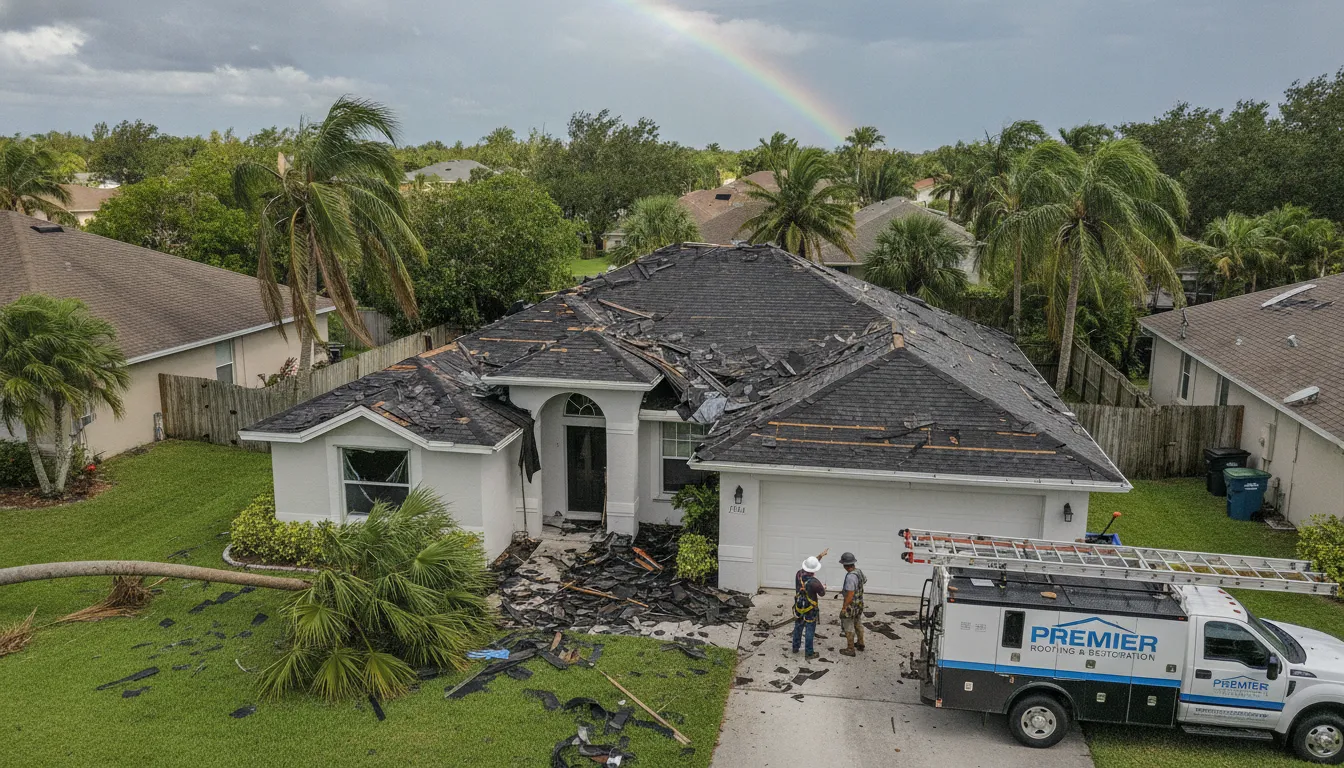
Storm season in Florida is relentless. From June through November, St. Petersburg and the surrounding Pinellas County communities face tropical storms, hurricanes, and severe thunderstorms that can damage even well-maintained roofs. Knowing how to check for roof damage after a storm is a critical skill for every Florida homeowner. This guide walks you through a step-by-step inspection process, explains what counts as storm damage, and covers Florida-specific insurance guidance for roof replacement.
Schedule your free roof inspection in St. Petersburg today. Call (727) 361-6905.
Whether your roof is asphalt shingle, tile, or metal, the checklist below applies. Start from the ground and work your way up, prioritizing safety at every step.
How to Check for Roof Damage After a Storm
A quick, thorough post-storm inspection requires a systematic approach. Follow these steps in order, and never compromise on safety by climbing onto a wet or damaged roof.
-
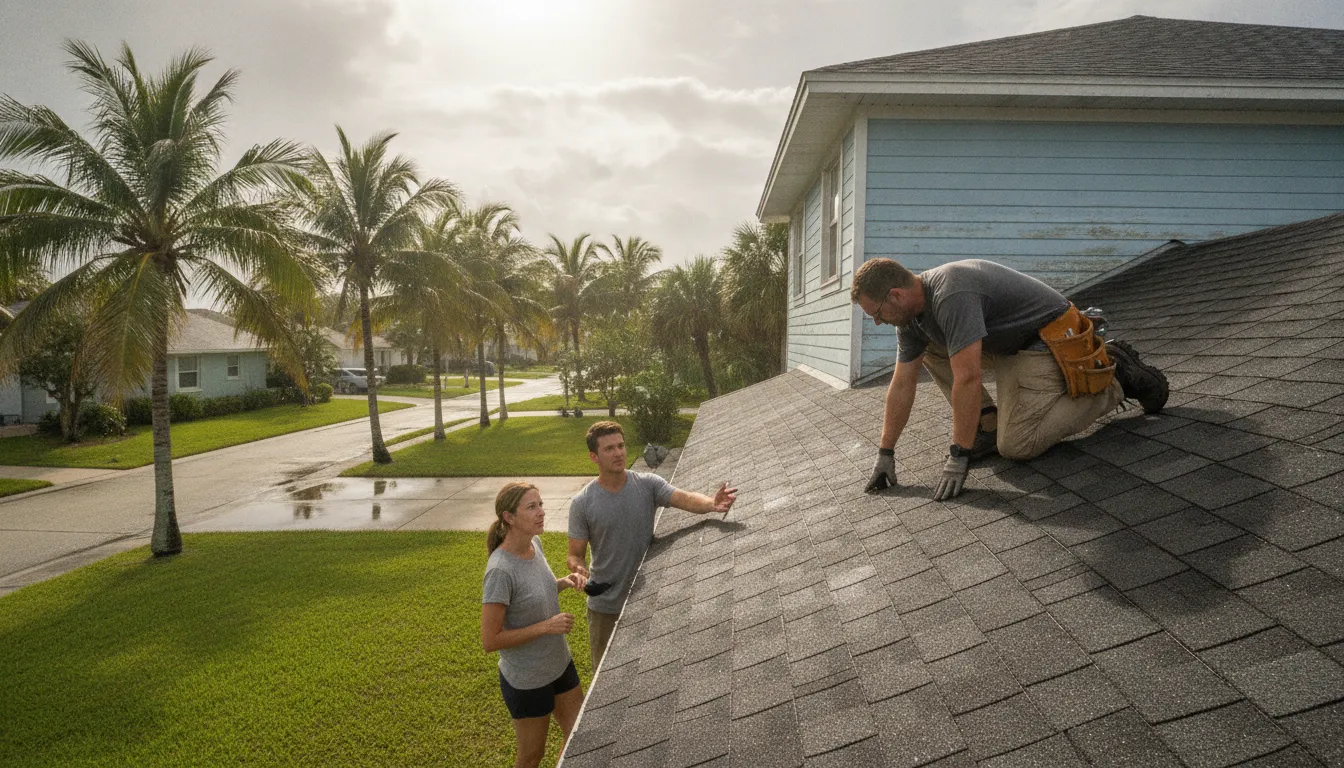
Start with a ground-level inspection using binoculars. Never climb onto a roof that may have structural damage after a storm. From the safety of the ground, use binoculars to scan your entire roofline. Look for missing, curled, or lifted shingles, especially along ridges and roof edges where wind uplift pressures are strongest. According to FEMA, the roof border is frequently at higher risk of wind damage than central roof areas.
-
Check gutters and downspouts for granules and debris. Asphalt shingles lose granules over time, and a storm can accelerate this process. If you find excessive granules in your gutters or at downspout discharge points, it signals significant shingle surface wear. Also clear any debris that could block drainage and cause water to pool against roof edges.
-
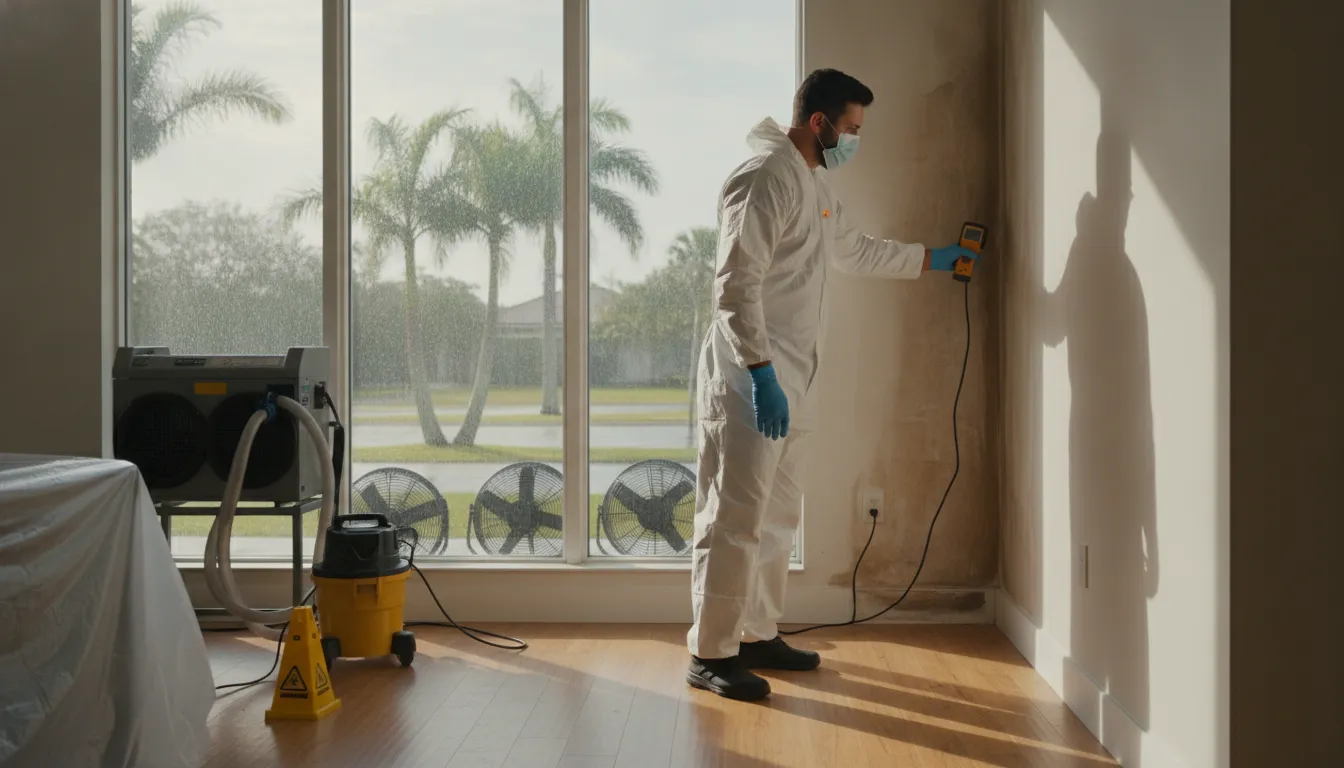
Inspect the attic and interior ceilings. Go inside and examine ceilings, walls, and attic spaces for water stains, dampness, or daylight showing through roof boards. Water stains are often the first visible sign of a compromised roof system. Florida’s humid climate means any moisture intrusion can rapidly lead to further damage, so prompt identification is essential.
-
Examine soffit and fascia boards. These components protect your roof’s ventilation system and edge integrity. High winds frequently damage soffit panels, which reduces attic ventilation and can trap moisture. Look for displaced, cracked, or missing soffit sections.
If the ground-level inspection reveals any of these warning signs, call a professional roofing contractor for a thorough assessment. Even if you see no visible damage, a professional inspection after a major storm event is recommended, as hidden structural issues may be present.
What Is Considered Storm Damage to a Roof?
Understanding what qualifies as storm damage helps homeowners recognize problems early and document them properly for insurance purposes. Storm damage falls into several categories, each with distinct visual indicators that you can spot from the ground or inside your home.
Wind Damage
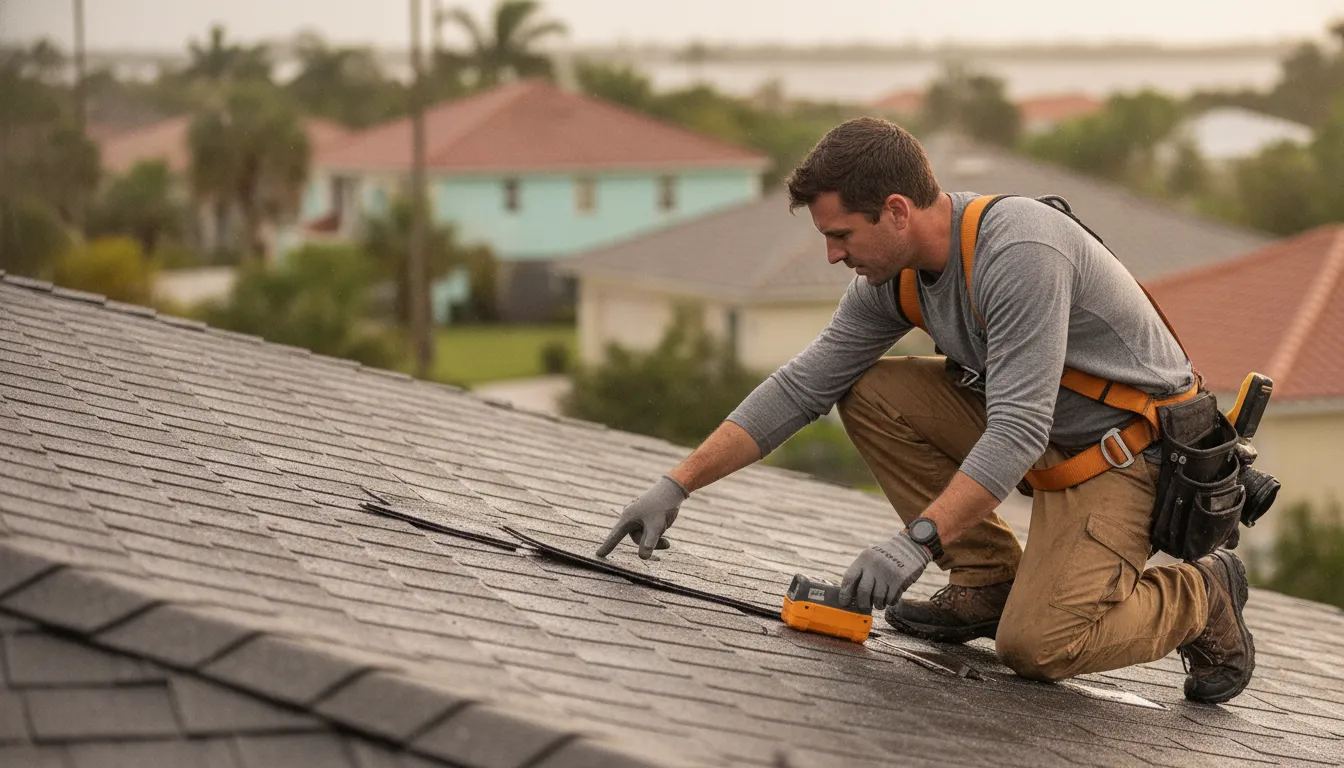
High-velocity storm winds lift shingle edges, breaking the factory-applied adhesive seal. This makes shingles more susceptible to being torn off entirely during subsequent storms. Look for missing shingles, curled or lifted edges, and exposed nail heads. Wind also damages flashing around chimneys, vents, and roof valleys, creating water entry points into the building envelope.
Hail Damage
Hail creates a distinctive random bruising pattern on asphalt shingles. These impact marks appear as dark, soft spots where the fiberglass mat has been fractured. On metal roofing, hail causes visible dents and dings. On tile roofs, hail can crack or chip clay and concrete tiles. Unlike wind damage, which follows directional patterns, hail damage appears scattered across the roof surface.
Debris Impact
Fallen branches, flying debris, and dislodged nearby objects can puncture or gouge roof materials. These concentrated impacts require immediate attention because the exposed underlayment and roof deck can deteriorate rapidly if rain penetrates the breach.
Water Intrusion Signs
Water damage often manifests as stained ceilings, peeling paint, or musty odors inside the home. In coastal Pinellas County communities, salt-laden storm winds can also accelerate corrosion on metal roof fasteners and components. Prompt inspection after any severe weather event is vital. If your roof is past its expected service life, storm damage may trigger a full replacement rather than repeated repairs.
What to Do If You Have Roof Storm Damage
Discovering roof damage can feel overwhelming, but following a clear action plan protects your home and strengthens your insurance claim. Take these steps in order:
-
Document everything with photos and videos. Before any repairs or temporary fixes, photograph and record all visible damage from multiple angles. Include wide shots showing the overall roof and close-ups of specific damage areas. Interior water stains and attic conditions should also be documented. This visual record is the foundation of your insurance claim.
-
Arrange emergency tarping if needed. If the damage has exposed interior spaces to the elements, emergency roof tarping prevents further water intrusion. Florida law requires insurance companies to cover reasonable temporary repairs that prevent additional damage. Keep all receipts and documentation related to emergency measures.
-
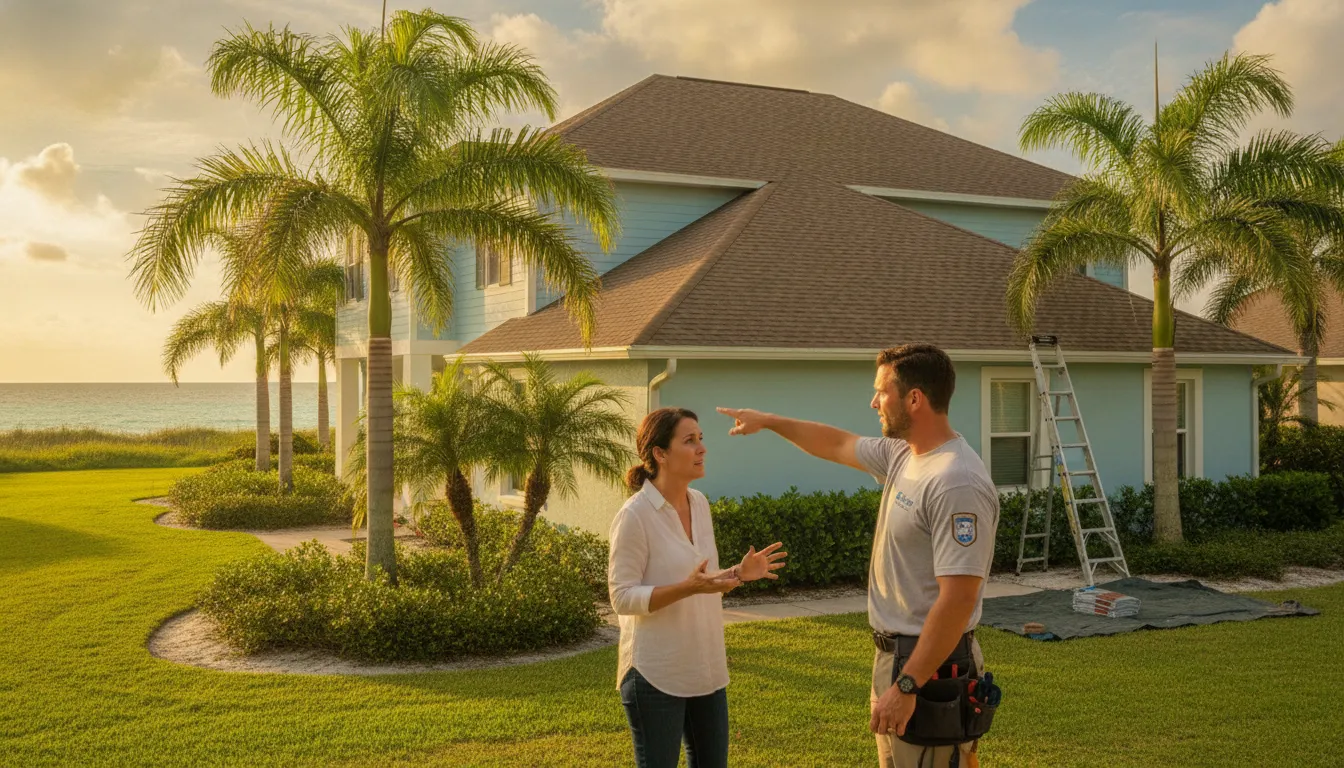
Contact a licensed local roofing contractor. After a major storm, be wary of out-of-town contractors who arrive uninvited. Storm chasers often perform substandard work and disappear when the next weather event hits a different area. Hire a reputable St. Petersburg roofing company with a local track record. A professional inspection provides the structural evaluation and moisture analysis needed for insurance documentation.
-
Notify your insurance company promptly. Most Florida homeowners insurance policies require timely notification after a loss. File your claim as soon as possible. The statute of limitations for property insurance claims in Florida is generally two to three years from the date of the storm. Filing early avoids complications and speeds the process.
Taking these steps quickly after a storm gives you the best chance of a smooth insurance process. Your documentation and a professional roofer’s report work together to support your claim. FEMA recommends documenting storm damage with photos and videos immediately after the event to strengthen your case.
How to Get Insurance to Pay for Roof Replacement in Florida
Florida property insurance has unique characteristics that homeowners need to understand. Getting a roof replacement covered requires preparation and documentation. Florida’s insurance market has experienced significant changes in recent years, making it more important than ever to document damage thoroughly and file promptly.
Start by reviewing your policy carefully. Many Florida homeowners policies have roof-specific deductibles and depreciation schedules. Older roofs may receive actual cash value rather than replacement cost value settlements, meaning you pay a larger share out of pocket. If your roof is more than 10 to 15 years old, check your policy’s roof payment provisions before filing.
When you file, provide the insurance adjuster with your complete photo documentation, the professional inspection report from your roofer, and any receipts for emergency tarping or temporary repairs. Florida law supports policyholders by requiring insurers to cover reasonable emergency measures that prevent further damage.
If the adjuster’s assessment differs from your contractor’s findings, you have the right to request a re-inspection or hire a public adjuster. Roof age is a critical factor in these disputes. If the storm damage occurred to a roof that was already beyond its expected service life. The insurer may argue that wear and tear caused the failure rather than the storm event itself. This is why prompt post-storm inspections matter, even when visible damage seems minor.
For deeper guidance on navigating the claims process, read our complete storm damage insurance claims in Florida guide. Also review what homeowners insurance roof leak coverage typically includes in Florida policies.
How Often Should a Roof Be Replaced in Florida?
Florida’s climate is uniquely hard on roofing materials. High humidity, intense UV exposure, frequent heavy rain, and hurricane-force winds all accelerate aging. The lifespan of your roof depends heavily on the material type and how well it has been maintained over the years.
| Roof Material | Typical Lifespan in Florida | Notes |
|---|---|---|
| Asphalt Shingles | 15-20 years | Most common; granule loss and curling accelerate in FL heat |
| Metal Roofing | 30-50 years | Excellent wind resistance; coastal homes require corrosion-resistant coatings |
| Clay and Concrete Tile | 30+ years | Durable but individual tiles can crack from impact or foot traffic |
| Slate | 40-75 years | Rare in FL; heavy weight requires structural reinforcement |
Regular maintenance and prompt storm damage repairs can extend a roof’s service life significantly. After every named storm, schedule a professional inspection even if you see no obvious issues. Minor damage that goes undetected can compound over time, turning a simple repair into a full replacement.
If your roof is approaching the end of its expected lifespan, consider proactive replacement rather than repeatedly repairing storm damage. A new roof not only protects your home but may also lower your homeowners insurance premiums. Metal roofing offers particular advantages in hurricane-prone areas of Florida.
Frequently Asked Questions
How long after a storm can you claim roof damage in Florida?
Florida homeowners typically have two to three years from the date of the storm to file a property insurance claim. Some hurricane claims may have specific shorter notification windows. Document the damage immediately and file as soon as possible to avoid complications with the claims process.
How do I know if my roof is damaged by wind?
Look for missing or curled shingles, especially along ridges and roof edges. Check for exposed nail heads, loose flashing around vents and chimneys, and excessive granules in gutters. Wind damage often creates visible directional patterns where shingles are lifted or displaced along roof seams and borders.
Can I inspect my roof safely after a storm?
Never climb onto a roof that may have structural damage after a storm. Start with a ground-level inspection using binoculars. Inside, check ceilings and attics for water stains or daylight showing through roof boards. If damage is suspected, always hire a professional roofer for a safe, thorough assessment.
Will my insurance cover a full roof replacement after storm damage?
Coverage depends on your policy, the extent of damage, and your roof’s age. Many Florida policies provide replacement cost value for roofs under 10 years old. Older roofs may receive actual cash value instead. Document all damage thoroughly and obtain a professional inspection report to support your claim.
How does Florida’s climate affect roof lifespan?
Florida’s humid subtropical climate causes asphalt shingle roofs to age faster than in other regions. Intense UV exposure, heat, moisture, and frequent storms combine to shorten typical lifespans. Asphalt shingle roofs generally last 15 to 20 years in Florida compared to 25 to 30 years in cooler climates.
What is the most storm-resistant roofing material in Florida?
Metal roofing offers the best wind resistance among common residential roofing materials. It can withstand gusts exceeding 140 mph when properly installed. Impact-resistant asphalt shingles rated for Class 4 hail resistance are another strong option for homeowners who prefer the traditional shingle look.
Protect Your St. Petersburg Home with a Professional Roof Inspection
Knowing how to check for roof damage after a storm is essential for every Florida homeowner, but professional evaluation remains the gold standard. Go Time Roofing and Restoration provides comprehensive post-storm inspections throughout St. Petersburg and Pinellas County. Our team identifies both visible and hidden damage, documents findings for insurance claims, and performs quality repairs or full replacements using durable, storm-resistant materials. We serve homeowners in Redington Beach, Madeira Beach, Treasure Island, Gulfport, and all surrounding Pinellas County communities. Every inspection includes a detailed written report that you can submit directly to your insurance company.
Don’t wait until the next storm causes greater damage. Call (727) 361-6905 or schedule your free roof inspection today. Protect your home and your peace of mind with an inspection from your trusted local roofing professionals. Early detection is the best way to prevent small storm damage from becoming a major structural problem.