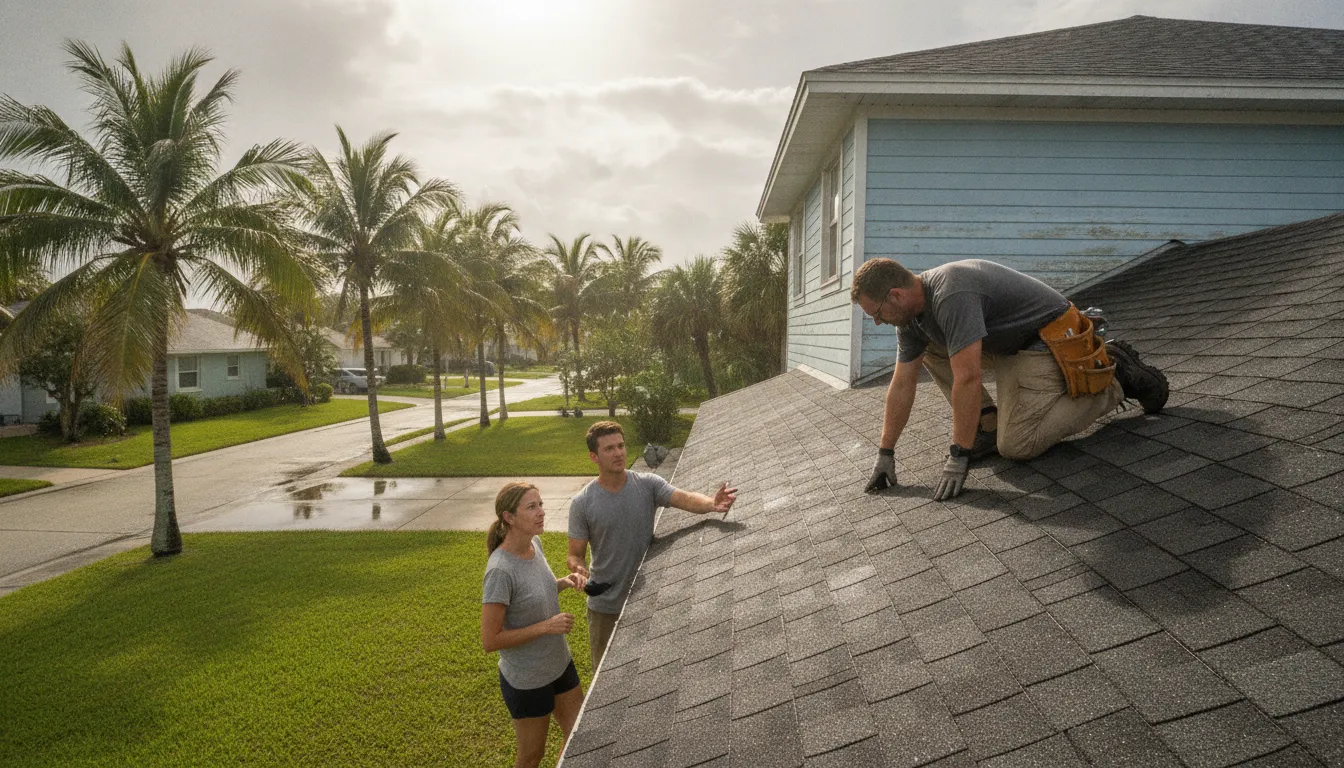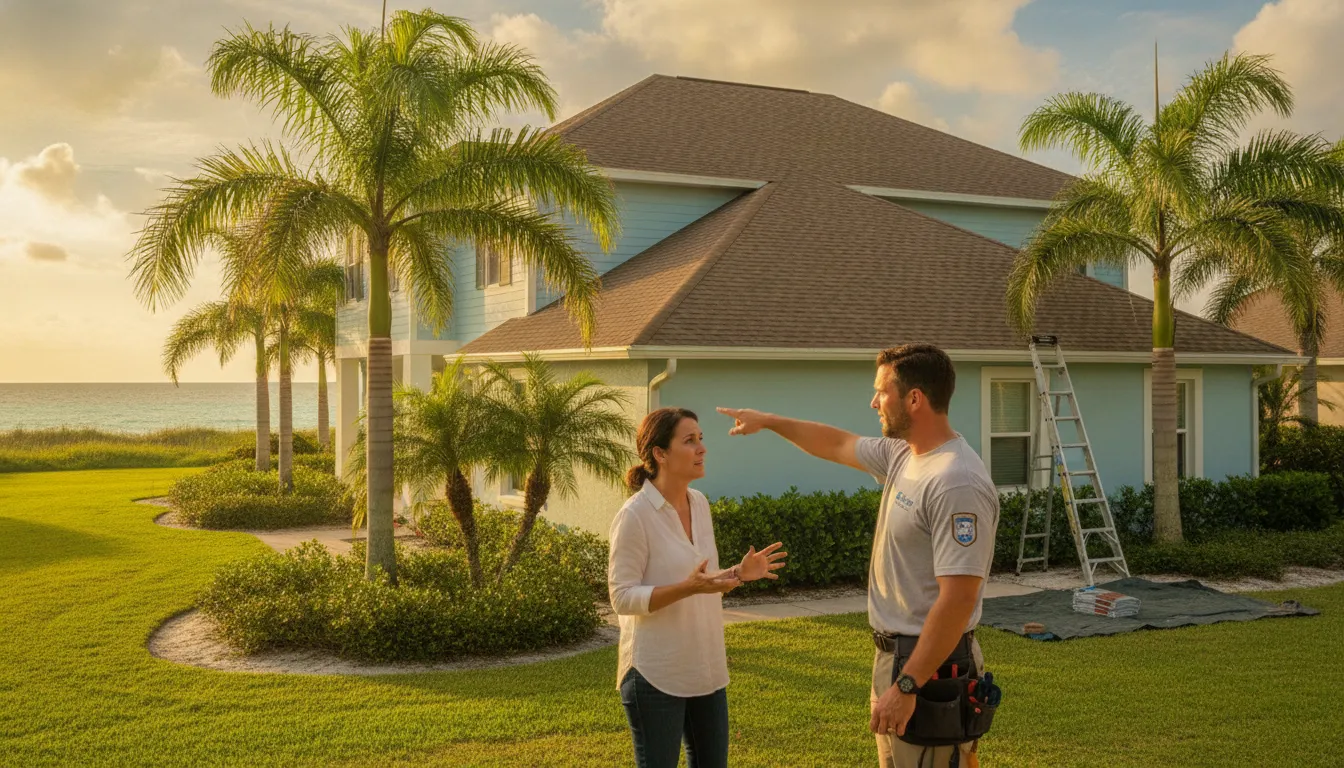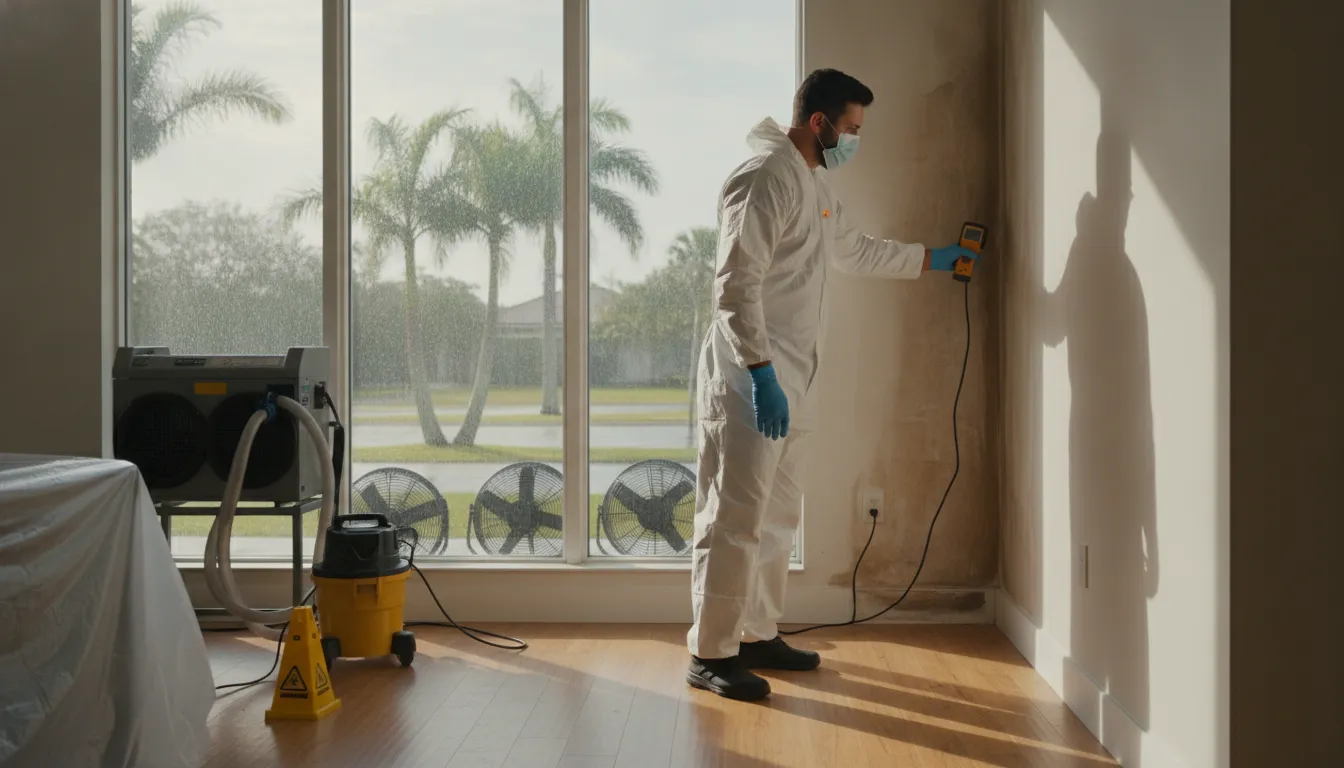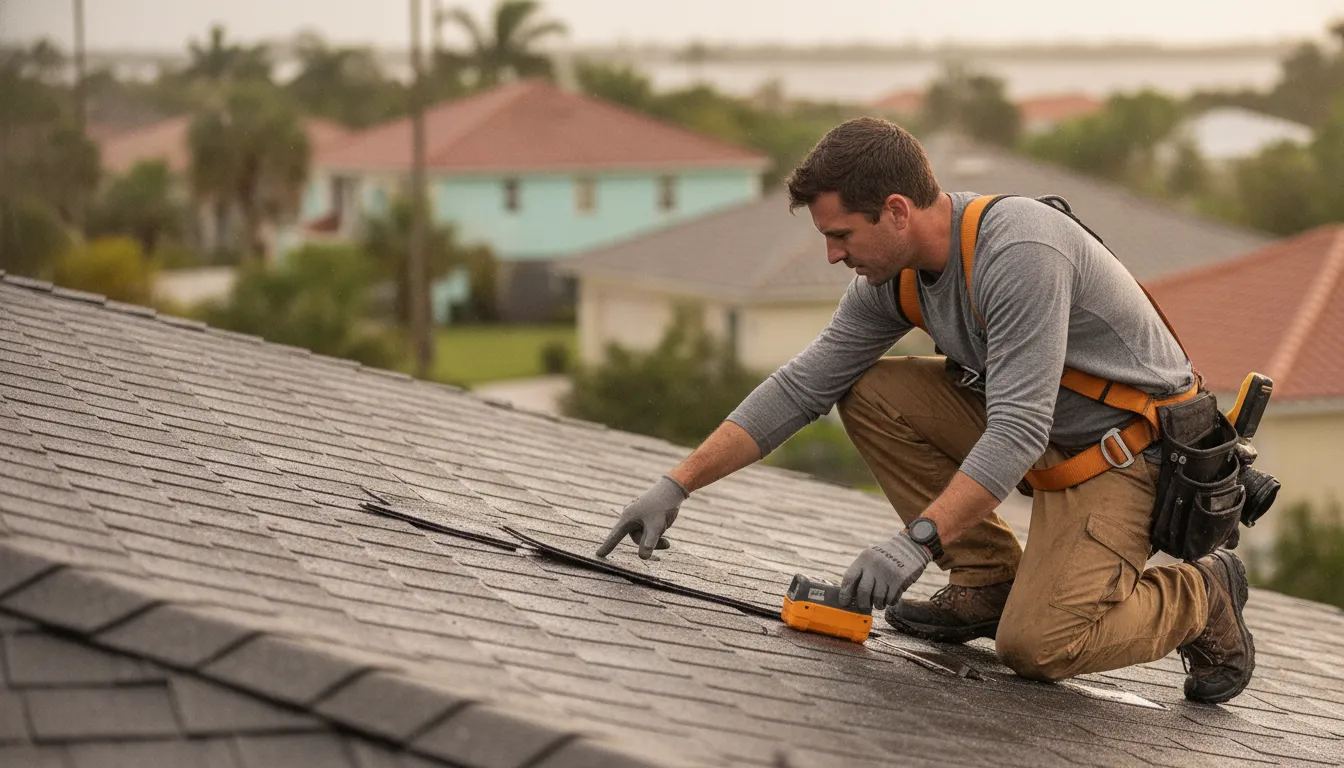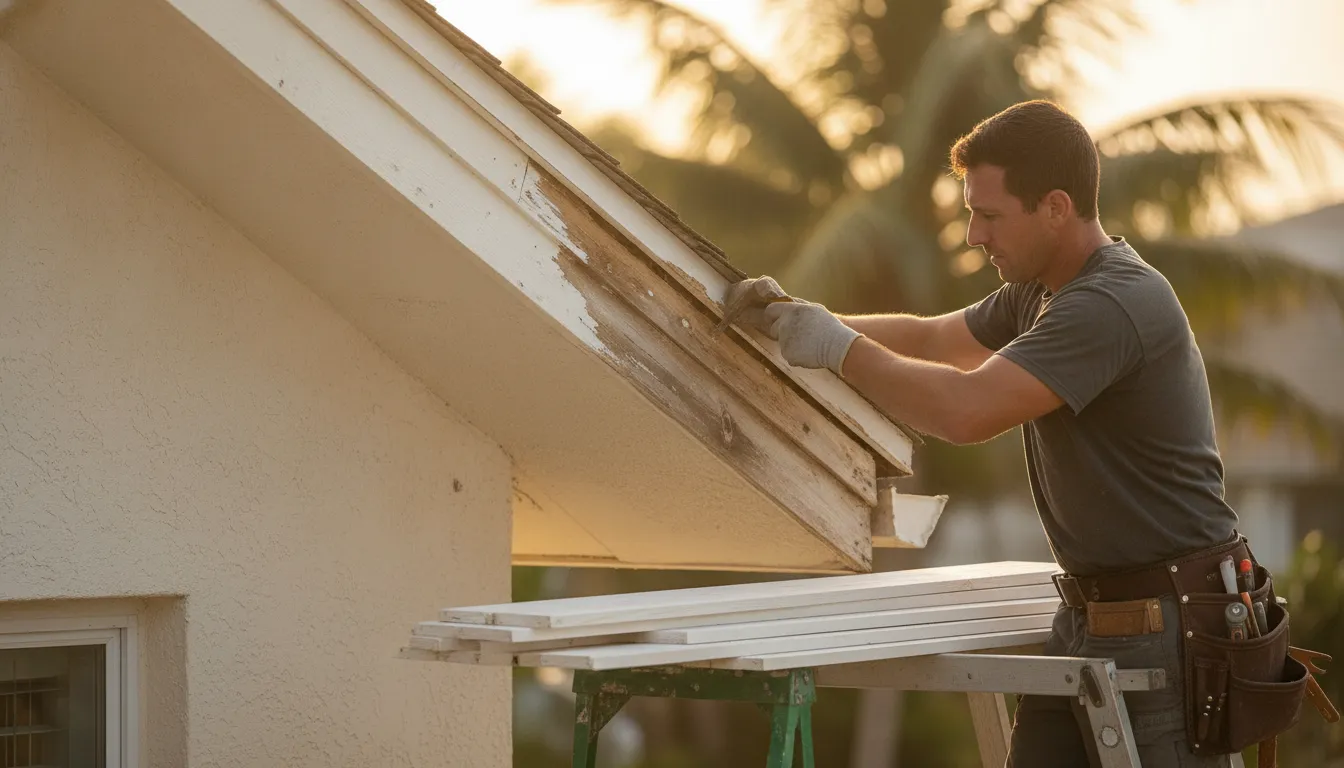
Peeling paint and damp stains along your home’s roof edge indicate hidden moisture damage from Florida’s humid air. When summer storms sweep across St. Petersburg, these weakened areas fail first.
Schedule your free soffit and fascia inspection in St. Petersburg today. Call (727) 361-6905.
Soffit and fascia repair in St. Petersburg protects the vulnerable roof edge from Pinellas County’s persistent high humidity, wood decay, and coastal storm damage. When these under-eave structures become soft or cracked, wind-driven rain seeps past the gutters into the building envelope, causing attic mold and decay. According to the University of Missouri Extension, damaged fascia boards allow moisture to penetrate, which potentially leads to decay in the roof deck and other interior structural components. Addressing these problems early keeps out destructive pests, maintains vital attic airflow, and ensures a single local licensed team handles both your roofing and restoration needs seamlessly.
But how do you know if your own roof edge is already starting to fail? Understanding What Are Soffits and Fascia, and Why Do They Matter in Florida? is the first step to shield your property from costly mold and decay. To protect your home’s structural integrity, we must first examine.
What Are Soffits and Fascia, and Why Do They Matter in Florida?
Soffits and fascia are key roof parts that shield your home from rain, heat, and pests. The soffit covers the underside of your roof eaves, while the fascia runs along the outer edge of the roofline. In the humid climate of St. Petersburg, these parts work together to block water and vent your attic.
The Role of the Soffit
The soffit is the board that covers the space under your roof overhang. It plays a big role in home safety. According to top studies, soffits are boxed-in eaves that protect your attic from debris, pests, and fire. They block embers from getting in through vents during storms or wildfires.
In Florida, open eaves can invite trouble. Squirrels, birds, and insects look for dry spots to build nests. A solid soffit stops them from getting inside your roof. The boxed-in design also helps keep out heavy winds during storms.
In St. Petersburg, heat can build up under your roof. Soffit boards often have small vents. These vents let fresh air flow into the attic. This air flow keeps your home cool and dry during the hot summer months.
The Purpose of the Fascia Board
The fascia is the long, straight board that runs along the lower edge of your roof. It joins the ends of the roof trusses. Its main job is to act as a barrier. It blocks moisture from reaching the wood under your roof.
In St. Petersburg, rain falls hard and fast. The fascia acts as a key base for your gutters. To keep water flowing away from your home, you must maintain both parts. Proper gutter repair and installation will secure the gutters to the fascia board. If the fascia is weak or rotted, it cannot hold the weight of the gutters when they fill with rain.
Why Florida Homes Need Strong Eaves
Florida has a hot, humid subtropical climate. High heat and wet air can wear down a house quickly. Together, soffits and fascia form the first line of defense for your roof edge. Studies show that soffits and fascia are critical outer parts that protect the frame of your home from the weather.
Without this defense, wet air would sit in your attic. This leads to wood rot, mold growth, and high power bills. Modern designs use strong boards to withstand this weather. Builders often choose boxed-in eaves. Research shows that boxed-in eaves are more robust because they seal off open spots. In a storm, this seal keeps wind and rain from lifting your roof.
Signs Your Soffit and Fascia Need Repair
Homeowners can spot early signs of roof edge damage by looking for peeling paint, sagging boards, or soft wood. In our humid climate, ignoring these clues can quickly lead to mold, pest nesting, and leaks inside the attic. Booking timely soffit and fascia repair st. petersburg is the best way to prevent water from reaching your roof rafters.
Visual roof edge damage
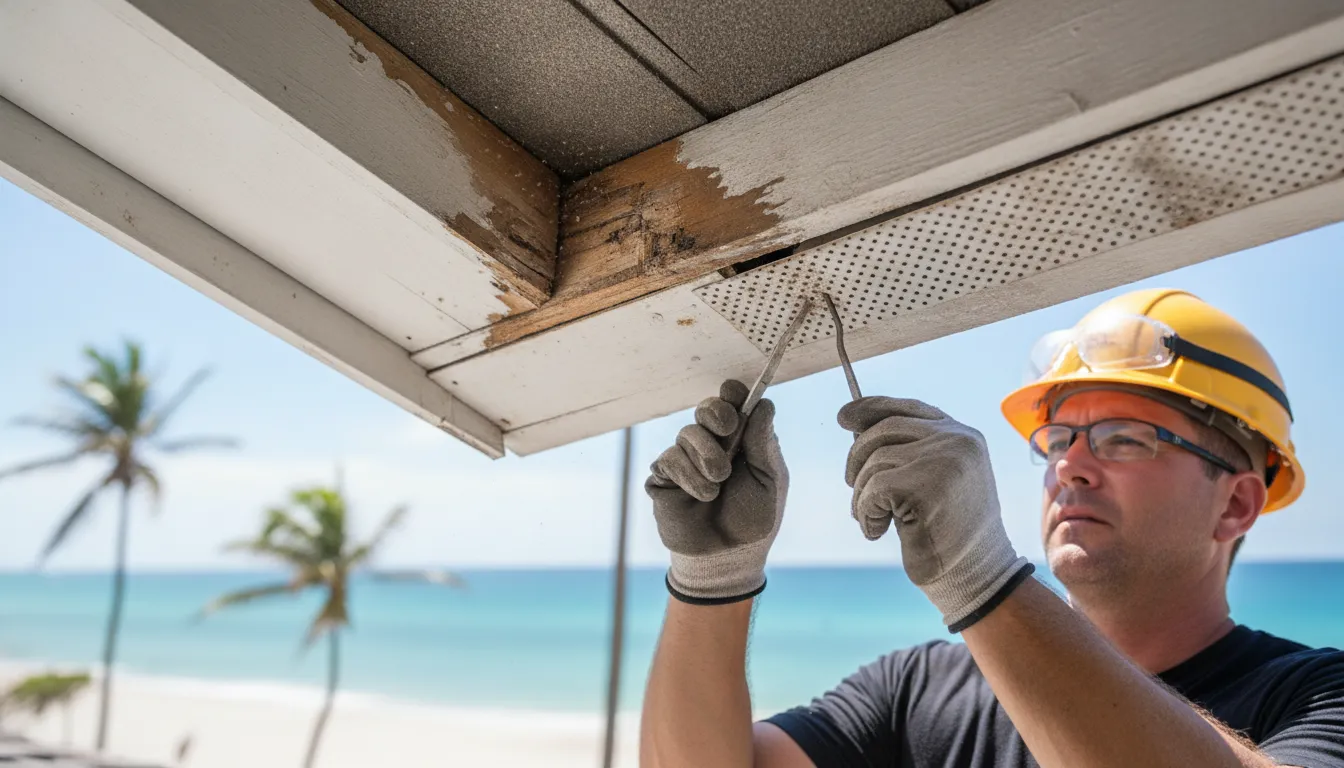
Strong sun and heavy rain can stress the wood trim at your roof edge. Wood that is rotted, soft, or peeling shows that water has got past your shingles. When wood gets wet and stays wet, it swells and breaks down. You can check the wood by tapping it with a tool. If the wood feels spongy, it needs to be fixed. Cracked or sagging fascia boards are also clear red flags.
Gaps where the soffit meets the roofline are also a key issue. In St. Petersburg, high winds can shift these panels and create small openings. These gaps are often common causes of roof leaks because wind blows rain straight into the cracks. Paint that flakes or peels is a sign of trapped water. Damp wood pushes the paint off the surface.
Interior leaks and pests
Damaged eaves can cause problems deep inside your home. If you see wet spots or dark rings on your ceiling, water is getting past the roof edge. When fascia boards warp or split, they let rain run down the wrong path. Housing guides show that damaged fascia allows moisture to penetrate. This leads to rot in the roof deck and other inner parts of your house.
You may also spot pests or light coming through your vents. Squirrels, rats, and wasps look for small holes in your eaves to build nests. If you go into your attic and see beams of light, you have gaps that need seal work. Spotting these signs early and planning for storm season roof maintenance will help you avoid big repair bills.
How to inspect your roof edge
You do not need to climb a tall ladder to do a basic check. Homeowners can find most issues from the ground with a pair of binoculars. Walk around your yard on a clear day and look up. Follow these steps to check your roof line:
- Look for peeling paint or dark stains on the wood. See if any boards stay wet during dry weather.
- Scan the fascia line to see if boards sag or crack. Check if the gutters are pulling away from the wood.
- Look for gaps where the panels meet the wall. Watch for any pests or birds flying near the vents.
- Check the attic space for wet spots, dark water stains, or signs of mold on the rafters.
- Check the roof deck edges for soft spots. Soft wood shows that water is backing up under your shingles.
Vinyl vs. Aluminum vs. Wood Fascia: Which Is Best for St. Petersburg Homes?
For St. Petersburg homes, aluminum and vinyl-clad wood are the best fascia choices. They offer the best defense against high heat, heavy rains, and salty air. While plain wood is common, it needs constant care to stay dry in our wet climate.
The impact of local climate on fascia boards
In our humid climate, damaged fascia can let water in. This can lead to rot in the roof deck and other inside parts. This risk is noted in research housing guides. To avoid this, you should keep an eye on your roof edge. If you find issues early, you can get damaged soffit and fascia fixed before the wood rots. Fast repairs prevent major damage to your attic.
Salt air from the Gulf of Mexico also speeds up decay. Wood can warp and rot, while some metals might rust. Mold and algae grow fast in our damp climate. They can stain your home and weaken the wood. Homeowners must choose a material that can stand up to these local threats. Upkeep is key, and inspecting soffit and fascia during storm season is a smart habit. High winds from tropical storms can rip weak boards right off your roof.
A comparison of fascia materials
When planning soffit and fascia repair St. Petersburg homeowners should think about materials first. Each material has its own pros and cons for local homes. Wood looks nice but demands a lot of care. Vinyl and aluminum cost less over time because they do not rot. They also resist pests like termites and bees, which love to nest in soft wood. Below is a breakdown of how the top materials perform in our region.
| Material | Life span | Water defense | Upkeep | Cost | Look |
|---|---|---|---|---|---|
| Wood | Short to medium | Poor | High | Low to high | Classic |
| Aluminum | Long | Great | Low | Medium | Clean |
| Vinyl | Long | Great | Low | Low | Simple |
| PVC (Vinyl-clad) | Very long | Great | Very low | High | High-end wood look |
For most homes in our area, aluminum or vinyl are the smartest choices. They save you money on repairs and stand up to bad weather. If you love the look of real wood, vinyl-clad wood is a great option. It gives you the look of wood without the risk of rot. These materials ensure your home stays dry and secure all year. Talk to a local expert to find the best fit for your home.
Why Soffit Venting Matters for Your Attic and Roof Deck
Proper soffit venting allows fresh, cool air to enter your attic from the lowest point of your roof line. This intake flow balances your roof’s ridge vents to sweep out trapped heat and moisture. In Florida’s humid climate, this constant air exchange is crucial to prevent wood rot and mold.
The Role of Balanced Airflow
Your attic needs to breathe. To make this happen, your roof must have a balanced ventilation system. Cool air must come in through the eaves, while hot air escapes through the ridge or roof vents. Proper roof ventilation for Florida homes relies on this steady loop. Without clear soffit vents, the exhaust vents at the top of your roof cannot draw air. This lack of airflow can cause severe damage to your home over time.
When heat builds up in your attic during the hot summer, it bakes your roof from the inside out. This heat can warp your roof deck and ruin your shingles fast. Adding intake vents keeps your roof deck cool and extends the life of your roof. For the best attic health, proper ventilation in soffits is essential to keep humidity from building up.
Signs of Inadequate Attic Ventilation
In St. Petersburg, our humid air makes attic venting even more vital. If your soffits are blocked or damaged, you will notice warning signs fast. High attic heat can cause your AC to run all day, raising your power bills. Moisture can also collect on the underside of your roof deck.
This dampness leads to mold growth and wood rot, which weakens the roof structure over time. Look for peeling paint or dark stains near the eaves. These signs show that water is trapping there instead of venting out. If you suspect these issues, scheduling an inspection for inspecting soffit and fascia can catch damage before it spreads.
The Foundation for New Soffit Material
If you want to upgrade to new, ventilated steel soffits, you cannot simply cover up old damage. Existing soffits must be repaired to provide a strong backer for the new panels. Putting new panels over rotted wood will not solve the real problem. The rot will continue to spread, and the new vents may sag or pull loose.
Rotted framing cannot hold the weight of new metal or vinyl vents. Securing new vents to a soft, decaying base is a recipe for quick failure. A proper repair ensures your new system has a solid base and lasts for decades.
When you need a professional soffit and fascia repair st. petersburg service, our team can help. We will check your entire roof line and make sure your attic gets the airflow it needs.
How Damaged Fascia Leads to Roof Deck Rot and Interior Water Damage
Damaged fascia boards allow wind-driven rain and humid air to seep into the roof edge, which causes the wood roof deck to rot. Over time, this moisture leaks into the attic and travels down into your home, causing wood decay and ceiling leaks. Timely repair prevents these small leaks from turning into major structural damage.
How water enters the roof line
During Florida storms, heavy rains pelt the sides of your home. Fascia boards form a finished surface to shield the roof edge. When these boards warp or crack, they lose their tight seal. Research from the University of Missouri Extension shows that damaged fascia lets water in, which leads to rot in the roof deck and other inside parts.
Wind-driven rain in St. Petersburg can force water upward under the shingles. Without proper roof flashing repair, this wetness sits on the fascia, causing the wood to soften and decay. Once the fascia is weak, the damage spreads to the soffits beneath them, where damp air prevents the wood from drying.
The progression of wood rot
A rotting fascia board cannot support your gutters. Sagging gutters pool water, which spills back onto the roof edge and slowly rots the wood roof deck sheeting. Rotting roof decks lose their strength and sag under weight. Over time, the damp wood invites mold growth that thrives in our warm, humid air.
Once wood rot starts in the roof deck, it is hard to stop. The soft wood acts like a sponge, drawing moisture deeper into your attic space. This dampness threatens the structural framing of your roof, causing rafters and trusses to weaken. Over time, your entire roof system can fail under high winds.
Protecting your home from inside damage
When water leaks past the roof deck, it drips onto the attic floor. It soon soaks insulation and ruins your ceiling, leaving dark stains on your walls. Without quick help, the leak leads to a need for water and flood damage restoration. Wet ceilings can collapse without warning, which is a major safety risk.
You must watch for these signs of water entry. Peeling paint, rotting wood, and green mold on your eaves mean you have a leak. Getting expert soffit and fascia repair st. petersburg stops leaks before they spread. Fixing these issues early protects your roof deck and keeps your home dry.
What Does Soffit and Fascia Repair St. Petersburg Involve?
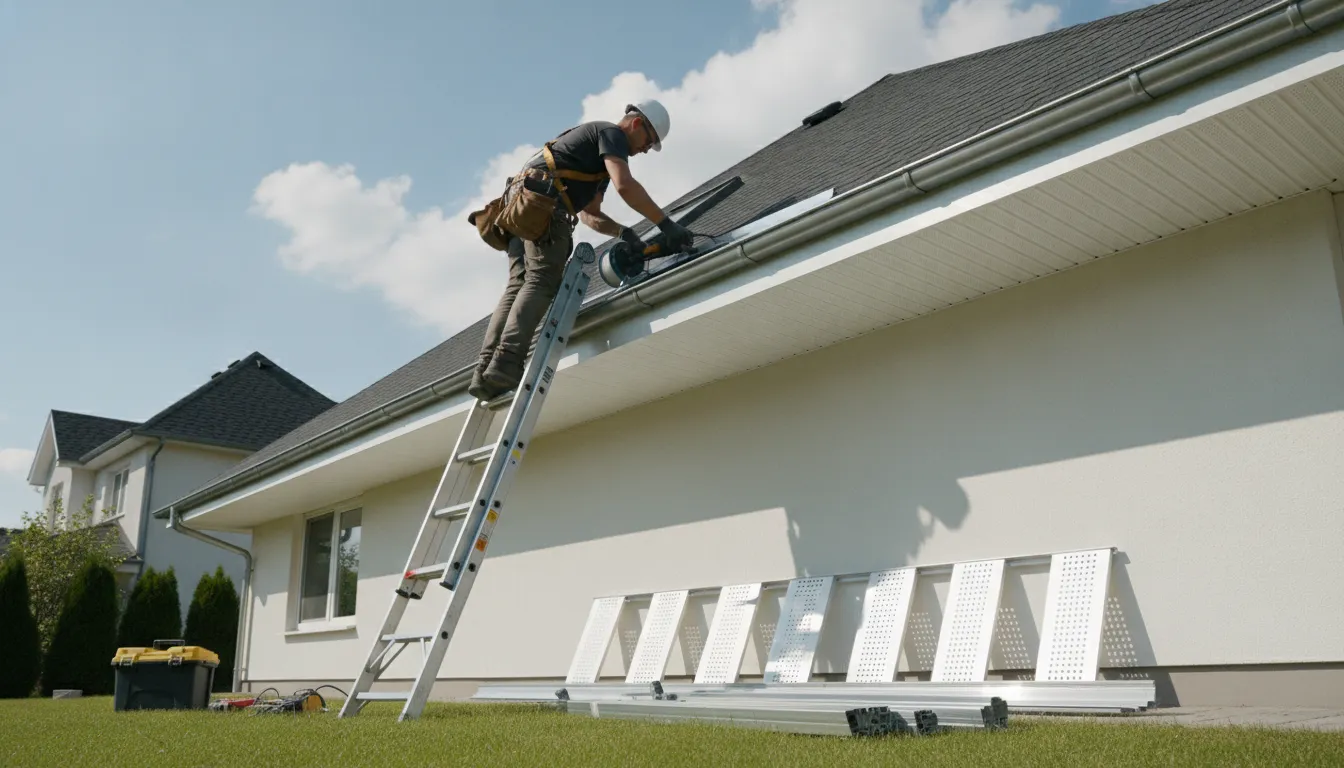
A quality soffit and fascia repair in St. Petersburg involves a series of steps to secure your roof. This process includes finding all wood rot, fixing the wood backer, and installing clean vents. Working with trained experts keeps your roof strong and protects your home from water damage.
Detailed check and board removal
First, our team must look for hidden water damage. Our experts check the entire roof edge to find mold, soft wood, and pest nests. In Florida’s hot and wet weather, a tiny leak can spread fast and ruin your rafters. Our crew uses moisture meters to find damp spots that the eye can miss.
Next, we strip away all bad wood. We do not just paint over mold or cover rot with vinyl. We pull down every soft board so we can start with clean, dry wood. This deep clean helps us protect your home and prevent more common causes of roof leaks from starting.
Wood deck and structural backer repair
Once the old wood is gone, we check the roof deck edge. This wood must be strong to hold the new parts. If the edge is soft, we cut it back and nail in fresh timber. This builds a solid base for the rest of our work. We also inspect the roof trusses to ensure moisture has not seeped deeper into your home.
Before we put up new panels, the wood under them must be ready. According to the University of Missouri Extension, existing soffits have to be repaired to provide an adequate backer for new soffit material. Our crew installs a solid wood frame to support the new trim. This step ensures that strong Gulf winds cannot tear the panels down during a big storm.
New fascia setup and vented soffit sealing
Next, we install the new fascia boards. We use solid wood or wrap the boards in aluminum for extra protection. We set the trim so that water flows right into your gutters. To keep your roof edge safe, we often link this step to roof flashing repair and gutter setup. This prevents rain from running behind the fascia and rotting the new wood.
Finally, we fit the new vented soffit panels. These vents let your attic breathe, which cuts down on heat and mold. As a combined roofing and restoration team, we know how roof-edge health impacts your entire home. Our crew holds active IICRC certs in water damage cleanup and structural drying. We make sure the final fit is fully sealed and secure.
Frequently Asked Questions
How much does soffit and fascia repair cost in St. Petersburg?
On average, St. Petersburg homeowners pay between $1,500 and $6,000 for soffit and fascia repair. The exact price depends on the roof size and the materials used. Vinyl and aluminum are highly cost-effective and need little care in Pinellas County’s humid climate. Wood costs more up front but offers a classic look. If water damage has spread to the rafter tails, replacing the wood will raise the total cost.
How long does it take to repair soffits and fascia?
Most soffit and fascia repair projects take between one and three days to finish. A simple repair on a single-story home might only take a few hours. Larger homes with heavy water rot or complex rooflines need more labor. The process includes removing damaged parts, treating any hidden wood rot, installing the new pieces, and painting or sealing the finished surfaces.
Can I install new soffits over old, damaged wood?
No, you should never install new soffits over damaged or rotten wood. Doing so traps moisture and speeds up wood decay. According to the University of Missouri Extension, original soffits must be repaired first to provide a solid base before you install new panels. Replacing the rotten wood helps your roof edge stay strong and prevents mold from spreading into your attic.
Does homeowners insurance cover soffit and fascia repair?
Homeowners insurance covers soffit and fascia repair if the damage comes from a sudden storm or a fallen tree. Insurance does not cover issues caused by rot, wear, or poor maintenance over time. You should have a licensed contractor inspect the roof edge and document the damage to help with your claim.
Can damaged fascia boards cause mold inside your home?
Yes, damaged fascia boards can easily cause mold inside your home. When fascia is cracked or rotten, rainwater seeps past the roof edge and enters the attic. According to the University of Missouri Extension, damaged fascia allows moisture to seep in, which can quickly rot the roof deck. This trapped moisture, plus Florida’s high heat, creates the perfect space for mold to grow.
Ready to Protect Your Pinellas County Home from Costly Wood Rot?
Leaving cracked, peeling, or rotted soffit and fascia alone on your roof edge allows heavy Florida rain and damp air to seep into your attic. This trap of constant coastal moisture leads to rapid mold growth, rotting wood rafters, and severe roof decay that costs you thousands to fix later. Booking expert repairs right now ensures proper roof ventilation, keeps your home cool, and protects your entire family from high winds before the weather turns.
Are you ready to protect your home from severe storm damage? Our local, expert team is ready to help you secure your roof edge. Call (727) 361-6905 today to speak with our specialists and schedule a free soffit and fascia inspection.