In Tampa, a small roof leak or persistent indoor condensation can become a larger moisture problem before mold is visible. Florida’s heat, humidity, and frequent storms give mold the damp conditions it needs to grow on drywall, insulation, wood, and other building materials.
Schedule your free mold removal consultation in Tampa Bay today. Call (727) 361-6905.
Professional mold remediation tampa services address the moisture source, contain affected areas, remove or clean contaminated materials, and dry the structure thoroughly. A complete job also includes verification that moisture levels are controlled, because treating visible growth without correcting the underlying water problem can allow it to return.
Homeowners should expect a careful process rather than a quick surface treatment. The first step is understanding why Tampa homes stay vulnerable to mold, especially around air-conditioning systems, roof assemblies, attics, and storm-damaged areas.
Why Does Mold Thrive in Tampa Homes?
Tampa homes face persistent mold risk because warm air, high humidity, condensation, and storm-related moisture create damp indoor surfaces. Mold remediation Tampa services address the growth and the moisture conditions that allow it to return.
The short answer is simple: mold spores grow when they land on wet surfaces, and Tampa’s climate makes indoor moisture harder to control. Air conditioning, high dew points, and summer humidity can keep vulnerable areas damp long enough for growth to begin.
Warm, humid air creates persistent moisture
Mold spores exist throughout indoor and outdoor air. They become a problem when they settle on damp drywall, insulation, wood, fabrics, or other materials.
Tampa’s humid subtropical climate supplies moisture for much of the year. Florida’s summer humidity places extra demand on home dehumidification systems, especially when doors open frequently or HVAC systems struggle to keep pace.
The Environmental Protection Agency recommends keeping indoor relative humidity below 60 percent. An indoor range between 30 and 50 percent is preferable when possible.
EPA humidity guidance explains why humidity control matters. A hygrometer can help homeowners monitor rooms, closets, garages, and other areas where moisture accumulates.
Air conditioning can cause condensation
Air conditioning provides essential relief during Tampa’s hottest months, but it can also create cold surfaces where moisture condenses. This effect is more likely when warm, humid air contacts chilled ducts, vents, pipes, walls, or poorly insulated surfaces.
Outdoor dew points in the Tampa Bay area can intensify condensation problems. Moisture may collect in hidden spaces before a homeowner notices staining, a musty odor, or visible growth.
Attics, closets, bathrooms, and areas near supply vents deserve particular attention. Poor ventilation or restricted airflow can leave these spaces damp after the rest of the home feels comfortable.
Storms and roof leaks add another moisture pathway
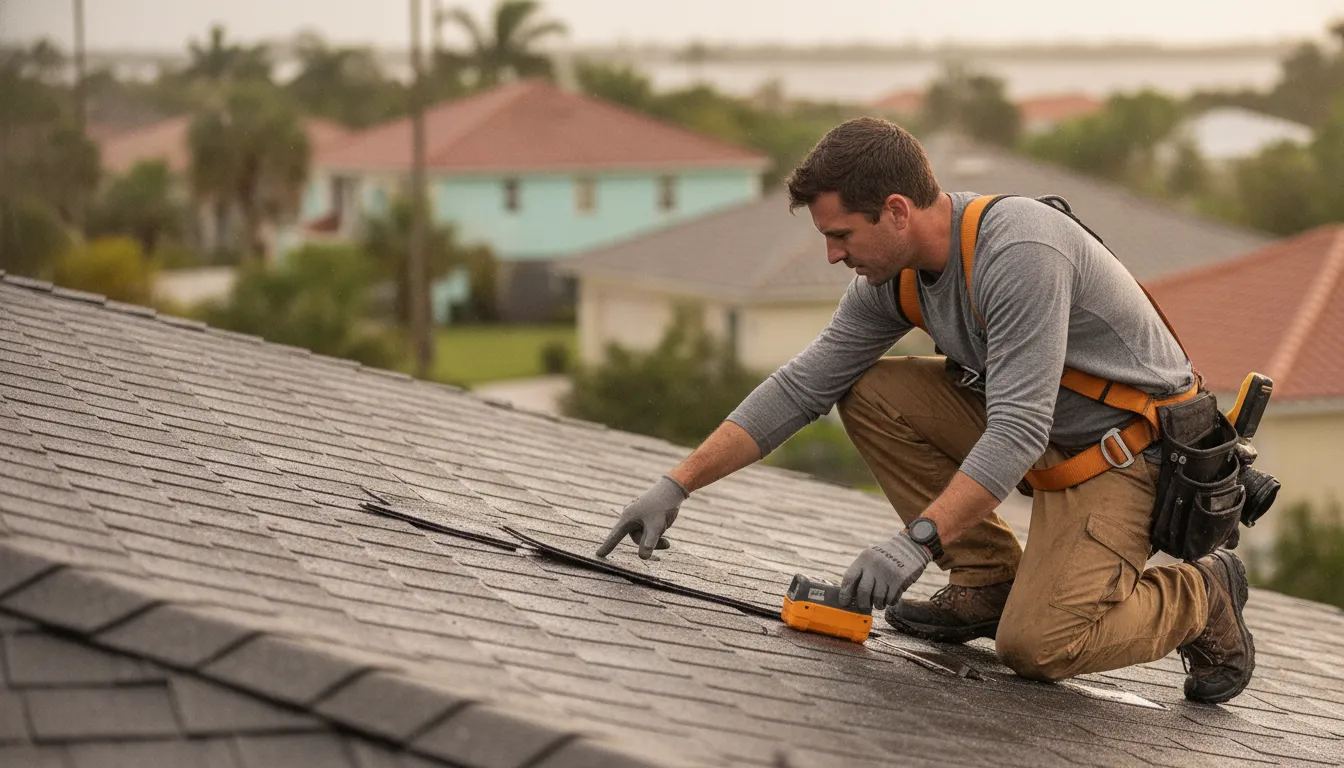
Heavy rain and tropical storms can introduce water through damaged shingles, flashing, vents, or roof penetrations. A small leak may wet attic insulation or ceiling materials without producing an immediate interior drip.
Homeowners can connect suspected roof moisture with dependable roofing services and leak repair. Resolving the leak matters because cleaning visible mold without fixing its source leaves the underlying risk in place.
When water intrusion affects building materials, comprehensive water damage restoration can address drying and moisture control before contamination spreads.
EPA guidance emphasizes that moisture control is the foundation of effective mold control. Promptly drying wet areas and correcting leaks gives Tampa homeowners the best chance of limiting damage and preventing regrowth.
What Are the First Signs of Mold in a Tampa Home?
The first signs of mold may appear as health changes, persistent odors, surface staining, or damage after water intrusion. Early action helps limit spread and protects affected materials.
In Tampa homes, pay attention to unusual allergy symptoms, irritation, musty smells, and ceiling or attic changes after a roof leak. These clues often point to moisture that needs professional evaluation and remediation.
Allergy Symptoms and Irritation
Mold exposure can cause hay fever-type symptoms in people who are sensitive to mold. The EPA lists sneezing, a runny nose, red eyes, and skin rash among common allergic responses.
Even people without a known mold allergy may notice irritation in the eyes, skin, nose, throat, or lungs. Symptoms that improve away from home and return indoors deserve attention, especially when several household members notice them.
These symptoms do not prove that mold is present. They do provide a practical reason to look for damp materials, visible growth, leaks, and areas with poor ventilation.
Musty Odors and Visible Spots
A persistent musty odor can signal microbial growth behind walls, under flooring, above ceilings, or inside damp closets. The smell may remain even when no discoloration is visible.
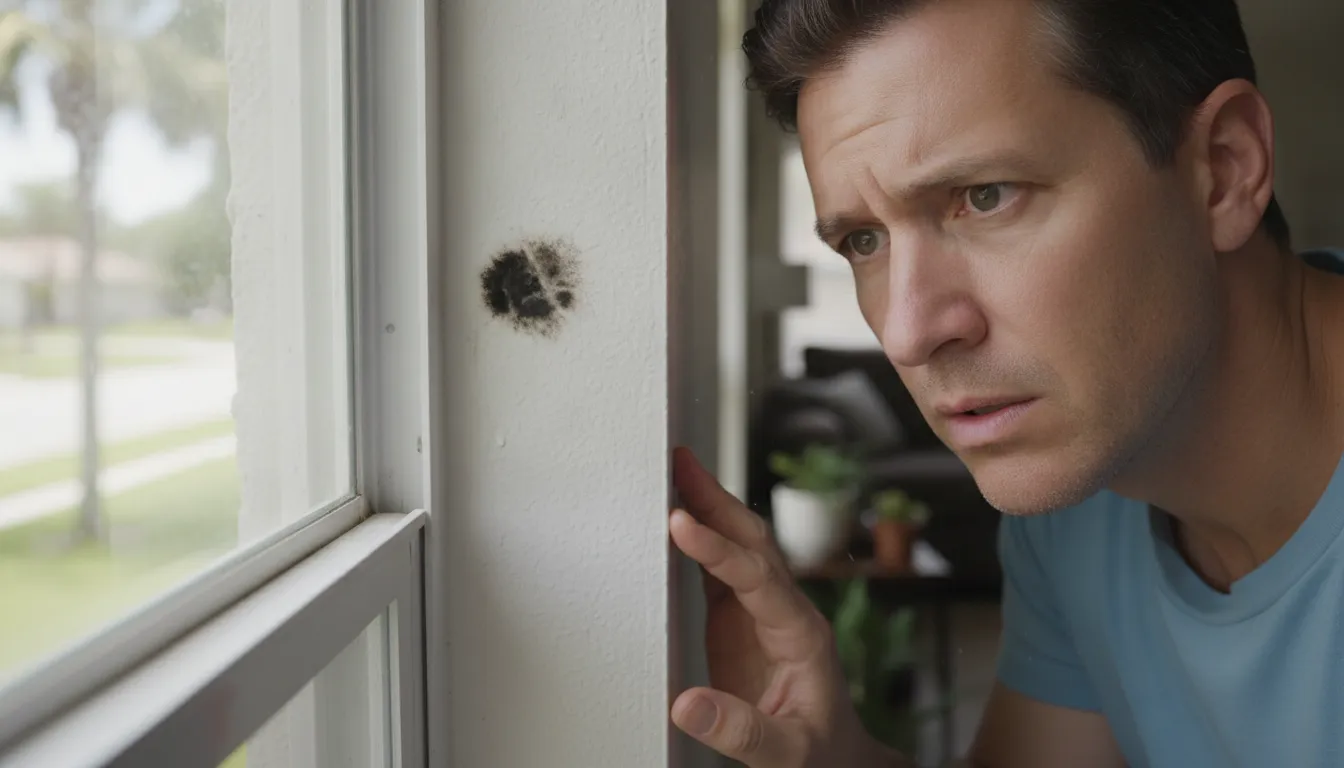
Visible growth may look black, green, gray, brown, or white, but color alone cannot identify a mold type or determine risk. Do not paint or seal over a suspicious spot, because that can conceal the moisture problem.
Mold can gradually damage the materials it grows on, including furnishings, personal belongings, drywall, and other building components. A small spot can therefore indicate a larger problem when moisture continues.
Roof Leaks and Hidden Mold
Florida roof leaks often remain unnoticed until mold appears on an interior ceiling or wall. Water can travel through insulation and roof assemblies before producing an obvious stain.
Check the attic and ceiling areas after heavy rain, tropical weather, or a roofing failure. Look for damp insulation, swollen materials, discoloration, peeling paint, or a new odor near the affected area.
Visible mold usually indicates an underlying moisture source that must be corrected. A remediation plan should address the leak or water intrusion, not only remove the growth.
Learn more about preventing mold growth after water damage when a roof problem affects your attic or ceiling.
The EPA explains that mold begins growing when spores land on wet indoor surfaces. If warning signs follow a leak, act promptly and avoid disturbing contaminated materials until the moisture source is controlled.
What to Expect From a Professional Mold Remediation Tampa Job
A professional mold remediation Tampa job combines controlled removal, air cleaning, material assessment, and moisture correction. The goal is not simply to remove visible growth, but to make the affected area safer and prevent the problem from returning.
The process should be tailored to the building, the affected materials, and the source of moisture. A qualified team typically follows these steps:
- Emergency contact and assessment. The first conversation establishes what happened, where moisture entered, and whether occupants need to avoid an area. The technician then assesses visible growth, water damage, building materials, and possible hidden moisture. This evaluation helps determine equipment, containment needs, and the safest work plan.
- Containment of the affected area. Plastic barriers, controlled access, and appropriate work practices separate contaminated spaces from clean areas. The EPA explains that containment helps prevent mold spores from spreading during cleanup. Heating and cooling airflow may also require temporary control while work is underway.
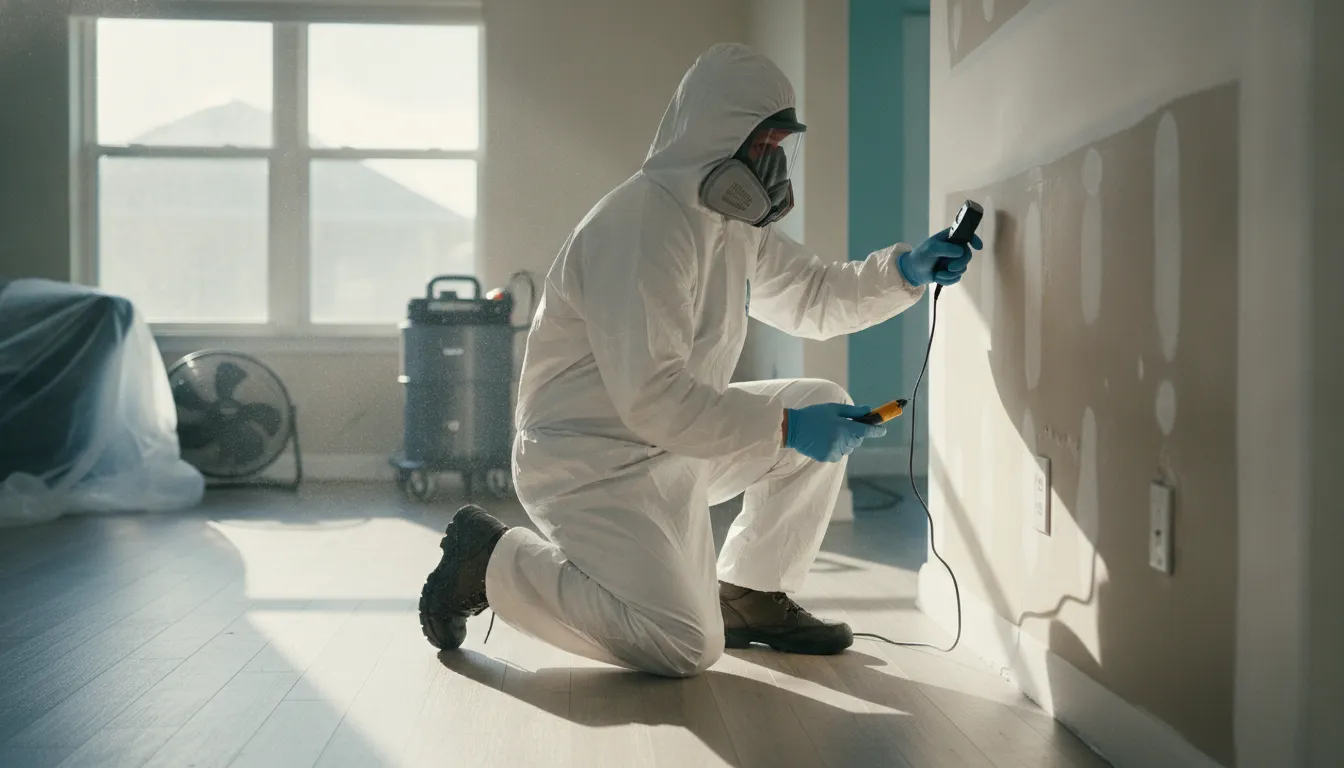
- Air filtration and worker protection. Professional crews use suitable personal protective equipment, including N95 respirators, gloves, and protective clothing. Specialized air filtration equipment helps capture airborne particles during removal. These precautions protect workers and reduce the chance of cross-contamination inside the property.
- Cleaning and antimicrobial treatment. Remediators clean salvageable surfaces using methods appropriate for the material and contamination level. Antimicrobial products may support cleaning and odor control when selected for the application. Treatment does not replace physical removal, drying, or correction of the moisture problem.
- Removal or replacement of porous materials. Heavily contaminated or saturated drywall, insulation, carpet, and similar porous materials may not be safely restorable. Those materials are carefully removed, packaged, and disposed of according to the work plan. Less-affected materials may be cleaned when their condition allows safe salvage.
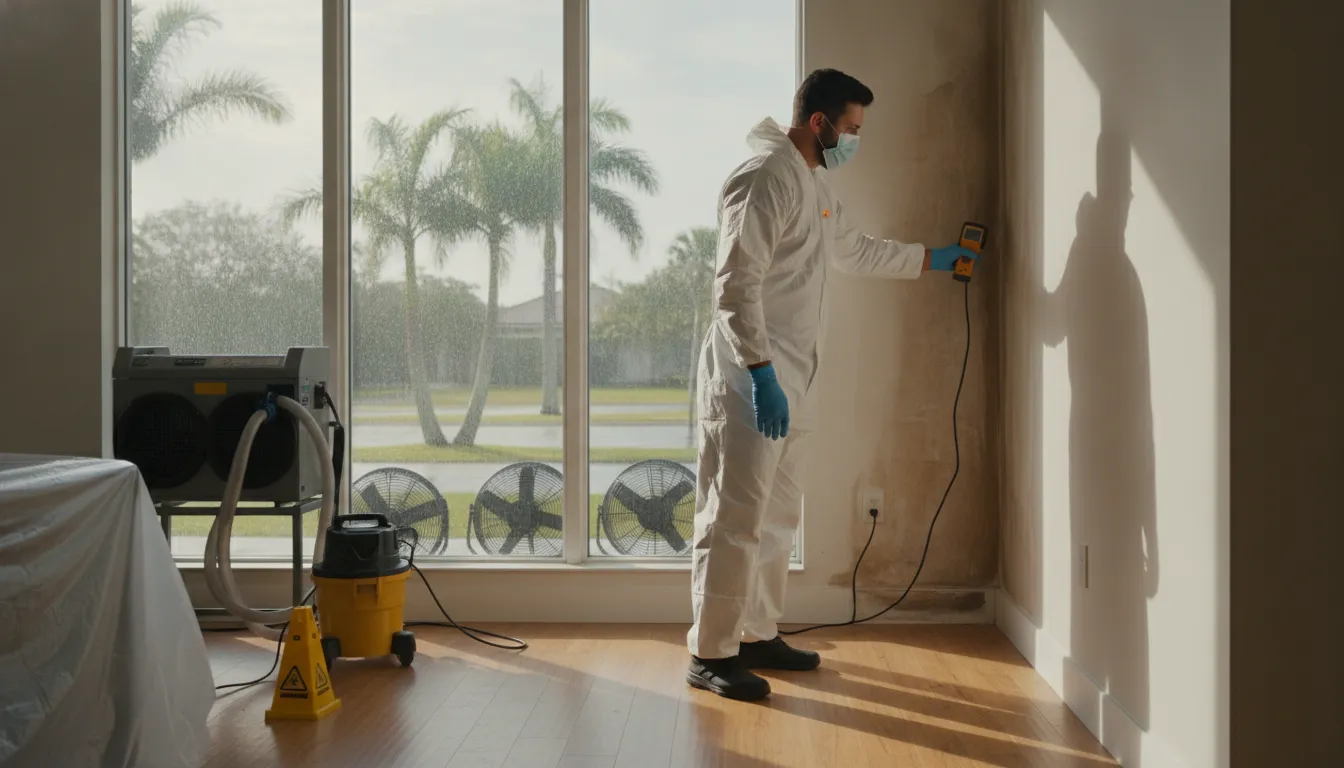
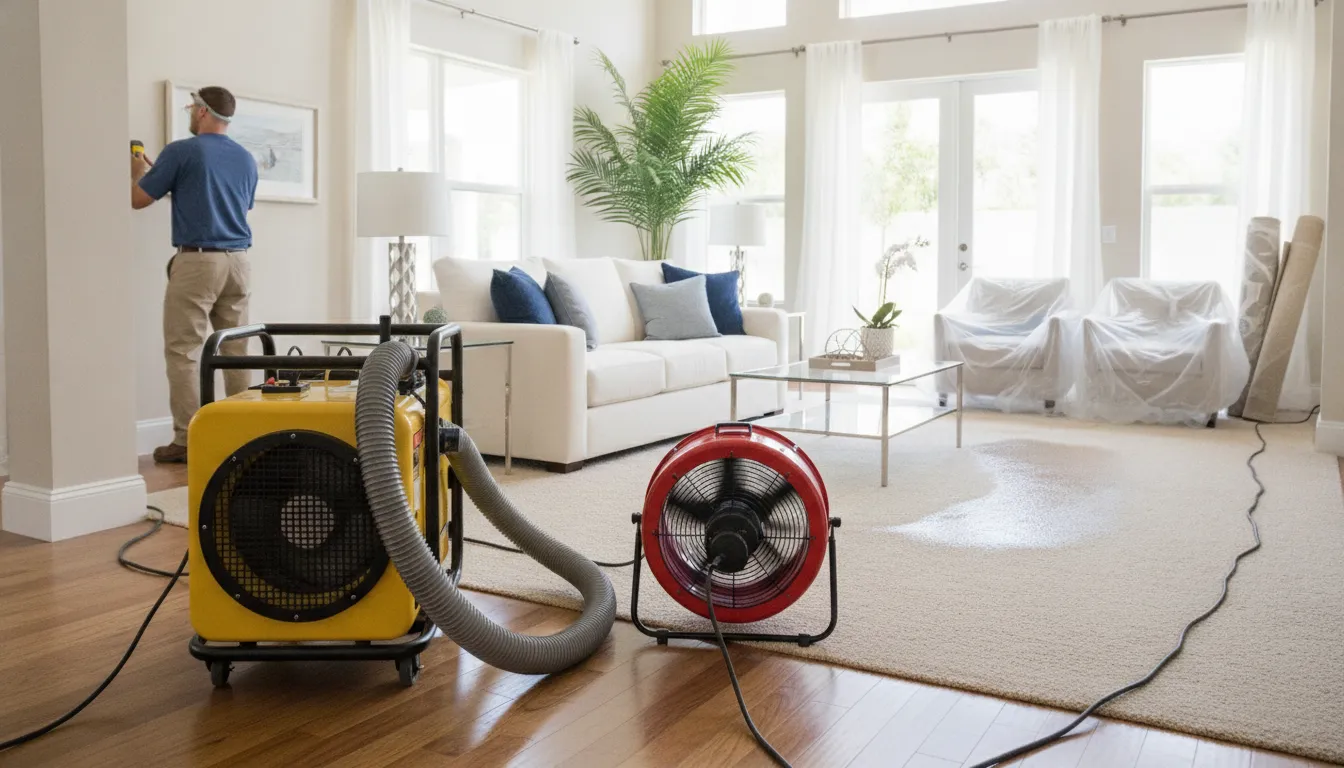
- Structural drying and moisture verification. Industrial dehumidifiers, air movers, and moisture measurements help dry walls, floors, framing, and other building materials. Drying must reach the structure, not just the visible surface. If the property also has active water damage, water damage restoration can address extraction and structural drying needs.
- Resolution of the moisture source. Visible mold often signals an unresolved leak, condensation problem, plumbing failure, or storm-related intrusion. The remediation is incomplete until that source is identified and corrected. Homeowners can also review professional mold remediation services for help addressing the broader cleanup process.
EPA guidance identifies moisture control as central to mold control. A complete project therefore ends with a dry, corrected environment, not merely a cleaner-looking surface.
How Long Does Mold Remediation Take in Tampa?
Most residential mold remediation in Tampa takes a few days to one week, followed by post-remediation verification. The schedule depends on the affected area, materials, moisture source, and drying requirements. Immediate drying also matters because the EPA advises drying water-damaged areas within 24 to 48 hours to help prevent mold growth.
Why the first 24 to 48 hours matter
Warm temperatures and high humidity can keep drywall, insulation, flooring, and framing damp after a leak or storm. Mold may begin growing when spores land on wet indoor surfaces. Drying the affected materials quickly reduces the time available for growth.
The 24-to-48-hour window is not a guarantee that mold will never develop afterward. Hidden moisture, trapped humidity, and saturated porous materials can continue supporting growth. The EPA recommends prompt drying as part of moisture control.
EPA guidance on drying water-damaged areas explains why fast moisture removal is important.
What happens during a typical remediation timeline?
The first phase usually involves assessing the affected spaces and locating the moisture source. A visible patch may not show the full extent of contamination. Moisture can remain behind walls, beneath flooring, or above ceilings.
Containment and air scrubbing add preparation time, but they help limit spore movement during cleanup. Professionals may isolate the work area and operate air filtration equipment while removing affected materials.
Drying can take longer than surface cleaning. Industrial dehumidifiers and air movers may run until moisture readings show that structural materials have stabilized. Removing heavily contaminated porous materials can also extend the schedule.
For many Tampa homes, a straightforward project takes several days. A larger loss, concealed moisture, attic contamination, or continuing plumbing or roof problems can extend work toward a week or longer.
Why verification adds time
Remediation should not end when visible mold is removed. Post-remediation verification may include a visual review and moisture testing. These checks help confirm that affected areas are clean and the moisture problem is controlled.
Allowing time for verification protects the repair decision. It can also identify remaining damp materials before walls, ceilings, or finishes are restored. Homeowners comparing mold remediation cost estimates should ask whether containment, drying, disposal, and verification are included.
A dependable timeline is based on measured conditions, not a preset promise. In Tampa Bay, completing the moisture correction is essential because unresolved humidity or leaks can allow mold to return.
DIY Cleanup vs. Professional Mold Remediation: When to Call a Pro
Small, isolated mold on a washable surface may be manageable with careful cleaning. Extensive growth, HVAC contamination, hidden moisture, or health concerns call for professional remediation.
The goal is not simply to make mold less visible. Effective cleanup removes contamination and corrects the moisture problem that allows it to return.
| Consideration | Limited mold cleanup | Extensive mold remediation |
|---|---|---|
| Scope | Small, visible areas on hard, washable surfaces | Broad growth, recurring growth, or contamination across rooms |
| Containment | Keep household members away and avoid disturbing nearby materials | Professionals isolate the work area to limit airborne spore spread |
| Safety | Only consider cleanup when occupants face no relevant health risk | Trained crews use appropriate PPE and control exposure during removal |
| Moisture fix | Stop the minor leak or condensation source before cleaning | Trace hidden moisture and correct leaks, humidity, or HVAC issues |
| Materials handled | Cleanable, nonporous materials that are not deeply damaged | Porous or saturated drywall, insulation, flooring, and concealed materials |
When limited cleanup may be reasonable
DIY cleanup may suit a small patch on tile, glass, or another nonporous surface. The area should be limited, accessible, and separate from HVAC equipment.
Use appropriate protection, ventilate carefully, and avoid actions that spread spores through the home. Do not disturb contaminated materials unnecessarily.
People with asthma, mold allergies, immune suppression, or other health concerns should avoid cleanup. The CDC guidance on mold and health explains why exposure can cause problems for sensitive individuals.
When professional remediation is the safer choice
Extensive growth is not a suitable DIY project. Professional help is also necessary when mold affects HVAC systems, wall cavities, attics, or other hidden areas.
Visible growth can indicate an unresolved moisture source. Tampa homes may face roof leaks, plumbing failures, storm intrusion, or persistent humidity that supports recurring growth.
EPA guidance states that mold cleanup must accompany correction of the water problem. Moisture control remains the fundamental key to lasting mold control.
Professionals can establish containment, use suitable respiratory protection, and assess materials that household cleaning cannot restore. They can also identify whether porous materials require removal.
Never paint, caulk, or seal over visible mold. Coatings do not remove contamination and may conceal moisture inside a wall or ceiling assembly.
The EPA guide to mold, moisture, and your home recommends prompt cleanup and moisture correction. For larger or hidden problems, consider professional mold remediation services that address both contamination and its source.
Use the moisture problem as your decision point
If you cannot identify why the mold appeared, cleaning alone is unlikely to solve the problem. A professional assessment becomes especially important after flooding, storm damage, or repeated condensation.
Act promptly after water intrusion. Drying affected areas quickly can reduce growth risk, but established or concealed contamination requires a more complete response.
How to Keep Mold From Coming Back in a Tampa Bay Home
Keep mold from returning by controlling moisture, drying wet materials quickly, and correcting the source of water intrusion. Tampa Bay homeowners should also manage indoor humidity, maintain HVAC equipment, and check for hidden moisture after storms.
Prevention is more reliable when it addresses the building conditions that allowed growth, rather than treating only the visible surface.
Fix the moisture source first
Visible mold is often a symptom of a continuing moisture problem. Leaking roofs, plumbing failures, window leaks, and condensation can keep wall cavities or attic materials damp.
Before cleaning or repairing a contaminated area, identify where the water entered and correct that condition. The EPA explains that moisture control is the foundation of effective mold control in homes.
After roof damage, look beyond the room where stains appeared. Water can travel through insulation, ceiling assemblies, and framing before the first visible mark develops. Learn more about preventing mold growth after water damage in Florida homes.
Dry water damage within 24 to 48 hours
Time matters after a supply-line break, appliance leak, roof leak, or storm intrusion. The EPA recommends drying water-damaged areas and items within 24 to 48 hours to help prevent mold growth.
Remove standing water, increase safe airflow, and use dehumidification appropriate for the affected materials. Porous materials may retain moisture even when the surface feels dry.
Do not close up wet walls or replace flooring before moisture levels stabilize. When water has spread into structural materials, comprehensive water damage restoration can address extraction, drying, and affected building components together.
Keep indoor humidity under control
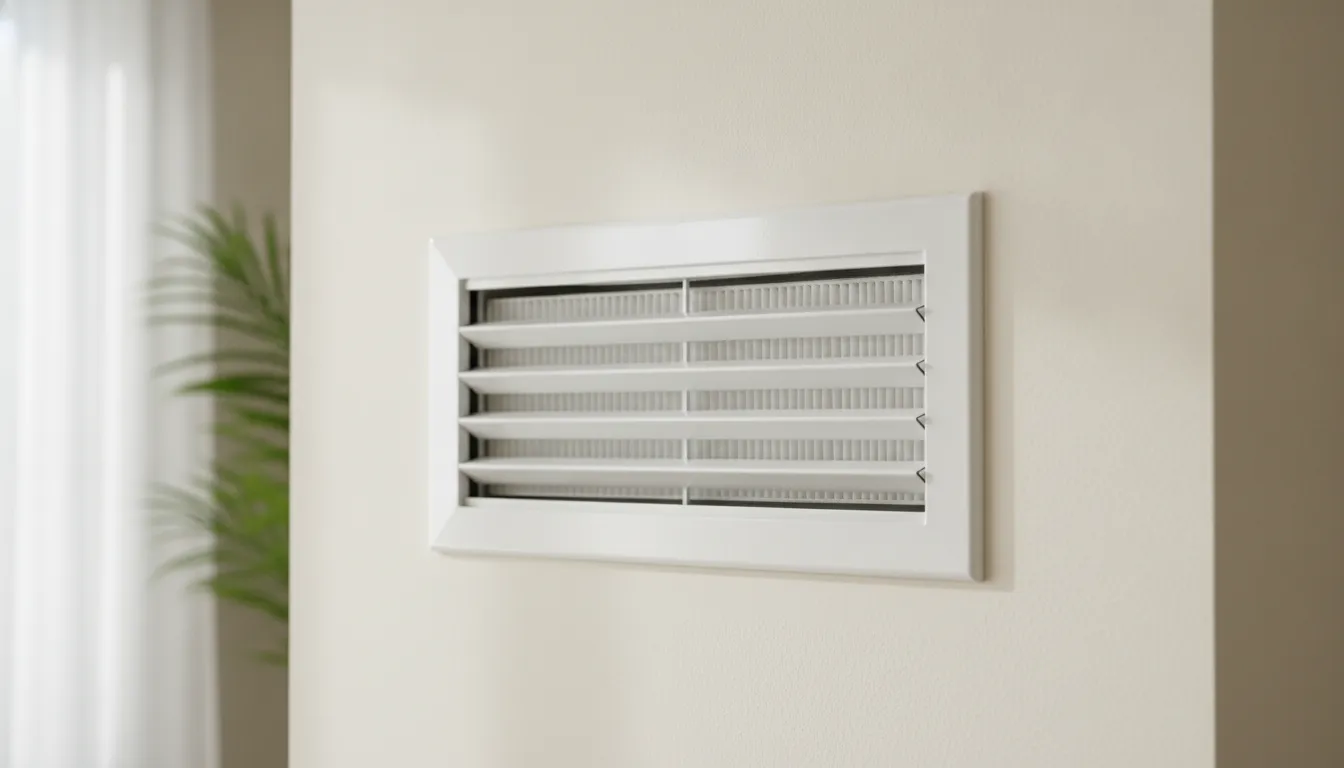
Air conditioning helps Tampa Bay homes stay comfortable, but poorly maintained equipment can struggle with airflow and dehumidification. Schedule routine HVAC maintenance, replace filters as recommended, and keep supply and return vents clear.
The EPA recommends indoor relative humidity below 60 percent, with an ideal range between 30 and 50 percent when possible. A simple hygrometer can help you notice rising humidity before condensation appears.
Watch closets, bathrooms, laundry areas, and rooms with limited airflow. Persistent condensation on vents, windows, or exterior walls deserves attention before it supports new growth.
Inspect after storms, and never seal mold inside
Heavy rain and wind can create small roof openings that continue admitting moisture after the storm passes. Check ceilings, attic access areas, baseboards, and other locations near exterior walls.
Act promptly when you notice damp materials, musty odors, staining, or changes in indoor air quality. Mold can damage belongings, furnishings, and building materials when moisture remains unresolved.
Painting or sealing over mold does not remove the contamination or correct the water problem. Remediation should occur before remodeling or repairs, so mold is not trapped inside wall cavities.
These steps reduce the conditions that support regrowth, but extensive contamination or recurring moisture requires a thorough professional evaluation and repair plan.
If mold has spread beyond a small surface or you cannot find the moisture source, professional help is the most reliable path.
Frequently Asked Questions
How much does mold remediation cost in Tampa?
Cost depends on the affected area, materials involved, moisture source, containment needs, and required repairs. A professional evaluation should identify the scope before you compare mold remediation cost estimates. Ask whether the estimate includes containment, air filtration, removal, drying, and post-remediation verification.
What is the difference between mold inspection and mold remediation?
An assessment identifies visible or suspected growth, moisture conditions, and the likely extent of the problem. Remediation is the corrective work, including controlling the moisture source, containing the area, removing damaged materials, cleaning surfaces, and verifying that the work is complete.
Why is mold remediation necessary for Tampa homes?
Tampa’s heat, humidity, storms, and air-conditioning condensation can keep building materials damp. The EPA recommends keeping indoor relative humidity below 60%, ideally between 30% and 50%. Removing visible growth without correcting moisture allows the problem to return.
Does homeowners insurance cover mold remediation in Florida?
Coverage depends on the policy, the cause of the moisture, exclusions, deductibles, and whether the event is covered. Do not assume a claim will be approved. Review your policy and speak with your insurer before authorizing work when the situation is not an emergency.
How long does professional mold remediation take?
Small, accessible areas may take less time than widespread growth involving walls, HVAC systems, attics, or saturated materials. The timeline includes moisture correction, containment, removal or cleaning, structural drying, and verification. Water-damaged areas should be dried promptly, ideally within 24 to 48 hours, according to EPA guidance.
Schedule Professional Mold Remediation in Tampa Bay
A clear remediation plan can help identify the moisture source, contain affected areas, and restore a healthier home environment.
Go Time Roofing and Restoration provides a direct next step for homeowners who need dependable mold removal support without unnecessary pressure.