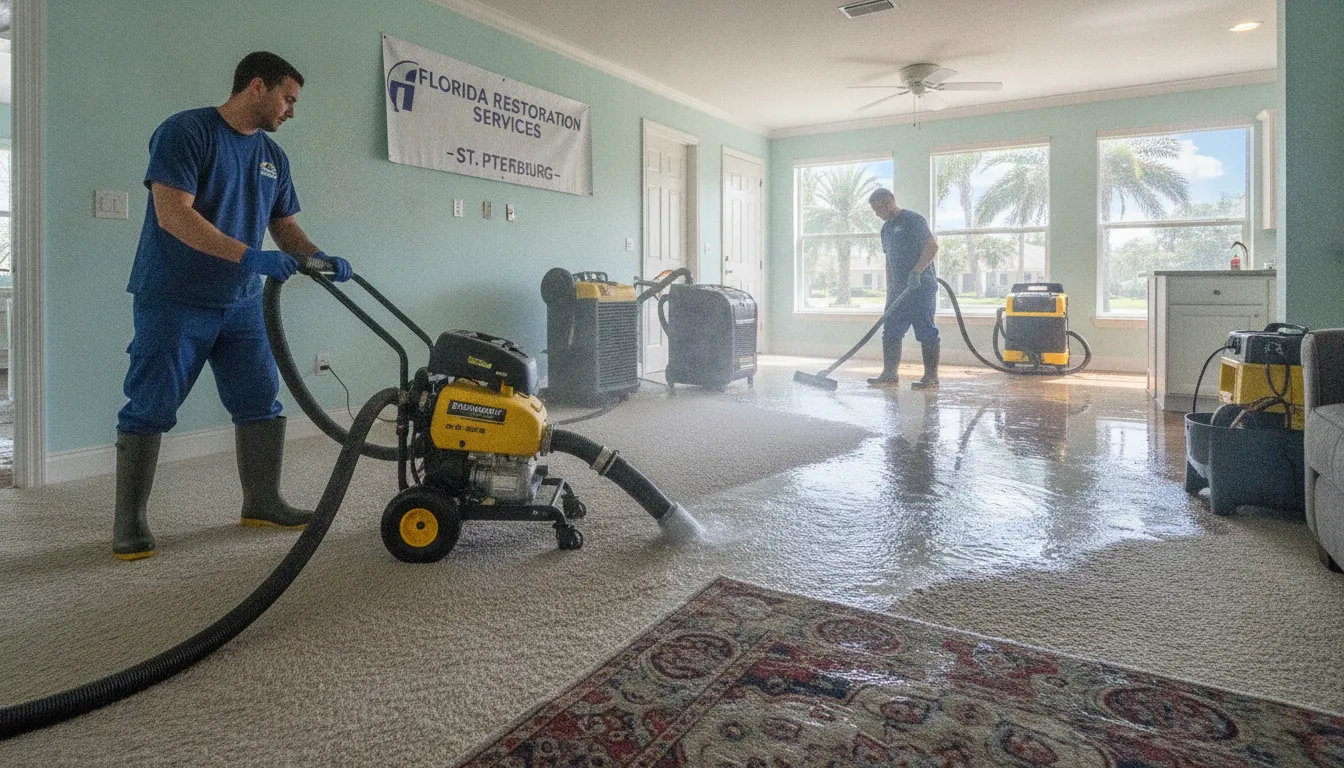
Water damage affects around 14,000 individuals in the United States every single day. In the hot and humid climate of St. Petersburg, Florida, a plumbing leak or roof failure can quickly escalate from a minor nuisance into a structural crisis. When flooding occurs, understanding how to clean and dry your property is the first step toward recovery.
What is water damage restoration? Water damage restoration is a professional process that involves inspecting, cleaning, drying, and repairing a property after water intrusion to return it safely to its pre-loss condition. Under the IICRC S500 standard, certified professionals use moisture detection tools, industrial water extractors, and heavy-duty dehumidifiers to systematically remove standing water and moisture. This managed process controls the spread of contaminants and prevents secondary structural damage and rapid mold growth. Professional restoration covers everything from initial emergency mitigation to full structural rebuilds and insurance documentation support.
Dealing with sudden property flooding can feel overwhelming, but knowing what to expect can help you make smart decisions. To help you protect your home, we have put together a clear guide on What Is Water Damage Restoration? A Complete Definition. Here is how the process works to save your property.
What Is Water Damage Restoration? A Complete Definition
Water damage restoration is a professional service designed to clean up, dry, and repair a property after a water intrusion event. According to the Institute of Inspection, Cleaning and Restoration Certification (IICRC). This specialized field focuses on both water mitigation and structural repair to return a property to its pre-loss state. It requires a deep understanding of the IICRC S500 standard, which is the official benchmark for professional structural drying and safety guidelines.
A Professional Standard of Care
The IICRC S500 standard defines how certified professionals must handle water damage. This standard dictates that restorers must attempt to control the spread of both moisture and contaminants. Managing these factors is vital to prevent secondary issues from hurting the building structure and its contents. For homeowners in St. Petersburg, Florida, this professional care is especially critical due to the region’s high humidity and intense storm patterns.
According to the IICRC S500, water damage is classified into three categories based on the level of contamination in the water source. Category 1 water comes from clean sources like supply lines, but it can degrade quickly. Standing water can easily degrade to Category 2 or 3 within 24 to 48 hours if it is left untreated. This makes prompt professional assessment essential for protecting both property value and human health.
The Five-Step Restoration Process
According to the Centers for Disease Control and Prevention (CDC), the complete water restoration process involves five main phases. Certified technicians must execute these water damage restoration steps in a precise order to ensure safety and quality:
- Detailed Inspection: Finding all active moisture sources using advanced thermal cameras and moisture meters.
- Water Removal: Extracting standing water quickly to stop the migration of moisture into dry building materials.
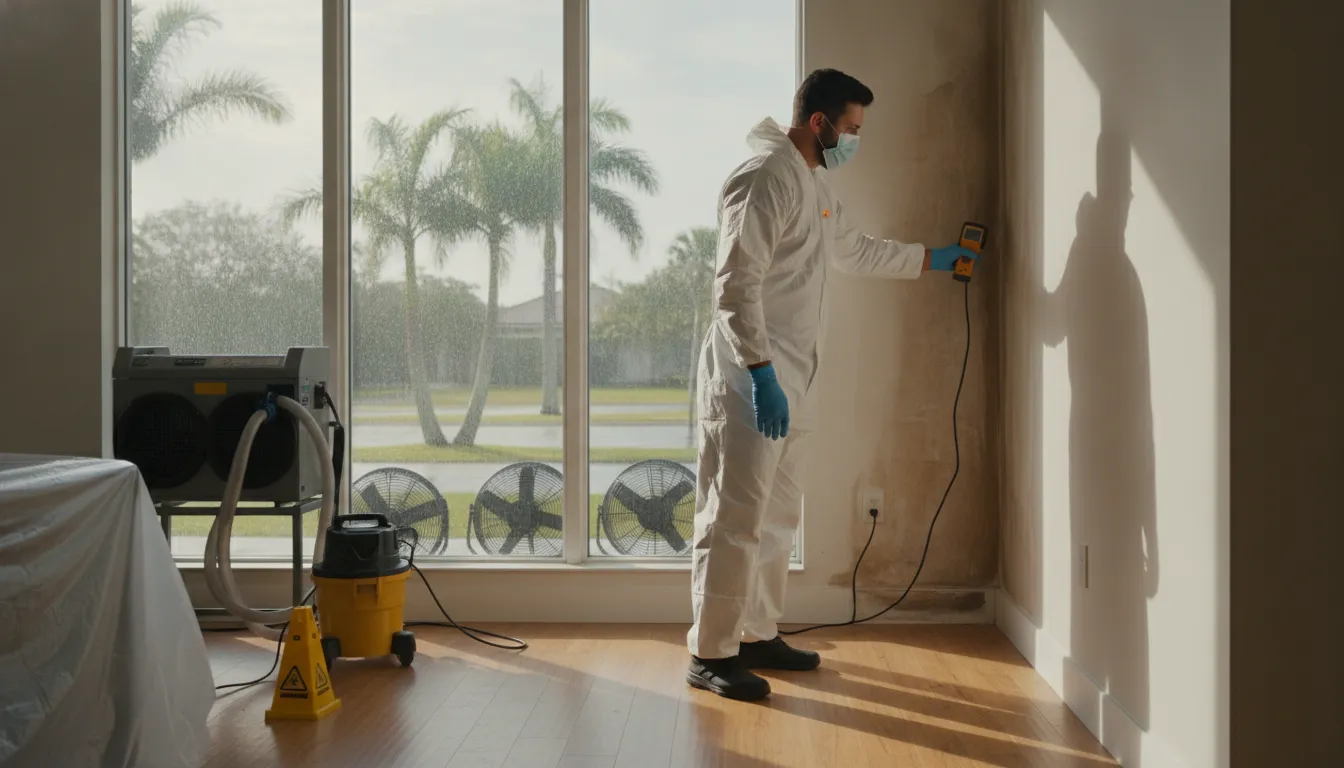
- Drying and Dehumidification: Using industrial air movers and low-grain refrigerant dehumidifiers to extract deep-seated moisture from walls and subfloors.
- Cleaning and Sanitizing: Applying antimicrobial treatments to kill bacteria and eliminate musty odors.
- Restoration and Repair: Rebuilding damaged structural elements like wet drywall, warped wood floors, and ceiling tiles.
Why Certified Experts Matter
Certified training is what sets professional restorers apart from basic clean-up crews. Technicians in this field must hold specific certifications like the Water Damage Restoration Technician (WRT) and Applied Structural Drying (ASD) designations. These certifications show that the technician knows how to dry a home safely.
In St. Petersburg, Florida’s humid climate, choosing an uncertified team often leads to lingering moisture and rapid mold growth, which can threaten your family’s health. Working with certified experts ensures the job is done right from the start, preserving the structure of your home and keeping your living space safe.
Why Professional Water Damage Restoration Matters for Your Home
Home water leaks or flood events can seem easy to manage on your own. But trying to clean up water without expert help often leads to major structural issues and health risks. Hiring certified professionals is the safest way to dry your property and protect your family from hidden damage.
Professional water damage restoration is a systematic process of drying, sanitizing, and repairing a water-damaged property to return it to its pre-loss state. Relying on expert technicians prevents secondary issues like wood rot, structural failure, and microbial growth. Understanding what is water damage restoration and why it requires specialized skills is the first step toward safeguarding your home after a leak or flood.
The Swift Onset of Toxic Mold
Standing water in your home creates a perfect breeding ground for mold. In the humid climate of Florida, mold spores can start to grow and spread in as little as 24 to 48 hours. This rapid growth can cause serious issues, especially for people with breathing problems. According to a Centers for Disease Control and Prevention study on major hurricane flooding, 46% of inspected homes had visible mold growth. Professional technicians use specialized methods to stop mold before it takes over your walls and floors. If you do not act quickly, you may face expensive cleanup costs later on. Knowing the risks of mold after water damage can help you make the right choice for your property.
The Need for Industrial Recovery Tools
Standard household fans and wet vacuums are not strong enough to dry deep moisture. Certified restoration companies invest between $50,000 and $150,000 in professional drying equipment. This gear includes commercial-grade air movers, LGR dehumidifiers, and thermal imaging cameras. These advanced tools let technicians find moisture trapped behind drywall and under hardwood floorboards. Without this industrial equipment, you run a high risk of secondary water damage such as wood rot or sagging ceilings. Expert teams can dry your home quickly and verify that your structural framing is completely dry.
Accurate Insurance and Claims Documentation
Filing a property claim can be a stressful process for any homeowner. Insurance companies need detailed, step-by-step evidence of the water damage and the drying process. Professional restoration teams know exactly how to document the loss to help your claim. They record moisture readings, take structural photos, and provide detailed equipment logs. How your policy covers restoration depends on the cause of the loss, such as a sudden pipe burst versus long-term neglect. Having clear proof from a licensed team makes it easier to secure your payout. Learn more about your options by reviewing our guide on water damage insurance coverage in Florida.
The Three Categories of Water Damage: What Homeowners Should Know
When you face a water leak, knowing the type of water in your home is key to staying safe. The Institute of Inspection, Cleaning and Restoration Certification (IICRC) groups water damage into three clear categories. These categories depend on where the water comes from and how dirty it is when it touches your property. Understanding these levels helps you make the right choices for your family’s health and home safety.
What is water damage restoration when it comes to these categories? It is a professional process that changes based on the level of contamination to keep you safe. If you do not treat clean water quickly, it can turn into a biohazard in a short time. Let us look at the three main types of water damage you might find in your home.
Clean Water Contamination
Category 1 water comes from a sanitary source and does not pose a major risk if you touch, swallow, or breathe it. Examples include broken supply lines, tub overflows, or falling rain. While this water starts out clean, it does not stay that way for long if left alone. According to standard industry guides, standing clean water can degrade to Category 2 after 24 to 48 hours because of dirt and germ growth on your floors.
Gray Water Health Risks
Category 2 water, or gray water, has a significant level of dirt and waste. It can cause discomfort or illness if humans touch or drink it. This water often comes from washing machines, sink drains, or toilet bowls with no feces. To protect your home and prevent mold after water damage, you must dry these areas fast using professional tools.
Black Water Biohazards
Category 3 water, also known as black water, is highly dirty and dangerous. It can carry harmful bacteria, fungi, and toxins that cause severe health issues. This water comes from sewage backups, rising river water, or seawater during storms. Because of these severe health risks, Category 3 cleanup requires specialized protective gear and strict sanitizing steps to make the space safe to use again.
| Category | Water Source | Risk Level | Health Threat | Upgrade Timeline |
|---|---|---|---|---|
| Category 1 (Clean) | Water supply lines, melting ice, rain | Very Low | Safe if touched or inhaled | Turns to Cat 2 in 24 to 48 hours |
| Category 2 (Gray) | Sump pumps, washers, sink drains | Medium | Can cause sickness if consumed | Turns to Cat 3 in 48 hours |
| Category 3 (Black) | Sewage, rivers, sea water, wind-driven rain | Extremely High | Severe illness from contact | Immediate biohazard state |
To keep people safe, experts follow strict rules when drying a building. The Centers for Disease Control and Prevention (CDC) notes that proper cleaning and water removal must happen before active drying begins, which you can read about in their flood cleanup reports. Following these steps helps prevent mold and keeps germs from spreading through the air in your home.
The professional water damage restoration process uses advanced tools to stop active leaks and dry out wet structures. Understanding what is water damage restoration helps property owners make smart choices during a household flood or plumbing crisis. This guide outlines the official steps used by certified technicians to protect your home from mold and structural damage.
-
Emergency Contact and Dispatch
The process starts the moment you call a local restoration team. Certified specialists are on standby 24/7 to gather details about your water emergency and send help to your property right away. Fast action matters because water can turn from clean to contaminated in as little as 24 hours.
-
Inspection and Damage Assessment
On site, technicians use moisture meters and thermal cameras to find hidden water behind walls and under floors. The IICRC S500 standard requires moisture detection tools to map wet areas and classify the water category. This step creates a clear drying plan for your specific home layout.
-
Water Removal and Extraction
The crew uses truck-mounted pumps and submersible extractors to remove standing water fast. Removing the bulk water stops further saturation and keeps secondary damage from spreading. This step pulls moisture out of carpets, wood floors, and subfloors quickly.
-
Structural Drying and Dehumidification
Even after standing water is gone, building materials stay wet inside. Technicians set up air movers and low-grain refrigerant (LGR) dehumidifiers. These LGR units cost $3,000 to $5,000 each and pull gallons of moisture from the air to speed drying times. While standard providers take 7 to 14 days to dry a home. Specialists with Applied Structural Drying (ASD) training can dry most homes in just 3 to 4 days.
-
Cleaning and Sanitizing
Water damage brings dirt, bacteria, and odors into your living space. Technicians clean all salvageable materials with professional antimicrobial treatments to make the area safe. The S500 standard requires that cleaning and decontamination happen before active air movement starts to stop airborne mold spores.
-
Repairs and Reconstruction
This final phase restores your home to how it was before the damage. It includes rebuilding drywall, baseboards, and flooring. Because Go Time holds a full Florida contractor license, they handle both the water cleanup and the structural repairs. This full-service approach keeps your project under one roof.
-
Final Inspection
Before the project finishes, a final quality check is done. Technicians scan with moisture meters to make sure all materials have reached safe drying levels. This step ensures no hidden damp spots remain to cause future mold or structural decay.
Following a clear set of water damage restoration steps ensures your home dries safely and fully. This professional approach protects your property value and keeps your family safe from indoor hazards.
Water Mitigation vs. Water Restoration: What’s the Difference?
Water mitigation stops the damage from spreading, while water restoration rebuilds your home after it is dry. These two terms describe different phases of a single recovery plan, but homeowners often mix them up. Mitigation stabilizes your property first, and then restoration returns it to its original pre-loss state. Understanding these phases helps you work with your insurance provider and manage your recovery timeline.
What Is Water Mitigation?
Water mitigation is the immediate emergency response to a flood or leak. The main goal is to prevent secondary damage like rot or mold. Technicians act fast to extract standing water and dry out the structure. They use industrial fans and dehumidifiers to pull moisture from walls and floors. During this phase, professionals track drying progress using moisture meters to reach stable drying goals. This first step stabilizes your home and handles Category 1 or Category 2 water risks before they get worse. You can read more about these quick actions in our guide on water damage restoration steps.
Mitigation must happen fast because standing water degrades quickly. According to the industry standard IICRC S500 guide, clean water can degrade to category 2 within 24 to 48 hours. Florida’s high heat and humidity speed up this bacterial growth. Prompt water extraction stops this decay and keeps mold from growing in your walls.
What Is Water Restoration?
Water restoration is the rebuild phase that happens after the structure is dry. While mitigation focuses on drying, restoration focuses on rebuilding. This process includes hanging new drywall, installing new flooring, painting, and fixing structural framing. The goal is to return your home to the state it was in before the water damage happened.
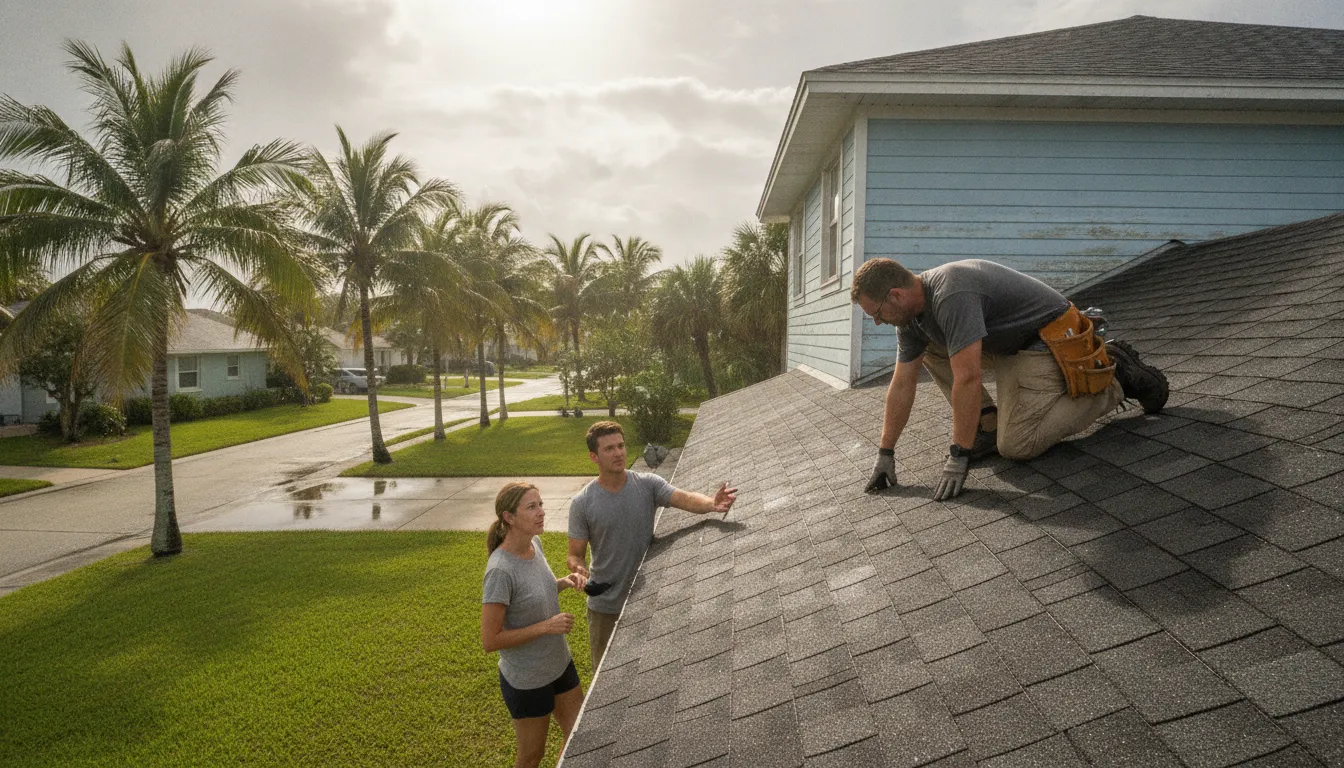
Because restoration requires construction work, it takes longer and uses different trade skills. Many water losses in St. Petersburg start from roof leaks during summer storms. Working with a company like Go Time Roofing and Restoration makes this easy. Our team handles both the emergency roof repairs and the interior structural rebuild, so you do not have to hire separate companies to finish the job.
How Insurance Covers Mitigation and Restoration
Most policies cover both services, but insurance companies handle them differently. Mitigation is billed as an emergency service to prevent more loss, which your policy requires you to do. Restoration is processed as a standard property claim to rebuild your home. Knowing the details of your water damage insurance coverage is vital before you start structural work. Keeping detailed, date-stamped logs of the drying phase is standard procedure to help get your rebuild claim approved.
Common Causes of Water Damage in St. Petersburg and Pinellas County
Water damage can hit your home when you least expect it. In St. Petersburg and surrounding Pinellas County towns, local climate factors and aging systems create unique risks for property owners. Knowing these common causes is the first step in protecting your property and understanding what is water damage restoration when problems arise.
Water intrusion in Pinellas County often comes from tropical storms, aging indoor plumbing systems, or condensation leaks in heavy-use cooling units. When water gets inside, our humid subtropical climate acts like a greenhouse, speeding up secondary issues like mold and wood rot. Homeowners must understand these specific local causes to stop minor leaks from turning into major structural restoration jobs.
Extreme Weather and Coastal Storms
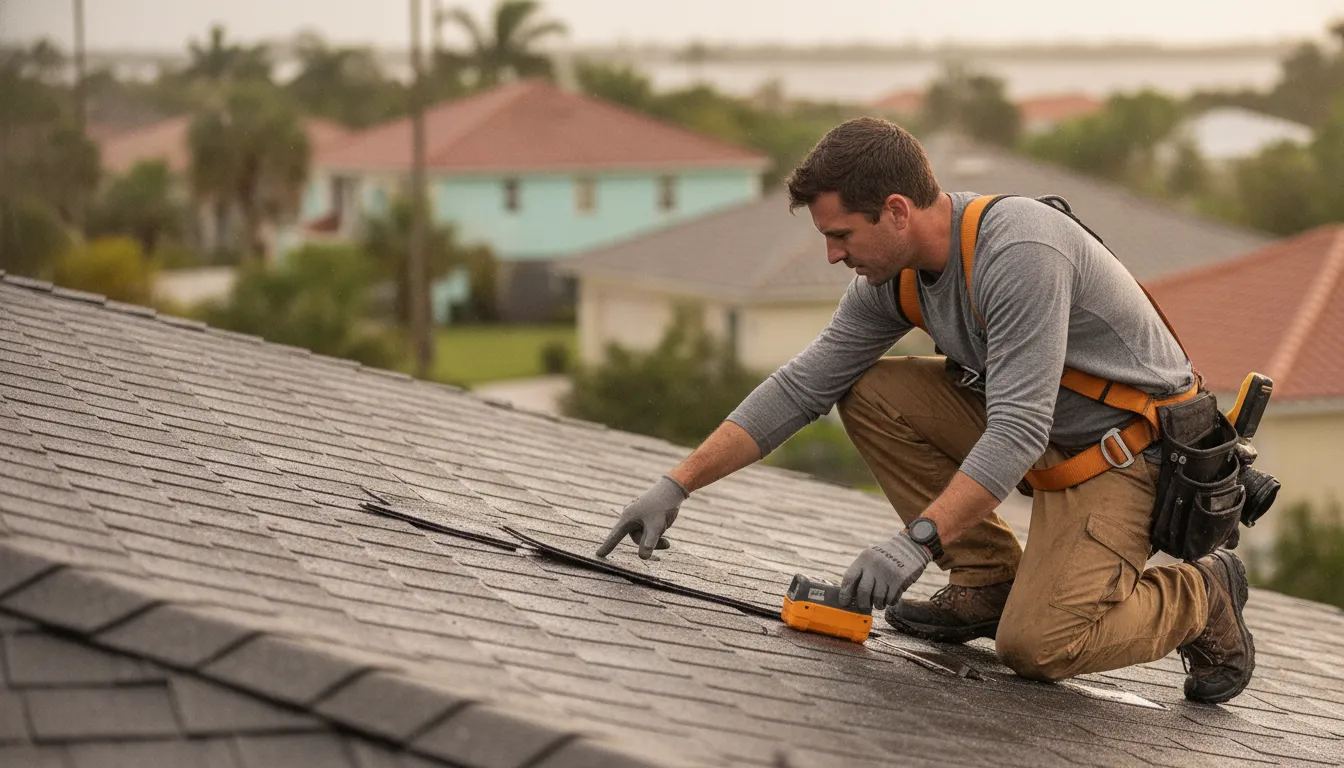
Our coastal location makes us prone to severe weather. Tropical storms and hurricanes regularly bring heavy rain and high winds to the Tampa Bay area. These storms push water into homes through roof leaks or low-lying doors. In fact, Florida holds about 35% of all national flood insurance policies according to industry statistics. High winds can rip shingles from your roof and let rain pour directly into your attic and walls.
Aging Plumbing in St. Petersburg Homes
St. Petersburg has many historic and older homes. While these properties have great charm, they often have old, weak pipes. Over time, metal pipes rust and break. Even a tiny pinhole leak in a wall can release thousands of gallons of water before you notice it. On a larger scale, faulty water systems across the country waste nearly 1 trillion gallons of water every year based on data from safety research. This shows how common and destructive plumbing failures can be for homeowners.
Appliance and HVAC Failures
Household appliances are another main source of water issues. Dishwasher supply lines, washing machine hoses, and water heaters can burst without warning. If you experience a broken kitchen line, getting professional water damage cleanup is vital to dry out wood cabinets and subfloors. Additionally, air conditioning units run constantly in our warm climate. If the HVAC condensation line clogs, the overflow pan spills water into your ceiling or closet, causing hidden structural rot.
High Humidity and Sewage Backups
Our humid subtropical climate makes any water leak much worse. When water enters your home, high humidity speeds up the growth of mold. The Centers for Disease Control and Prevention warns that mold can start growing on damp surfaces in as little as 24 to 48 hours. Furthermore, heavy Florida rains can overload local sewer systems. This can cause dirty sewer water to back up through drains into your bathrooms, which requires immediate cleanup by certified experts to protect your health.
How Long Does Water Damage Restoration Take?
Every water emergency has its own timeline. The total time to dry, clean, and fix your home depends on how much water was lost, the class of the flood, and the type of materials involved. Homeowners must understand how long water damage restoration takes so they can plan their lives and coordinate with insurance providers.
Dry-out times can change fast based on how soon help arrives. Under the S500 standard set by the Institute of Inspection, Cleaning and Restoration Certification, crew members must use professional tools to stop ongoing damage. For safety, drying and cleanup must occur before active air movement begins to prevent cross-contaminating the air flow with potential contaminants in the house.
Mitigation vs Reconstruction Timelines
Drying out a home is much faster than rebuilding it. Water mitigation stops active damage and includes water extraction and structural drying. With standard professional gear like LGR dehumidifiers and high-speed air movers, drying a home typically takes three to four days. In contrast, the industry average for untrained drying or using basic home fans is seven to fourteen days.
Once the structure is dry, the actual restoration starts. This phase includes rebuilding walls, laying new floors, and painting. This building work can add weeks to the project timeline depending on the scope of the damage.
Drying Timelines by Area Size
Small leaks in single rooms are easy to resolve. If a small pipe leaks in a bathroom or laundry room, the drying process usually takes three to five days. Since the water is confined to a tight space, crew members can focus their equipment on the wet zone and dry it quickly.
Larger floods that impact multiple rooms or entire floors take much longer. When water flows across a whole level of a home, it saturates subfloors, baseboards, and deep wall cavities. In these scenarios, dry-out times can run from seven to fourteen days. Our technicians must open assemblies like walls, ceilings, and flooring to access pockets of saturation and remove contaminated materials to prevent mold growth, as outlined in the IICRC S500 Standard of Care.
Full Reconstruction and Repair Schedule
If a home suffers from major structural flooding, the entire process of cleanup and reconstruction can take two to four weeks. During the first week, we focus on safe demolition and dry-out. Technicians set up engineering controls like containment walls and HEPA air filtration machines to minimize the spread of dust and potential contaminants during cleanup.
The remaining weeks are dedicated to structural repairs. We replace damaged drywall, install new wood framing, and lay down fresh flooring. A team must establish clear drying goals and measure the moisture content in materials like subfloors and framing. Typically aiming for approximately 10% moisture before installing any new materials.
Choosing a Water Damage Restoration Company in St. Petersburg
Finding a trusted partner to restore your home after a flood or leak can feel overwhelming. In the humid coastal climate of Pinellas County, you must act fast to prevent mold and structural rot. Knowing what to look for in a professional service ensures your property is dried quickly and restored to safe conditions.
To choose the right water damage restoration team in St. Petersburg, look for active IICRC certifications, local license CBC059332, round-the-clock availability, and direct insurance billing assistance. Working with a local owner-operated company that manages both structural drying and complete roof repairs ensures a smooth path to recovery.
Verify Essential Certifications and Licenses
Never hire a contractor who lacks professional training. Your chosen company must have staff with active certifications from the Institute of Inspection, Cleaning and Restoration Certification. Specifically, technicians should hold mold after water damage prevention training, Water Damage Restoration Technician credentials, and Applied Structural Drying credentials. These classes teach crews how to follow the IICRC S500 standard of care. This standard is the recognized guide for safe drying practices, as noted by the IICRC S500 guidelines. The company must also hold a valid state license, such as Florida Certified Building Contractor license CBC059332, to handle structural repairs legally.
Look for Local Ownership and Fast Response Times
When water floods your home, every minute counts. Standing water can cause mold growth in as little as 24 to 48 hours, according to the Centers for Disease Control and Prevention. An owner-operated team based in St. Petersburg can arrive at your door much faster than a national franchise. Local teams know how Pinellas County heat and humidity affect wet drywall and wood. They also have a deep connection to the community, which shows in their local reputation. Look for a team with at least 45 five-star Google reviews from real homeowners in the St. Petersburg area.
Demand Complete Roof-to-Recovery Solutions
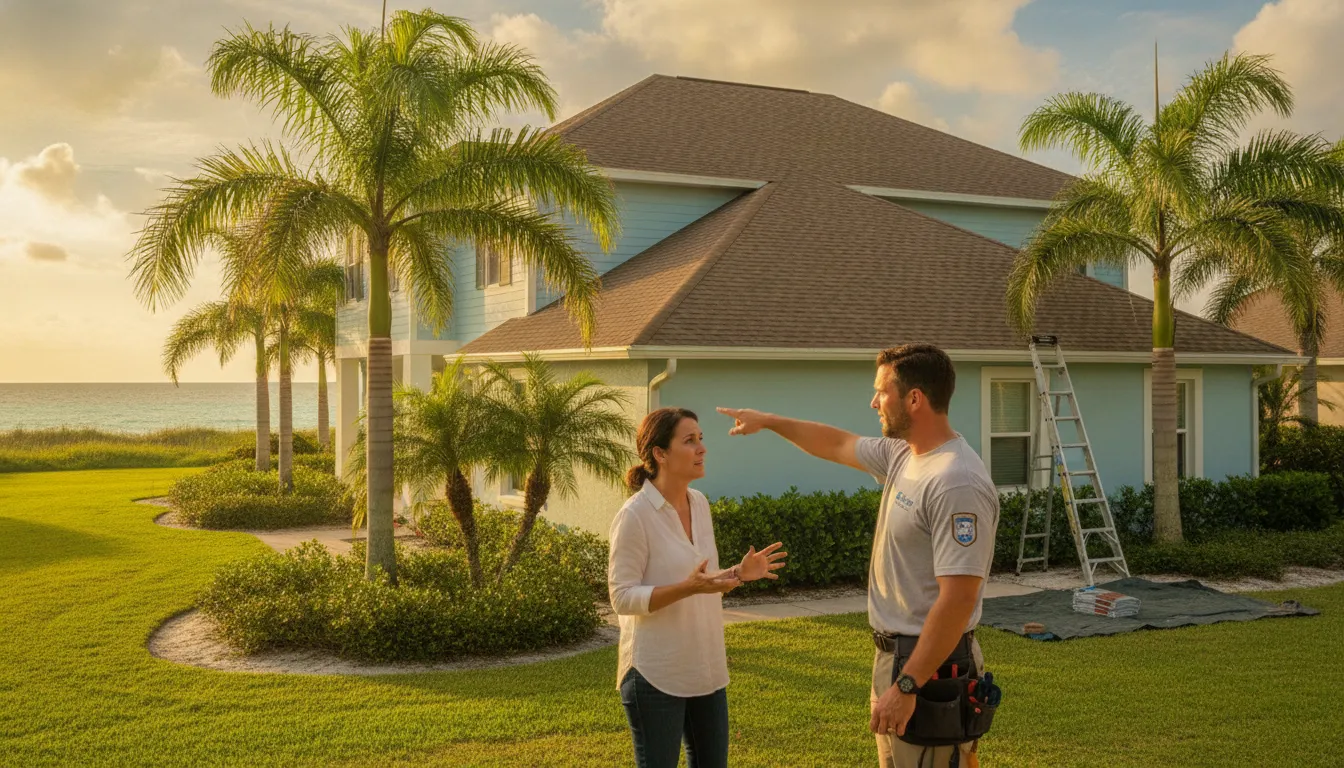
Many water leaks in Florida stem from roof damage caused by severe storms or heavy rains. Hiring one company to dry your drywall and another to fix your roof leads to delays, extra costs, and communication gaps. A true full-service restoration company offers an integrated model that handles both water mitigation and professional roofing. This combined approach protects your home from future leaks while completing all interior repairs. A local contractor who provides free damage assessments can find the exact source of the leak. Whether it is a broken pipe or a torn roof shingle, and fix it all under one roof.
Ensure Direct Insurance Claim Support
Filing a property damage claim after a water leak can be stressful. The best restoration companies guide you through the process and help you document your losses. They use professional moisture meters to prove where the water traveled and what materials are wet, as required by the SafetyCulture water restoration standards. Your contractor should work directly with your insurance adjuster to ensure your claim is processed smoothly. They will provide the detailed drying logs and repair estimates your insurer needs, which helps prevent delayed or denied coverage.
Frequently Asked Questions
What are the main steps in water damage restoration?
According to the CDC, water damage restoration includes inspection, water removal, drying, cleaning, and repairs. Certified technicians first inspect the property and find the water source. Next, they pump out standing water and use heavy fans to dry the area. They clean the rooms to stop germs and mold. Finally, they fix broken walls and floors to make the home safe again.
What is the difference between mold remediation and restoration?
These two terms refer to different parts of the cleanup process. Professional water restoration is the broad process of returning a damaged property back to its original state. Mold remediation is a specific step within that process that focuses only on finding and cleaning up mold growth. Homeowners often need both services after a major flood or a long pipe leak.
Does insurance cover water damage restoration?
Most home insurance plans cover sudden and accidental water leaks like a burst pipe or water heater failure. However, they do not pay for damage from slow leaks or poor upkeep. According to SafetyCulture, coverage depends on what caused the loss and your specific policy terms. Standard plans also do not cover rising flood waters, which require a separate flood policy.
Can I do water restoration myself?
You should not try to do this work yourself. Safe water cleanup requires industrial tools to find hidden wet spots and dry out walls. Industry experts at SafetyCulture state that professional tools are necessary to stop secondary damage like mold and wood rot. In humid areas like Florida, mold can grow in wet drywall in less than two days.
Schedule Your Free Water Damage Assessment in St. Petersburg
Ignoring water damage can lead to structural decay and mold growth within twenty-four hours in our humid Florida climate. Acting fast stops the spread and keeps your repair costs low. Our certified team is ready to dry your home and restore your property before the damage gets worse.
Ready to schedule a free water damage assessment? Call (727) 430-3079 to book your service with our local specialists today.
Pinellas Park water damage restoration services — available 24/7 for emergency response and structural drying.