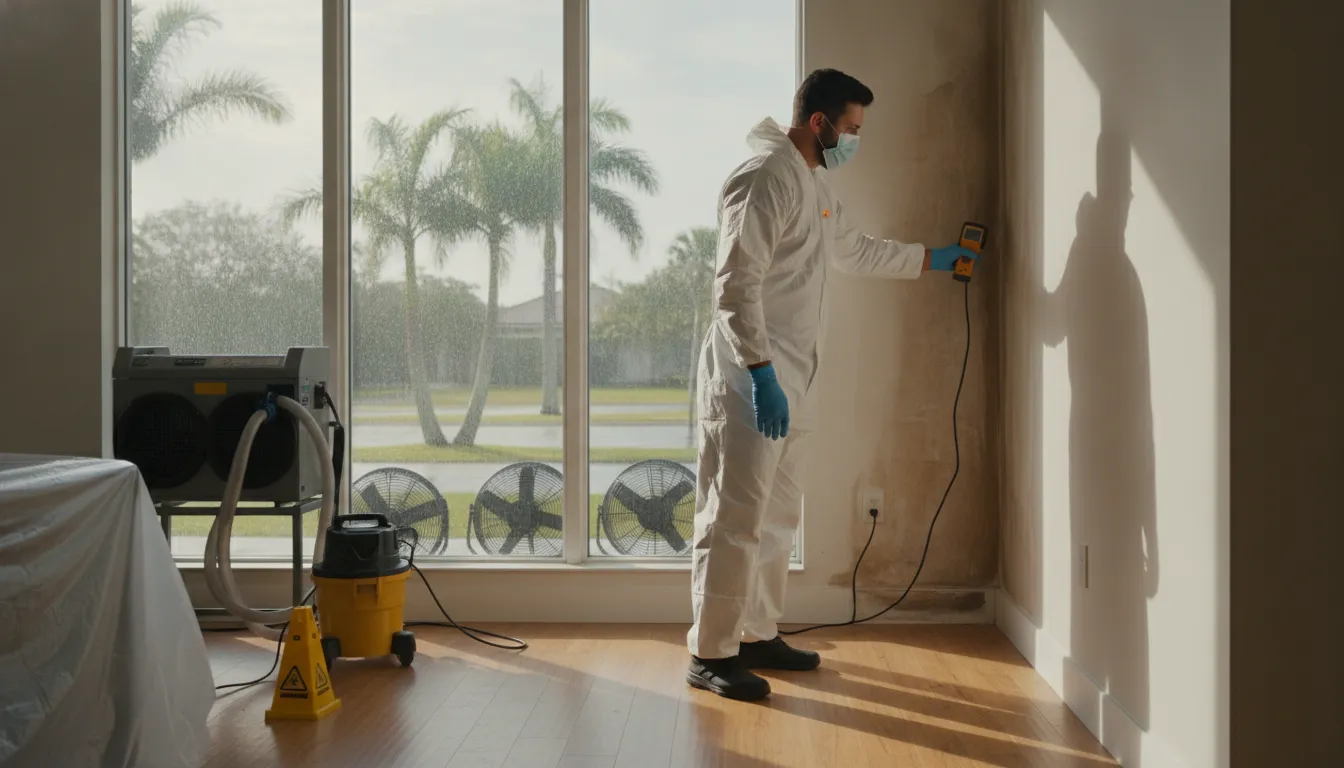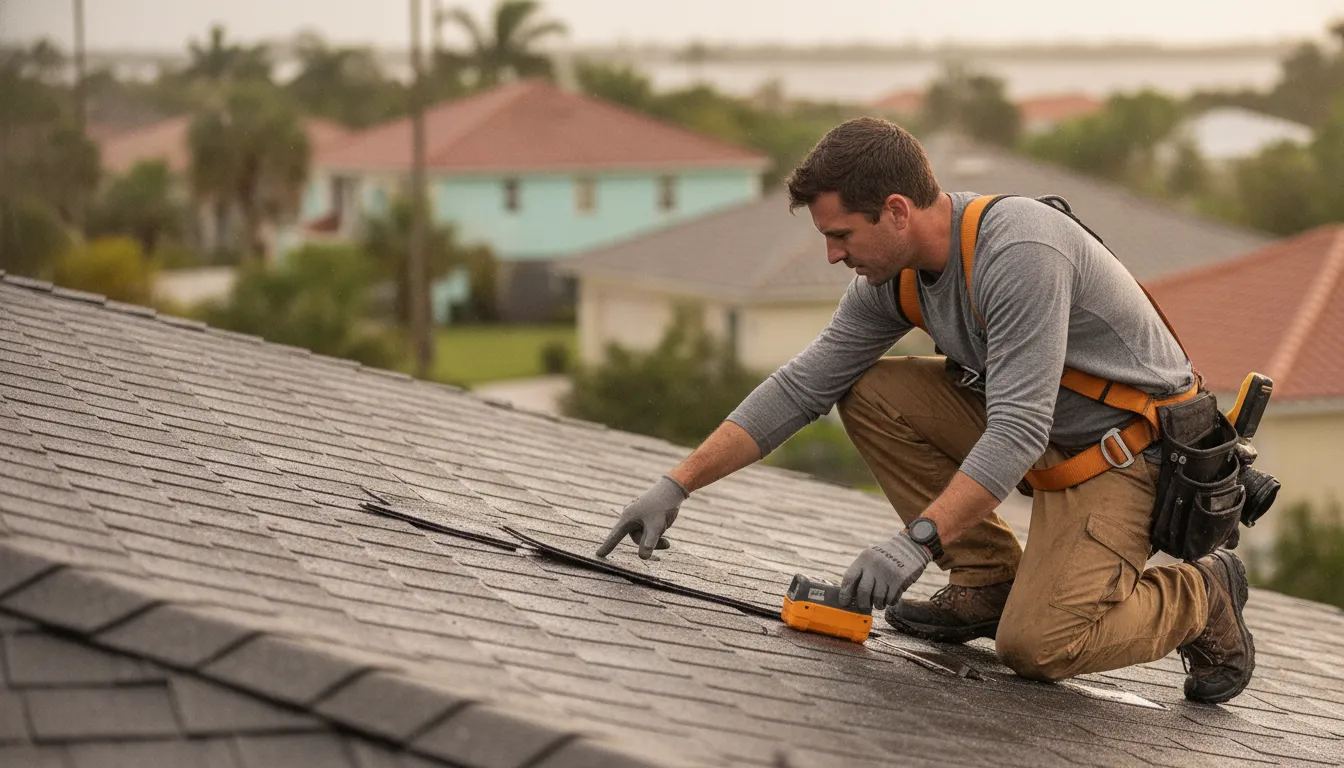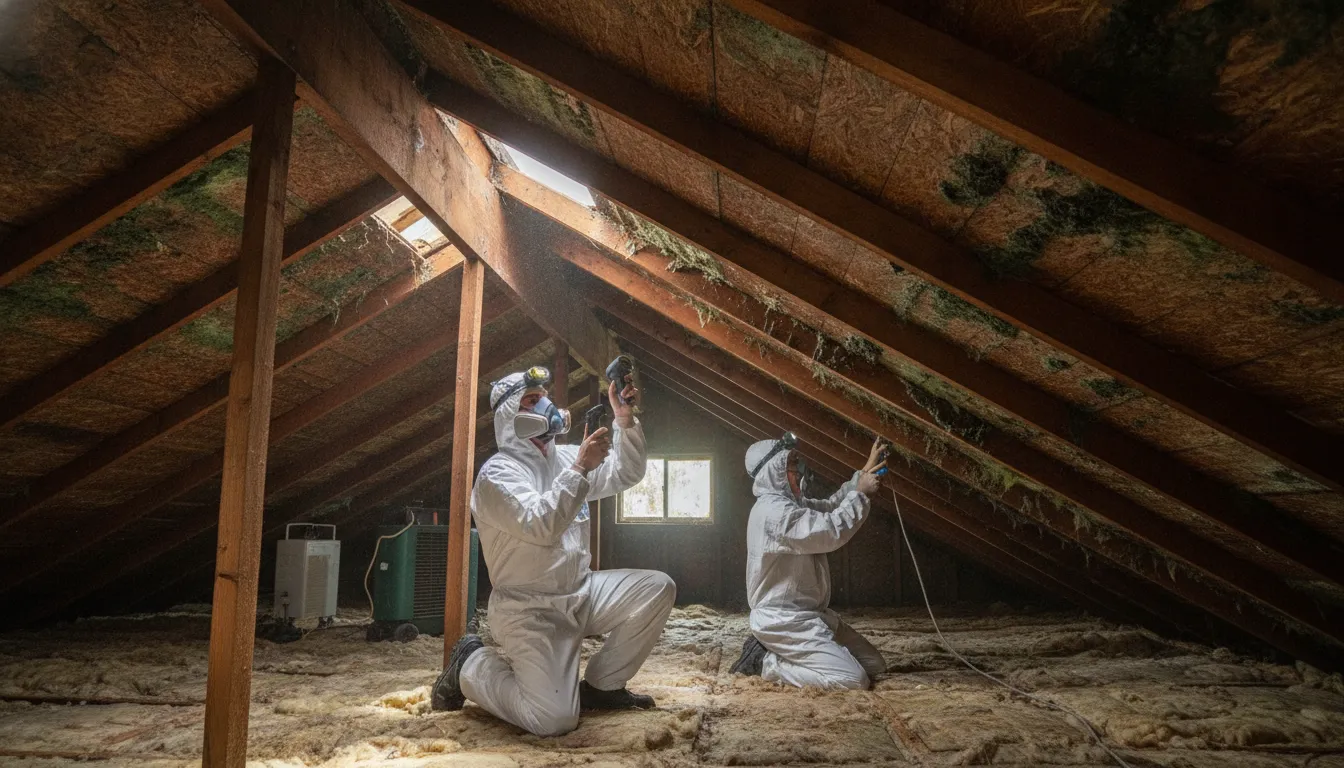
A sudden roof leak during a hot Saint Petersburg rainstorm can trigger a silent crisis in your home. Within hours, water soaked into drywall and wood turns your dark attic space into a breeding ground for toxic spores.
Schedule your free roof inspection in Saint Petersburg today. Call (727) 361-6905.
Attic mold prevention Florida homeowners can easily practice relies on drying wet roof wood within 24 hours and constantly maintaining steady, clean airflow throughout the entire attic cavity. Because damp insulation feeds toxic spores very quickly, the United States Environmental Protection Agency warns that rapid, thorough drying is vital to stop new mold colonies from growing. Saint Petersburg residents must fix roof leaks immediately, keep attic soffit vents clear of debris, and make sure bathroom fans vent to the outside. If dampness lingers or mold develops, our professional, licensed mold remediation services can help. We provide safe containment and clean wood without spreading harmful mold spores further inside your home.
To protect your home from costly wood rot, you should understand how moisture behaves inside your roof cavity. We will start by looking at why Florida attics are so vulnerable to mold after a roof leak.
Attic Mold Prevention Florida: Why Are Florida Attics So Vulnerable to Mold After a Roof Leak?
Florida attics are highly prone to mold because of the state’s extreme heat and high moisture levels. When a roof leak lets liquid water enter the dark, uncooled space, it creates the perfect breeding ground. Spores can take hold in less than two days on wet wood and insulation, turning a small drip into a severe hazard.
Subtropical heat and constant humidity
St. Petersburg and the rest of Pinellas County have a warm, humid climate. The state’s average annual humidity is 74.5%, which is the second highest in the country. During the long rainy season from June to September, outdoor humidity levels often climb past 90% overnight. This wet air gets trapped inside your roof space and keeps attic wood damp. This high moisture level creates a constant risk for your roof deck. Even without a leak, the wood in your attic stays under constant stress from this moisture.
When you have a roof leak, this deep dampness makes drying out very hard without help. Thick, damp air prevents wet wood from drying. Homeowners must take active steps to prevent mold in your home after storm damage. If left alone, this moisture will fuel rapid spore growth across your entire ceiling structure. A lack of air flow in local homes makes this issue worse.
Wood moisture and rapid growth
Wood is highly porous and acts like a sponge when water drips from a roof leak. When sheathing moisture exceeds 19%, mold sprouts. The year-round warmth in a Florida attic acts as an oven that speeds up this process. Poor ventilation makes this warm attic environment even worse. This heat lets the fungus weaken your roof deck.
The U.S. Environmental Protection Agency notes that mold can colonize wet boards and drywall within 24 to 48 hours. This brief timeline makes rapid drying vital. If you delay, the fungus will spread deep and weaken the wood framing of your home. Wet drywall is also hard to fix.
The scale of this issue is clear. In just one year, Florida homeowners filed 264,000 mold claims. This made up more than 20% of all home claims statewide. A minor roof leak can quickly turn into a costly rebuild if wood remains damp. St. Petersburg homes face these risks every wet summer.
How Roof Leaks Create the Perfect Condition for Attic Mold Growth
A roof leak brings in liquid water that soaks wood and insulation in your attic. This constant source of wetness combines with high heat and stagnant air to make the perfect home for spores. Quick action and proper repairs are vital steps for attic mold prevention Florida homeowners can take.
How Florida weather wears down your roof
Our local weather is very harsh on roofs. Strong sun, hot days, and heavy storm winds wear down shingles and tiles over time. Heavy rain can force water under loose shingles. When your roof fails, rain gets inside the home. This water runs down into the attic space. This is why routine checks are so vital. Homeowners can use maintenance tips to prevent roof leaks before the rainy season starts.
Once wetness gets in, it feeds mold. Spores are always in the air but they need water to grow. The EPA says stopping wetness is the main key to stop indoor mold growth. If you do not stop the leak, the mold will keep spreading across your wood boards and beams.
The danger of slow and hidden leaks
Some roof leaks do not cause a big flood right away. A tiny gap around a vent pipe or a small crack in a shingle can let in just a few drops at a time. This water slowly soaks into your wooden roof deck and sheathing over many weeks. Because the leak is small, you might not see any water stains on your ceiling downstairs. The wood stays wet and dark, which is exactly what mold spores need to thrive.
By the time you notice a musty smell or see dark stains, the mold has already taken root. Wet sheathing and insulation will rot if they stay damp. This ruin can spread fast and cost a lot of money to fix. Spotting these small leaks early is a key step in attic mold prevention Florida homes need.
Warm air and wet attic surfaces
Hot attic spaces make mold grow even faster. In our state, the sun heats the roof to very high levels. This heat warms up the air inside the attic. When a leak adds water to this hot space, it acts like a greenhouse. The wet air cannot escape if your attic does not have good air flow. This trapped dampness clings to cool surfaces in the attic and turns back into water drops.
This sweat coats the rafters, pipes, and beams. Even parts of the attic that are far from the actual leak can become damp. Mold can start growing on these sweaty surfaces within forty-eight hours. To stop this cycle, you must fix the roof leak and make sure your attic has good air flow. This keeps the space dry and cool.
How to Inspect Your Attic for Leak Damage and Early Mold Signs
To inspect your attic, search for water stains, soft wood, and damp insulation with a bright flashlight. In Florida’s humid climate, finding roof leaks early is key for effective attic mold prevention Florida. Regular checks help you find roof damage and stop mold before it spreads through your home.
Heavy storms can weaken your roof shingles and sealants. You should complete a roof inspection after a storm to find structural gaps. Even minor leaks let moisture seep into wood, which triggers fungal growth.
Safety and preparation
Before you climb into your attic, make sure you have the right gear. You need a bright flashlight, a dust mask, and sturdy shoes. Only step on secure ceiling joists, as stepping on drywall will cause you to fall through the ceiling. Safety is always your top concern.
Check that your ladder is stable before you start your climb. Tell someone in your house that you are going into the attic so they can help if you get stuck.
Step-by-step attic inspection
You can find most roof issues by following a clear routine. The Environmental Protection Agency states that moisture control is the best way to stop mold.
- Smell for musty odors: As soon as you enter the space, check the air for damp or earthy smells that point to hidden growth.
- Inspect during daylight hours: Turn off the attic lights and search for pinpoints of sun shining through the wood roof deck.
- Search for watermarks on rafters: Look for dark spots, water rings, or white salt tracks along the wood sheathing.
- Check the wood for soft spots: Push a thin tool gently into discolored rafters to see if the wood is soft or rotten.
- Feel the insulation for dampness: Touch the insulation under known leak spots to make sure it is dry and free of mold clumps.
- Check around roof openings: Look closely at seals around chimneys, pipes, and attic vents where rain often leaks into the home.
Inspecting key roof openings
Roof openings are the most common source of attic water leaks. Flashings around chimneys and exhaust vents can rust, crack, or pull away over time. Rainwater seeps through these tiny gaps and slowly wets the nearby wood deck. Inspect these areas twice a year to keep your attic dry and safe.
If you find any rusted metal or missing caulk, you should address it quickly. Leaving these areas open invites heavy Florida rain to pool in your roof system. This standing water soon rots the wood and feeds mold spores.
Ventilation and Humidity Control: The First Line of Defense
Good attic airflow and low humidity are the best defense against mold after a roof leak. By keeping moisture levels low, you can stop mold from growing when minor leaks occur. This balance needs active climate controls and steady airflow.
Continuous airflow for attic mold prevention
When planning attic mold prevention Florida climate patterns must be top of mind. Wet air trapped in a dark, warm attic will lead to mold in less than two days. To stop this, fresh air must enter from the bottom of your roof and carry dampness out through the top. This simple path keeps wood rafters dry and stops spores from taking root.
The ridge and soffit vent combination
The most reliable way to get this airflow is with a balanced soffit and ridge vent system. Soffit vents sit under the eaves to let cool air in. Ridge vents run along the peak of the roof to let hot, wet air escape.
| Vent Material | Durability in Florida Climate | Best Use |
|---|---|---|
| Aluminum | Rust-resistant, withstands storm winds, can handle Florida heat without warping | Coastal homes, best long-term choice for St. Petersburg attics |
| Wood | Rots quickly in 74.5% average humidity, absorbs moisture, needs frequent replacement | Not recommended for Florida attics near the coast |
| Vinyl | Warp under intense Florida sun, can crack in storm conditions, less durable over time | Budget option but needs replacement sooner in Florida heat |
In St. Petersburg, aluminum soffits are much better than wood or vinyl. Wood rots quickly in our wet air, and vinyl can warp under the intense heat. Aluminum resists rust and stands up to storm winds, which is why it is the top choice for coastal homes. We suggest these durable vents as part of our maintenance tips to prevent roof leaks.
Exhaust fans and indoor climate controls
Indoor air systems also play a big role in attic mold prevention. You should keep indoor humidity below 60 percent, and ideally below 50 percent, to stop mold spores from growing. The U.S. Environmental Protection Agency recommends this range to maintain healthy air. Your air conditioner helps dry the air, but you may need a dehumidifier during the damp summer months.
Moisture also enters the attic from inside the home. Exhaust fans in bathrooms and kitchens must vent straight to the outside. If these fans vent into your attic, they will dump hot, wet air directly onto your roof deck. The EPA guidance on moisture control warns that this bad setup quickly leads to wood rot.
To keep your roof safe, you should get an annual attic airflow check to find blocked vents before mold can start. Vents can easily get blocked by loose attic insulation, bird nests, or dust. A certified specialist can check these spaces and clear any debris to restore full airflow. Regular attic checks help find these issues early, saving you from costly repairs down the road.
What to Do After a Roof Leak in Florida: Immediate Steps
When you find a roof leak, acting fast is key to protect your home. Quick steps include stopping the leak, drying the wet room, and clearing wet insulation. Taking these actions is the best way to ensure attic mold prevention Florida homeowners can use.
Immediate Leak Response
A roof leak allows water to soak your attic wood and ceiling. When water pools in these spaces, mold can start to grow in just a couple of days. To prevent deep damage and stop mold spores, you need to follow a clear plan right away.
Taking action fast is the best defense against attic water issues. You can protect your home and health by drying the wet area as soon as you can.
Seven Steps to Dry Your Attic
Following a set plan helps you save your attic from mold. Work through these seven key steps as soon as you find a leak in your roof.
- Stop the water. Put a bucket under the drip to catch falling water. If it is safe, put a tarp over the roof leak to stop more water from getting in.
- Take photos. Get clear pictures of all wet areas, stains, and damp wood. This step is vital when you file a claim for insurance coverage for roof leaks and mold.
- Remove wet insulation. Soggy attic insulation traps water against your ceiling and wood framing. Discard the wet batting because it will not dry on its own.
- Dry wet materials. Set up large fans and dryers to move air through the attic space. Dry water-damaged areas and items within 24 to 48 hours to prevent mold. This quick timeline is backed by the Environmental Protection Agency (EPA).
- Check for mold. Walk your attic with a bright light once the space is dry. Search for wood that looks dark, has fuzzy spots, or smells musty.
- Get an expert check. Water can hide where you cannot see it. Professional water damage restoration services will find hidden moisture behind walls and floors.
- Fix the roof. Hire a local roofer to repair the damage. A solid roof keeps water out and stops new mold spores from starting.
Preventing Future Mold Growth
After you dry the space and fix the leak, keep a close watch on your attic. Florida’s damp weather makes it easy for spores to grow. High humidity will cause new mold issues if you do not stay on top of roof care.
Make sure your roof vents stay clear so air can flow well and keep wood dry. A dry, breezy attic is the best way to prevent mold after a big Florida storm.
When to Call a Professional for Attic Mold Remediation
Call a professional when attic mold covers over 10 square feet or keeps coming back. You should also seek expert help if you smell musty odors or suffer from persistent allergy symptoms. Licensed specialists can safely remove mold and find hidden leaks to protect your home.
Signs of a serious attic mold issue
Homeowners often do not see attic mold until it spreads. You can find mold by smelling a damp, musty odor coming from your ceiling vents. Another key sign is seeing dark spots on your roof rafters.
According to the Environmental Protection Agency, you must dry wet areas within 48 hours to stop spores from growing. If the mold already covers more than 10 square feet, home cleaning is not enough.
Ongoing allergy symptoms like sneezing or coughing can point to a hidden attic mold problem. Mold spores can easily travel from your attic into your living spaces through small cracks or HVAC vents. If mold keeps returning after you wipe it away, the moisture source is still active. You need a professional to find and fix the root cause.
Why professional mold cleanup matters
Cleaning attic mold on your own is unsafe because it can spread spores to other rooms. Professional mold remediation services use special tools to keep the spores from getting out. Teams set up thick plastic sheets to seal off the work area. They also use negative air pressure machines and air scrubbers to clean the air while they work.
Once the work area is secure, crews use HEPA vacuums to pull mold spores from the wood rafters. They wipe down the wood with strong cleaners to kill any leftover growth. Any ruined parts, like wet drywall or insulation, must be put in sealed bags to be thrown away safely. This clear process ensures the mold is gone and will not return.
Licensed attic restoration experts in Florida
Florida is one of only five states in the country that require a mold remediator license. This law protects you by making sure that only trained crews work on your home. Go Time Roofing and Restoration is an owner-run team based in St. Petersburg. We hold the state mold remediator license MRSR5100 and AMRT certification.
We handle both your roof repairs and mold cleanup, which saves you from hiring many companies. Our experts can find where the water got in, fix the leak, and remove the mold at the same time. This dual service is a key part of attic mold prevention Florida homeowners need. We can also help you understand your insurance coverage for roof leaks and mold. This makes it easier to file your claim.
Frequently Asked Questions
How do I prevent attic mold in Florida?
To stop attic mold in Florida, you must control moisture and ensure proper airflow. Keep your attic vents clear so fresh air can flow through. If you have a roof leak, fix it fast to keep water out. According to the EPA, managing dampness is the single most important step to stop indoor mold. Ensure all bathroom vents route air completely outside and not into your attic space.
Does Florida’s climate make attic mold worse?
Yes. Florida has high year-round heat and wet air. The state has the second highest annual humidity in the country, averaging about 74 percent. This damp air enters your attic through vents and provides constant moisture. When a roof leak adds liquid water, mold can grow and spread very fast. Homeowners must watch their attics closely during the rainy summer months when wet air is at its worst.
How fast does mold grow after a roof leak?
Mold can start to grow in a warm attic within 24 to 48 hours after a roof leak. Spores only need moisture, warm air, and a food source like wood or drywall to germinate. To prevent this, you must dry out all wet building materials very quickly. The EPA advises drying water-damaged areas within two days to stop mold from colonizing your home.
Can a bathroom fan vent into an attic?
No. You should never vent a bathroom exhaust fan directly into your attic. Bathroom fans remove hot, wet air from your home. If you dump this damp air into your attic, it will settle on wood rafters and insulation. The EPA states that all exhaust fans must vent completely to the outside of your home to keep moisture from building up.
When should I call a professional about attic mold?
You should call a mold cleanup expert if you notice a musty smell in your home. Other signs include dark stains on attic wood or sudden allergy symptoms. If the mold covers more than 10 square feet, the EPA suggests hiring a licensed specialist. An expert can safely contain the area and use HEPA vacuums to clear the spores without spreading them to other rooms.
Ready to Protect Your Home From Attic Mold?
If you do not fix a roof leak fast, Florida’s high heat will cause toxic mold to grow inside your attic within two days. This rapid growth can rot your wooden roof deck, ruin your home’s ceiling, and lead to costly repairs that insurance might not pay. By booking a free roof inspection today, you can dry out the wet wood before spores ruin your ceiling and damage your family’s health.
Are you ready to protect your attic from moisture? Call (727) 361-6905 to schedule a free roof inspection. Our trusted local team will find and stop any hidden leaks fast. We will keep your Pinellas County roof and home safe and dry.
For residents in Pinellas Park, Pinellas Park mold remediation services are available to address attic mold issues promptly before they spread.